
Most people think “federal court” means “big case” or “important case.” In reality, federal courts are courts of limited jurisdiction. They cannot hear everything, even if the dispute feels national, emotional, or high-stakes.
The threshold issue is subject-matter jurisdiction, which is lawyer-speak for one question: Does this court have power to decide this type of case?
This guide covers the three concepts that cause the most confusion for everyday readers and new students of civics: federal question, diversity (including amount-in-controversy), and removal from state to federal court.
Join the Discussion
Two systems, different jobs
We have state courts and federal courts running at the same time. State courts are often described as courts of general jurisdiction, meaning they can usually hear a wide range of cases: contracts, property disputes, crimes under state law, family law, and more.
A quick caveat: state courts are not truly unlimited. Their jurisdiction can be shaped by state constitutions and statutes, and some categories of cases are assigned exclusively to federal court.
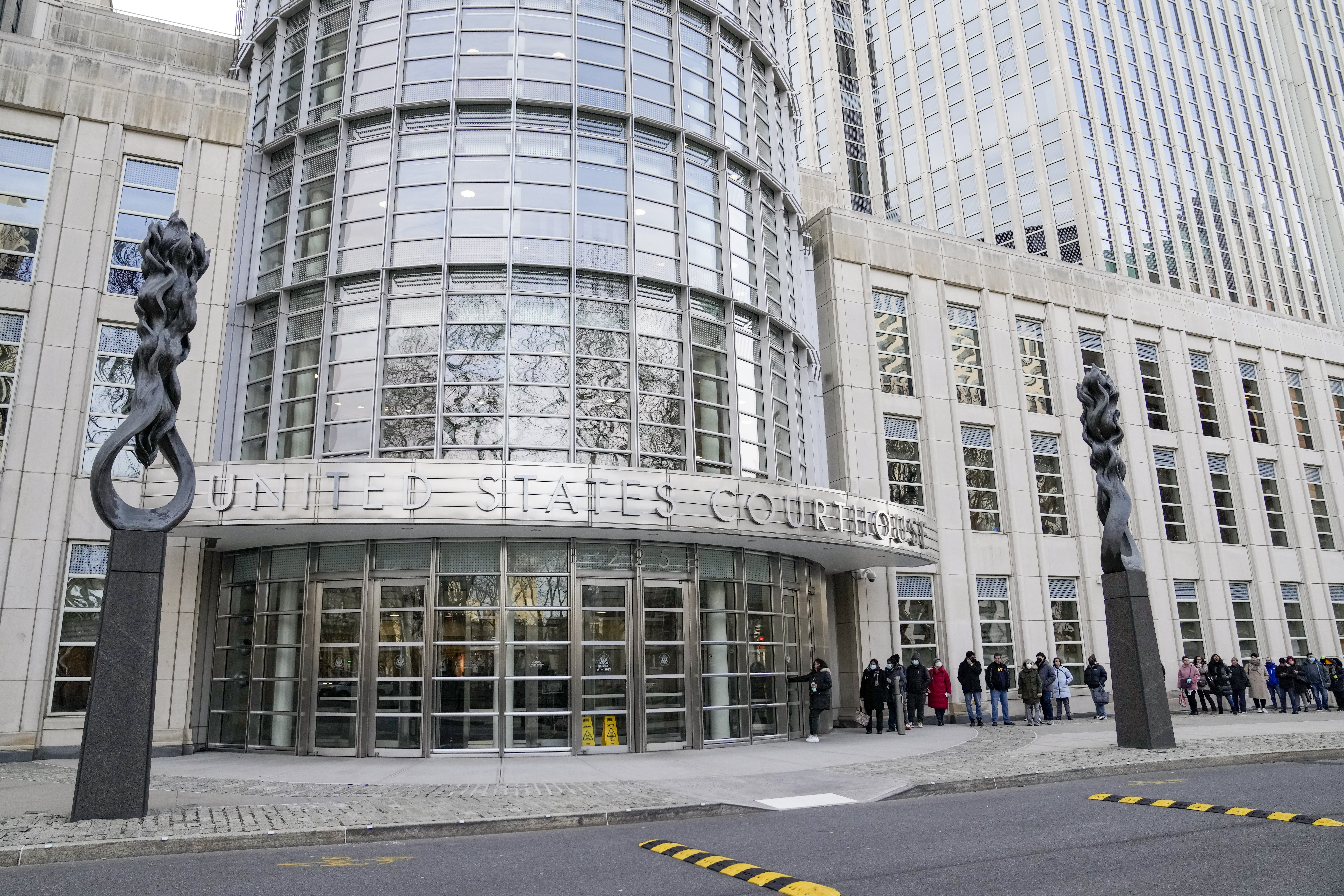
Federal courts are different. Under Article III of the Constitution, federal courts can hear only the categories of cases the Constitution and Congress authorize. That limitation is a feature, not a bug. It is part of how federalism divides power between states and the national government.
The practical takeaway
If someone says “we’re going to federal court,” the correct follow-up is not “how serious is it?” It is: what is the jurisdictional hook?
Subject-matter jurisdiction in one sentence
Federal district courts most commonly have subject-matter jurisdiction in two ways:
- Federal question jurisdiction: the lawsuit arises under federal law.
- Diversity jurisdiction: the lawsuit is between citizens of different states (or involves foreign citizens in certain configurations), and the amount in controversy is high enough.
There are other categories, but these two are the everyday workhorses.
Federal question jurisdiction
Federal question jurisdiction comes from 28 U.S.C. § 1331. It covers civil cases “arising under” the Constitution, federal statutes, or treaties.
What “arising under” means
It is not enough that a federal issue is floating around somewhere in the background. In most situations, the federal issue must appear on the face of the plaintiff’s properly pleaded complaint. This is often taught as the well-pleaded complaint rule.
In plain English: the plaintiff cannot get into federal court just by predicting a federal defense.
Simple examples
- Federal question: An employee sues an employer for unpaid overtime under the federal Fair Labor Standards Act.
- Federal question: A person sues a federal agency claiming it violated the First Amendment.
- Usually not a federal question: A landlord sues for unpaid rent under state law, and the tenant says, “My federal rights were violated.” The tenant’s federal argument might matter, but it does not automatically create federal jurisdiction.
Advanced note
In rare situations, a case based on state law can still belong in federal court if it necessarily raises a substantial, actually disputed federal issue. That is an edge case most beginners can set aside, but you may see it referenced in discussions of “embedded” federal issues.

Diversity jurisdiction
Diversity jurisdiction comes from 28 U.S.C. § 1332. It is designed to give an out-of-state party a neutral forum, at least in theory, by allowing certain state-law disputes to be heard in federal court.
Diversity jurisdiction has two core requirements:
- Complete diversity: no plaintiff can share state citizenship with any defendant.
- Amount in controversy: the plaintiff must seek more than $75,000, not counting interest and costs.
Citizenship is not residence
For diversity purposes, a person’s “citizenship” usually means their domicile: where they live and intend to remain. You can have multiple residences, but typically only one domicile.
Foreign citizens and exceptions
Section 1332 also covers certain cases involving foreign citizens, but the rules get nuanced. For example, some alien-on-both-sides configurations do not qualify, and permanent resident status can change the analysis. For a beginner rule of thumb: treat “U.S. citizen vs. foreign citizen” as often, but not always, enough, with exceptions.
What about companies?
Corporations have their own rule. They are citizens of:
- the state where they are incorporated, and
- the state where they have their “principal place of business” (often described as the company’s nerve center).
Other business entities can have different citizenship rules depending on structure. A common example: LLCs and partnerships typically take the citizenship of all members or partners, which can make “complete diversity” harder to satisfy than people expect.
Simple examples
- Diversity exists: A citizen of Florida sues a citizen of Georgia for $200,000 over a contract dispute.
- No diversity: A citizen of Florida sues a citizen of Florida, even if the dispute involves a huge amount of money.
- No complete diversity: Two plaintiffs (one from Texas, one from Oklahoma) sue two defendants (one from Oklahoma, one from Kansas). Because one plaintiff and one defendant share Oklahoma citizenship, complete diversity fails.
The $75,000 rule
The amount in controversy requirement is not “the amount you will win.” It is the amount that is in dispute in good faith at the time the lawsuit is filed in federal court (or removed there).
What counts
- Compensatory damages claimed in the complaint generally count.
- Punitive damages can count if they are legally available under the claim.
- Attorney’s fees sometimes count if a statute or contract allows fee shifting.
What does not count
- Interest and court costs are typically excluded by statute.
Adding claims together
Often, yes, a single plaintiff can aggregate multiple claims against a single defendant to exceed $75,000. But aggregation gets tricky with multiple parties, and the rules depend on how claims and parties are aligned.
The big idea is simpler than the doctrine: diversity jurisdiction is for larger interstate disputes, not everyday local cases.
Removal
Removal is the process where a defendant moves a case filed in state court to federal court, as long as the case could have been filed in federal court in the first place. The main removal statute is 28 U.S.C. § 1441.
Removal matters because it flips a common intuition. People often assume the plaintiff chooses the courtroom and that is the end of it. Not always.
The removal rule
If the federal court would have had subject-matter jurisdiction on day one, the defendant can usually remove.
“Usually” matters. Multi-defendant cases commonly require the consent of all properly joined and served defendants (often called the rule of unanimity), and some statutes add special removal limits or procedures.
Two common paths
- Federal question removal: The plaintiff’s complaint raises a federal claim. The defendant can remove to federal court.
- Diversity removal: The case meets complete diversity and amount-in-controversy, and removal is not blocked by special rules.
Advanced note
Removal has a few recurring edge issues. One is “snap removal,” where a defendant removes before being formally served, trying to sidestep the forum defendant rule. Courts disagree about when, if ever, that is allowed.
Forum defendant rule
Diversity removal has a major limitation that surprises people: even if there is complete diversity and more than $75,000 in controversy, a defendant generally cannot remove on diversity grounds if any properly joined and served defendant is a citizen of the state where the case was filed.
This is often called the forum defendant rule (28 U.S.C. § 1441(b)(2)).
Why it exists
The historical justification for diversity jurisdiction is fear of local bias against out-of-state defendants. If the defendant is already a citizen of the forum state, that justification weakens.
Example
- A citizen of New York sues a citizen of California in California state court for $500,000. The California defendant is a forum defendant, so the case typically cannot be removed on diversity grounds.
Removal timing
Removal is powerful, but it comes with deadlines and paperwork. The exact timing rules can be technical, but the practical point is straightforward: defendants usually must act quickly.
- Removal typically must be filed within 30 days after the defendant receives the initial pleading that makes the case removable.
- In many diversity cases, there is also a one-year limit after the case begins in state court, with a “bad faith” exception in some situations.
If the defendant removes improperly, the plaintiff can ask the federal court to send the case back to state court. That is called a motion to remand.
Quick decision tree
If you want a fast way to reason through this, start here. This is simplified, and exceptions exist.
Step 1: Federal claim in the complaint?
- Yes → Federal question jurisdiction is likely available in federal court. Removal is usually possible if the case started in state court.
- No → Go to Step 2.
Step 2: All plaintiffs diverse from all defendants?
- No → Diversity jurisdiction is not available. The case generally belongs in state court (unless another federal jurisdiction basis applies).
- Yes → Go to Step 3.
Step 3: More than $75,000 in dispute?
- No → No diversity jurisdiction.
- Yes → Go to Step 4.
Step 4: If filed in state court, is any defendant a citizen of that state?
- Yes → The forum defendant rule likely blocks diversity removal.
- No → Diversity removal is likely available (assuming procedural requirements like timely filing and, in multi-defendant cases, required consent are satisfied).
Why jurisdiction fights matter
To non-lawyers, a jurisdiction dispute can sound like procedural throat-clearing. But the choice of forum can shape the entire case.
- Different rules: Federal and state courts operate under different procedural systems. Discovery, pleading standards, and scheduling can feel very different.
- Different judges and juries: Federal judges are appointed, state judges are often elected. Jury pools can differ too.
- Different leverage: A removal can change the bargaining power in settlement talks, simply by changing cost, pace, or perceived risk.
And at a constitutional level, jurisdiction is a reminder of design. Article III is not a blank check. It is a boundary line. If you want to understand how American power is divided, start with the question every federal judge must ask before anything else: Do we even have authority to be here?
Common misconceptions
“If something seems unfair, it becomes federal.”
Unfairness is not jurisdiction. A state-law dispute can be serious and unjust and still belong exclusively in state court.
“If I mention the Constitution, I can file in federal court.”
Not necessarily. Federal jurisdiction usually depends on the claim itself, not a passing reference or a predicted defense.
“The plaintiff always gets the final word.”
Plaintiffs choose where to file, but removal exists precisely because defendants sometimes get a second choice.
One last civics note
Jurisdiction is where constitutional structure meets ordinary life. It decides whether your contract dispute stays in a county courthouse or lands before a federal judge. It determines which rules govern your case and which institution speaks with final authority.
One more concept you may hear in the background is supplemental jurisdiction. In simple terms, when a federal court has a proper anchor claim (like a federal question), it can sometimes hear closely related state-law claims alongside it.
And it is not just a law-school puzzle. It is federalism in action, one filing at a time.