
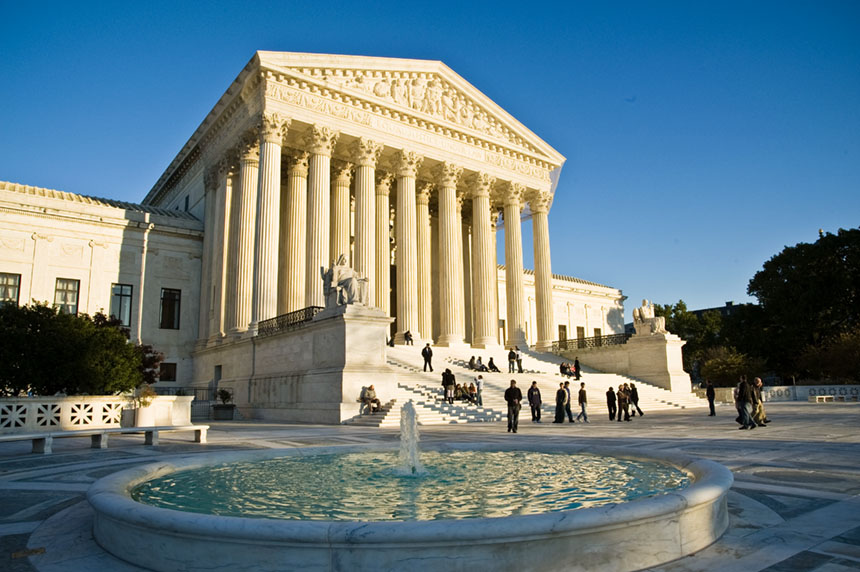
The Supreme Court has allowed the Trump administration to proceed with a new election-related use of a federal citizenship verification system, clearing the way for states to request access to data that could be used to identify and remove alleged noncitizens from voter rolls.
For readers who feel whiplash from the pace of election litigation, you are not alone. This decision arrived through an unsigned order on the Court’s emergency docket, and it matters less for the paperwork it approves than for the practical risks it introduces: mistakes, confusion, and the possibility that eligible voters get caught in a dragnet meant for someone else.
Join the Discussion
What the Court just allowed
The system at the center of this dispute is the Department of Homeland Security’s Systematic Alien Verification for Entitlements, commonly called SAVE. Traditionally, SAVE is used by local, state, and tribal agencies to check immigration or citizenship status for things like public benefits and licensing.
The Trump administration moved to expand that system’s role into election administration, including pulling in additional types of data such as Social Security numbers. A lower court had blocked the rollout since June. The Supreme Court’s new order lifts that roadblock for now, allowing the administration to continue sharing access with states that want to use the database for voter list maintenance focused on alleged noncitizens.
It is important to keep the scope straight: states run elections, including the day-to-day work of maintaining voter rolls. What the federal government is doing here is offering a tool and a pipeline of data. That pipeline can still reshape real outcomes if states rely on it heavily or treat its flags as final answers rather than leads that require careful verification.
Why critics are alarmed
Databases are only as reliable as the information fed into them and the way they are queried. This is not an abstract worry. In a 2019 test run, Texas officials reportedly identified 2,700 people as potential removals, but 578 of those were actually U.S. citizens.
That kind of error rate is exactly what civil rights groups and election officials fear, because the constitutional harm is not theoretical. If a lawful voter is wrongly flagged, they can face extra paperwork, delays, or removal from the rolls. And if that voter does not learn about the problem in time, they can lose the practical ability to vote even though their legal right still exists on paper.
Justice Ketanji Brown Jackson, joined in dissent by the Court’s other two liberal justices, framed the imbalance this way: The harm caused by burdening or disenfranchising even a few lawful voters outweighs the nonexistent harm that the government experiences when it is prevented from taking an action that it likely lacks the authority to take.
The 90-day quiet period
A key piece of the Court’s reasoning involves a federal protection often described as a 90-day “quiet period.” Under the National Voter Registration Act, states face limits on systematic list maintenance close to federal elections, a safeguard designed to reduce last-minute purges that voters cannot realistically fix before Election Day.
The Court’s conservative majority indicated that the 90-day buffer should be enough to limit disruption to voter rolls ahead of the upcoming midterm elections.
That may sound reassuring, but it depends on details that do not fit neatly into an emergency order: What counts as “systematic”? How quickly do states act on SAVE matches? How much notice do voters get? What appeals process exists, and how easy is it for a busy person to navigate it?
Why this is bigger than one database
This fight sits at the crossroads of three recurring constitutional tensions:
- Federal versus state power: States administer elections, but Congress can set certain ground rules for federal elections, and federal agencies control the data systems states may seek to use.
- Ballot access versus fraud prevention: Courts frequently weigh the government’s stated interest in election integrity against the concrete risk that eligible voters are blocked or discouraged.
- Emergency litigation: When the Court acts quickly and without full briefing and argument, the law can shift before the public fully understands what changed.
To be clear, states can and do remove ineligible registrations, including when a person is not a citizen. The constitutional concern is the method: if the method is sloppy, the right to vote becomes conditional on your ability to correct someone else’s administrative mistake.
Other pressure points
The SAVE decision is not happening in isolation. The Court recently rejected a different Trump effort aimed at mail voting, one that would have required mail ballots to be screened through the Postal Service and checked against state-submitted lists, along with requiring Postal Service-approved envelopes with individualized barcodes.
Meanwhile, there is also ongoing litigation seeking to weaken the 90-day protection against last-minute voter-roll purges. That case is an RNC lawsuit that has not yet been argued on the merits, and the Department of Justice has filed a brief supporting it. Arguments are not expected until at least December, but an emergency move could still put pressure on the guardrails before the midterms.
There is also a separate pattern worth tracking: federal courts have dismissed at least 25 cases where the Department of Justice sought direct access to unredacted state voter rolls. The through line is that the legal fights keep circling the same question: what data, what access, and how quickly election administrators can be pushed to act on it.
The other SAVE

One more point of confusion is branding. Trump and congressional allies have also pushed a proposed voter ID bill titled the SAVE Act, short for the Safeguard American Voter Eligibility Act. That bill has languished in Congress despite an aggressive push to make it a centerpiece issue ahead of the midterms.
MAGA allies such as Florida Governor Ron DeSantis have openly characterized the SAVE Act’s purpose as keeping Republicans in office. It is a different thing than DHS’s SAVE database, but the shared name is not an accident. Both debates run on the same fuel: expanding eligibility checks, tightening the system, and accepting a higher risk that legitimate voters get stuck proving themselves to the state.
What voters should watch
If you are trying to follow this without getting lost in the procedural weeds, here are the real-world signals to pay attention to over the coming months:
- State announcements about new voter-roll initiatives targeting alleged noncitizens.
- Notice letters and the deadlines they set. Tight deadlines can function like barriers even when a correction is technically possible.
- What proof is demanded. A process that requires hard-to-obtain documents can chill participation for naturalized citizens, students, seniors, and frequent movers.
- Whether mistakes are acknowledged. A healthy system does not pretend errors never occur. It builds in fixes.
In everyday terms: check your registration early, especially if your state announces an eligibility sweep. The constitutional right to vote is powerful, but it is enforced through systems that sometimes fail the people they are supposed to serve.