
For decades, the American legal system has treated “drugs” as a kind of constitutional solvent. Invoke them, and suddenly ordinary rules soften. Searches get easier. Property gets taken. Sentences get longer. Rights get treated less like rights and more like privileges granted to the well behaved.
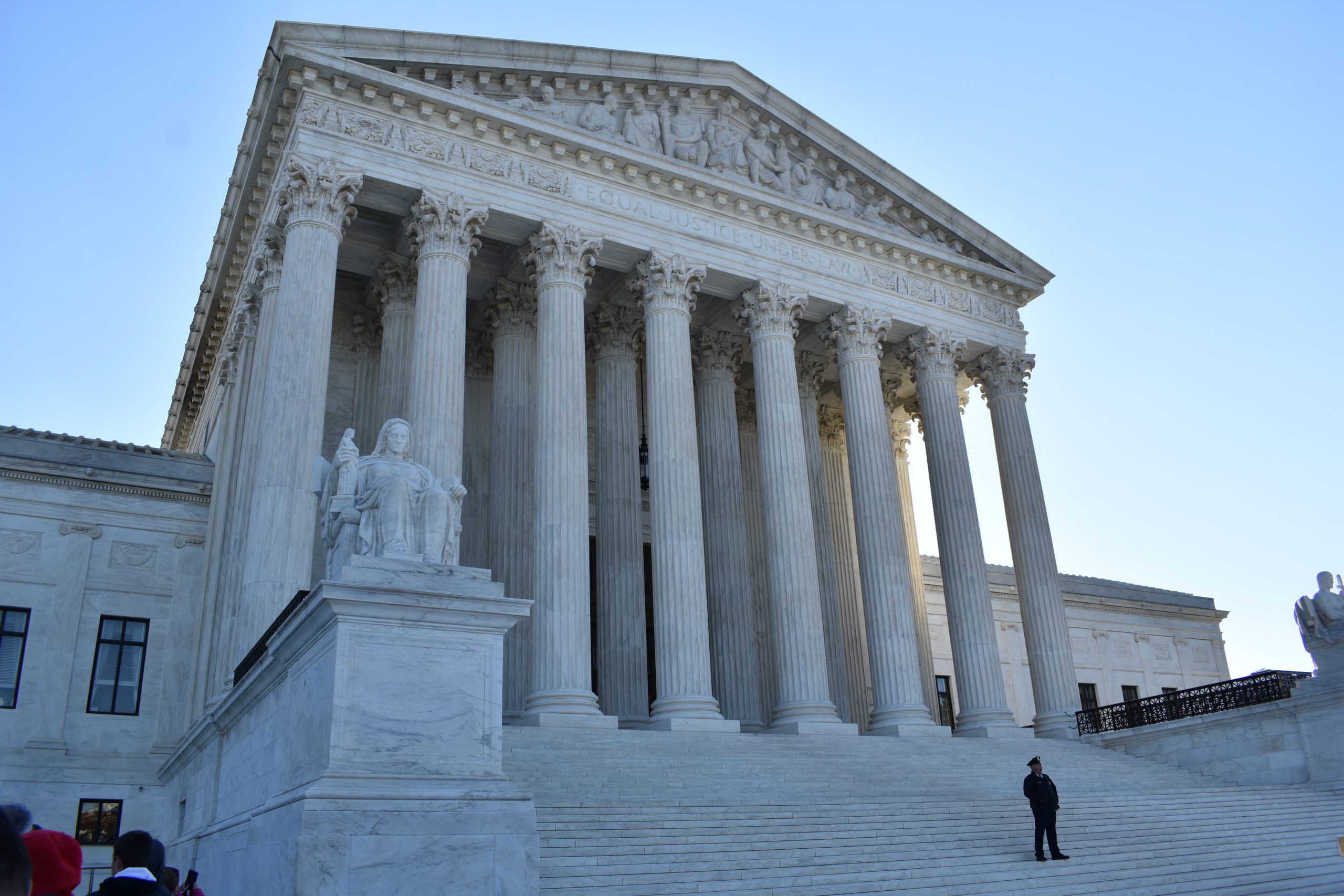
Last week, the Supreme Court did something refreshingly unglamorous and deeply important. In a unanimous decision, it said the Second Amendment does not evaporate just because the government disapproves of marijuana.
Join the Discussion
The law
The federal statute at the center of the case makes it a felony for an “unlawful user” of “any controlled substance” to possess a firearm. The maximum punishment is up to 15 years in prison.
Pause on the structure of that rule. It does not ask what you did with a gun. It does not require proof that you threatened anyone, harmed anyone, or even mishandled a firearm. It asks what kind of person you are categorized as, and then it makes mere possession criminal.
That is the logic of a status offense wearing public safety clothing. And it is exactly the sort of thing modern Second Amendment doctrine has been forcing courts to confront.
The case
The defendant, Ali Hemani, is a Texas man who admitted he owned a pistol and used marijuana a few times a week. Under federal law, that admission would ordinarily be enough for a conviction for illegal gun possession, even without any allegation that he was violent, reckless, or impaired while armed.
A federal judge dismissed the charge on Second Amendment grounds. The U.S. Court of Appeals for the 5th Circuit affirmed. And then the Supreme Court took the case.
The politics
The legal question was straightforward. The political lineup was not.
The Trump administration, despite its stated commitment to “protecting Second Amendment rights,” asked the Supreme Court to reject the 5th Circuit’s reasoning and reinstate the charge against Hemani.
More counterintuitive still, the attorneys general of 18 blue states that have legalized recreational marijuana joined the Trump administration in urging the Court to allow Hemani’s prosecution. Whatever their mix of motives, the practical message was clear: treat cannabis not like alcohol, but like a permanent constitutional disqualifier.
On the other side, the case produced a coalition you almost never see. The National Rifle Association, other leading Second Amendment groups, and several libertarian organizations lined up with the Drug Policy Alliance, the National Organization for the Reform of Marijuana Laws, and the National Association of Criminal Defense Lawyers. Even the American Civil Liberties Union, long skeptical that the Second Amendment guarantees an individual right to arms, joined Hemani’s Supreme Court brief, which explicitly defended that right.
If you ever wanted a clean illustration of how the war on drugs and gun control can scramble usual ideological loyalties, this was it.
Why unanimity matters
In today’s Supreme Court, unanimity is not common, especially in gun cases. The justices disagree about what the Second Amendment protects, how history should be used, and what level of risk justifies disarmament.
But here, the Court found the government’s position too historically thin to survive. Under the Court’s current framework, firearm restrictions must be consistent with “this Nation’s historical tradition of firearm regulation.” That test has been controversial, but it has one clarifying effect: it makes lawmakers show their work.
If you want to disarm a class of people, you have to point to something more than modern anxiety. You have to show an actual historical analogue that matches the burden you are imposing, not just a vague sense that “the founders would have agreed.”
The drunkard analogy
The government leaned heavily on an analogy to historical laws dealing with “habitual drunkards.” The idea was simple: if earlier generations tolerated confining or restricting certain heavy drinkers, then modern government should be able to disarm marijuana users.
The Court was not persuaded. Justice Neil Gorsuch, writing for the Court, said: “The habitual drunkard laws on which the government relies here differ dramatically” from the statute used against Hemani “on every single metric the government invites us to consider.” He continued: “They targeted different kinds of people, did so for different purposes, and operated in different ways.”
That is not just a factual distinction. It is a constitutional one. The Second Amendment test the Court uses is not satisfied by a loose family resemblance. It requires a meaningful match in the kind of burden, the justification, and the mechanism.
No drug carve-out
The most important thing the Court did was also the simplest: it refused to create a drug carve-out.
American law has flirted with the idea that certain constitutional protections become flexible when narcotics are involved. Critics have long argued that the war on drugs produced a practical “exception” to ordinary civil-liberties rules.
This decision pushes back, at least in the Second Amendment context. The government cannot strip someone of the right to keep and bear arms, and cannot prosecute someone for mere firearm possession, simply because the person uses marijuana.
What the Court did not say
This was not a ruling that every person who uses drugs must be armed under all circumstances. The Court left open the possibility that gun-owning drug users could be prosecuted when there is additional evidence that they pose a threat to public safety.
In other words: evidence of dangerousness, threats, or circumstances that genuinely implicate public safety could change the analysis. The Constitution does not forbid government from responding to actual risk. What it forbids is turning a broad moral judgment into a blanket disability on a core right.
Why it matters
The case is not rare because the law is rarely violated. It is rare because the law is rarely enforced evenly.
Survey data has suggested something like 20 million American cannabis consumers own guns. Federal prosecutors bring only a tiny fraction of the potential cases each year, which means the law functions less like a clear rule and more like a trapdoor. Many people live over it. A few fall through it, often based on circumstances unrelated to violence.
That unevenness is not a side issue. It is part of the constitutional problem. When a statute criminalizes commonplace conduct and is enforced sporadically, it stops looking like a neutral public-safety measure and starts looking like a discretionary weapon.
The deeper question
This case sits at the intersection of two American obsessions: policing vice and regulating weapons. Both are politically radioactive. Both are often justified with the language of emergency. And both have a long history of expanding the state’s power in ways that outlast the original panic.
The Constitution is designed for exactly this kind of moment. Not because the Framers were anticipating cannabis policy, but because they understood a broader pattern: when government acts from fear or moral fervor, it will always be tempted to downgrade rights into permissions.
A unanimous Supreme Court just reminded us that the Bill of Rights does not come with an asterisk that says: valid except when we disapprove of your lifestyle.
What next
Expect two immediate consequences.
- Prosecutions based solely on marijuana use and firearm possession will be far harder to sustain under the Second Amendment, particularly in jurisdictions that had treated the federal statute as an automatic disqualifier.
- Legislatures will face pressure to rewrite restrictions around conduct and demonstrable risk, rather than broad status categories.
And the larger civic lesson is this: constitutional rights are not a reward for cultural conformity. They are a restraint on government, especially when the government feels most justified.