
For decades, the American Civil Liberties Union was the organization many people associated with unpopular speech, controversial protests, and the principle that constitutional rights do not depend on whether the public approves of the speaker.
So it has surprised some observers to see the ACLU step into a very different kind of fight: a Supreme Court case centered on the Second Amendment.
That turn is not just an internal policy story. It is a window into how civil liberties coalitions actually work in real life. They are not tidy. They are not permanent. And they often form around something more basic than ideology: fear of unchecked government power.
Join the Discussion
The case that pulled the ACLU into a gun rights brief
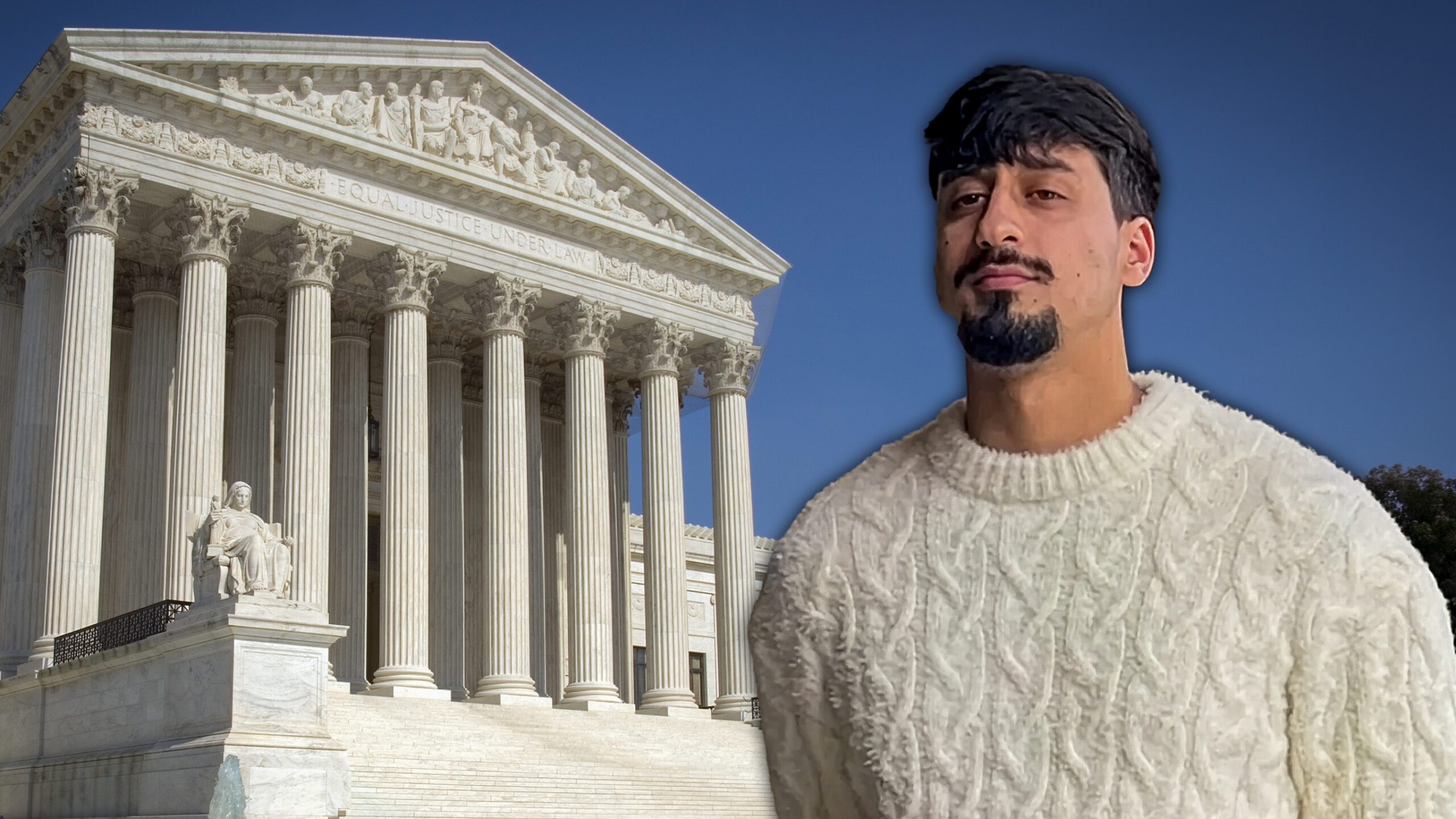
The immediate catalyst is a Supreme Court case called United States v. Hemani. Ali Hemani is a Texas man who admitted he owned a pistol and used marijuana a few times a week. Under federal law, that combination can trigger serious criminal consequences.
The statute at issue is 18 U.S.C. § 922(g)(3), which makes it a felony for an “unlawful user” of a controlled substance to possess a firearm. A conviction can carry up to 15 years in prison.
The case against Hemani began with the FBI’s suspicions that he was involved in providing financial support to Iran’s Islamic Revolutionary Guard Corps, a designated foreign terrorist organization. Although the FBI never found enough evidence to support a terrorism-related charge, its 2022 search of Hemani’s home in Lewisville, Texas, discovered a Glock 19, about two ounces of marijuana, and less than a gram of cocaine. Hemani acknowledged the gun and marijuana were his, and prosecutors brought the firearms charge under § 922(g)(3).
But the gun charge did not go to trial. A federal judge dismissed it in February 2024. The U.S. Court of Appeals for the Fifth Circuit affirmed in January 2025, relying on its own Second Amendment precedent.
When the Supreme Court agreed to hear the dispute, the ACLU joined Hemani’s Supreme Court brief urging the Court to reject the government’s attempt to revive the prosecution.
Why this is a real shift for the ACLU
The reason this feels like a headline moment is simple: historically, the ACLU did not treat the Second Amendment as protecting an individual right to own firearms.
In a June 1979 statement, the ACLU’s national board took the position that the Second Amendment was tied to state militias, not personal gun ownership. The statement went further, asserting that “there is no constitutional impediment to the regulation of firearms.”
Even after the Supreme Court recognized an individual right in District of Columbia v. Heller (2008), the ACLU continued to say it disagreed with the Court’s understanding of the Amendment’s meaning, emphasizing the Amendment’s militia language.
That backdrop matters because it shows how unusual it is for the organization to file on behalf of a person asserting a Second Amendment claim. As Brandon Buskey, director of the ACLU’s Criminal Law Reform Project, put it: “This is the first time that we have entered a case affirmatively on behalf of an individual making a Second Amendment claim.” He also explained the organization’s reasoning in today’s legal landscape: “Now that the Supreme Court has recognized this as a fundamental right, we see this as an important civil liberties issue.”
What changed: the Court’s test changed
It is hard to understand the ACLU’s move without appreciating how much Second Amendment law has shifted in the last few years.
In New York State Rifle & Pistol Association v. Bruen (2022), the Supreme Court adopted a history-focused test: modern gun restrictions must be “consistent with this Nation’s historical tradition of firearm regulation.” That framework has made some longstanding gun laws more vulnerable in the lower courts, including laws tied to categories of people rather than specific behavior.
The Fifth Circuit’s approach to § 922(g)(3) is a good example. In United States v. Connelly (August 2024), that court concluded the Second Amendment bars prosecutions when the government’s evidence shows only what the statute requires: that a person is an unlawful drug user and has a gun.
The Fifth Circuit rejected the government’s attempt to analogize the statute to historical laws involving intoxication. In the court’s view, older rules tended to target the immediate danger of handling firearms while actually under the influence in public. Section 922(g)(3), by contrast, disarms drug users categorically, including inside their homes and even when they are sober.
Hemani benefited from that reasoning. The Fifth Circuit noted that the government conceded its proof was insufficient under Connelly and that the deficiency was decisive.
Coalitions form around power, not labels
“Gun rights” often gets treated as a single political identity. But a Supreme Court case is rarely only about identity. It is also about:
- How broad criminal statutes should be
- How much discretion prosecutors should have
- Whether a person can lose a constitutional right without individualized proof of dangerousness
- How the war on drugs continues to shape punishment
Those themes overlap with traditional ACLU concerns, even for people who strongly favor gun control as a policy matter.
In other words: the coalition logic is not “the ACLU became pro-gun.” The logic is closer to “the ACLU recognized a familiar pattern of expansive criminal enforcement and stepped in where constitutional doctrine now provides a foothold.”
The NRA, the ACLU, and an awkward alignment
The Hemani case also produced an alignment that would have sounded implausible not long ago: the ACLU and the National Rifle Association on the same side in a Second Amendment dispute at the Supreme Court.
It is not the first time the two organizations have been aligned in the Supreme Court. In 2024, the ACLU supported the NRA’s First Amendment position in National Rifle Association v. Vullo, which involved questions about government pressure and advocacy rights.
Still, the Hemani brief represents a different kind of overlap. It is about the substantive right to keep and bear arms.
Hemani’s attorney Zachary Newland explained why the ACLU’s presence mattered: “They bring a certain gravitas as one of the preeminent civil liberties organizations in the country.” He described the case as one involving “governmental overreach” and “abuse of prosecutorial discretion,” a framing that sits squarely within classic civil-liberties vocabulary.

This is not the first ACLU fight over guns
One helpful way to read this moment is as a return to an older internal tension: even when the ACLU rejected a personal Second Amendment right, it acknowledged that gun control regimes can create civil liberties problems in practice.
The 1979 board statement itself warned that licensing, registration, and prohibition systems can raise concerns about privacy, entrapment, and illegal searches. Those are not small issues. They are the everyday mechanics of enforcement that determine whether constitutional promises feel real.
Former ACLU executive director Ira Glasser later criticized the organization’s earlier posture as too reflexive, describing it as “really social policy” rather than core civil liberties work. “It was really not the ACLU’s business,” he said, explaining that the internal consensus became that the organization should not be in the business of endorsing gun control as policy.
That history helps explain why today’s move can be understood less as a sudden conversion and more as a re-centering: focusing on governmental methods and constitutional constraints rather than on which side “wins” the gun debate.
What Hemani shows about civil liberties coalitions
1) Rights groups often follow the doctrine
When the Supreme Court announces a right is fundamental, organizations that center constitutional limits have to decide what to do with that reality. Ignoring a recognized right can leave vulnerable people without serious representation, especially in criminal cases where the stakes are liberty and imprisonment.
2) Criminal law is where coalitions get strange
Criminal enforcement is one of the few areas where groups with very different political identities regularly converge. A tough-on-crime statute can sweep in unpopular defendants, and a rights group’s job is often to insist on rules that apply even then.
3) The war on drugs is still a coalition engine
Section 922(g)(3) is, in many ways, a war-on-drugs statute that also functions as a gun-control statute. That dual character invites unusual alliances, especially as state marijuana legalization continues to collide with federal criminal definitions.
4) “Civil liberties” is not a left or right category
The deeper lesson is that civil liberties coalitions are often situational. They form around a particular threat and a particular legal tool. Sometimes that tool is censorship. Sometimes it is surveillance. Sometimes it is a broad criminal prohibition that strips rights based on status rather than conduct.
A practical takeaway
If you are trying to make sense of this shift without getting pulled into partisan reflexes, here are two questions that help:
- What power is the government claiming in this case? In Hemani’s, it is the power to categorically disarm people based on drug use, including in private and without proof of intoxication or dangerous conduct at the moment of possession.
- If the government wins, who else could be affected next? Civil liberties groups tend to focus on that second question, because constitutional doctrine rarely stays confined to a single defendant.
The ACLU’s decision to defend a Second Amendment claim does not erase its long support for many gun regulations. But it does highlight something important about constitutional life in America: once a right is recognized, it will be tested at the edges, often in cases involving unpopular facts. And those edge cases are where unexpected coalitions are most likely to appear.