

Minnesota asked a federal court to step in during an extradition standoff with Texas.
In an emergency request, Minnesota asked a federal judge to stop Cameron County, Texas, from releasing ICE agent Christian Castro from jail while Texas decides whether to send him to Minnesota to face felony assault charges tied to a January shooting incident.
On Wednesday, U.S. District Judge Fernando Rodriguez Jr. said no. His ruling clears the path for Castro’s release when his Texas detention period expires, unless Texas issues the paperwork that keeps him in custody for extradition.
Join the Discussion
What the judge decided

Minnesota sought a temporary restraining order, the kind of fast, emergency relief courts grant only when specific legal requirements are met and the situation cannot wait. Judge Rodriguez denied it, writing that Minnesota “fails to satisfy the requirements for the issuance of a temporary restraining order.”
Minnesota also asked the court to force Texas Gov. Greg Abbott to immediately issue a rendition warrant, and to prevent Castro’s release in the meantime.
Just as important as the outcome was the reason. Rodriguez concluded Minnesota’s suit was premature because Texas has not denied the extradition request. “The record reflects only that Governor Abbott has neither agreed nor refused to sign the rendition warrant as to Castro,” he wrote.
In other words, the court was not going to treat delay alone as a constitutional violation on this record and at this stage.
Why Thursday matters

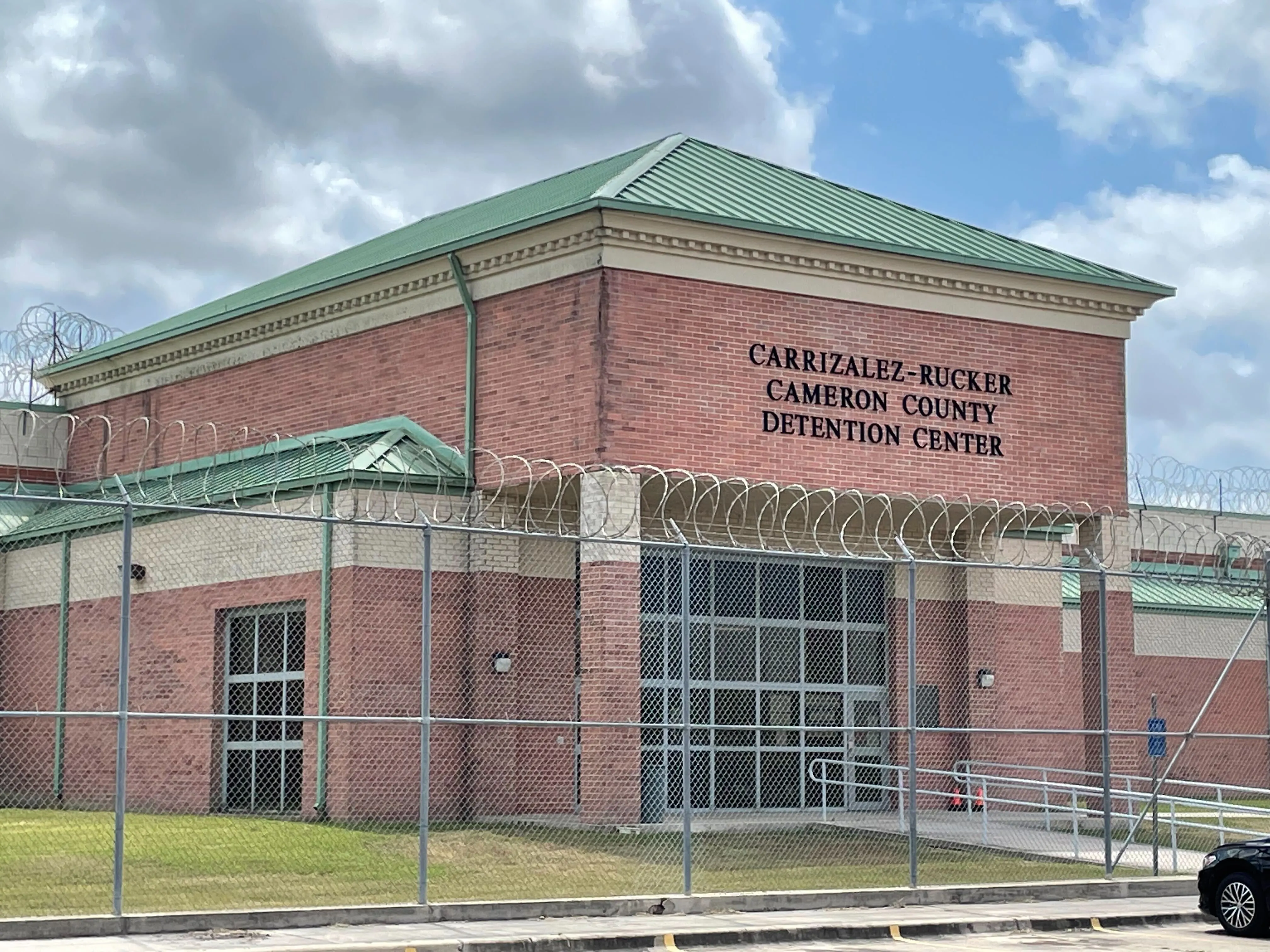
Castro has been held in the Cameron County Jail under a Texas-law detention period tied to the out-of-state warrant. That 90-day period expires Thursday.
Lawyers for Cameron County Sheriff Manuel Treviño told the court that without a court order or a rendition warrant signed by Abbott, Castro must be released once the detention authority runs out.
This is the pressure point Minnesota focused on: if Castro walks out of a Texas jail, Minnesota cannot simply keep him jailed while it waits for extradition to move forward. A person cannot be held indefinitely on the theory that another state would like to prosecute him.
The Minnesota charges
Castro was charged in May with four felony counts of second-degree assault and one misdemeanor count of falsely reporting a crime. The charges stem from a January ICE operation in Minnesota.
According to the court order, Castro fired one shot through the closed front door of a home, and a person was injured in the leg.
The incident sparked protests in north Minneapolis and has widened into a broader political and legal collision: state prosecutors asserting the power to enforce state criminal law, and federal immigration enforcement arguing that state prosecutions can become a way to punish or deter federal operations.
Minnesota’s flight risk argument
Minnesota argued that if Castro is released before extradition is resolved, he could flee to Mexico. In court filings, the state pointed to jail calls with a woman described as his romantic partner who lives in Progreso, Mexico.
According to the order, Castro discussed buying property and moving to Mexico in the future. Minnesota warned that if he left the country, securing his return could take months or years.
That concern may feel straightforward, but temporary restraining orders turn on specific legal standards. Rodriguez’s order reflects a familiar judicial instinct: if the underlying dispute is not ripe, the court will not jump ahead because the facts are tense.
Extradition and the holdup
The Constitution includes a simple command in Article IV: states must deliver up people charged with crimes in another state when properly demanded. Congress later built statutory procedures around that promise. Many states, including Texas, implement those procedures through versions of the Uniform Criminal Extradition Act.
Rodriguez emphasized a narrow point in this case: neither the Constitution nor the state and federal extradition laws at issue imposed a set deadline for Abbott to complete his review. Abbott directed the Texas secretary of state to investigate whether Castro should be surrendered, a step permitted under Texas law.
Rodriguez acknowledged Texas has considered Minnesota’s request for an “atypically-long duration,” but he still found Minnesota could not point to a legal requirement forcing a decision by a particular date.
The “fugitive” question
One argument raised in Texas has been whether Castro counts as a “fugitive” for extradition purposes, since he returned to Texas after the January incident on orders from federal immigration officials.
Rodriguez signaled skepticism in a footnote: “The Court has doubts that caselaw supports the construction of ‘fugitive’ that Texas is considering,” noting that precedent tends to focus on whether the accused left the state, not why.
Still, that doubt did not change the immediate result. The judge treated it as a question for another day, not a reason to issue emergency relief.
What happens next
After Wednesday’s ruling, Castro’s immediate status hinges on executive action in Texas and the mechanics of custody.
- If Abbott signs a rendition warrant, Texas can hold Castro for transfer to Minnesota.
- If no warrant is issued and no other court order intervenes, Castro is expected to be released when the 90-day detention period expires Thursday.
None of this resolves the underlying Minnesota case. It only answers a narrower question: whether a federal judge will force Texas to keep him jailed while Texas decides what to do.
The takeaway
Extradition can sound like administrative housekeeping. It is not. It is one of the Constitution’s tools for keeping states accountable to each other’s criminal processes without turning the country into a patchwork of separate systems.
This dispute also highlights a practical reality: even when a duty is clear in principle, timelines and enforcement often run through elected officials and procedural steps. That is where legal obligation and political friction meet.