
You can feel the temptation in almost every high-profile legal dispute: just ask a judge to settle it now.
Is the policy constitutional? Can the agency do that? Would the statute survive a challenge? In ordinary conversation, we treat courts like a national help desk for hard questions.
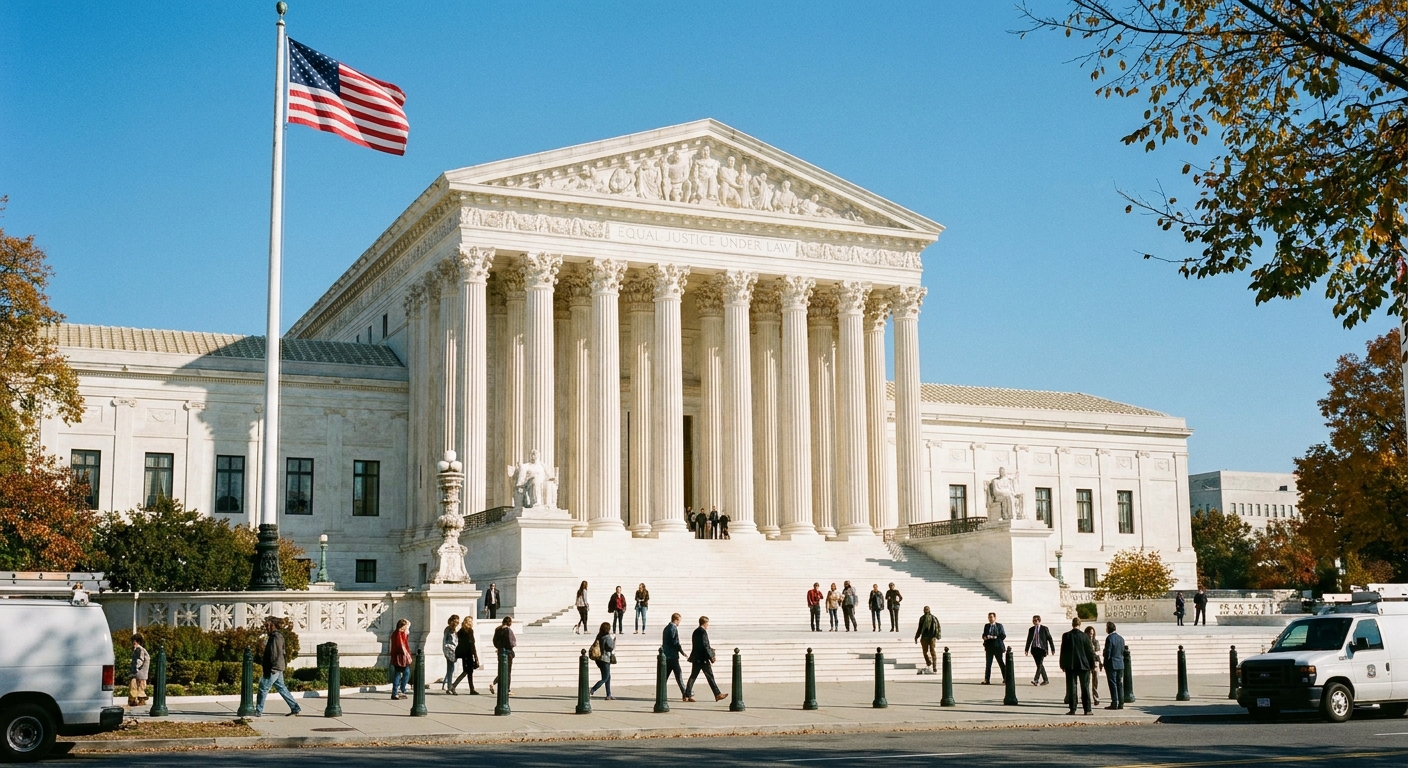
Federal courts are not built that way. Under Article III of the Constitution, they do not issue advisory opinions, meaning they do not give official legal advice in the abstract. They decide actual disputes between real parties, with real stakes, where the court’s decision will actually change someone’s legal position.
Join the Discussion
What an advisory opinion is
An advisory opinion is a court’s answer to a legal question when no binding judgment is needed to resolve a live dispute. Think of it as: “If someone sued about this, would the law be constitutional?” or “What does the Constitution mean here, generally?”
Federal judges can say many things outside of cases. They give speeches. They teach. They write law review articles. But when they speak as a court, with the authority of a judgment, Article III demands something more concrete than curiosity.
Why people want them anyway
- Prevention: Governments want to know whether a plan is legal before investing time and money.
- Stability: Businesses and agencies want certainty about rules that affect nationwide conduct.
- Speed: The public wants a quick constitutional answer before an election, emergency, or major rollout.
Those are sensible policy reasons. They just are not, by themselves, a ticket into federal court.
Article III and “case or controversy”
Article III limits the federal judicial power to certain categories of matters, and that power has long been understood to extend only to a genuine case or controversy. That phrase is not a throwaway. It is a constitutional boundary line.
At bottom, a federal court needs an actual dispute that is fit for judicial resolution:
- Adverse parties: people or entities with conflicting legal interests.
- Concrete stakes: a concrete injury or a credible, imminent threat of enforcement or other legal harm.
- A remedy the court can grant: a judgment that will change the parties’ legal relationship.
This is also why federal courts have doctrines like standing, ripeness, and mootness. Those doctrines are not separate from Article III. They are some of the tools used to enforce it.
The early refusal: the 1793 letter
The Supreme Court’s refusal to issue advisory opinions goes back to the earliest days of the Republic. In 1793, President George Washington’s administration, through Secretary of State Thomas Jefferson, sent the justices a set of questions about U.S. neutrality obligations amid war between Britain and France. The justices declined in a letter, a piece of correspondence often referenced as the 1793 letter to Washington.
The point was structural as much as practical: giving official answers outside of a case would pull the judiciary into the work of the political branches and compromise its role as an independent adjudicator. Federal judges are not constitutional consultants to the Executive.

Key limits courts enforce
The Supreme Court has reinforced the advisory-opinion ban through several recurring limits. The case names below are not trivia. They are the doctrine’s load-bearing beams.
1) No friendly lawsuits
In Muskrat v. United States (1911), Congress tried to manufacture a pathway for certain plaintiffs to challenge a federal statute by authorizing suit and appropriating funds for fees and expenses. The Court dismissed the case. The deeper problem was not just optics. It was the absence of a truly adverse party with a concrete stake, making the judgment function like an advisory ruling on the statute.
The takeaway is blunt: Congress cannot convert the judiciary into a constitutional review board simply by authorizing a lawsuit.
2) No decisions subject to revision
Hayburn’s Case (1792) is often cited as early evidence of the same constitutional instinct. Early federal judges objected to a scheme that would have required them to make pension determinations subject to revision by the Secretary of War and potentially Congress. There was no single, tidy merits opinion, and Congress later amended the framework. But the episode is frequently used to illustrate a core point: if another branch can revise what a court “decides,” the court is not really exercising judicial power.
3) No political questions in legal clothing
The advisory-opinion idea often overlaps with the political question doctrine, where courts decline to decide issues the Constitution commits to another branch or that lack judicially manageable standards. A classic example is Luther v. Borden (1849), involving which Rhode Island government was legitimate under the Constitution’s Guarantee Clause. The Court treated the matter as one for the political branches, not for judicial resolution.
This is not exactly the same as an advisory opinion, but it frequently plays a similar role: keeping courts from issuing pronouncements that look like legal answers but function as political referee calls.
4) No declaratory judgment without a real dispute
The federal system does allow declaratory judgments, which can sound advisory because they can state what the law is without awarding damages. But they still must involve a real controversy.
In Aetna Life Insurance Co. v. Haworth (1937), and later reiterated in MedImmune, Inc. v. Genentech, Inc. (2007), the Court emphasized that a declaratory judgment action must present a substantial controversy of sufficient immediacy and reality. The Declaratory Judgment Act does not override Article III. It is a procedural vehicle, not a constitutional loophole.
Standing, ripeness, and mootness
Advisory opinions are the big category mistake. Standing, ripeness, and mootness are three of the most common ways courts detect and prevent that mistake in practice.
Standing
Standing asks whether the plaintiff is the right person to bring the claim. At minimum, federal courts require a concrete injury (or a credible threat of one) that is fairly traceable to the defendant and likely to be redressed by the court.
If no one has been injured in a way the court can remedy, the court is being asked for advice, not judgment.
Ripeness
Ripeness asks whether a dispute has matured enough for judicial decision. Courts generally avoid ruling when the facts are still hypothetical, the alleged harm is speculative, or the policy is not actually being applied yet.
When a claim is unripe, a court’s ruling risks becoming a forecast. That starts to resemble an advisory opinion.
Mootness
Mootness asks whether an actual controversy still exists. If events have resolved the dispute and the court cannot grant meaningful relief, the case usually must be dismissed.
If nothing turns on the judgment anymore, the court is being asked to pronounce on the law for its own sake, which is advisory territory.
If you want the short mental map, use this:
- Advisory opinion: the court is being asked to advise, not decide.
- Standing: wrong plaintiff or no concrete injury or credible threat.
- Ripeness: too early, not developed enough.
- Mootness: too late, nothing left to fix.
Certified questions are different
One common point of confusion is certification. Federal courts sometimes certify questions of state law to a state’s highest court. That is not an advisory opinion in the Article III sense because it happens inside a live case with real parties and real stakes. It is a way to get an authoritative answer to a state-law issue the federal court must apply to resolve the dispute.
Some states allow advisory opinions
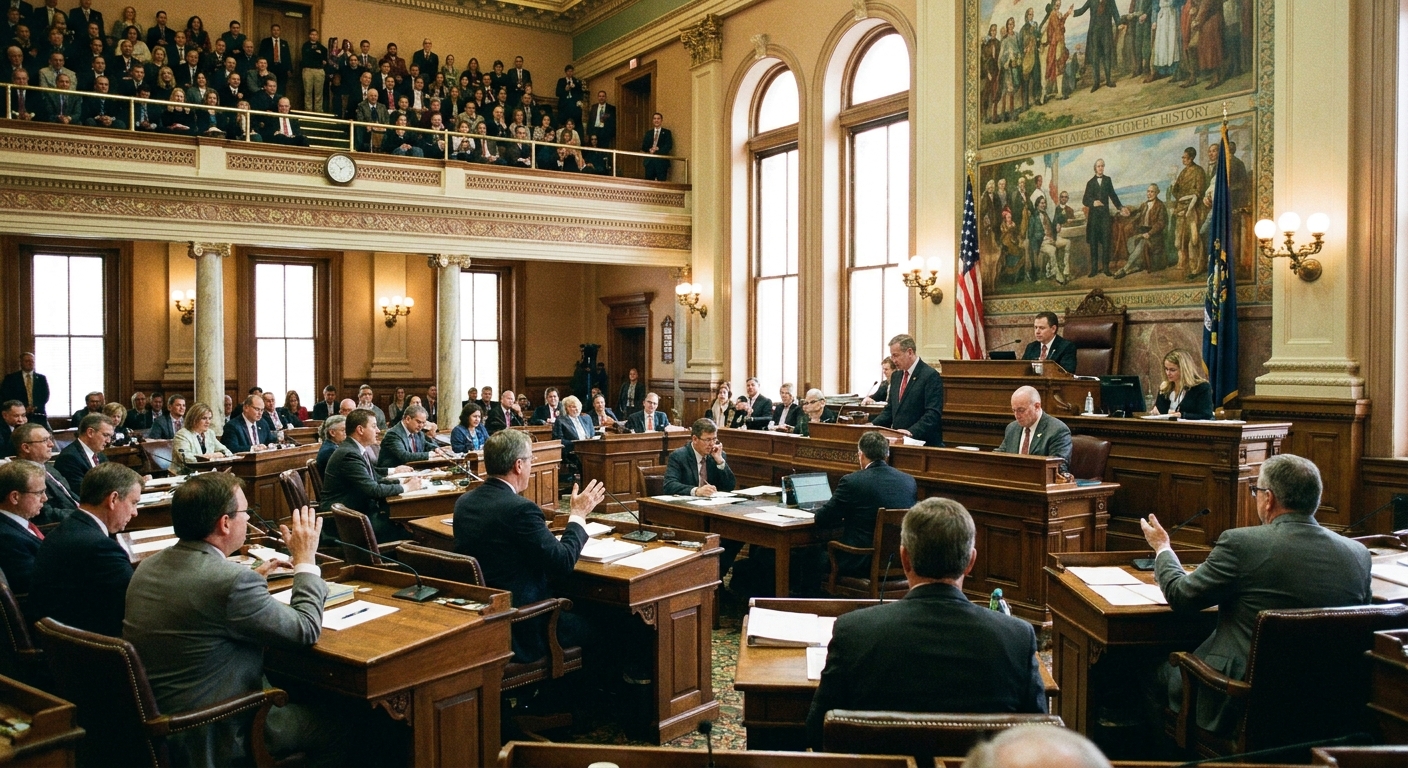
Here is where many readers get understandably confused: some state court systems allow advisory opinions, often by state constitution or statute. Common formats include:
- Governor’s questions: a governor may ask the state’s highest court about a proposed action or bill.
- Legislative requests: a legislature may request a constitutional assessment before passage.
Whether these opinions are formally binding varies by state. In many jurisdictions they are technically nonbinding but treated as highly persuasive in practice. Their legitimacy rests on state law, not Article III.
Federal courts cannot imitate that model without violating the Constitution’s structural limits on judicial power. State courts are not constrained by Article III, and their authority varies widely.
Emergency orders and confusion
Modern procedure makes it easy to think the Supreme Court is issuing quick answers on demand. Emergency orders, stays, and injunctions pending appeal can arrive fast and with limited explanation. That is often what people mean when they talk about the Court’s “shadow docket.”
But even emergency orders must still fit inside Article III. The Court is not deciding abstract questions. It is responding to a filed case with parties, lawyers, and at least some record from the filings and lower-court materials.
Advice vs a real judgment
Because the federal courts can issue declaratory judgments, and because injunction cases often involve future conduct, the line can look fuzzy. The simplest test is practical: Will the court’s decision alter the legal rights or obligations of the parties in a concrete way?
Examples that typically are not advisory in federal court:
- A pre-enforcement challenge where a law is on the books and the plaintiff faces a credible threat of enforcement.
- A declaratory judgment action resolving an actual contractual or regulatory dispute that is actively constraining conduct.
- An injunction suit seeking to stop an imminent government action that will cause concrete harm.
Examples that drift toward advisory territory:
- A request to bless a policy that has not been adopted and may never be adopted.
- A suit with no real adversary, designed only to tee up a legal question.
- A request for an opinion that would not bind anyone or change any party’s legal position.
Two modern-style examples
- Permissible: A group regulated by a newly enacted rule sues before enforcement begins because the agency has announced it will enforce the rule on a set date and noncompliance carries penalties.
- Not permissible: A legislature asks a federal court to rule on whether a bill, not yet enacted and possibly subject to amendment, would be constitutional if passed.
Why the ban matters
The advisory-opinion bar is not a technicality. It is a separation-of-powers choice.
- It keeps courts from becoming political counselors to the elected branches.
- It preserves legitimacy by ensuring courts decide concrete disputes rather than abstract ideological questions.
- It improves decision-making because real cases produce real records, tested arguments, and visible consequences.
There is a tradeoff, of course. The country often has to live with uncertainty until the right case arrives, brought by the right party, at the right time. That is frustrating. It is also the point. Article III forces the federal judiciary to be a court, not a council.
One last way to think about it
If you want to spot an advisory opinion request in the wild, listen for phrasing that sounds like a professor’s exam question: “Would this be constitutional if…?”
Federal courts answer a different question: “Given what happened to these parties, and what the law requires, what judgment must we enter?”
That shift from hypothetical to lived dispute is the constitutional boundary that Article III enforces. And it is why, even in an age of emergency orders and instant legal commentary, federal judges still cannot simply tell the nation what the Constitution means on demand.