When politicians bring the Bible into abortion politics, it can land as a one-size-fits-all argument. Texas Democratic Senate nominee James Talarico is taking a different tack. He is using faith language to argue that the state should not be the one making the decision.
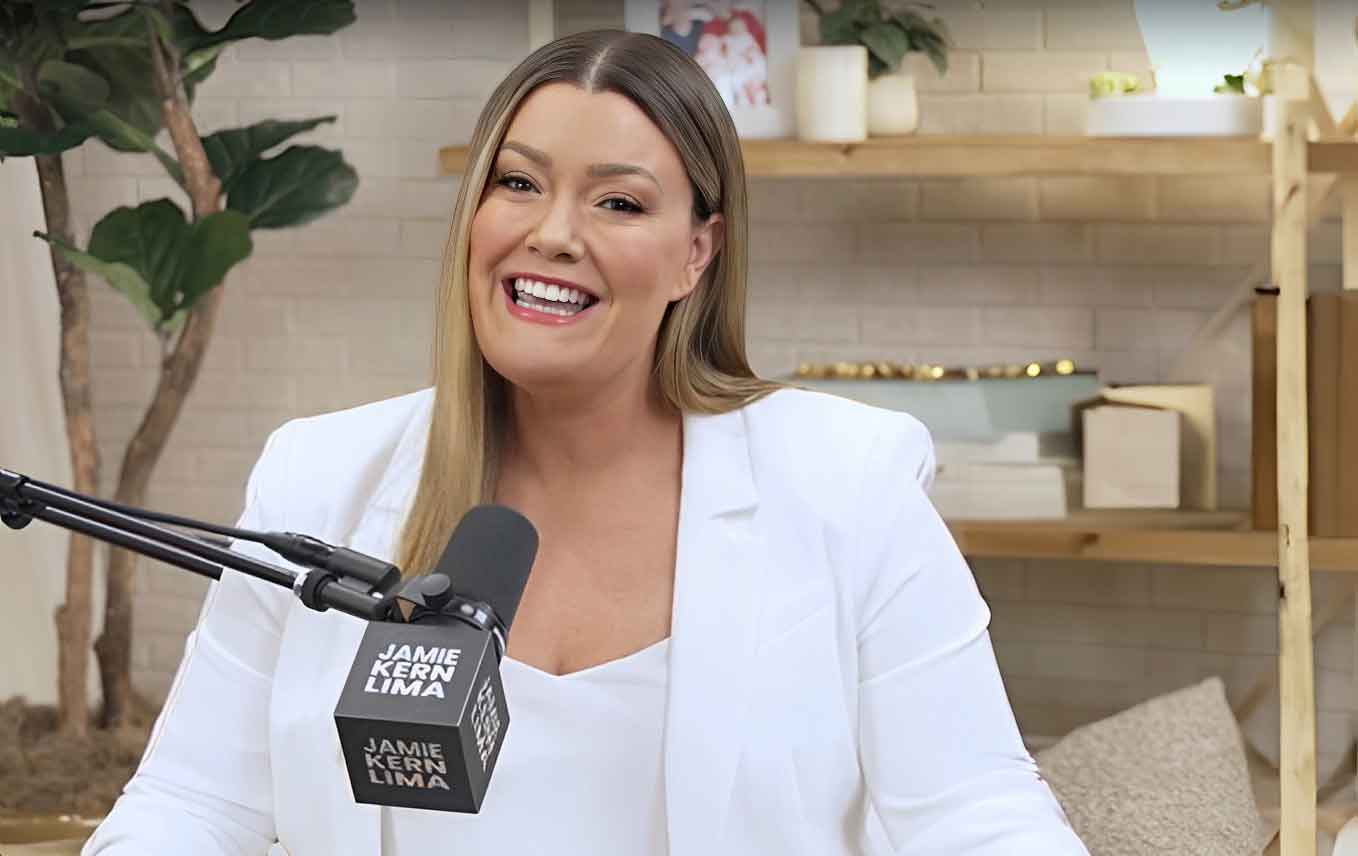
In an interview on The Jamie Kern Lima Show, Talarico made his position plain: I don't believe it's a place for politicians
to decide abortion. I don't believe it's a place for the state
, either. He tied that view directly to his Christianity: Jesus never talks about abortion. The Bible is silent on abortion.
Join the Discussion
A faith argument
In a state where abortion politics and religious identity are often treated as inseparable, Talarico is presenting a narrower claim. He is not arguing that Christianity requires one position on abortion. Instead, he is arguing from within his faith that elected officials should be careful about turning contested religious interpretation into state power.
On the show, he described what he believes Christians should do when Scripture does not directly address a modern issue. And when that happens with a social issue as important as abortion, we Christians have to take scripture as a whole,
he said, before adding, And we've got to try to make some kind of ethical determination.
It is a way of talking about abortion that emphasizes moral reasoning and limits on government, not just the conclusion.
Texas law at the center
Talarico pointed to Texas abortion law as the real world test of his argument about state authority. In the interview, he said Texas has the most extreme abortion ban in the country
and stressed, No exception for rape. No exception for incest.
He also described a scenario he says the law forces Texans to confront: We have girls as young as 10 years old who are assaulted, who are raped, who are victims of incest, and who can't access basic reproductive care
and who aren't able to make the decision
about whether to carry a pregnancy.
In his framing, those examples are meant to keep the debate on a practical question: in the hardest cases, who should decide, the patient, the doctor, the family, or the state.
Religion and state power
Talarico’s argument sits on a familiar American fault line. Many voters bring religious convictions into public life, while government is expected to avoid treating any single theology as official policy.
In his telling, the claim The Bible is silent on abortion
is part of a broader case for keeping the state from enforcing one religiously grounded moral certainty as criminal law. Opponents often respond that abortion restrictions can be defended without relying on theology, or that Scripture and tradition provide enough guidance to justify firm legal limits.
Past comments on gender
Talarico is not new to mixing theology with politically heated topics. In a 2021 video taken on the Texas House floor in Austin, he said, God is non-binary
, adding, Trans children are God’s children, made in God’s own image.
He has also argued that sex is a spectrum
, saying, The point is that biologically speaking, scientifically speaking, sex is a spectrum, and oftentimes can be very ambiguous.
Those remarks are likely to remain part of how voters evaluate his broader message about faith, identity, and what government should enforce.
The 2026 Senate map
Talarico, first elected to the Texas House in 2018 at age 29, is running as the Democratic nominee for U.S. Senate in Texas, where Democrats have not won a U.S. Senate race since 1988.
On the Republican side, Sen. John Cornyn and Texas Attorney General Ken Paxton are in a runoff for their party’s nomination. Polling has shown hypothetical tight races between Talarico and both Cornyn and Paxton, adding to the stakes for Senate control in the 2026 midterms.
The question for voters
Talarico is asking religious Texans to consider a counterintuitive idea: that faith can point toward restraint in lawmaking, not only toward restriction. His opponents will argue the opposite, that moral clarity requires the state to act.
The collision is not only about one policy. It is also about where Texans want to draw the line between personal conviction and public power, especially when candidates speak in explicitly religious terms while asking the state to either step back or step in.