
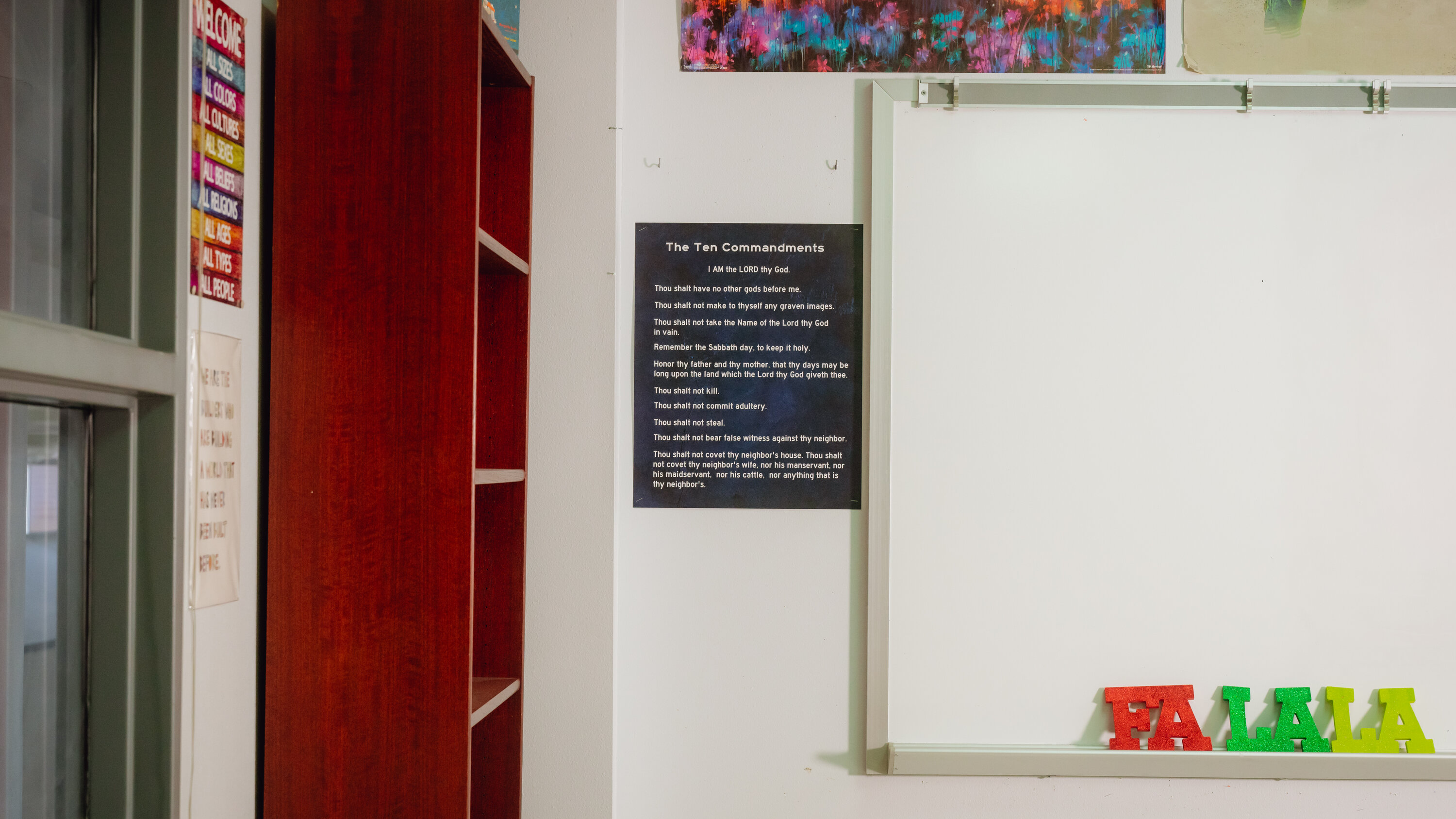
Texas wants the Ten Commandments on the wall of every public school classroom. Not in a textbook. Not as part of a unit on ancient law codes. On the wall, full time, in the King James wording, as a state-mandated presence in the daily life of a student.
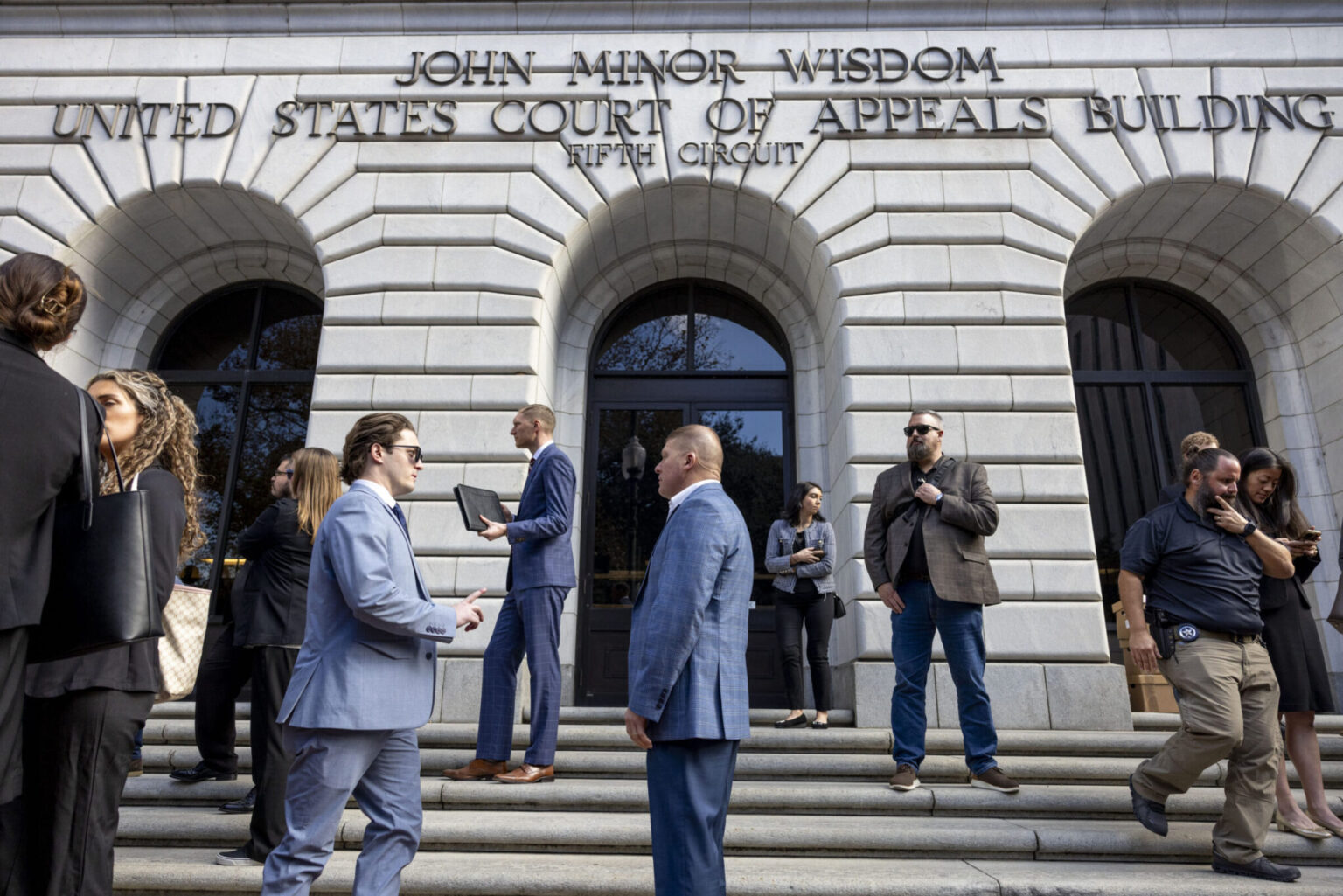
A closely divided federal appeals court has now said Texas can do it. By a 9–8 vote, the 5th U.S. Circuit Court of Appeals upheld the state’s requirement. And that forces a question that sounds simple until you try to answer it honestly: Can a government-run school display a sacred text all day, every day, without the government taking sides in religion?
Join the Discussion
What Texas required
The case, Nathan v. Alamo Heights, turned on a Texas law requiring the Ten Commandments to be posted in public school classrooms. The state chose the King James version. The point was not subtle. Texas Attorney General Ken Paxton said it out loud: “The Ten Commandments have had a profound impact on our nation, and it’s important that students learn from them every single day.”
That is not the language of neutral history. That is the language of moral formation. In a public school setting, where the state controls the room, the schedule, and the authority figures, moral formation by the state is exactly what the Establishment Clause was designed to restrain.
Other states are trying too
Texas is not alone. Louisiana and Arkansas have enacted laws requiring prominent display of the Ten Commandments in every classroom, and several more states are poised to follow. These statutes are not accidental or merely symbolic. They are designed to test whether today’s Supreme Court will keep enforcing the old rule that public schools cannot be used for sectarian indoctrination.
Supreme Court precedent is direct
In 1980, the Supreme Court struck down a nearly identical law in Stone v. Graham. The Court did not treat it as a close call. It said Kentucky’s goal “is plainly religious in nature,” and that the likely effect would be “to induce the schoolchildren to read, meditate upon, perhaps to venerate and obey, the Commandments.”
That is the key idea courts used to take seriously in school cases: kids are not just “viewers.” They are a captive audience. The state compels attendance. The teacher is an authority figure. Classroom walls are not like billboards on a highway you can ignore by taking another exit.
So if Stone is still law, Texas loses. The real story is that the appeals court acted as if it is not bound by that decision anymore.
How the 5th Circuit dodged Stone
The appeals court’s move was legal jujitsu. It argued that Stone relied on the old Lemon framework for Establishment Clause cases, and that the Supreme Court has since walked away from Lemon, especially after Kennedy v. Bremerton (2022). The court’s bottom line was blunt: “With Lemon extracted, there is nothing left of Stone.”
But here is the civics-class problem. Lower courts are not supposed to “extract” Supreme Court precedent like a bad tooth. The Supreme Court has repeatedly instructed lower courts to follow directly applicable Supreme Court holdings unless and until the Supreme Court itself overrules them, even when later decisions create tension.
This is not a technicality. It is the chain of command that keeps federal law from becoming a patchwork where each circuit builds its own Constitution.
“Just a poster” is not serious
Defenders of these displays lean on a comforting idea: a wall posting is passive, and passive means non-coercive. But classrooms are not museums. Schools put things on walls to teach. The whole point of a posted text is that it is meant to be noticed.
Ask the basic classroom question: What happens the first time a student raises their hand and asks what the Commandments mean? If the teacher explains with approval, the state has functionally endorsed a religious message. If the teacher refuses or discourages discussion, the teacher has to navigate a state-mandated religious object while pretending it is educationally irrelevant. Either way, the state has inserted religion into the ordinary mechanics of instruction.
And if the state can require that kind of religious presence in the room, it does not take much imagination to see where enforcement pressure could go next: complaints about a teacher who “disrespects” the display, or a teacher who treats it as a historical artifact rather than sacred instruction. It also raises a more pointed question: if a teacher is told to have students ignore it, could the state later punish that teacher for showing “anti-Christian” bias?
Schools are a danger zone
The Supreme Court has long treated public schools as a special danger zone for establishment problems. The reason is not hostility to religion. The reason is power. When the government runs the school, the government has leverage over children, and it has leverage over parents who cannot realistically shop for a different public system.
That is why earlier Court decisions were especially skeptical of religious exercises and religious messaging in schools. Even when a practice looked “voluntary” on paper, the Court understood that children experience authority differently. Peer pressure is real. Teacher influence is real. The desire to fit in is real.
So the Establishment Clause question is not “Are students forced to recite the Commandments?” The question is whether the government has placed its thumb on the scale of belief by using the classroom as a platform for a particular religious tradition.
Parental rights, applied unevenly
One of the strangest features of today’s First Amendment landscape is how loudly courts have embraced parental rights claims in some school disputes and how quickly those same institutions can minimize parents’ objections in others.
In Mahmoud v. Taylor, the Supreme Court struck down a Maryland public school lesson plan under the Free Exercise Clause. The curriculum used storybooks featuring queer and gender-nonconforming characters, and the Court said parents with moral objections had a First Amendment right to opt their children out. In other words, the mere presence of LGBTQ+ people in classroom materials was treated as constitutionally weighty enough to require an escape hatch.
A few months later, the Court went further in Mirabelli v. Bonta, a case about gender transition and pronouns in California schools. The state allowed students to use their preferred pronouns and prevented educators from outing transgender students to their parents. The Supreme Court found that anti-outing policy unconstitutional, 6–3, granting parents a religious exemption that forced schools to disclose a child’s gender identity even without the child’s permission.
If parental rights are that important, then the 5th Circuit’s answer here should feel impossible to square. Texas is one of the most diverse states in the country. Yet under this law, every public school in a multicultural society must prominently display the tenets of one religion. A Buddhist, Jewish, or Muslim parent who objects is left with two options: move their child to private school, if they can afford it, or teach their child to ignore a state-mandated sacred text that greets them all day, every day.
When displays can be allowed
Sometimes, yes. Context matters. A comparative religion unit, a literature lesson quoting scripture, a history course examining legal traditions, or a temporary student-created display can all be consistent with the First Amendment when handled with genuine neutrality and educational purpose.
But Texas is not offering a unit. It is mandating a devotional text as permanent classroom decor. That is closer to endorsement than education, especially when state leaders explicitly frame the goal as students learning from it “every single day.”
The hardest truth is this: the Establishment Clause does not enforce itself. It is only as strong as the institutions willing to apply it evenly, even when the majority’s faith is the one being promoted.
Who controls constitutional meaning
This dispute is not only about religion. It is about judicial authority and the rule of law.
If lower courts can declare Supreme Court precedents effectively dead based on implication alone, then constitutional rights become regional. In one part of the country, a settled rule holds. In another, it evaporates. That is not “federalism.” That is fragmentation.
The Supreme Court now faces an uncomfortable choice. It can reaffirm that its school Establishment Clause precedents still bind, including Stone v. Graham. Or it can bless the idea that states may install sectarian texts in every classroom by treating a major religious text as “just a poster” and pretending its impact is negligible.
The first choice protects minority faiths and nonbelievers, and it protects the Court’s own role as the final expositor of federal law. The second choice may please a political moment, but it would teach a lesson more enduring than any poster: that constitutional boundaries are optional when enough people want them to be.