
When the Supreme Court turns down a case, most Americans shrug. The Court rejects far more petitions than it accepts, and it has wide latitude to manage much of its docket.
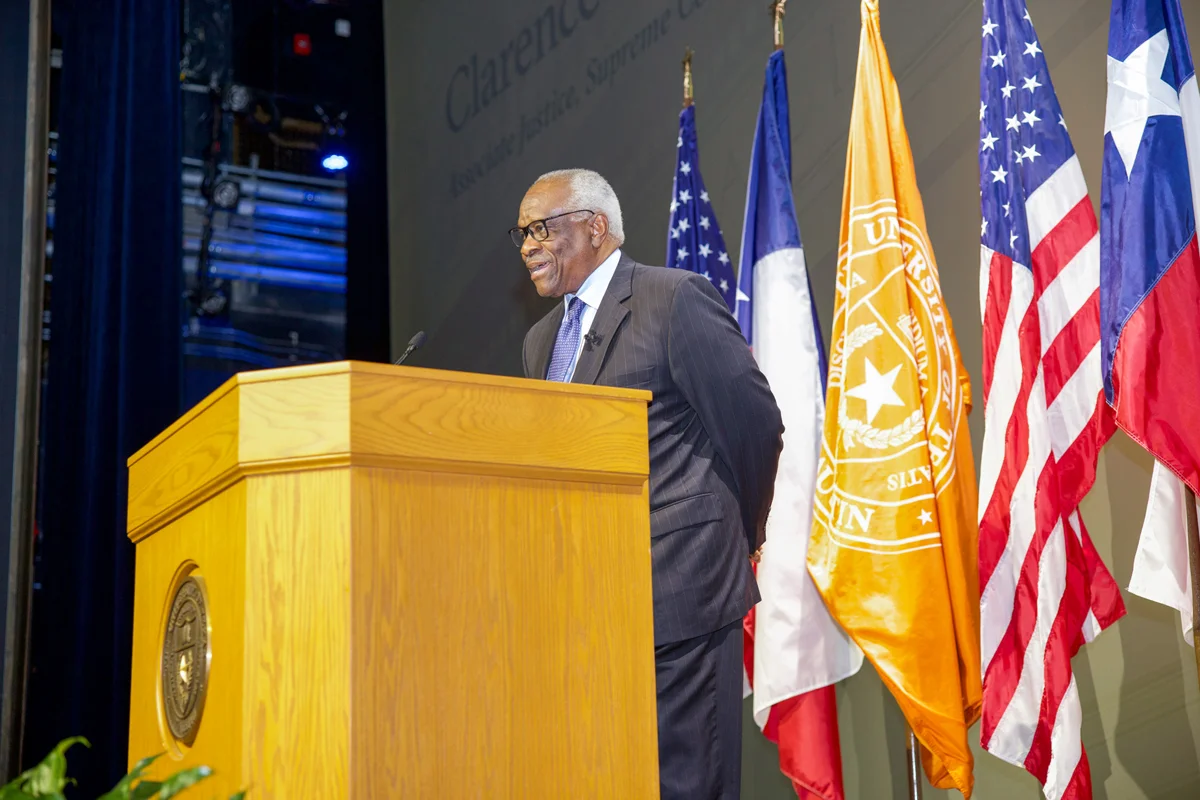
But Justice Clarence Thomas is asking a blunt civics-class question that does not fit neatly into modern Court habits: What happens when the Constitution gives the Supreme Court the only courtroom for a dispute, and the Court still says no?
That is the heart of Thomas’s criticism after the Court declined to hear Florida’s lawsuit accusing California and Washington of issuing commercial driver’s licenses in ways Florida says conflict with federal trucking and immigration-related licensing standards.
Join the Discussion
A case Florida says had one forum
Florida brought the case directly to the Supreme Court under the Court’s original jurisdiction, the Constitution’s built-in procedure for certain disputes between states. In this category of conflict, the Supreme Court is the place states are meant to go.
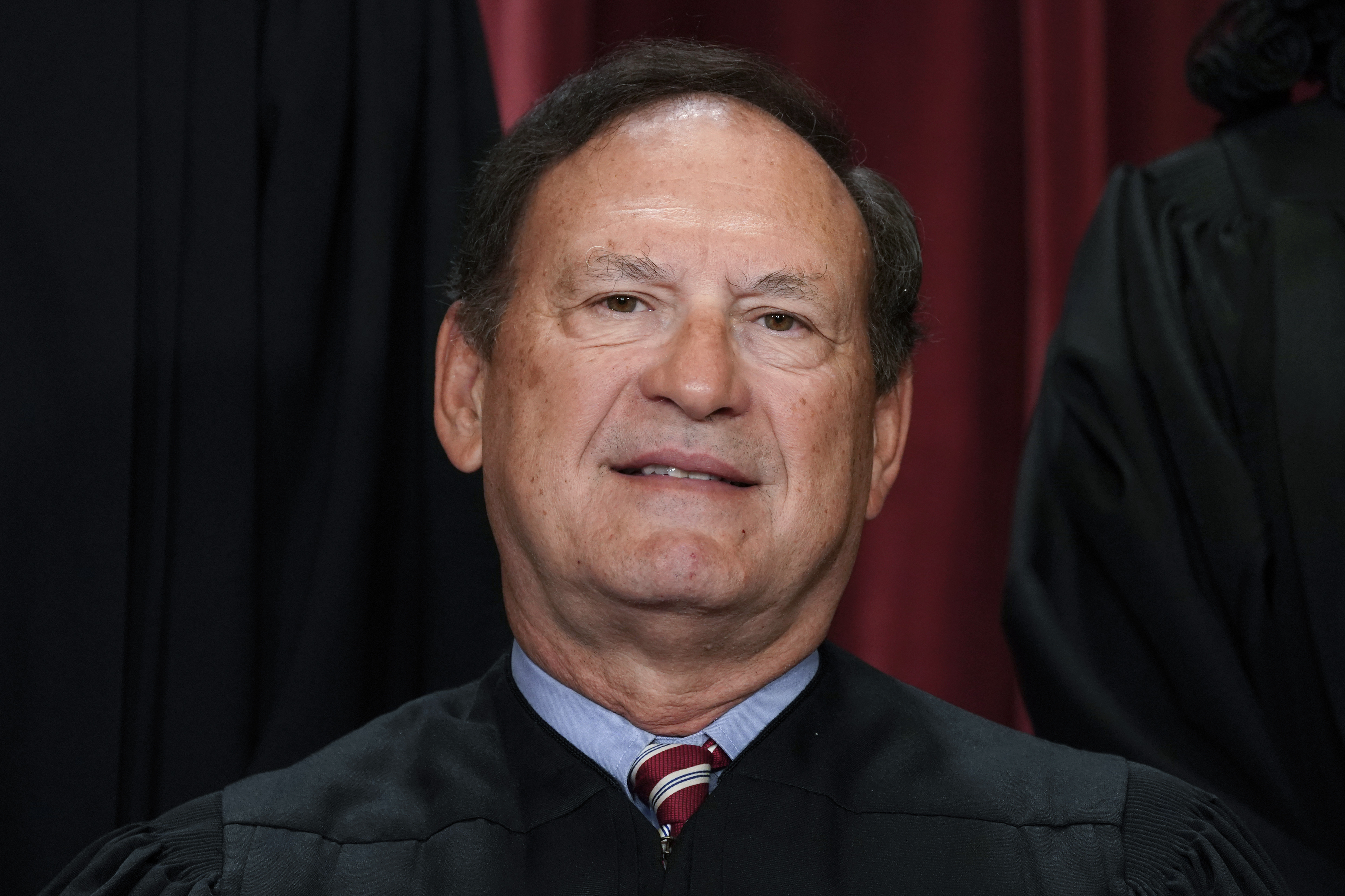
Thomas, joined by Justice Samuel Alito, argued that refusing to take the case leaves Florida stranded. In his words: If this Court does not exercise jurisdiction over a controversy between two States, then the complaining State has no judicial forum in which to seek relief.
Thomas framed the denial as more than a routine docket decision. He accused California and Washington of undermining federal immigration and trucking safety standards, and he said Florida’s allegations were serious enough to warrant a hearing.
The dispute
Florida’s claim, in plain terms, is that two states issued commercial driver’s licenses to people who should not have received them under federal requirements. Florida points to federal standards that tie a CDL to things like passing a driver’s test, English comprehension, and appropriate immigration status for certain commercial drivers.
Thomas framed the stakes as both constitutional and practical. When one state’s licensing decisions effectively put drivers on the interstate system, every other state lives with the consequences. That is not a partisan talking point. It is how a national transportation network works.
Thomas put it starkly: An illegal alien who cannot read English road signs cannot drive an 80,000-pound tractor-trailer.
Discretion vs duty
In most of the Court’s work, discretion is the whole point. The Supreme Court chooses which appeals to hear. It shapes national law by selecting a small number of cases that present big questions.
Thomas’s argument is that state-versus-state disputes are different. Here, he said, the Constitution does not merely allow the Court to act. It assigns the Court exclusive jurisdiction over these conflicts.
Thomas leaned on a constitutional principle that sounds almost old-fashioned: a court cannot refuse power that the Constitution assigns it, just as it cannot seize power it was never given. As he wrote: We have no more right to decline the exercise of jurisdiction which is given, than to usurp that which is not given.
He also criticized what he described as the Court’s policy-driven approach to avoiding original-jurisdiction cases, writing: This Court has adopted a discretionary approach to its exclusive original jurisdiction based on policy judgments that are in conflict with the policy choices that Congress made in the statutory text.
The crash Thomas pointed to
This lawsuit did not emerge from an abstract debate about federalism. Thomas referenced a fatal Florida highway crash involving truck driver Harjinder Singh, saying Singh could not read the road signs
. Singh had received CDLs from both California and Washington.
The underlying question is painfully concrete: Who bears responsibility when a licensing decision in one state contributes to danger in another?
Florida’s theory is not complicated. If federal law sets baseline standards for who can be trusted with an 80,000-pound vehicle, then a state should not create workarounds that turn those baselines into suggestions.
What the Court is for
Thomas’s writing is also an argument about the Court’s job description. The Supreme Court is not just a tribunal for private disputes. It is also a stabilizing institution for the federation itself.
He illustrated the point with an international analogy: if Florida, California, and Washington were separate countries, and one government alleged another was effectively allowing dangerous drivers into its territory, you would expect serious diplomatic tension and some formal method of adjudication. In our system, he said, that role belongs to the Supreme Court because, By entering the Union, States agree to instead have such disputes resolved by this Court.
So the uncomfortable question is this: If the Court will not serve as the forum for interstate conflict, what replaces it? For Thomas, the point is not rhetorical. It is a structural problem when the one court assigned to hear certain disputes declines to do so.
What comes next
The Court’s refusal to hear Florida’s case does not settle the underlying conflict over licensing standards and interstate consequences. It simply leaves it unresolved in court, at least for now.
And Thomas’s critique does not fade just because the docket moved on. He is challenging the modern Court’s instinct to treat every “no” as harmless. In a dispute the Constitution routes to one building and one bench, “no” is not a neutral act. It is a structural choice with winners, losers, and unanswered questions about the Union’s basic operating system.