
Editor’s note: This article is a forward-looking analysis set in the 2026 election cycle. Dates, figures, and quotations are presented within that hypothetical setting.
South Carolina lawmakers came to Columbia with a clear mission: redraw the state’s congressional map in time for the 2026 midterms. They left with something rarer in modern politics, a hard stop.
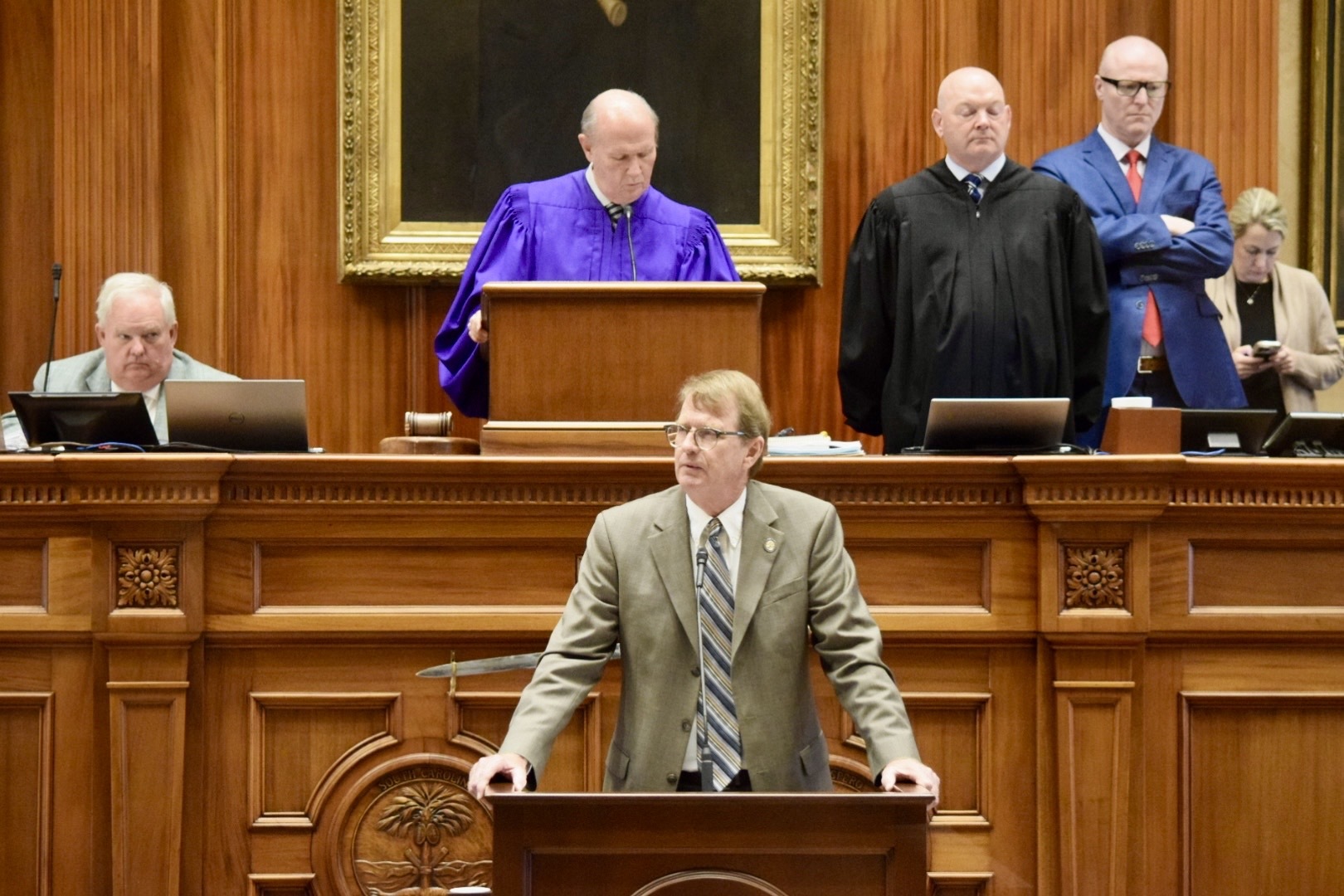
On Tuesday, the South Carolina Senate abruptly adjourned without taking up a new congressional map, even as early voting for the June 9 primary began. The practical effect is straightforward: unless a court intervenes or lawmakers find a way to implement changes without disrupting ballots already in use, the 2026 cycle is likely to proceed under the current district lines.
But constitutionally, the moment is bigger than a scheduling failure. It is a live demonstration of what election law is supposed to protect when politics tries to move the goalposts after the game has started.

Join the Discussion
What happened
The Senate’s debate over the new map effectively collapsed on a procedural reality: there was not enough support among Republicans to force the change through in time for the state’s June 9 primary.
Lawmakers failed to pass a motion to stop debate on the map, and then agreed to adjourn, punting any map vote until after the primary. With early voting already underway, that decision sharply narrowed the remaining window for any legally and administratively clean switch.
The timing did not just complicate the politics. It raised the most basic legitimacy question an election can face: what does it mean to rewrite district lines while voters are already casting ballots?
Pressure and resistance
The proposed map had a clear political theory. Critics said it was designed to unwind South Carolina’s lone majority-Black congressional district, commonly described as the 6th, and tilt the delegation further toward Republicans. Supporters described it as a partisan correction they believed the law now allowed.
National pressure to act intensified after a Supreme Court decision last month that conservatives read as narrowing how the Voting Rights Act can be used in vote dilution challenges. In South Carolina, President Trump and national conservatives urged lawmakers to join a broader redistricting push before November.
But a critical bloc of Senate Republicans hesitated. The reasons were not subtle:
- Ballots were already being cast. State election officials said thousands of early ballots had been cast by Tuesday afternoon.
- Incumbent risk. Some Republicans worried the new lines could weaken their own political chances in a difficult midterm environment.
- Legal risk and process concerns. Skeptics warned the rushed effort could invite a court fight or an injunction.
- Resentment of national interference. Some senators bristled at the perception that the map was generated by a consultant in Washington.
An election underway
If there was a single line that captured the Senate’s braking instinct, it came from State Senator Richard Cash, a Republican from northwestern South Carolina, in floor remarks Tuesday.
“Neither my conscience nor my common sense will allow me to stop an election that is already underway,” he said.
It is not legal doctrine, but it reflects a principle courts repeatedly lean on when election rules change close to voting: voters should not be punished for relying on the rules as announced when they decided to participate.
Election lawyers have a shorthand for that instinct. Under what is often called the Purcell principle, courts are wary of late changes that risk confusing voters and election administrators. The doctrine is formally about courts and last-minute judicial relief, not legislatures. Still, lawmakers operate in the shadow of the same legitimacy problem: changing the rules after voting begins can turn governance into chaos, fast.
The Clyburn district
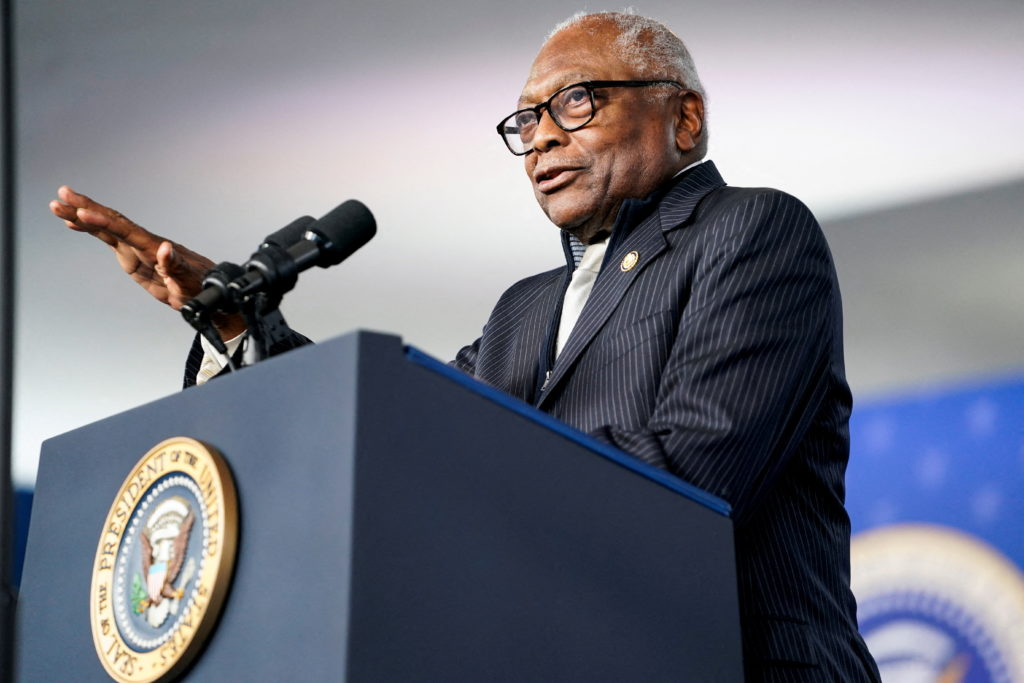
The map debate is inseparable from one person: Representative James E. Clyburn.
South Carolina’s only majority-Black district has repeatedly elected Mr. Clyburn, a Black Democrat who, in this 2026 frame, is 85 and seeking an 18th term. He remains a major political force in the state. The proposed map was widely viewed, by opponents and some skeptical Republicans, as an attempt to slice up that district and disperse its core electorate.
What the proposal did, in practical terms, was reallocate portions of the current district into neighboring districts to reduce the concentration of Black voters that has helped sustain it. Supporters argued that the changes tracked traditional redistricting criteria. Critics argued that the effect, and in their view the intent, was racial and partisan dilution.
Some Senate Republicans questioned whether altering the district would even accomplish the political goal of defeating him. Others worried that redistributing his voters could make neighboring districts more competitive for Democrats, or could boost Black turnout in ways that hurt Republicans down ballot.
Why early voting matters
State legislatures have broad authority to draw congressional districts. That authority is real, and it is powerful.
But elections are not simply line-drawing exercises. They are reliance systems. People arrange work schedules, transportation, childcare, and accessibility needs based on the rules the state sets. When the state tries to revise those rules after voting begins, it risks crossing from hardball politics into something that looks like disenfranchisement by administrative chaos.
Practically, a midstream map change raises thorny questions that administrators would have to answer quickly. Do already-cast ballots count if a voter is suddenly assigned to a different district? Does the state reissue ballots and restart voting? Does a court freeze the new map to preserve orderly administration? Even if a legislature believes it has the power to act, the legitimacy costs are immediate and easy for voters to understand.
GOP split and governor
The State House had already passed the new map earlier in May, and was described as more receptive to redistricting. The Senate was a different story, in part because senators are not up for re-election until 2028 under the state’s regular four-year cycle, with all seats elected on the same schedule.
Gov. Henry McMaster called a special session to force the issue back onto the calendar.
After the Senate adjourned Tuesday, State Senator Larry Grooms, a Republican who supported the map, argued the governor moved too slowly in comments to reporters outside the chamber. “Republicans and the White House worked quickly to pass a redistricting plan before the start of in-person voting,” he said. “But the call from the governor came too late.”
Senator Grooms also framed the stakes plainly. “I like the map, I would like to see it become law,” he said, adding he believed Tuesday represented “our last and best chance” to pass it.
Process fight
During debate, some senators criticized the mapmaking process as hurried. Senator Tom Davis, a Republican from Beaufort County, told constituents in a written message that mistakes were evidence of a rubber-stamp approach.
“Two years of due diligence would have caught these mistakes,” he wrote. “Two weeks did not, because two weeks is not due diligence. It is a rubber stamp.”
Adam Kincaid, executive director of the National Republican Redistricting Trust, pushed back in a statement, saying those lawmakers were mistaken and that the bill text referred to 2020 census geography, not voting precincts.
This is the recurring redistricting paradox: speed serves political timing, while process serves legal durability. Courts do not just ask whether a legislature had power. They also look at what the legislature did with it, and whether the record suggests careful adherence to law or a sprint built for advantage.
What comes next
The Senate’s adjournment does not end South Carolina’s redistricting fight. It delays it.
Other Republicans signaled that future efforts are likely. Alan Wilson, the state attorney general and a Republican candidate for governor, said he was disappointed in a public statement and insisted the state has “the authority and the responsibility to fix it,” adding: “This fight is not over.”
What is at stake is not abstract. Under the current lines, South Carolina’s delegation has leaned strongly Republican even with one safely Democratic, majority-Black district anchoring Democratic representation. The proposed changes would have tested how durable that balance is, and how aggressively the state could pursue a mid-cycle rewrite without triggering court intervention.
Regionally, leaders in Georgia and Mississippi have indicated they want to revisit their lines for 2028, after their primaries are behind them. South Carolina may well return to this issue after the June 9 primary, or in the next cycle, especially if litigation is threatened and political incentives shift.
For now, one fact matters more than any talking point: South Carolina chose not to redraw congressional districts after early voting began. In a political moment defined by relentless escalation, that decision is a reminder that election rules are not supposed to be movable, at least not once citizens have started to vote.