
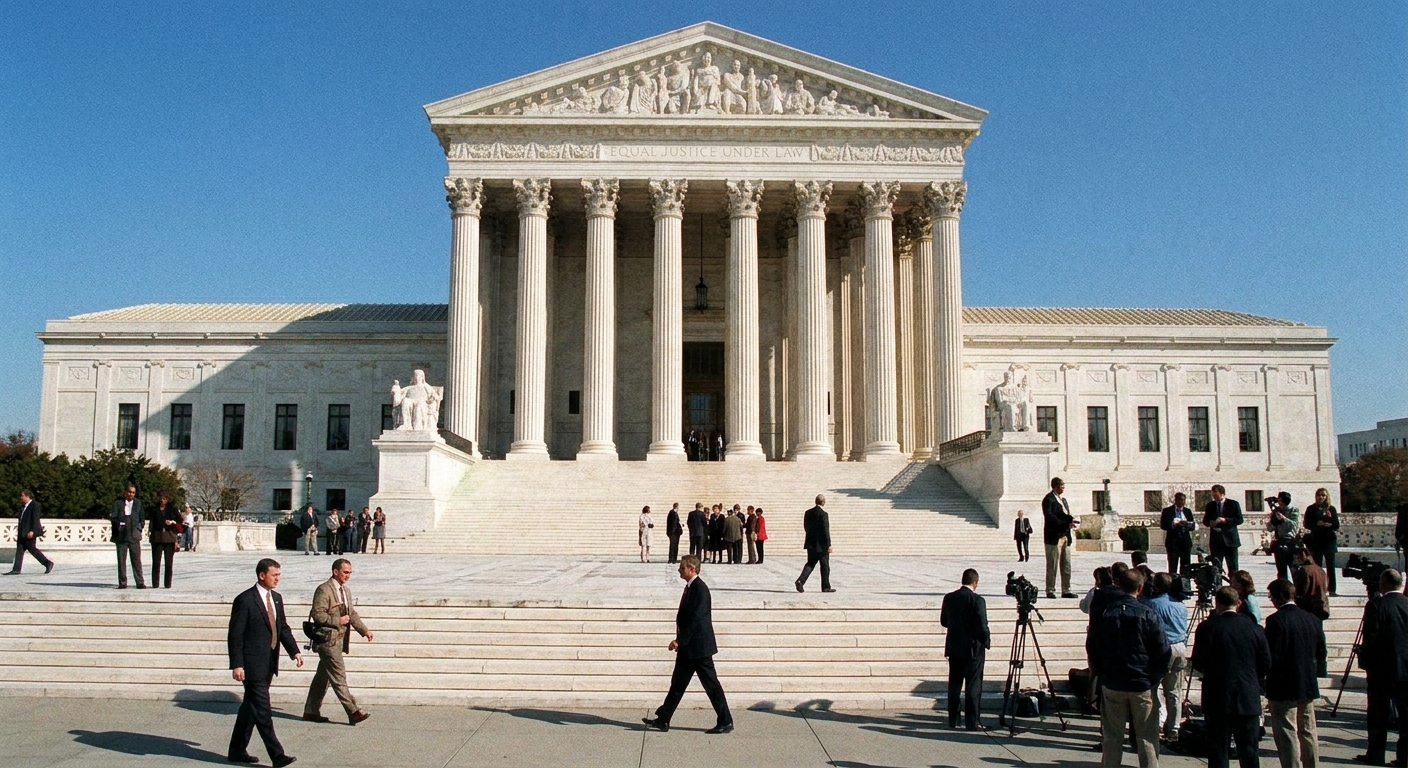
The name is long, but the question the Supreme Court answered in Dobbs v. Jackson Women’s Health Organization was simple: can a state ban most abortions before viability, and if it can, what happens to Roe v. Wade?
In 2022, the Court said yes to a pre-viability ban, and it went further. The majority upheld Mississippi’s law and overruled Roe (1973) and Planned Parenthood v. Casey (1992), ending the federal constitutional framework that had governed abortion for nearly fifty years.
Join the Discussion
Case basics
Full case name
Dobbs v. Jackson Women’s Health Organization, 597 U.S. ___ (2022).
Where the case came from
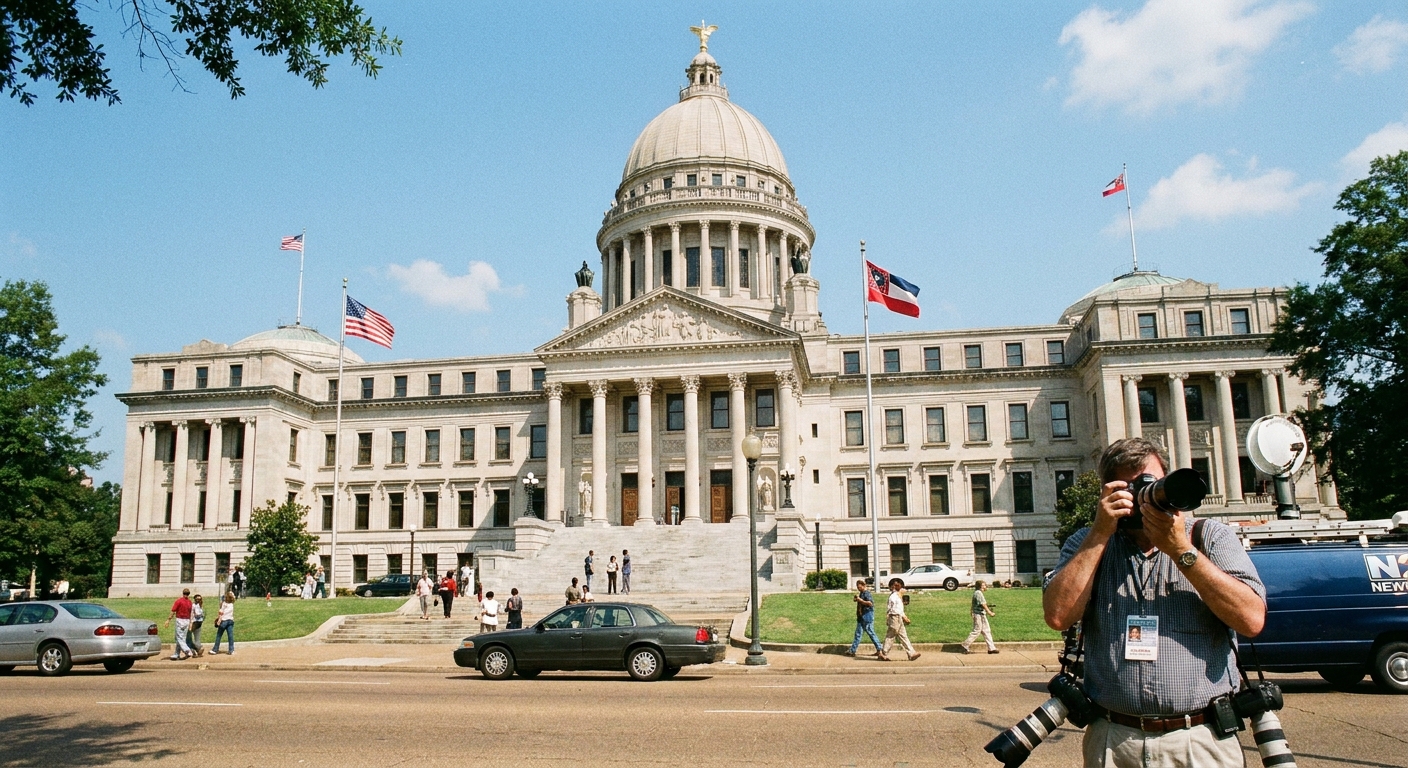
Mississippi passed a law restricting abortion after 15 weeks of pregnancy, with limited exceptions. Jackson Women’s Health Organization, widely reported as the state’s only licensed abortion clinic at the time, challenged the law. The case eventually reached the U.S. Supreme Court.
The Mississippi law at issue
The statute is commonly referred to as Mississippi’s “15-week law.” It prohibited most abortions after 15 weeks of gestational age.
The law included exceptions for medical emergencies and certain serious fetal conditions, but it did not include exceptions for pregnancy resulting from rape or incest.
What the Court decided
The holding on Mississippi’s law
The Supreme Court upheld Mississippi’s 15-week abortion restriction.
The bigger holding
The Court overruled Roe v. Wade and Planned Parenthood v. Casey. That meant the federal Constitution, as interpreted by those cases, no longer provided a nationwide constitutional right to abortion.
Vote and opinions
The Court’s judgment was 6 to 3. Justice Alito wrote the majority opinion. Chief Justice Roberts concurred in the judgment but would have stopped short of fully overruling Roe and Casey. Justices Thomas and Kavanaugh each wrote separate concurrences. Justices Breyer, Sotomayor, and Kagan dissented.
What changed immediately
After Dobbs, abortion regulation returned primarily to the political branches, especially state legislatures and state courts interpreting state constitutions. Federal constitutional litigation did not disappear, but the specific Roe and Casey framework no longer controlled.
Key terms
What “viability” meant
In Roe and Casey, “viability” generally meant the point at which a fetus can survive outside the womb with medical care. Under Casey, viability functioned as the central constitutional line: before viability, a state could regulate but not ban abortion, and it could not impose an “undue burden” on access.
The Court’s reasoning (majority)
To understand Dobbs, it helps to separate two moves the majority made. First, it concluded the Constitution does not protect a right to abortion. Second, it concluded Roe and Casey should be overruled rather than narrowed.
1) Substantive due process and “unenumerated” rights
Roe and Casey treated abortion as a right protected by the Fourteenth Amendment’s Due Process Clause. That clause is textually about “due process of law,” but for generations the Court has also read it to protect certain substantive liberties from state infringement.
The Dobbs majority applied the Court’s history-and-tradition approach for recognizing unenumerated rights: the asserted right must be deeply rooted in the nation’s history and tradition and implicit in the concept of ordered liberty.
Applying that approach, the majority concluded that a right to abortion does not qualify because, in its view, American legal history included long periods in which abortion was widely regulated or prohibited, especially in the nineteenth and early twentieth centuries.
2) Why the majority said abortion is different
The majority treated abortion as distinct from other privacy and autonomy cases because abortion involves what the opinion called “potential life.” On that view, the state’s interests are different in kind from cases involving only the rights and relationships of people already born.
3) Why the majority overruled Roe and Casey
Rather than preserve the core of Roe and Casey, the majority concluded those decisions were wrongly decided from the start and had proved unworkable in practice.
Key criticisms included:
- Lack of textual grounding: the Constitution does not mention abortion.
- Historical argument: the majority said the claimed right lacked deep roots in American tradition.
- Doctrinal instability: the majority argued Roe and Casey produced persistent conflict and line drawing problems, including viability as the central dividing point.
- Stare decisis analysis: the majority acknowledged the importance of precedent but concluded the factors the Court considers for overruling precedent favored overruling here.
4) The standard after Dobbs
With Roe and Casey overruled, the Court said abortion regulations, as such, are generally reviewed under the ordinary standard used for most laws: whether the law has a rational basis.
That said, other constitutional claims can still trigger different analyses. For example, challenges involving the First Amendment, vagueness and notice, equal protection theories, federal preemption, or other specific provisions may raise questions beyond rational basis.
What the dissent argued (briefly)
Three justices dissented. They would have kept Roe and Casey in place, arguing that the Fourteenth Amendment protects a sphere of bodily autonomy and equality interests that includes abortion decisions.
The dissent also criticized the majority’s application of stare decisis and warned that withdrawing a long recognized right would have broad real-world consequences and could destabilize other substantive due process precedents.
What Dobbs did not decide
Dobbs did not itself ban abortion nationwide. It addressed whether the federal Constitution, under the Fourteenth Amendment as interpreted by Roe and Casey, protects a right to abortion. After Dobbs, states may ban or protect abortion subject to other applicable federal and state law constraints.
Who decides now?
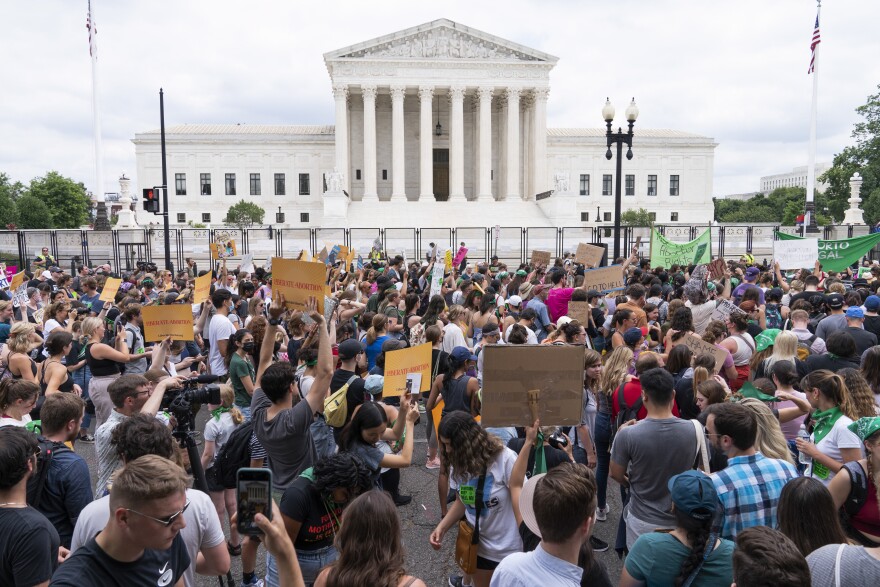
The practical question many Americans ask after Dobbs is not only “what did the Court say,” but “who gets to make the rules.” Here is the shift in simple terms.
Before Dobbs
- 1973, Roe v. Wade: the Supreme Court recognized a constitutional right to abortion under the Fourteenth Amendment and set a national constitutional framework.
- 1992, Planned Parenthood v. Casey: the Court reaffirmed a constitutional right to choose abortion before viability and replaced Roe’s trimester framework with the “undue burden” test.
- Bottom line: states could regulate abortion, but not ban it before viability, and not impose regulations that created an undue burden on access as defined by Casey.
After Dobbs
- June 24, 2022, Dobbs: the Court overruled Roe and Casey, removing federal constitutional protection for abortion as those cases defined it.
- States: state legislatures and state constitutions became central. Some states restricted abortion substantially; others protected access by statute or state constitutional interpretation.
- Federal government: Congress retains powers that can affect healthcare and related issues, but it remains limited by enumerated powers and federalism constraints.
- Courts: litigation continued, increasingly focused on state constitutional claims, state statutory interpretation, and narrower federal questions rather than the Roe viability rule.
Why it matters beyond abortion
Dobbs is also a case about constitutional method. The decision signaled a tighter approach to substantive due process and a stronger emphasis on history and tradition when courts are asked to recognize rights not explicitly listed in the Constitution’s text.
At the same time, the Court stated that Dobbs concerned abortion specifically. Readers should still recognize the underlying tension: when a right depends on implication rather than explicit text, the scope and durability of that right often rise and fall with the Court’s interpretive approach.
Key takeaway
Dobbs v. Jackson Women’s Health Organization upheld Mississippi’s 15-week law and overruled Roe and Casey, holding that the U.S. Constitution does not confer a right to abortion. After Dobbs, abortion policy is primarily decided by states and the political process, with federal and state courts playing a different and often narrower role than they did under the Roe and Casey framework.