
Every time a report surfaces claiming that noncitizens were found on voter rolls, two different questions collide in the public mind.
First: Is it legal for a noncitizen to vote? For federal elections, the answer is no. Federal law makes it a crime for a noncitizen to vote in an election held in whole or in part for federal office. (See 52 U.S.C. § 20511.) Separate from that federal rule, states also generally prohibit and penalize noncitizen voting in state elections under their own election codes, though the details and enforcement vary by state.
Second: How can someone who is not eligible end up registered anyway? The answer is less dramatic and more bureaucratic: voter registration in the United States is a decentralized, state-run system that relies heavily on self-attestation, imperfect data matching, and cleanup processes that are legally constrained.
That mix can produce a reality that sounds contradictory but is not: an ineligible person can appear on the voter rolls without ever casting a ballot, and even without intending to register.
Join the Discussion
The constitutional setup
The Constitution does not create a single national voter registration system. It splits election authority between states and Congress.
The Elections Clause
Article I, Section 4, Clause 1, known as the Elections Clause, says that the “Times, Places and Manner” of holding elections for Senators and Representatives are prescribed by state legislatures, but Congress may “make or alter” those regulations.
That is why your voter roll is typically maintained by a county or state election office, using state procedures, even though federal law can impose baselines for federal elections.
Qualifications and limits
Voter qualifications are largely set by states, but they cannot violate constitutional protections. The Fifteenth, Nineteenth, Twenty-Fourth, and Twenty-Sixth Amendments limit how states can draw eligibility lines. The Fourteenth Amendment’s Equal Protection Clause also constrains discriminatory administration.
Citizenship is a qualification states require for state and federal elections today. A small number of local jurisdictions have, at times, allowed noncitizen voting in certain local elections, but those municipal policies do not apply to federal contests and do not make noncitizen voting in federal elections lawful.
Can noncitizens vote in federal elections?
Federal law prohibits noncitizens from voting in federal elections. States also typically prohibit it and impose their own penalties.
It is important to separate three categories that often get blurred together:
- Registration error: an ineligible person appears on the rolls.
- Ballot attempt: an ineligible person tries to vote but is stopped by safeguards.
- Illegal voting: an ineligible person actually casts a ballot that is counted.
Headlines sometimes treat “on the rolls” as if it automatically means “voted.” It does not. Registration databases are administrative lists. The practical questions are how names get there and what checks exist before a ballot is counted.
How noncitizens can end up on voter rolls
Most pathways are ordinary process failures rather than elaborate schemes. The same government that processes millions of address changes, driver’s licenses, and benefit applications also feeds data into voter registration systems, often through overlapping agencies and vendor software.
1) Motor voter and accidental registration
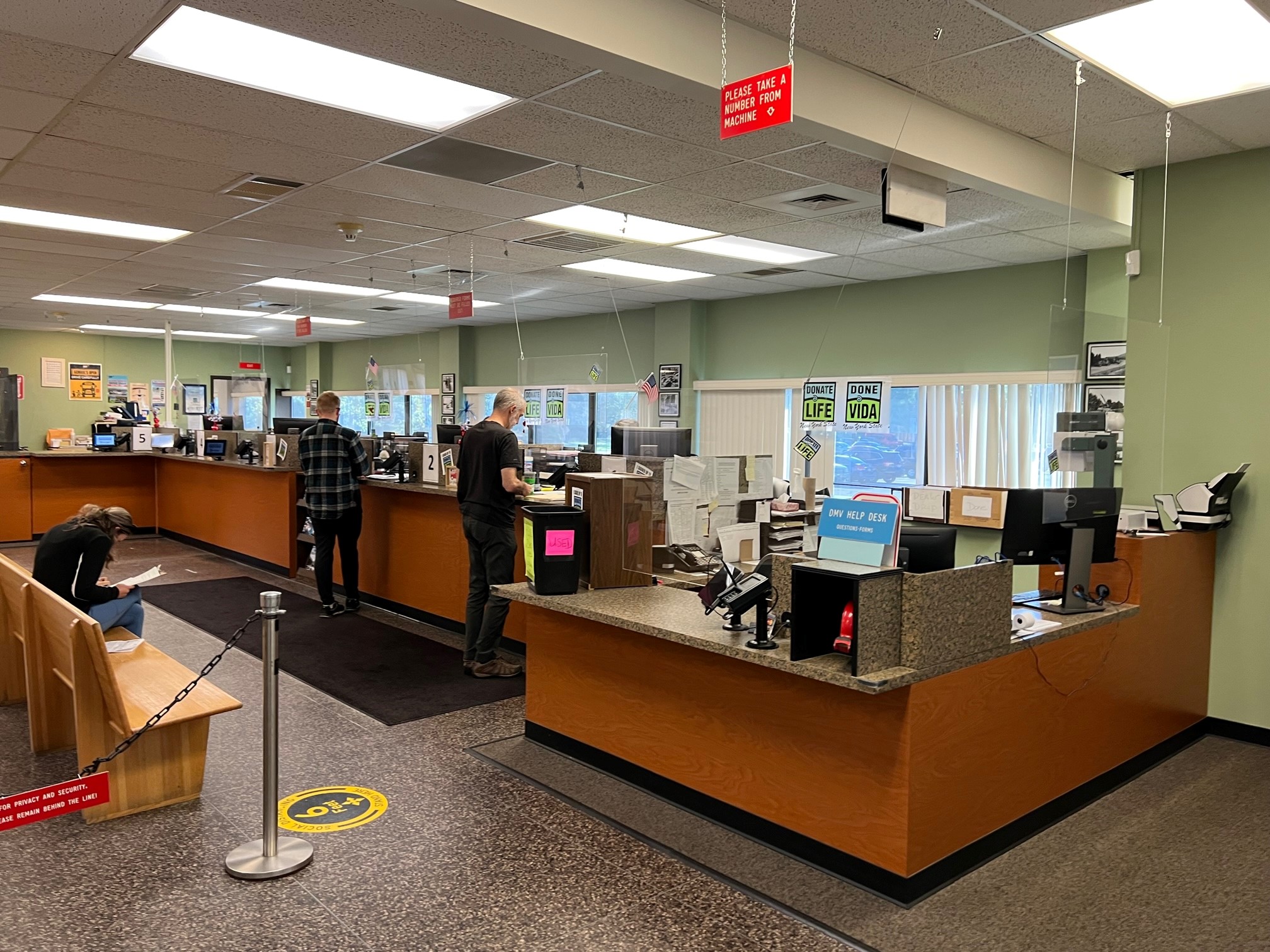
The National Voter Registration Act of 1993 (NVRA) requires states to offer voter registration opportunities at driver’s license offices and certain public assistance and disability services offices.
In many states, that registration step is integrated into routine transactions like getting a driver’s license, updating an address, or renewing an ID. If the workflow is confusing or rushed, a noncitizen may be handed a form or guided through an option they do not understand.
In some states, especially those with opt-out or automatically triggered registration models tied to DMV transactions, screen design and defaults can matter a lot. If the citizenship question is not prominent and consistently handled, an eligible DMV transaction can be routed into a voter registration workflow that produces a mistaken record.
Some states issue driver’s licenses to noncitizens lawfully present in the United States. That policy can be entirely lawful. But it can increase the risk of mistaken registration if agency systems or front-end prompts do not cleanly distinguish eligibility for a license from eligibility to vote.
2) Data matching and messy records
Election offices do not have a single, definitive nationwide citizenship registry they can query for a perfect answer. Some states do use available data sources, such as a DMV citizenship indicator, state agency records, or limited state-federal verification tools in specific contexts. Those sources can help, but they are not uniform across the country and they are not designed as a comprehensive voter eligibility citizenship file.
Matching is hard for ordinary reasons:
- People share names and birthdates.
- Names are entered differently across systems (middle initials, hyphens, multiple surnames).
- Addresses change frequently.
- Records can be incomplete or outdated.
Audits and administrative reviews sometimes find false positives when states use broad matching rules (for example, relying on partial name matches or incomplete dates of birth). A noncitizen record can also be mistakenly linked to a citizen’s voter file, or vice versa, depending on how a state’s system is built and how strict the matching rules are.
3) Naturalization timing
Some cases fall into a timing gap. A lawful permanent resident might interact with the DMV or a state agency shortly before naturalization. Later, if databases update out of sequence, or if an older citizenship indicator persists in one system but not another, the mismatch can lead to flags, pending statuses, or in some jurisdictions an erroneous entry that must be corrected.
Naturalization is federal. Voter registration is state-administered. The seams between those systems are a common place for paperwork and data synchronization errors.
4) Self-attestation and mixed verification
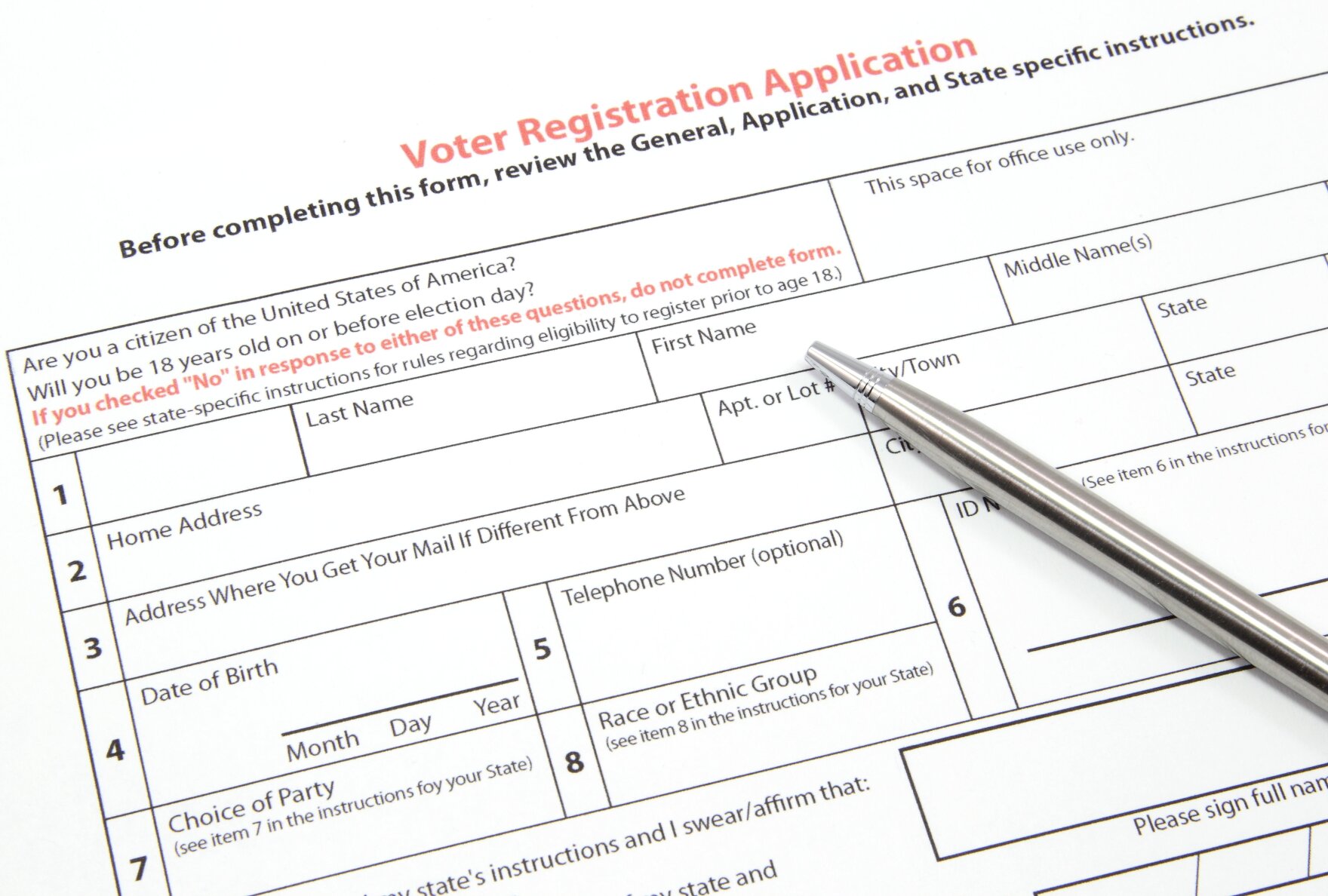
In many states, registration relies on an applicant affirming under penalty of perjury that they are eligible, including that they are a U.S. citizen.
That is not the same thing as “no security.” It is a design choice that uses sworn statements plus a mix of up-front checks, post-registration audits, and enforcement tools that vary by state. But self-attestation does mean that an applicant who misunderstands the question, or ignores it, can end up with a voter record unless a later check catches the issue.
5) Decentralization and capacity
The United States runs elections through thousands of local jurisdictions. That is a feature of federalism. It also means training, technology, budgets, and procedures vary widely. A state may have strong statewide rules and still see uneven execution from one county to another.
When an ineligible name is found
Contrary to popular assumption, election officials cannot always simply delete a name the moment someone alleges ineligibility. Voter roll maintenance is governed by federal and state rules designed to prevent both fraud and wrongful disenfranchisement.
NVRA guardrails
The NVRA regulates how states maintain registration lists for federal elections and sets process requirements for removals tied to common triggers like change of residence and death. (See 52 U.S.C. § 20507.) States also remove voters for state-law disqualifications, but they still must follow applicable federal guardrails when maintaining lists used for federal elections.
The NVRA also includes a 90-day restriction, often called the “quiet period,” that limits systematic removals close to a federal election, with exceptions for certain individualized or otherwise permitted updates. (See 52 U.S.C. § 20507(c)(2)(A).)
How corrections usually work
When a record is questioned, states use tools like:
- Pending or inactive status (the person stays on the list but must confirm details before voting, depending on state law).
- Notice-and-wait processes (mailing confirmation notices and removing after nonresponse plus time and additional triggers).
- Document requests (in some states, voters may be asked to provide documentation to resolve a citizenship question).
In other words, election administration often prioritizes documented, reviewable steps over fast, error-prone steps. That is closely tied to due process concerns and the history of improper purges.
Checks before a ballot is counted
Being listed as “registered” is not the final gate.
Poll books, IDs, and signatures
Depending on the state, a voter may need to show identification, confirm personal information, or sign a poll book. Mail voting often involves signature verification and envelope documentation. None of these are perfect, but they are additional filters that can stop an ineligible voter even if the registration database contains an error.
Provisional ballots
If eligibility is in question at the polls, many states use provisional ballots. Those ballots are set aside and counted only if the voter’s eligibility is confirmed under state law.
This is one reason “X people on the rolls” does not translate cleanly into “X illegal votes counted.” Different states use different choke points, and not every registration error turns into a counted ballot.
Proof of citizenship rules
This is where the Elections Clause and federal statutes collide in a modern way.
Some states have tried to require documentary proof of citizenship to register. The key distinction is often practical as much as legal: registering with the federal form versus a state-specific form, and registering for federal elections versus adding a person to a state-only voter list where a state runs separate rules.
The federal form and the Supreme Court
In Arizona v. Inter Tribal Council of Arizona (2013), the Supreme Court held that Arizona could not require additional documentary proof of citizenship beyond what the federally prescribed registration form requires for federal elections. The Court pointed to Congress’s power under the Elections Clause to regulate the manner of federal elections through statutes like the NVRA, and to the federal process that sets the contents of the national mail voter registration form.
Two-tier systems and state-only rules
In response, some states explored or adopted “two-tier” approaches that attempt to distinguish registration for federal elections from participation in certain state contests, or to apply documentary proof rules through state forms. Litigation over these systems has been frequent, and outcomes have depended on the details of state law, the burdens imposed, and how the system is administered.
What the data generally show
Because election administration is decentralized, evidence often comes from state audit reports, administrative reviews of registration databases, prosecution records, and academic studies rather than one national dataset. Those sources also underscore two practical cautions: a “flag” is not always a confirmed case, and “on the rolls” is not the same as “voted.”
- Registration errors can occur for the administrative reasons described above.
- Confirmed noncitizen voting in federal elections appears to be rare relative to the total number of ballots cast, based on available audits, investigations, and prosecutions, and many identified incidents involve attempted voting, eligibility confusion, or records that are later corrected.
That does not make errors acceptable. It suggests that the policy focus is often best placed on front-end workflows, back-end cleanup, and verification steps that reduce mistakes without producing wrongful removals.
Why it keeps recurring
If a report claims that thousands of noncitizens were mistakenly added to voter rolls across multiple states over a long period, the number may sound alarming. The underlying mechanics are straightforward.
Here is why it recurs:
- High volume: states process millions of registrations, address updates, and DMV transactions.
- Human input: people click the wrong box, misunderstand questions, or receive inconsistent guidance.
- Technology: databases are merged, vendors change, rules evolve, and legacy records persist.
- Legal constraints: cleanup must follow notice rules and cannot be purely reactive.
Election integrity is not a single checkpoint. It is a set of overlapping rules and routines. When one routine is sloppy, the system can look compromised even if downstream checks still reduce the risk that an ineligible ballot is counted.
What reform looks like
Most meaningful fixes live in state legislation, state agency procedures, and careful database design. But the Constitution matters because it tells you which level of government can do what.
State reforms
- Clearer front-end design at DMVs and online portals so citizenship questions are prominent, unambiguous, and logged in auditable ways.
- Training and auditing for agency staff who handle integrated registration workflows.
- Fast error correction for people mistakenly registered, including prompt notice and simple ways to resolve status.
- Targeted verification that is accurate and legally durable, rather than broad-brush matching that generates false positives.
Federal reforms
- Congress can adjust baseline rules for federal elections under the Elections Clause, within constitutional bounds.
- Congress can fund modernization through grants tied to security standards, recordkeeping, and usability.
What the Constitution does not do is guarantee a single, uniform national election bureaucracy. The system is designed to be shared, and shared systems require coordination and clear lines of responsibility.
FAQ
Is being on a voter roll the same as voting?
No. Voter rolls are registration lists. Voting involves additional verification steps that vary by state, including ID rules, signature checks, and provisional ballot procedures.
Do election offices intentionally register noncitizens?
As a general matter, no. The more common explanation is administrative error: confusing motor voter workflows, mistaken data matches, or record timing issues. Intentional misconduct is possible in any system, but it is not required to explain how ineligible records appear.
Can election officials just purge anyone suspected of being ineligible?
Not legally, not instantly, and not safely. Federal and state rules often require notice, waiting periods, and documented triggers before removal, partly to prevent wrongful disenfranchisement.
Who has the final authority over federal election rules?
States run the machinery day to day, but Congress can “make or alter” regulations for federal elections under the Elections Clause. That is why disputes recur over registration procedures and proof-of-citizenship rules, especially when state requirements conflict with federal baselines.