
The Supreme Court has a way to change the legal landscape without hearing oral argument, issuing a full signed opinion, or waiting months for the usual briefing schedule. It is not a secret power. It is an old tool used in a modern way.
That tool is the Court’s emergency docket, sometimes discussed under the broader nickname the shadow docket. It is back in the headlines after Justice Ketanji Brown Jackson criticized the Court’s increasing reliance on emergency orders in high-stakes disputes, warning that emergency procedure can operate like a kind of procedural “fast pass” that sidesteps normal safeguards.
If you have ever wondered how the Court can effectively freeze a federal policy overnight, or let a state law take effect before anyone has fully litigated it, this is the answer.
Join the Discussion
What is the emergency docket?
The emergency docket is the set of requests asking the Supreme Court to act right now, usually because someone claims they will suffer serious harm before the normal court process finishes.
Most emergency filings ask for one of a few things:
- A stay, often called a stay pending appeal, which pauses a lower court decision or pauses enforcement of a law.
- An injunction, often styled as an injunction pending appeal, which orders a party, often the government, to do or stop doing something while litigation continues.
- Vacating a stay, which removes a pause that a lower court put in place.
- Emergency relief in other time-sensitive forms, including short administrative orders that hold the status quo.
These orders are usually temporary. But “temporary” at the Supreme Court can be decisive. If a law is allowed to operate for months or years while a case crawls through appeals, the practical reality on the ground can become the new normal long before the Court ever decides the merits.
Emergency vs. shadow docket
People often use “shadow docket” as shorthand for emergency orders, but the terms are not identical.
- Emergency docket refers to urgent applications for immediate relief.
- Shadow docket is a looser label for actions the Court takes outside the fully briefed, argued, signed-opinion pipeline. Depending on who is using the term, it can include emergency orders, summary reversals, and other short-form orders that can still have outsized impact.
This article focuses on the emergency side of that universe, because that is where the speed, opacity, and high stakes collide most sharply.
How it differs from normal cases
The Supreme Court’s familiar work happens on what you can think of as the merits docket. That is the slow, structured pathway:
- A party files a petition asking the Court to take the case.
- Multiple rounds of briefing follow, often with amicus briefs from outside groups.
- The Court holds oral argument.
- The justices issue an opinion on the merits, usually signed and often accompanied by concurrences and dissents.
The emergency docket compresses that timeline. Briefing can be short. Argument is rare. The Court may issue an order with little explanation. Sometimes the Court adds a short per curiam opinion or one or more justices write separately. Often, though, the order is just a few lines.
That difference in process is the heart of the dispute. Critics argue that the Court is making high-impact choices without the usual transparency and deliberation. Defenders argue that emergencies are real and courts exist to prevent irreparable harm, even on tight deadlines.
Where the power comes from
Start with the Constitution: Article III creates “one supreme Court” and allows Congress to structure the federal judiciary. But Article III does not lay out a step-by-step procedure for how the Supreme Court must handle every urgent request.
Instead, Supreme Court procedure comes from three main sources:
- Federal statutes passed by Congress, including laws defining the Court’s appellate jurisdiction and its authority to issue certain writs.
- The Supreme Court’s own rules, which the Court promulgates to manage filings, deadlines, and motions.
- Equitable tradition, inherited from English and early American courts, where judges could issue extraordinary relief like injunctions when legal remedies were inadequate.
In other words, the emergency docket is not an extra-constitutional loophole. It is the Supreme Court using its procedural authority to manage urgent disputes. The fight is about how often and how aggressively it should do so, especially when an order effectively sets national policy.
Why the justices fight about it
When a justice criticizes the emergency docket, the complaint is usually not “the Court should never act quickly.” The complaint is that quick action is increasingly used for decisions that look and feel like merits rulings, without merits-level process.
Justice Jackson’s “fast pass” critique appears in her April 2024 dissent from an emergency order in Labrador v. Poe, where she warned that the Court’s emergency posture can become a procedural shortcut that changes the real-world rules before the usual safeguards of full briefing, argument, and reasoned explanation have a chance to do their work.
The arguments tend to cluster around four concerns.
1) Fairness and equal access
Emergency relief is discretionary, and timing matters. Well-resourced litigants can mobilize quickly, file polished applications, and recruit high-profile amici on short notice. That can create the perception that some parties can reach the Court faster and more effectively than others.
2) Transparency and reasoning
Unsigned orders with minimal explanation make it hard to know what legal standard the Court applied. Was it about likelihood of success on the merits? Irreparable harm? Public interest? Something else? When the reasoning is unclear, lower courts and future litigants are left guessing.
3) Interlocutory orders that still shape the law
Formally, emergency orders are typically interlocutory. They do not finally resolve the merits the way a full opinion does. In practice, though, they can signal how a majority views the issue. Lower courts notice. Governments adjust. The “temporary” order starts shaping behavior like precedent, even if it is not labeled one.
4) Institutional legitimacy
The Court’s authority depends on public acceptance that it is applying law through a stable process, not choosing outcomes through procedural shortcuts. When the emergency docket becomes the stage for major national disputes, it invites suspicion that process is driving results instead of the other way around.
How an emergency request moves
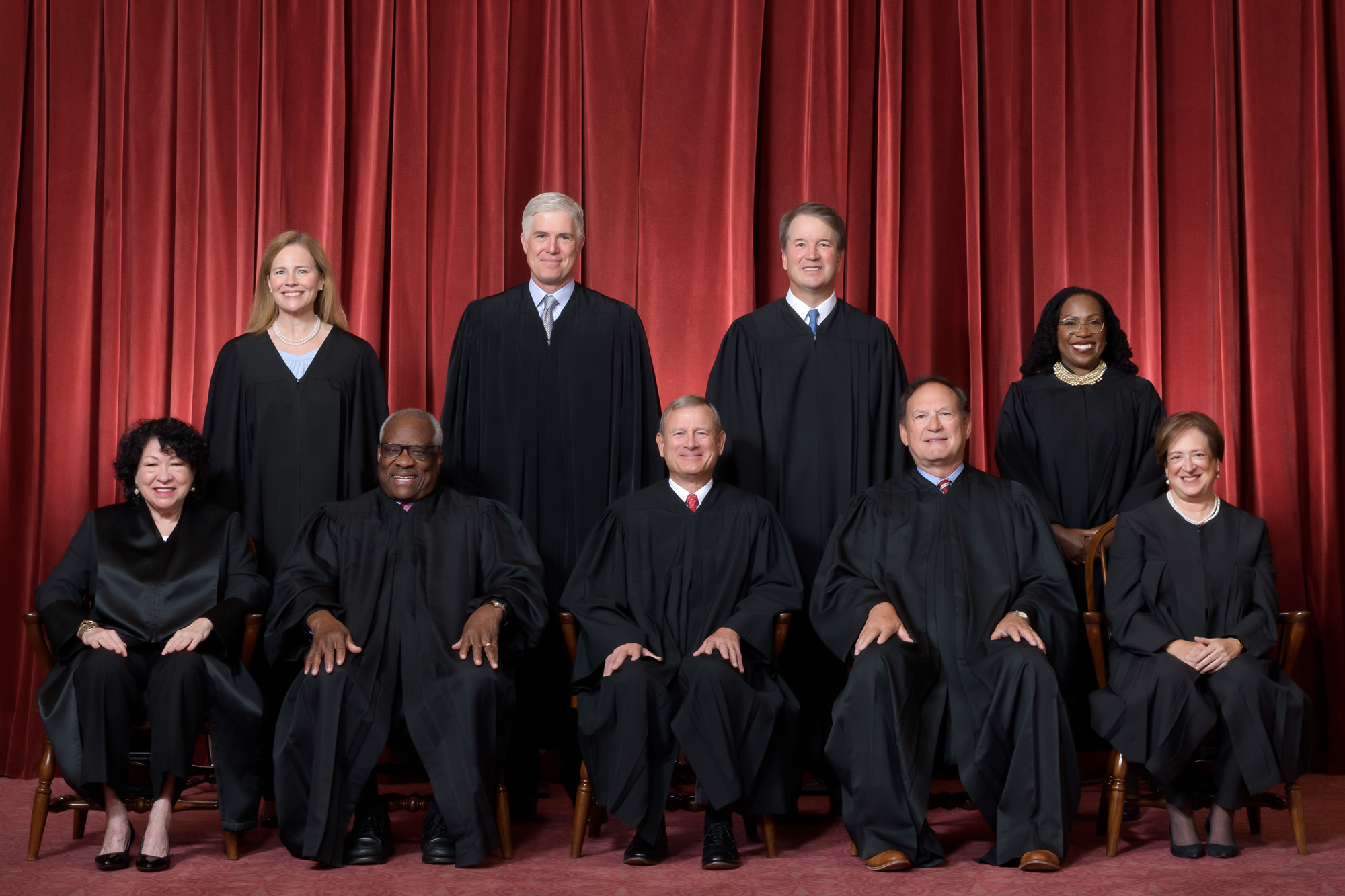
Most emergency requests first go to a single justice. The Court assigns each justice responsibility for emergency matters from specific federal circuits. That justice is the Circuit Justice.
The Circuit Justice can:
- Act alone in limited ways, including issuing short administrative orders.
- Refer the application to the full Court, which is common in high-stakes disputes.
When the full Court considers an application, relief typically requires a majority of the justices. If relief is granted, the order may pause a law or a lower-court ruling nationwide, sometimes within days.
One more procedural twist matters: the Court sometimes issues administrative stays simply to hold things in place while it decides whether to grant longer relief. That first pause can be brief, but it can still change what happens on the ground.
Timing also shapes everything. In many emergency matters, the applicant files first, the opposing party gets a short deadline to respond, and the Court may receive rapid-fire amicus briefs. When the federal government is involved, the Solicitor General’s office is often a central player, either as the party seeking relief or as the respondent defending the government’s position.
The legal standard
The Court often frames emergency relief using a familiar set of factors, especially in stay applications:
- Likelihood of success on the merits
- Irreparable harm if relief is denied
- Balance of equities between the parties
- Public interest
Those factors sound orderly, but applying them under severe time pressure is difficult. “Likelihood of success” can require a deep dive into complex constitutional questions. “Public interest” can bleed into policy judgments. And “irreparable harm” can look different depending on whether the harm is framed as individual injury, governmental disruption, or broader societal impact.
This is part of why the emergency docket is contested. The Court is being asked to make predictive judgments about complicated legal issues before the normal appellate process has done its work.
What it looks like in real cases
The emergency docket matters because it can set the rules of the road while the merits fight is still years away from a final decision. In recent terms, the Court has used emergency orders to manage disputes involving national policy, elections, and high-profile regulatory fights.
A few widely discussed examples show the range:
- Texas abortion law (SB8): in Whole Woman’s Health v. Jackson and related emergency applications, the Court’s early orders did not decide the constitutionality of the law on the merits, but they helped determine whether the law could operate while litigation and procedural disputes unfolded.
- Abortion medication (mifepristone): in FDA v. Alliance for Hippocratic Medicine, emergency orders were used to hold the status quo in place while challenges proceeded, illustrating how quickly the Court can stabilize or disrupt nationwide access to a regulated drug.
- Immigration and administrative policy disputes: emergency stay fights frequently involve whether a nationwide policy change can take effect immediately or must remain blocked while appeals continue.
The point is not that the Court always reaches the wrong answer in emergencies. It is that the interim answer can become the operational reality for everyone.
Why it matters for separation of powers
The emergency docket sits at the intersection of judicial power and executive and legislative power.
When the Court issues emergency relief, it can:
- Pause a federal regulation issued by the executive branch.
- Block enforcement of a state law passed by a legislature.
- Freeze a lower-court injunction that was already blocking government action.
Each move shifts the default setting of government power. That is why these fights feel larger than procedure. In the real world, an emergency order can decide whether a policy exists at all while the courts debate it.
From a constitutional perspective, the tension is this: Article III courts are supposed to decide cases and controversies through reasoned judgment. But the modern state moves fast. Policies change quickly, elections come and go, and regulated conduct does not politely wait for appellate timelines. The emergency docket is where those two clocks collide.
Is the shadow docket real?
“Shadow docket” is not an official category in the Supreme Court rules. It is a label used to describe decisions and orders that do not come with the full merits-case treatment.
That label can be misleading, because there is nothing inherently hidden about emergency orders. They are on the public docket. They are reported. They are often accompanied by dissents or concurrences.
What makes it feel shadowy is how little explanation the Court sometimes provides relative to the impact of the decision. The critique is less about secrecy and more about opacity.
Reform ideas
No single fix will satisfy everyone, because the core tradeoff is speed versus process. But common proposals include:
- More explanation for emergency orders, especially when they affect broad categories of people.
- More consistent standards for when emergency relief is appropriate.
- Faster merits review after major emergency interventions, so temporary orders do not function as long-term settlements.
- Greater transparency about votes, though the Court historically guards internal deliberations.
Defenders of current practice respond that the Court already writes separately when justices think explanation is necessary, and that forcing full opinions under emergency timelines could produce worse reasoning, not better.
FAQ
Does an emergency order decide the case forever?
Usually no. Emergency orders are typically interim. But interim relief can effectively decide the outcome for a long period, and it can shape how lower courts and governments behave.
Can the Supreme Court act without oral argument?
Yes. The Court is not constitutionally required to hold oral argument in every matter. Emergency applications are commonly decided on written submissions.
Why do these cases arrive as “emergencies” so often now?
Modern litigation frequently targets nationwide policies, and lower courts can issue nationwide or large-scale injunctions. When a single lower-court order affects a whole state or the federal government, the losing side has a strong incentive to seek immediate Supreme Court intervention.
Can Congress change this?
Congress has substantial authority to shape federal court jurisdiction and procedure by statute, but the Supreme Court also has inherent and rule-based powers to manage its docket. Any reform effort has to navigate that separation of powers carefully.
The bottom line
The emergency docket is the Supreme Court’s legal triage room. It exists to prevent irreparable harm, but it can also determine what the law looks like while everyone waits for the slow machinery of appellate review.
When justices fight about the emergency docket, they are fighting about more than scheduling. They are fighting about what counts as a legitimate exercise of Article III judicial power when the Court is asked to act at maximum speed, with national consequences, and with limited explanation.