
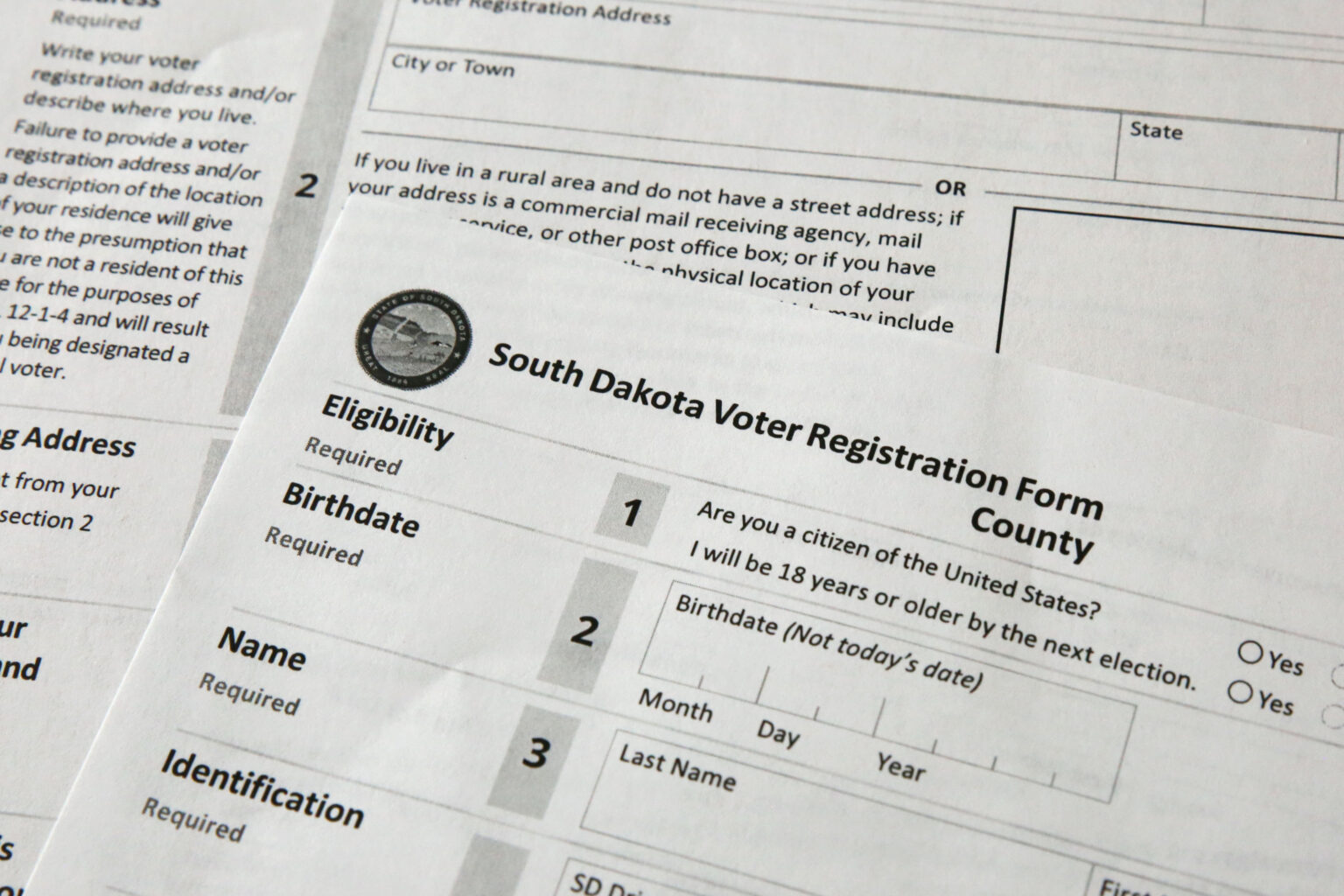
You can feel a quiet shift happening in American elections. It is not always announced with a dramatic speech or a sweeping constitutional amendment. Sometimes it arrives as a form you cannot complete, a deadline you did not know existed, or a document you cannot find.
Ari Berman, a longtime voting rights journalist, recently put the most revealing question in the simplest possible terms: Ask the average person, ‘Do you know where your birth certificate is?’ And a lot of people are gonna struggle to find it.
That is not a throwaway line. It is a warning about the direction of election law, and about how the right to vote can be narrowed without ever saying the word “ban.”
Join the Discussion
The new barrier is paperwork
The proposed shift is straightforward: make proof of citizenship a prerequisite for registering to vote, and add strict identification requirements to cast a ballot. President Donald Trump has pushed Congress to pass the SAVE America Act, which would require a passport or birth certificate to register to vote and would impose strict identification requirements to cast a ballot.
The details matter because the burden is not distributed evenly. Berman notes that Half of all Americans don't have passports.
A rule that assumes passport access is a rule that selects for income, stability, and bureaucratic luck. It is the difference between having a document and having the life circumstances that make keeping that document easy.
This is what modern voting restrictions tend to look like. They rarely announce themselves as “disenfranchisement.” They reframe participation as compliance.
Rights and the fine print
Many Americans carry around an understandable civic assumption: voting is a constitutional right, therefore the government must make it accessible. In practice, election rules often live in a dense layer of statutes, procedures, and court decisions that can expand access or narrow it.
That design creates a vulnerability. If lawmakers can redefine the mechanics of voting, they can reshape who gets through the gate without ever touching the language of equality directly. The fight then becomes less about lofty principle and more about whether a rule is an acceptable administrative safeguard or an unconstitutional burden.
The Voting Rights Act is being stripped
The administrative gatekeeping is landing at the same moment federal voting protections are being narrowed in court.
In its spring session, the Supreme Court significantly limited the reach of the Voting Rights Act of 1965. Berman’s summary is blunt: The Voting Rights Act of 1965, the most important civil rights law of the 1960s, has no teeth left. And that's just the beginning of what they've done in terms of weakening democracy.
He points specifically to Louisiana v. Callais, a decision issued in late April, which he describes as a turning point that makes it far harder to sustain or create majority-minority districts in which Black voters and other voters of color can elect candidates of their choice. In the wake of that ruling, he says, several Southern states have moved quickly to redraw maps in ways that reduce Black representation before the midterms.
You do not need a conspiracy theory to see what follows from that combination. When protections against racial vote dilution shrink, mapmaking becomes sharper. When mapmaking becomes sharper, the incentive grows to fight elections in the registration office rather than at the ballot box.
Mail voting survives, barely
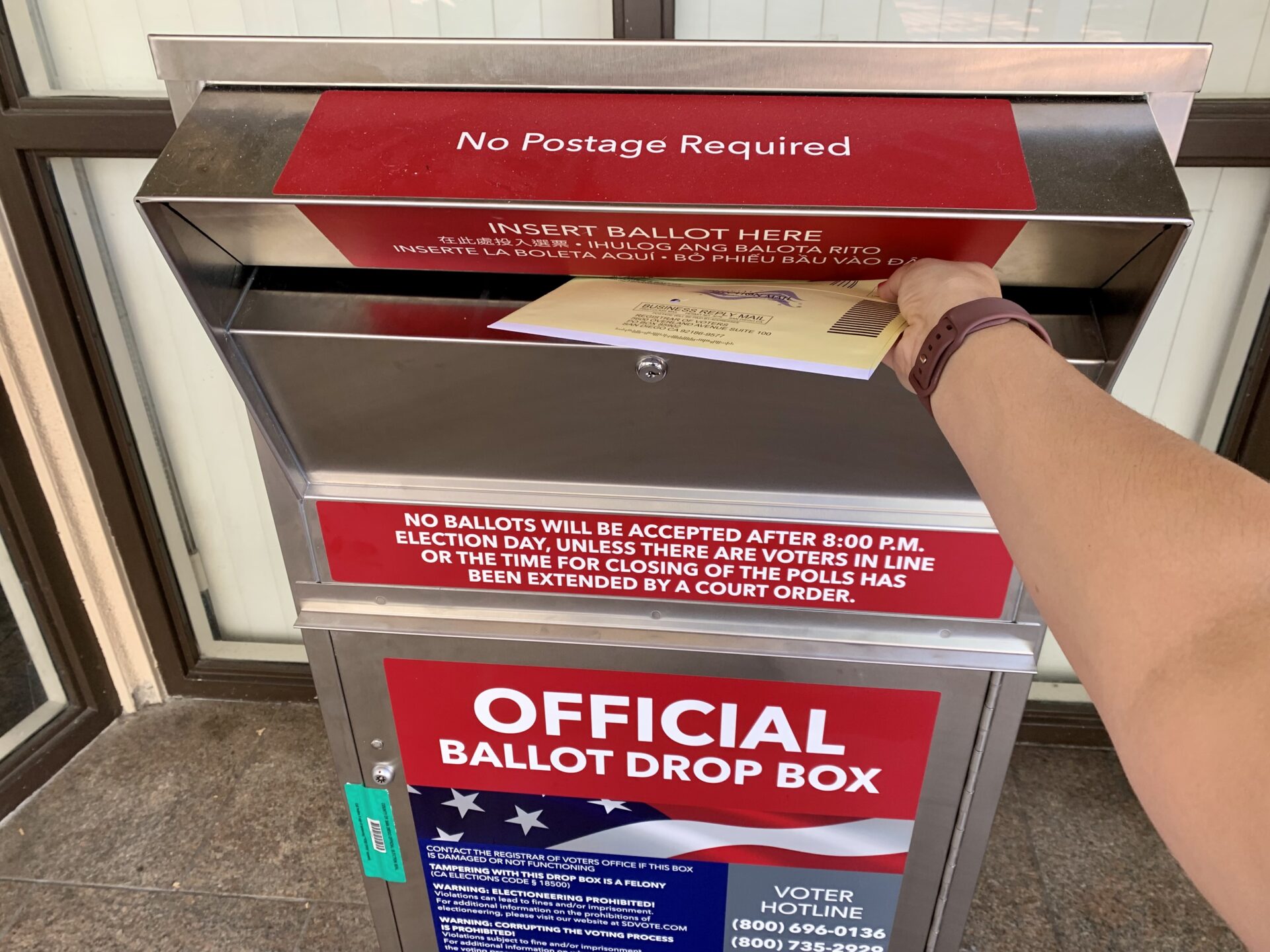
Even where the Court has not fully endorsed restrictions, the margin tells its own story. The justices recently preserved mail-in voting by a single vote, and the dissents signaled that some members of the Court are prepared to treat mail voting itself, not merely specific procedures, as constitutionally suspect.
The immediate fight centered on a narrow question: whether ballots postmarked by Election Day can be counted if they arrive within a short window afterward. But narrow cases often become the legal blueprint for broader arguments. Berman warns that dissents can become the basis for the next challenge, especially if the Court’s composition or appetite shifts.
What makes this debate especially revealing is that mail voting is not a novelty. States such as Oregon and Washington have used all-mail elections for years. Utah and Alaska, both with strong Republican constituencies, also rely heavily on vote-by-mail systems. Berman notes there is no evidence that those states experience higher fraud rates than states that vote differently.
So if the empirical case for mass fraud is thin, why target the method? Because mail voting changes participation. And in modern election politics, participation itself is treated as a partisan variable.
More money, fewer limits
There is another shift happening at the same time, and it is heading in the opposite direction: more money, fewer limits.
The Supreme Court has struck down decades-old restrictions on how much political parties can spend on candidates. The practical effect is that donors who hit individual limits on giving to a candidate can route influence through parties instead, and parties can then spend without the old caps. Berman frames it as part of a longer judicial project that expands the political power of wealthy individuals.
That combination should bother anyone who still believes in the small-d democratic promise of the Constitution. When the cost of influence falls for the wealthy, but the cost of participation rises for ordinary voters, the system tilts toward a politics where citizenship is theoretical but access is purchased.
Who gets hit hardest
Birth certificates sound universal until you remember how life works. People move. Families split. Records burn in fires and vanish in floods. Names change after marriage or divorce. Older Americans, rural residents, and people born at home or in segregated systems have historically faced documentation gaps that are not their fault but are absolutely their problem when the law changes.
Even when a replacement is possible, it can take time, fees, and navigation of state bureaucracy. That is not a neutral burden right before an election. It is a timed obstacle course.
The legal question is not whether the government can verify eligibility. It can. The question is whether the chosen method is appropriately tailored, or whether it functions as a predictable barrier to lawful voting. The more restrictive the required documents, the more the rule risks acting like a gate.
The mechanics are the point
Berman describes President Trump as obsessed with the mechanics of voting
and argues that pushing strict proof requirements can serve a second purpose: establishing an excuse to delegitimize results if the president’s party loses.
His warning is direct: If Republicans lose, he's going to say, 'Well, we didn't have the SAVE Act, therefore the election was rigged.'
In other words, the rule becomes a narrative tool. If it passes, it blocks voters. If it fails, it becomes the reason to distrust the count.
That is not just political hardball. It is a constitutional stress test. A system built on consent depends on losers accepting lawful outcomes, and on the public refusing to accept rules being retroactively rewritten to manufacture doubt.
Reform talk is growing
As courts narrow what Congress can protect through voting laws, proposals to reform the Supreme Court are gaining momentum in Democratic circles. The ideas range from term limits to expanding the Court, all aimed at reining in a Court that many critics see as unchecked by democratic norms.
What you can do now
I am not going to tell you that locating your birth certificate is the solution to America’s voting crisis. But I am going to tell you it may become a prerequisite for exercising a right you assumed you already possessed.
- Find your foundational documents: birth certificate, Social Security card, passport (if you have one), naturalization papers if applicable.
- Check your voter registration status early, especially if you have moved, changed your name, or skipped a recent election.
- Track your state’s rules: many voting barriers are not federal. They are state-level and can change quickly.
- Do not confuse “fraud prevention” rhetoric with proven fraud: demand evidence, not vibes.
In a healthy republic, voting should be a civic act, not an archival scavenger hunt. When the government starts treating your ballot like a privilege you must re-earn with paperwork, it is not merely administering elections. It is redefining citizenship as a file folder.