
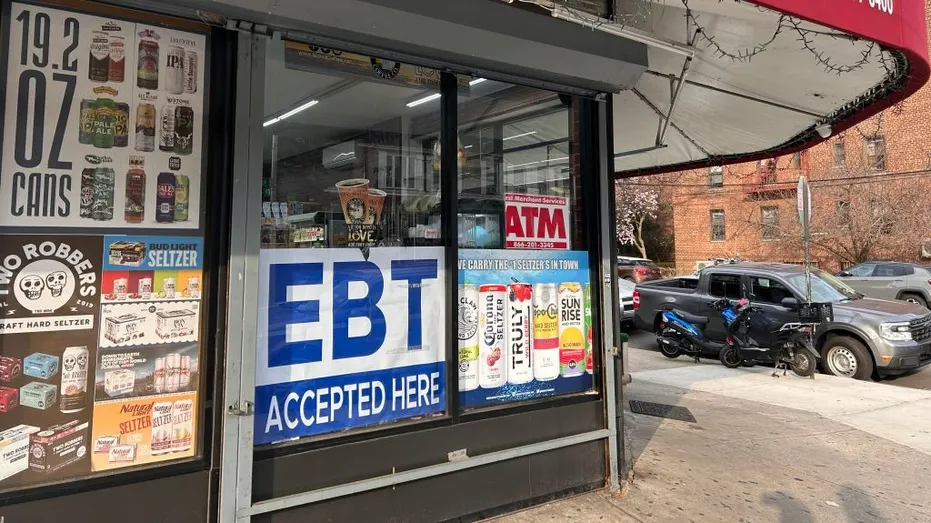
You can feel the instinct behind policies like this: if public dollars are meant to keep families afloat, the state should be able to say they cannot be used for tattoos, vapes, theme park tickets, or a new game console.
But here is the necessary clarification up front: despite a lot of headline-level talk about Florida “cracking down” on what people can buy with an EBT card, we did not readily identify a single recently enacted Florida statute that matches the exact scenario this kind of explainer needs. In other words, we did not find a specific new Florida bill number, with a clear effective date, that newly bans specific cash-side purchases like “tattoos” or “video games” through EBT-style point-of-sale blocks.
That is not a claim that no restrictions, agency rules, federal conditions, or card-system limits exist. It is a narrower point about the common viral version of the story: a brand-new Florida law that suddenly blocks a long list of cash purchases through the card itself. Anyone writing to that claim should be able to point readers to the enacted bill and the effective date.
Because that kind of claim should be verifiable, this explainer does something more honest and more useful. It explains what Florida could and could not do under the Constitution and federal welfare statutes if Florida lawmakers adopt (or expand) “cash-side restrictions on an EBT-access card.” It also shows why the legal answer changes depending on which program is involved.
The constitutional question is not whether those purchases are wise. It is who gets to write the rules when a benefit program sits at the intersection of state administration and federal money.
Join the Discussion
First: which program?
When people say “EBT,” they often mash together benefits that are legally different. One reason the confusion persists is practical: the same card can access multiple benefit “wallets.” At the checkout counter, SNAP is restricted to eligible food items. Cash assistance, where available, can often be withdrawn at an ATM or spent more like cash, unless the program or the delivery system restricts access.
- SNAP (food benefits) is federally defined. States administer it, but Congress sets the core eligibility and purchase rules.
- Cash assistance is often tied to TANF (Temporary Assistance for Needy Families), a block grant that gives states more design flexibility, within federal boundaries.
That distinction drives almost everything that follows. A state trying to add new “you cannot buy X” rules to SNAP runs into federal preemption problems fast. A state putting conditions on state-run cash assistance is usually operating in a more flexible zone, though still not a lawless one.
Example: SNAP benefits can be used only for eligible food items under federal rules. TANF-style cash benefits can often be withdrawn and spent broadly unless a state restricts how the cash can be accessed or imposes recipient conditions.
What a Florida policy could look like
If Florida were to adopt the kind of policy often described in these debates, it would typically be framed as a restriction on cash assistance delivered through Florida’s public-assistance card system, administered by the Florida Department of Children and Families. Practically, that means a restriction on the cash side of benefits accessed through an EBT-style card, not a rewrite of SNAP’s federally defined purchase rules.
Those policies usually come in one of two forms:
- Point-of-sale and ATM blocks, often implemented through merchant category code limits and restrictions on certain kinds of withdrawals.
- Recipient rules and penalties, where spending that violates program conditions can lead to sanctions, repayment demands, or benefit changes.
Even when a legislature lists concrete examples (tattoos, vape shops, casinos, theme parks), the enforcement tool matters because it affects accuracy, overbreadth, and error rates. Merchant coding is blunt. “Forbidden categories” can be both underinclusive and overinclusive depending on how a vendor is coded.
SNAP is federal
SNAP is created by federal statute, funded by the federal government, and governed by federal rules administered through the U.S. Department of Agriculture, including the Food and Nutrition Service.
That means the core constitutional structure is not “free speech” or “privacy.” It is supremacy. Under the Supremacy Clause, a state cannot rewrite a federal program by creating conflicting requirements.
States can sometimes seek federal permission to test administrative changes where Congress has authorized demonstrations. But SNAP’s purchase rules are heavily statutory, and USDA’s waiver and demonstration authority is limited. A state generally cannot use a “waiver” to override core statutory limits on what SNAP benefits can buy.
Why “ban vapes with SNAP” is different
If a restriction is about SNAP, the controlling question is usually: does federal SNAP law permit this restriction, either directly or through a lawful, approved demonstration that stays within the statute? If not, the state has a preemption problem. Federal law is the operating system.
Cash benefits: more state room
Cash assistance programs often run through TANF, which replaced Aid to Families with Dependent Children in the 1990s. TANF is a federal block grant that gives states broad flexibility to design programs, impose conditions, and structure benefit delivery, so long as they stay within federal requirements and constitutional constraints. Federally, TANF is overseen by the Administration for Children and Families within the U.S. Department of Health and Human Services.
So if Florida lawmakers want to attach conditions to cash-side benefits, it is often legally easier than trying to impose new purchase restrictions on SNAP. The key is that TANF is designed to tolerate state variation in a way SNAP is not.
Existing baseline, in concrete terms: federal TANF rules have long contemplated limits on where TANF cash can be accessed. For example, federal law directs states to maintain policies and practices to prevent TANF cash assistance from being used in certain high-risk locations, including liquor stores, casinos, and adult entertainment establishments, and to report on those policies. States typically implement those limits through their TANF state plans, contracts with EBT vendors, and ATM and merchant restrictions, plus program sanctions where applicable.
The constitutional hook

Most welfare fights that sound “constitutional” are really fights about Spending Clause power.
Congress funds programs and attaches conditions. States can accept the funds under Congress’s terms, or they can forgo participation and use state funds for a separate program. For SNAP in particular, that means a state cannot create its own version of SNAP under different rules. It can only create a separate, state-funded food assistance program if it wants different spending conditions.
The Supreme Court has said Congress can attach conditions to federal funds, but the conditions have to be stated clearly, and at some point financial pressure can become unconstitutionally coercive. The basic guardrails are often associated with cases like South Dakota v. Dole and NFIB v. Sebelius.
The takeaway in this context is straightforward: if Florida is using federal money, Florida is operating inside a federal rulebook. Flexibility exists, but it depends on what Congress authorized for that specific program.
One more wrinkle: many states commingle dollars. A restriction might apply only to TANF block-grant funds, to state maintenance-of-effort spending tied to TANF, or to a separate state-only benefit. Those funding choices can change which federal conditions apply and how much room the state has.
Due process limits
Even when states have authority to create restrictions, they still have to enforce them lawfully. Public benefits are not a constitutional “right” in the same way speech is, but cutting or sanctioning benefits often triggers procedural due process when the benefit functions like an entitlement under state and federal law.
That framework is closely associated with Goldberg v. Kelly, which required fair procedures before certain cash welfare benefits are terminated. But modern cash assistance programs can be more discretionary than the program in Goldberg, and the constitutional baseline can be more contested depending on how state law structures the benefit. Separately, SNAP operates under federal notice and fair-hearing requirements.
Still, as a practical matter, if a state penalizes a recipient for an allegedly prohibited purchase, the recipient is often entitled by statute, regulation, and sometimes the Constitution to:
- clear notice of what rule was allegedly violated,
- a meaningful chance to contest the allegation,
- an appeal process with neutral review.
This is where broad bans can stumble. “Tattoos” is fairly concrete. “Nonessential purchases” can be a moving target. The vaguer the rule, the more pressure it puts on notice and consistent enforcement.
What courts ask
If Florida adopted a cash-side restriction policy and it were challenged, the litigation would likely center on program authority more than moral judgment. Courts tend to ask questions like:
- What program is this? TANF cash assistance, a state-only benefit, SNAP, or a hybrid with commingled funds?
- What does federal law say? Is the restriction consistent with the federal statute and regulations that govern that program?
- How is the restriction implemented? Point-of-sale blocks versus after-the-fact sanctions, and whether the chosen tool is too blunt or too error-prone.
- Are recipients given due process? Notice and a fair hearing before benefits are reduced, terminated, or penalized, as required by the program’s statutes, regulations, and constitutional minima.
- Is there an equal protection problem? Most restrictions will get deferential review unless they discriminate on a suspect classification or burden a fundamental right. Disparate impact alone usually does not trigger heightened scrutiny without proof of discriminatory intent.
Notice what is missing: the Constitution does not contain a clause that says “states must allow welfare cash to be spent freely.” The fight is about statutory authority, federal conditions, and fair procedures.
Can Washington make it national?
A national template can happen in two main ways, and they are not the same.
Congress can amend program rules
If Congress wants SNAP restrictions expanded nationwide, it can change the SNAP statute. That is the cleanest path legally.
Agencies can allow limited testing
Agencies can issue guidance, propose regulations, and approve certain demonstrations where statutes allow. But the executive branch cannot invent new program restrictions out of thin air. The authority has to trace back to a statute passed by Congress, and it generally cannot override statutory purchase rules in SNAP.
That division is not a technicality. It is how the Constitution channels power: Congress writes the spending programs. Agencies administer them. States implement them under the deal they accepted.
What to watch
If Florida lawmakers or state officials propose a new “no cash for X” policy, the fast way to evaluate it is to ask three questions:
- Which funding stream is being restricted? SNAP, TANF cash assistance, state maintenance-of-effort dollars, or state-only funds.
- Who must approve it? USDA for SNAP administration questions, and HHS (through the Administration for Children and Families) for TANF plan compliance questions, plus whatever Florida agency process applies.
- How will it be enforced? ATM and merchant blocks (which can be overbroad) versus sanctions (which raise notice, proof, and hearing issues).
Bottom line
States can often restrict how state-administered cash assistance is used, especially under flexible frameworks like TANF, but they still have to provide fair procedures when enforcing the rules.
SNAP is different. Because SNAP is federally defined, a state’s ability to add new purchase bans depends on what federal SNAP law and regulations allow, and whether Congress has authorized a lawful mechanism for experimentation that USDA can approve within the statute.
So the real lesson hiding inside the tattoo and vape headlines is federalism: when a program is funded and structured by Congress, states are partners, not owners. They can administer it. They cannot unilaterally rewrite it.
Quick FAQ
Can Florida ban SNAP from buying vapes?
If the benefits at issue are SNAP, Florida is constrained by federal SNAP law. The state generally cannot impose restrictions that conflict with the federal statute and regulations unless federal law provides a lawful mechanism to do so and the change is approved within that authority.
Can Florida ban cash welfare from being used for tattoos or video games?
States typically have more leeway to restrict cash assistance programs they design within federal boundaries, often under TANF. Challenges tend to focus on statutory authority, how the restriction is implemented, and due process in enforcement.
Is there a constitutional right to spend benefit dollars however you want?
No. But once benefits are granted under rules that function like an entitlement, the government often must follow fair procedures, required by statute and sometimes by the Constitution, before reducing or terminating them for an alleged violation.