
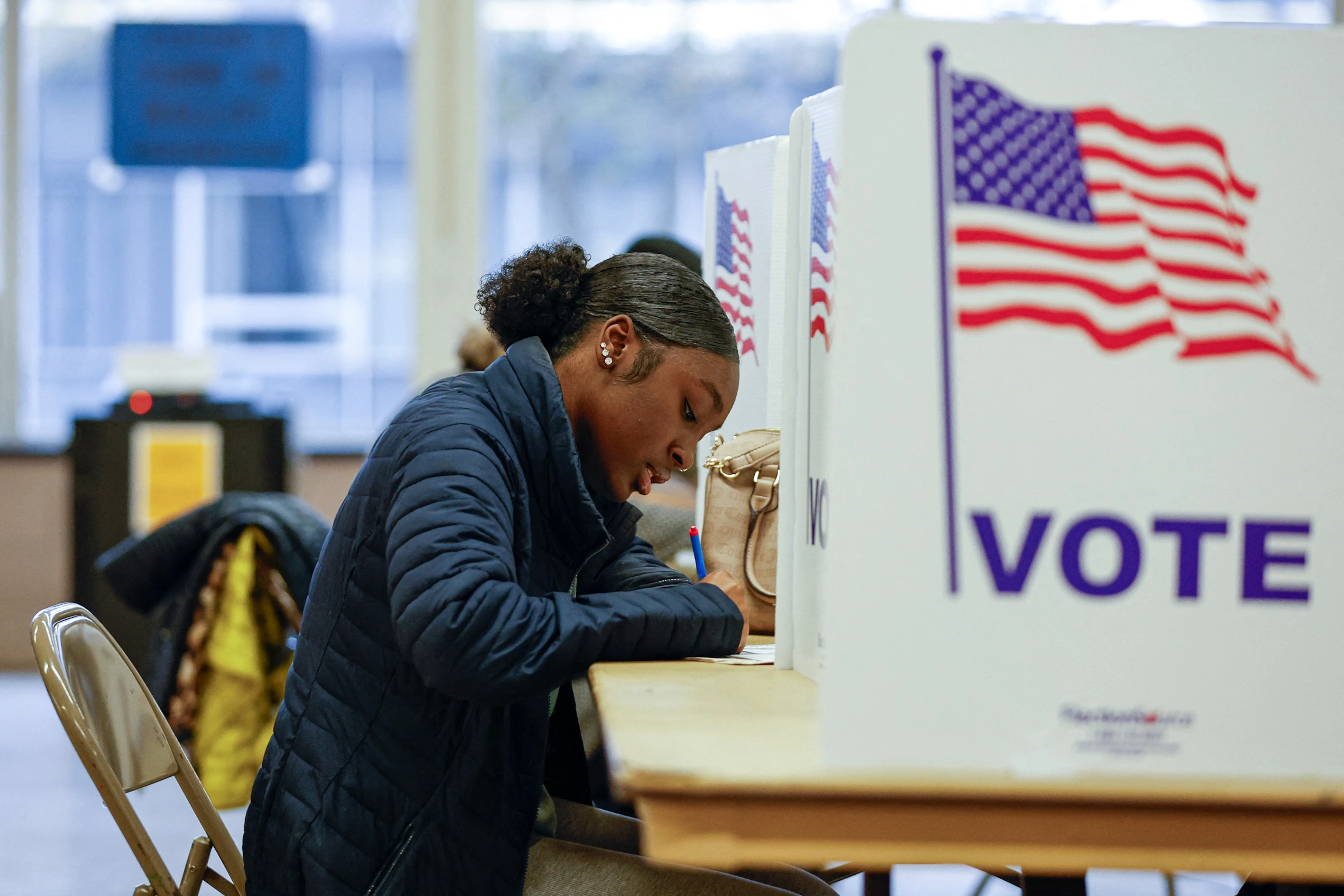
Every election cycle produces a familiar question that sounds simple until you ask the Constitution to answer it: can noncitizens vote in federal elections?
Today’s version of that question is tied to a concrete case. In August 2024, federal authorities publicly announced the arrest of Helda Araceli Mendez-Merida in Indianapolis and, according to the federal charging documents, alleged she voted in a past federal election. The public announcement and the existence of an indictment are not in doubt. The underlying conduct is still an allegation unless and until it is proven in court.
You do not need the facts of any single case to understand the legal framework, but a real-world charge is a useful lens because it forces the system to show its wiring: who sets the rules, what “federal election” means legally, and what happens after an allegedly unlawful ballot is cast.
Join the Discussion
The short answer
Under federal law, it is unlawful for a noncitizen to vote in an election for federal office, meaning President, Vice President, U.S. Senate, or U.S. House, even when those contests appear on the same ballot as state and local races. The core modern prohibition is found in federal statute (commonly cited as 18 U.S.C. § 611), which generally bars noncitizens from voting in an election that includes a federal candidate.
The statute includes limited carveouts, but they are narrower than the way they are sometimes discussed. In plain terms, the exception is aimed at situations where noncitizen voting is authorized by state or local law and the election is also held for a purpose other than choosing a federal candidate and the noncitizen is not permitted to vote for any federal candidate (often operationalized through a separate local-only ballot or ballot style). None of that is a permission slip to vote for Congress or President.
That is the baseline rule. The harder and more important civic point is why the rule exists where it does: not because the Constitution includes a single, clean sentence saying “only citizens may vote,” but because election administration is split between state power and federal power, with Congress holding specific tools to protect federal elections.
What the Constitution says

The Constitution does not contain a universal voting code. Instead, it creates a structure:
- States set voter qualifications for federal House elections by borrowing the qualifications for their own most numerous legislative chamber. That is the rule in Article I, Section 2. In practice, states define who is qualified to vote, and those qualifications flow into House elections, subject to constitutional limits and federal statutes.
- The Senate is tied to the same electorate. The Seventeenth Amendment provides that voters for U.S. Senators in each state must have the qualifications required for voters of the most numerous branch of the state legislature. That links Senate elections to the same state-defined baseline used for House electors.
- Congress can regulate the mechanics of federal elections. The Elections Clause (Article I, Section 4) gives state legislatures initial authority over the “Times, Places and Manner” of congressional elections, but allows Congress to “make or alter” those regulations.
- Presidential elections run through state-appointed electors. States decide how to appoint electors (Article II), but federal law and constitutional amendments shape the process, and Congress counts electoral votes under the Twelfth Amendment and the modern statutory framework updated through the Electoral Count Act and the Electoral Count Reform Act of 2022.
So where does “citizenship” come in? Primarily through state qualification rules, constitutional protections such as equal protection, and federal statutes that protect federal election integrity. The Constitution’s amendments dealing with voting are mostly phrased as limits on how states may deny or abridge the vote (race, sex, age 18+, poll taxes), not as a single, comprehensive eligibility checklist.
Federal law and elections
When people hear “voting illegally,” they often imagine one set of rules. In reality, there are several overlapping categories:
- Voting in a federal election: this triggers specific federal prohibitions on noncitizen voting and can bring federal criminal exposure.
- Registering to vote: even before a ballot is cast, false statements on voter registration materials can trigger separate state and federal penalties, depending on the form used and the facts.
- Voting in a local election: a handful of jurisdictions in the United States have experimented with allowing some noncitizen voting in local-only elections. That is controversial and often litigated, but it is legally distinct from voting for federal office.
The key point is that a single ballot can contain multiple contests. Most Americans vote using one ballot that includes federal, state, and local races. A typical general election ballot might include a contest for U.S. House and also governor, state legislature, county offices, and local questions. If a noncitizen votes that ballot, the legal problem is not abstract participation. It is participation in the selection of federal candidates, which is where Congress has drawn a bright statutory line.
Indiana’s role

Even when the alleged unlawful vote is for federal office, states are the front door for most election administration. That includes:
- Voter registration systems (including online registration, paper forms, and DMV-linked registration where offered).
- Eligibility checks that rely on attestation, database matching, and documentation rules set by state law within federal constraints.
- Pollbook management and list maintenance governed in part by federal rules like the National Voter Registration Act (NVRA), but implemented by state and local officials.
This is why stories like the Indianapolis case tend to raise a second question behind the first: not only “can a noncitizen vote,” but “how could a noncitizen get onto the rolls in the first place?” The answer is usually mundane and procedural. Election systems lean heavily on self-attestation under penalty of perjury, plus cross-checks that are real but imperfect. They are designed to process millions of registrations and ballots, not to function like a security clearance investigation for each voter.
What happens next
There are three different tracks that can follow an allegation of noncitizen voting. They can overlap.
1) Election consequences
In most cases, an individual allegedly improper ballot is not pulled back out of the box and displayed for the public. Ballot secrecy rules, ballot handling procedures, and the practical realities of tabulation mean the system usually addresses the issue through investigation and prosecution rather than surgical ballot retrieval. If the allegation is discovered early enough (for example, before Election Day in some vote-by-mail contexts), officials may have mechanisms to challenge eligibility or cancel an uncounted ballot under state law.
2) Criminal exposure
Depending on the facts, an accused person may face state charges, federal charges, or both. These cases also tend to turn on evidentiary issues that are less dramatic than the headlines, but decisive in court: what the person signed on a registration form, whether a citizenship box was checked, whether the person received notices about eligibility, and what prosecutors can prove about knowledge and intent.
It is also important to separate criminal liability from administrative error. Election offices process huge volumes, databases have mismatches, and mistakes happen. A mistake in the system is not the same thing as proving a criminal violation by an individual. But the legal risk for a noncitizen can still be serious if the facts show a false attestation or an actual vote in a federal contest.
3) Immigration consequences
For noncitizens, voting unlawfully can also carry immigration consequences separate from criminal punishment. Federal immigration law includes specific grounds under which unlawful voting and, especially, a false claim to U.S. citizenship can trigger inadmissibility or removability. The exact consequences depend on the person’s status and the precise conduct alleged, but the headline point is straightforward: voting is not just a civic act in U.S. law. For noncitizens, it can become an immigration trigger.
Can ICE arrest someone?
ICE can be involved for two different reasons that get blurred in public discussion.
- Immigration enforcement authority: ICE can arrest and detain a person for immigration violations under the immigration statutes, regardless of whether a state election charge is pending.
- Criminal investigation support: Federal agencies can share information and coordinate with the Department of Justice and local authorities when alleged conduct implicates federal law.
In other words, ICE’s role in a case like the Indianapolis charge is not necessarily “ICE as the election police.” It is often ICE acting on immigration status, with the alleged voting conduct functioning as evidence, a separate charge, or an aggravating legal problem for the person involved.
Local noncitizen voting
Some U.S. localities have allowed certain noncitizens to vote in limited local elections, usually tied to municipal policy choices (for example, school board governance). Those policies are contested politically and sometimes challenged in court under state constitutions or state statutes. Many states also explicitly require citizenship for voting in their constitutions or election codes, which limits or blocks local experiments.
Where local noncitizen voting exists, it generally requires practical separation from federal contests. Because most Americans vote on a single ballot that includes federal races, jurisdictions that permit local-only noncitizen voting typically have to use a separate ballot, a distinct ballot style, or another mechanism that prevents any vote for federal office.
But even where local noncitizen voting is permitted, it does not authorize participation in federal elections. A jurisdiction cannot convert a federal contest into a local one. Federal offices are federal offices, and federal statutes attach legal consequences to noncitizen voting in those races.
The Elections Clause
The Indianapolis case is about one charged defendant. The constitutional question it tees up is broader: who is responsible for preventing ineligible voting in federal elections?
The Elections Clause creates a shared system. States run the day-to-day machinery. Congress can standardize rules for federal elections and criminalize certain conduct. Federal agencies can investigate and prosecute. But no single actor controls every lever, which is why the system produces both:
- real prohibitions that are enforceable, and
- practical gaps that require administrative competence, funding, and careful coordination, not just new laws.
This division of responsibility is not a bug. It is a design choice in a federal republic. It also means election integrity debates are often really debates about where to place trust, which level of government should do more, and how to do it without making lawful voting harder for eligible citizens.
FAQ
Can a green card holder vote in federal elections?
No. Lawful permanent residents are noncitizens. Federal law generally prohibits noncitizens from voting in federal elections.
Can a noncitizen vote in state elections?
As a general rule, states limit voting to citizens for state offices too, and many states write that rule directly into state law or their state constitution. A small number of local jurisdictions have allowed noncitizens to vote in certain local-only elections, but that does not extend to federal contests.
If someone votes once by mistake, is it automatically a felony?
Not automatically. The legal outcome depends on the statute invoked and what prosecutors can prove, including knowledge and intent. But “mistake” does not eliminate risk, especially when voter registration involves signing a citizenship attestation. Even without a conviction, the immigration consequences for noncitizens can be severe.
Does the Constitution require citizenship to vote?
The Constitution does not contain a single, comprehensive clause that says only citizens may vote in all elections. Instead, states set voter qualifications (and those qualifications are used for federal House and Senate elections through Article I and the Seventeenth Amendment), subject to constitutional constraints and federal law, and federal statute separately prohibits noncitizens from voting in federal elections.
What to take away
Noncitizen voting in federal elections is unlawful under federal statute, and states are still the primary administrators of the registration and voting process. When an allegation surfaces after the fact, the system tends to respond through investigation and prosecution, not by rewinding the election.
That is the constitutional reality: the rules are real, the enforcement is real, and the machinery is shared. The headline may be about one indicted case in Indianapolis. The civics lesson is about federalism, the Elections Clause, and a country that runs national elections through fifty state systems and then tries to hold the whole thing together with law.