
When a candidate gets blowback for opposing a federal conversion therapy ban and then reverses course, the politics are obvious. The constitutional question is quieter, and arguably more important: even if Congress wants a nationwide ban, does it have the power to do it?
“Conversion therapy” is not a single standardized practice, and “ban” can mean several different legal approaches. That is why this issue keeps returning to the same constitutional fault lines: Congress’s enumerated powers versus the states’ traditional “police power,” and then the First Amendment arguments that show up the moment a law touches speech, counseling, or religion.
Join the Discussion
What a federal conversion therapy ban would do
Most proposals do not try to police private beliefs. They regulate conduct by licensed professionals, usually focused on minors. Depending on how a bill is written, a “ban” could mean:
- A direct prohibition on licensed mental health providers performing conversion therapy on minors.
- A funding condition, such as barring federal dollars from going to programs that provide it.
- A consumer protection rule, treating it as fraud or deceptive practice when marketed as a therapy that can change sexual orientation (and, in many proposals, gender identity or expression).
- A civil rights approach, framing it as discrimination in places of public accommodation or healthcare settings.
Those are not interchangeable. One is a criminal or licensing-style ban. Another is basically a contract with strings attached. Another relies on commerce and advertising. The constitutional analysis changes with each. A practical example: a rule limited to interstate telehealth sessions billed to insurance looks very different from a rule that tries to reach purely in-person, intrastate counseling in a private office.
Definitions matter too. Many laws define “conversion therapy” as efforts to change a person’s sexual orientation or gender identity, often by seeking to suppress or reduce same-sex attraction or gender nonconformity. Some definitions focus on talk-therapy techniques; others also cover non-speech conduct (for example, aversive methods). That drafting choice can affect both federal power arguments and First Amendment arguments.
The basic problem: limited federal powers
States have what constitutional lawyers call police power: broad authority to regulate health, safety, and welfare. That is why states license doctors, set standards for therapists, and police professional misconduct. That power is assumed to exist unless a state constitution limits it.
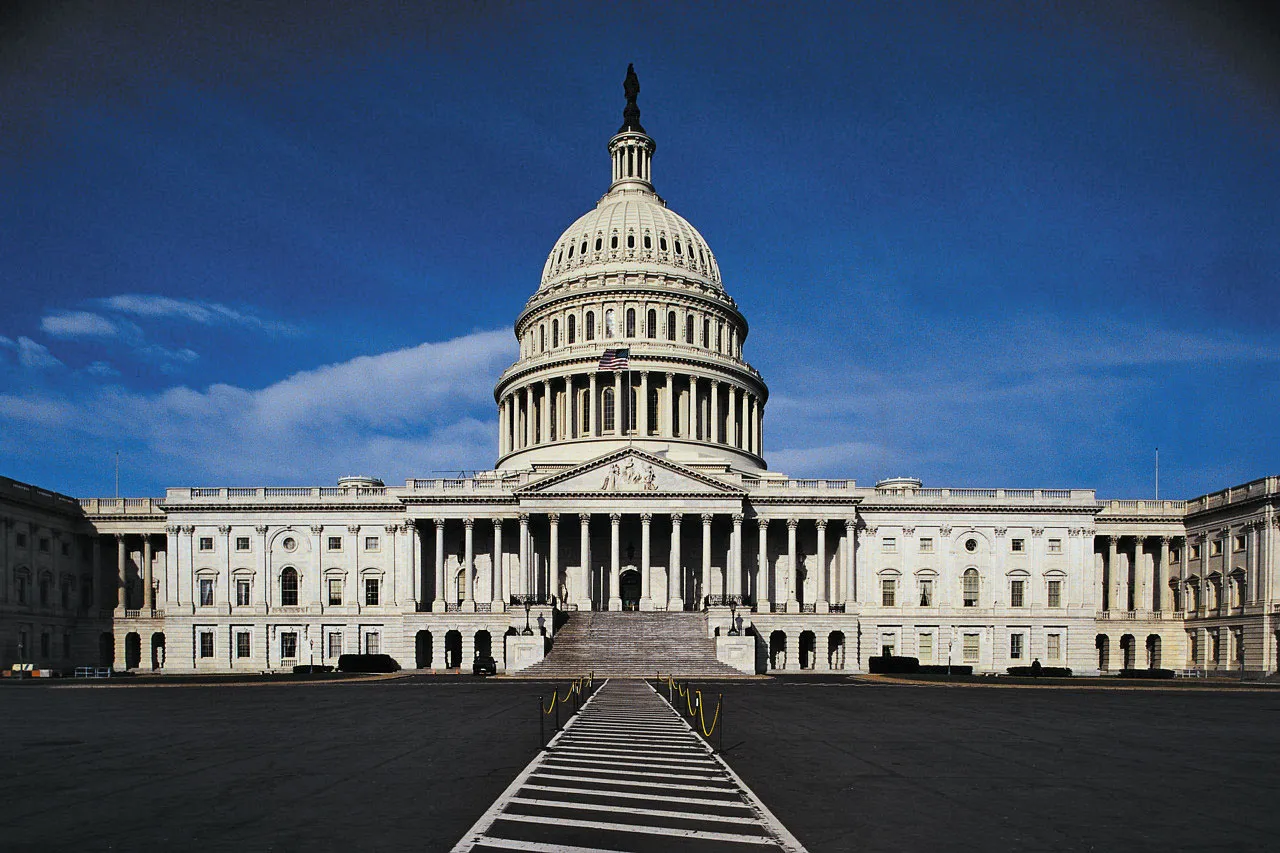
Congress is different. Under Article I, Congress is a legislature of limited, enumerated powers, plus those “necessary and proper” to carry them out. So a federal conversion therapy ban lives or dies on the question: which enumerated power is doing the work?
In practice, there are a few candidates.
Possible power #1: Commerce Clause
The Commerce Clause is Congress’s most common tool for nationwide regulation. But it has real limits.
What Congress can regulate
Under modern doctrine, Congress can regulate:
- Channels of interstate commerce (highways, mail, internet transmission in many contexts).
- Instrumentalities of interstate commerce (things used in interstate commerce).
- Economic activity that substantially affects interstate commerce.
Therapy can look “economic” because it is a paid service, often billed through insurers, sometimes offered by multi-state companies, and marketed across state lines.
Where Commerce Clause fights happen
The Supreme Court has rejected Commerce Clause theories that try to regulate non-economic, local conduct simply because it might have downstream effects. United States v. Lopez (1995) and United States v. Morrison (2000) are key limiting precedents here.
So if a federal ban is written as “no person may provide conversion therapy to a minor anywhere,” challengers will argue that Congress is trying to do what states typically do: regulate local medical practice as a matter of health and welfare, not commerce.
Supporters would respond that professional therapy is a commercial service and that the national market for mental health care, insurance, and telehealth is unmistakably interstate. They would also point to Gonzales v. Raich (2005), where the Court upheld federal regulation of intrastate conduct as part of a broader scheme regulating an interstate market.
The more a bill is tethered to transactions, billing, advertising, or telehealth across state lines, the easier the commerce argument becomes, especially if it is embedded in a broader regulatory framework rather than a free-standing moral prohibition.
Possible power #2: Spending and federal healthcare
If Congress cannot, or does not want to, impose a direct ban, it can often accomplish something close through its power to spend for the general welfare and attach conditions to federal funds.
This is how Congress shapes everything from highway policy to school rules. In healthcare, Congress already sets conditions for participation in Medicare and Medicaid. A conversion-therapy restriction could show up as:
- a requirement for providers who bill Medicaid or Medicare,
- a condition on federal grants for youth services, mental health, or community clinics,
- a rule for federally funded facilities.
The constitutional limits are not only about coercion. Funding conditions generally must also be stated clearly so recipients have fair notice, and they must relate in some meaningful way to the program being funded.
On coercion, the modern case people cite is NFIB v. Sebelius (2012), where the Court said Congress went too far by threatening states with the loss of existing Medicaid funding.
A narrower condition aimed at specific grants or specific program participation is usually on firmer ground than a sweeping “take it or lose everything” threat.
Possible power #3: Federal property and jurisdiction
Congress has clearer authority to regulate conduct:
- on federal property,
- within federal agencies and the armed forces,
- in federal prisons or federal facilities,
- through rules governing federal employees and contractors.
A law banning conversion therapy in federally run programs or on federal installations is not the same as a nationwide ban, but it is the easiest version constitutionally.
Even with power, the First Amendment waits
Once you regulate “therapy,” you often regulate an activity that is heavily speech-based. But many conversion-therapy definitions also reach non-speech conduct, so it is not always “just words.” Either way, this is where litigation often shifts from federalism (who can regulate) to the First Amendment (what can be regulated).
Speech or conduct?
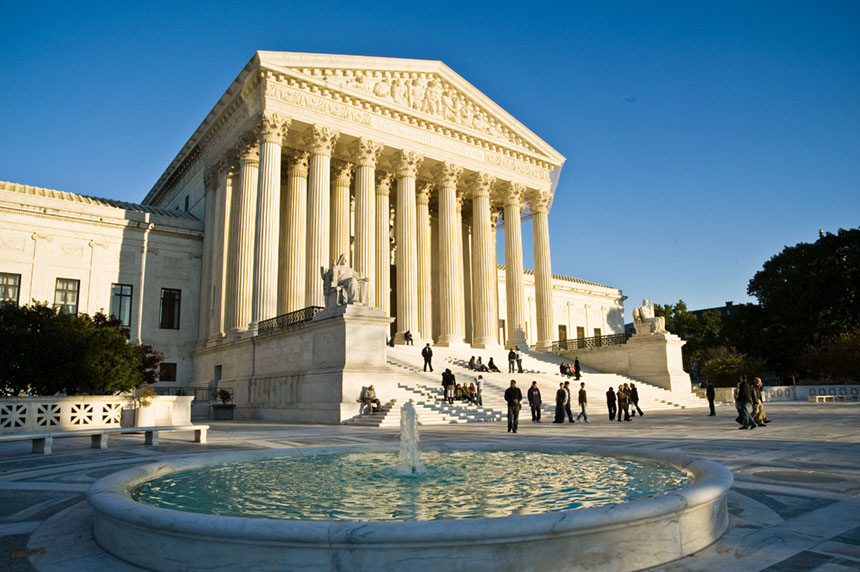
The Supreme Court has not created a simple, across-the-board category called “professional speech” that gets less protection just because it happens in a professional setting. In NIFLA v. Becerra (2018), the Court was skeptical of that idea and emphasized that states cannot sidestep the First Amendment by labeling speech as professional regulation.
At the same time, the Court has recognized contexts where professional regulation intersects with speech in more familiar ways, such as informed-consent requirements and certain disclosure rules. And lower courts have not spoken with one voice on how to analyze counseling restrictions after NIFLA, which is one reason these cases keep returning.
The hard line-drawing question is whether a conversion-therapy ban targets:
- a treatment method (conduct, like a prohibited practice standard), or
- a viewpoint (speech, like banning one side of a conversation).
A statute that looks like “you may not counsel minors toward heterosexuality” will be attacked as viewpoint discrimination. A statute that reads more like “this specific set of interventions is deemed harmful and below professional standards for minors” is more likely to be defended as regulation of professional practice.
Religion matters, but it is not a free pass
Religious objections often arise in two ways:
- licensed religious counselors who provide therapy as part of a practice, and
- unlicensed pastoral counseling inside a church setting.
A ban aimed at licensed healthcare providers is easier to defend because licensing itself is a state-created privilege with enforceable standards. A ban that reaches deep into purely pastoral counseling raises more serious Free Exercise concerns, and it also risks overbreadth if it sweeps in speech that is not medical treatment.
Courts tend to ask whether the law is neutral and generally applicable (not targeting religion) and whether it is being applied evenhandedly across secular and religious providers.
Parents, minors, and the state
Conversion therapy debates almost always involve minors, and that brings another constitutional triangle into view: parental rights, minors’ welfare, and government authority.
Parents do have constitutionally recognized rights to direct the upbringing of their children. But those rights have never been absolute. Governments routinely override parental preferences when they believe a child is at risk, and governments set medical standards for minors all the time.
That is why conversion-therapy bans for minors are typically defended as government acting in a protective role.
Challengers respond that not every disputed therapy is abuse, and that the state cannot simply declare a contested set of conversations off-limits because officials dislike the goal. Which brings you back to the central question: is the law regulating harm in a profession, or regulating a viewpoint in a debate?
Federal vs state: what is banned today
As of mid-2026, conversion therapy regulation in the United States is mostly a state and local issue, not a federal one. Many states and municipalities restrict the practice for minors through professional licensing rules or consumer protection laws, while other states have no such restrictions. The exact map changes over time as legislatures act and courts weigh in.
That patchwork is part of what drives calls for a nationwide rule. But constitutionally, uniformity is not a magic word. Congress still has to anchor a national ban to an enumerated power and draft it tightly enough to survive First Amendment scrutiny.
On top of that, the litigation landscape is still unsettled. Courts have reached different results in challenges to state and local bans, and the post-NIFLA First Amendment framing continues to be contested.
So can Congress ban it?
Sometimes, and it depends on the design.
- Most defensible: restrictions tied to federal spending, federal programs, federal property, and participation in federal healthcare systems.
- Plausible but litigated: a Commerce Clause based ban focused on commercial provision of therapy, telehealth across state lines, billing, or marketing practices, especially as part of a broader regulatory scheme.
- Most vulnerable: a sweeping national prohibition that reads like viewpoint-based speech control, or that reaches deeply into purely religious pastoral counseling untethered to licensing or commerce.
The deeper point is that “Can Congress ban it?” is really two questions. First: does Congress have power here, or is it a state matter? Second: even with power, can the government write the rule without violating speech and religious liberty protections?
In American constitutional law, the hardest fights are often not over whether a policy is popular or unpopular. They are over who gets to decide, and what the government is allowed to do on its way to deciding it.
Quick FAQ
Is conversion therapy banned federally?
There is no general, across-the-board federal ban in the way many state licensing bans operate. Federal restrictions, where they exist, tend to be program-specific, funding-related, or tied to particular federal settings.
Can states ban conversion therapy even if Congress cannot?
States generally have broader authority to regulate healthcare and professional licensing. State bans still face First Amendment challenges, but states do not need to point to an enumerated power the way Congress does.
Would a federal ban violate the First Amendment?
Not automatically. The constitutional risk rises if the law is framed as banning a viewpoint or a particular message rather than regulating a professional practice standard for licensed providers, especially for minors.
What about adults who seek it out?
Laws targeting therapy for adults raise different issues because adult consent changes the protective justification, and courts may scrutinize restrictions more closely.