
There are Supreme Court decisions that resolve a dispute. And then there are decisions that shape what kind of country the United States can become under the Constitution.
McCulloch v. Maryland (1819) is the second kind. On the surface, it was a fight over a bank and a state tax. Underneath, it was a constitutional test of whether the federal government is limited to a narrow checklist or is a functioning national government with enough capacity to solve national problems.
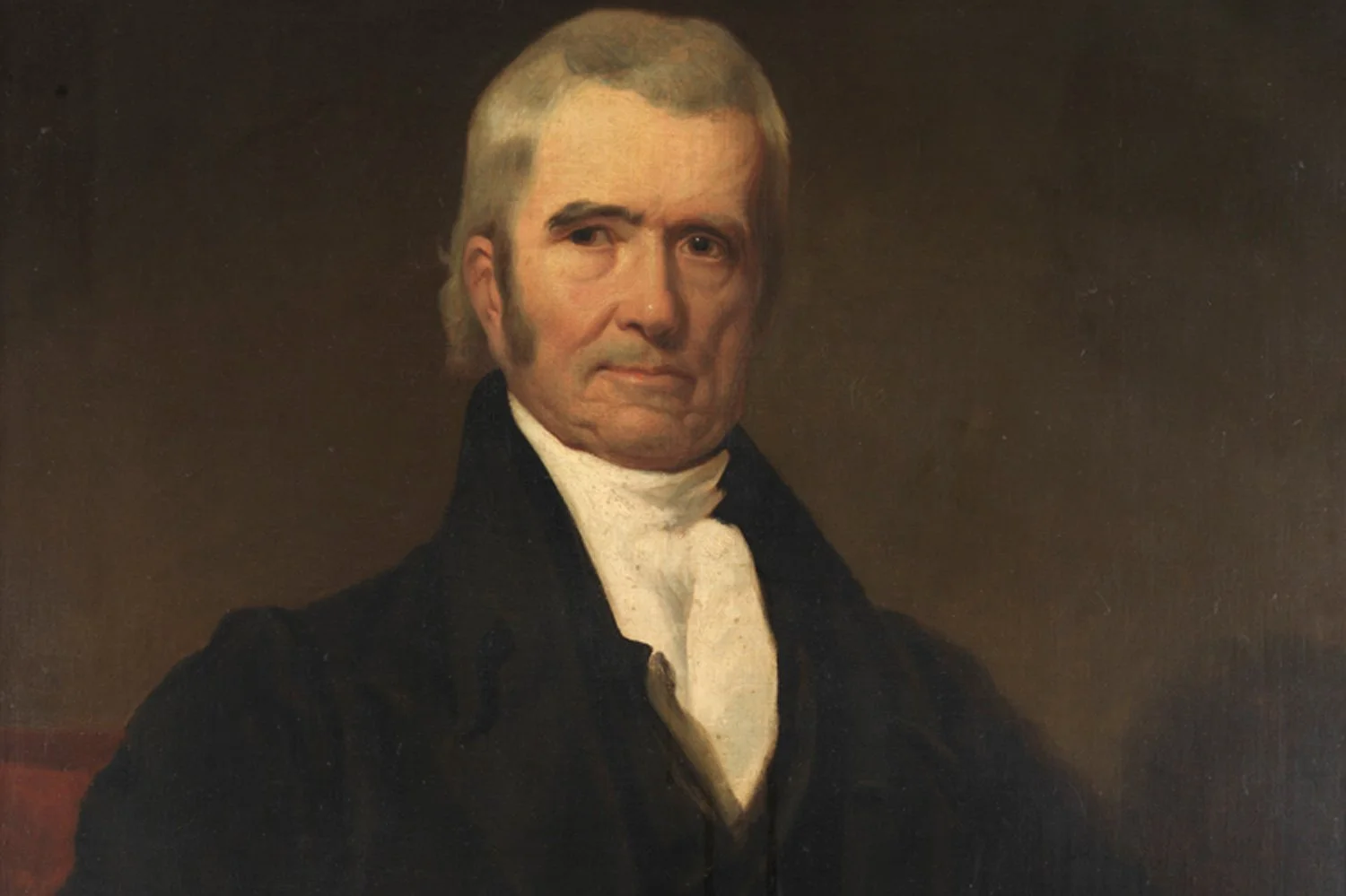
Chief Justice John Marshall’s opinion did not just defend a single federal institution. It defended an entire theory of federal power, one that still shows up every time Congress tries to address problems the Constitution does not list by name.
Join the Discussion
The dispute
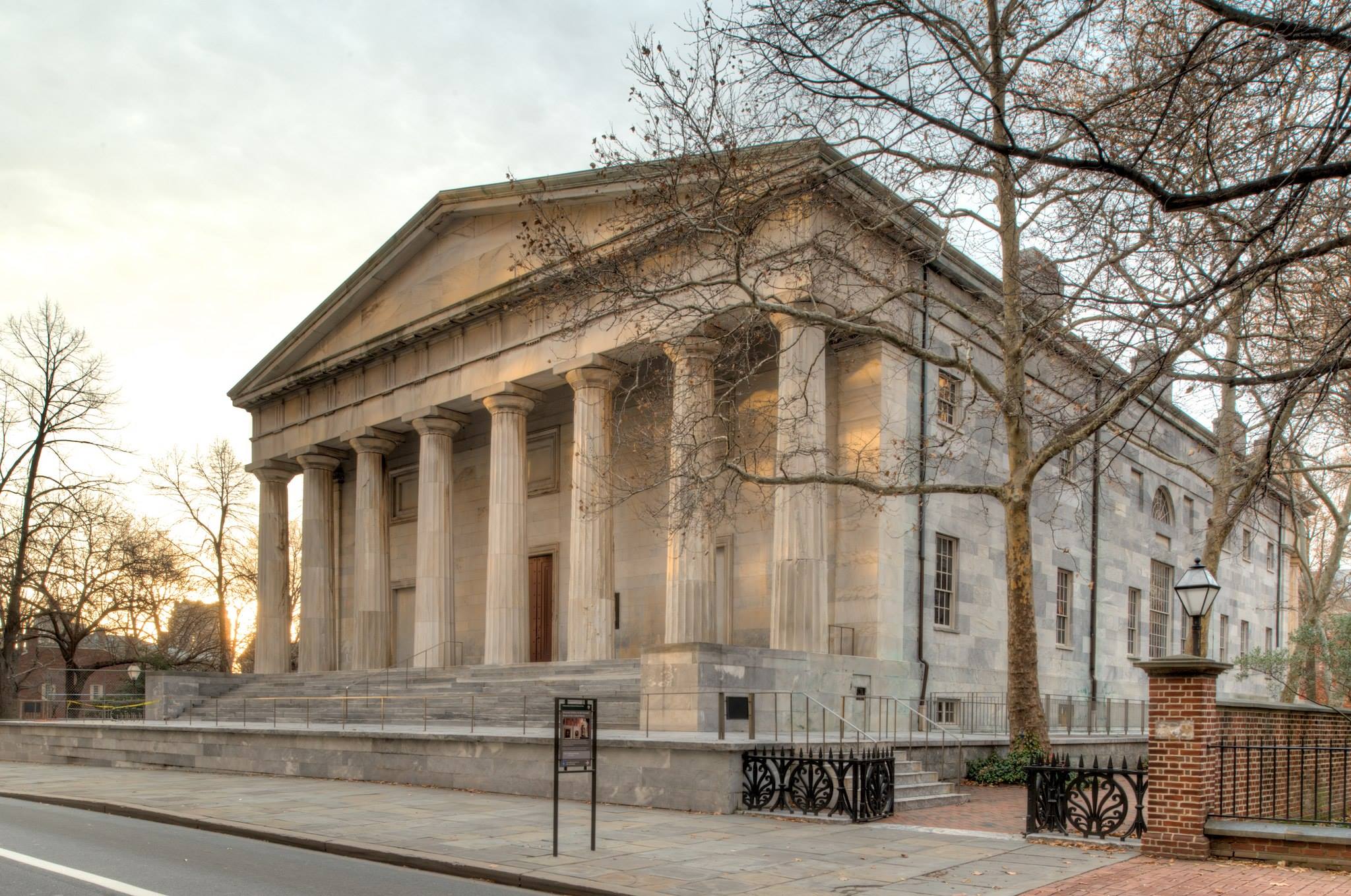
After the War of 1812, Congress chartered the Second Bank of the United States. Among other things, it served as a place for federal deposits and as a key part of the nation’s financial system. The Bank’s role and influence were politically controversial then and remain a touchstone in debates about federal economic power.
Many states, including Maryland, saw the national bank as a competitor to state banks and a symbol of federal overreach. So Maryland passed a law aimed at banks “not chartered by the legislature of this state,” requiring them to use specially stamped paper for certain bank notes and imposing fees for those stamps. In practice, the measure squarely targeted the Baltimore branch of the federally chartered Bank.
James McCulloch, the cashier at that Baltimore branch, refused to pay. Maryland sued him to collect the tax.
The case made its way to the Supreme Court after Maryland’s highest court upheld the tax. The questions presented sound technical, but they were existential:
- Could Congress create a national bank at all?
- If it could, could a state tax it?
The bank is constitutional
The Constitution gives Congress a list of powers, like collecting taxes, borrowing money, regulating interstate commerce, and paying debts. It does not explicitly say: “Congress may create banks.”
Maryland’s argument was straightforward: if the power is not explicitly enumerated, Congress does not have it.
Marshall rejected that approach as too cramped for a national constitution. His core point was that the Constitution was written to endure. It sets out broad powers and expects Congress to select workable means to carry them out.
That is where the Necessary and Proper Clause comes in. It authorizes Congress to make laws that are “necessary and proper” for executing its enumerated powers. Marshall read “necessary” to allow more than what is strictly indispensable. The question is whether the chosen means are appropriate and plainly adapted to a legitimate constitutional end, and consistent with the Constitution’s letter and spirit.
If Congress has the power to tax, borrow, regulate commerce, and manage national finances, then chartering a bank can be a proper instrument for executing those powers.
“Let the end be legitimate”
Marshall’s reasoning is often summarized by a line that still gets quoted in constitutional law classrooms:
“Let the end be legitimate, let it be within the scope of the constitution, and all means which are appropriate… are constitutional.”
This is the beating heart of implied powers. The Constitution does not try to list every tool Congress might use. It sets the ends and leaves Congress room to choose reasonable tools to reach them.
That does not mean Congress can do anything. The “end” still has to be legitimate and connected to an enumerated power. But it does mean the word “necessary” does not operate like a padlock on federal capacity.
States cannot tax it
Once Marshall concluded Congress could charter the bank, he turned to Maryland’s tax.
Here the Court drew a boundary that still structures federalism: states cannot use their taxing power to control or sabotage valid federal operations.
Marshall framed it with a principle that is as blunt as it is memorable: the power to tax involves the power to destroy. If Maryland can tax the bank, it can tax it heavily. If it can tax it heavily, it can effectively shut it down. If a state can shut down a federal institution, then federal law is not supreme in any meaningful sense.
The Constitution’s Supremacy Clause makes federal law the “supreme Law of the Land.” So when a state tax directly burdens a federal instrument created under constitutional authority, the state tax must give way.
The Court held:
- Congress had the constitutional power to incorporate the Bank.
- Maryland could not tax the Bank.
Why it matters: implied powers
Modern Americans routinely debate whether the federal government is too big, too intrusive, or too distant. But McCulloch forces a prior question: what counts as federal power in the first place?
Much of what Congress does involves tools the Constitution never names. Banks. Agencies. National programs. Complex regulatory systems. The constitutional fight is rarely about whether Congress can collect taxes or regulate commerce. It is about whether Congress can use a particular method to do those things.
McCulloch supplies the framework. If Congress is pursuing a constitutionally legitimate end within its enumerated powers and chooses means that are appropriate and plainly adapted to that end, the Court will generally treat the law as valid.
This is why the case is constantly in the background of implied-powers debates. People may not cite the decision by name when arguing over federal student loan programs, health policy, environmental regulation, or technology oversight. But the question they are asking is the same one Marshall answered in 1819: how much flexibility does Congress have to choose the means?
Why it matters: state taxes
The decision is also a foundational statement about how state power stops at the edge of federal operations.
States have broad authority to tax within their jurisdictions. But when a tax targets or meaningfully burdens the federal government itself, McCulloch stands for the idea that states cannot use revenue tools as a veto.
Later doctrine is more nuanced than a simple ban on any tax that touches something federal. For example, generally applicable, nondiscriminatory taxes that affect people who work with the federal government can sometimes be permitted, depending on what is being taxed and whether the tax is aimed at the federal government as such. The animating rule from McCulloch, though, remains the same: states cannot single out federal instruments for special burdens as a way to control federal policy.
The federalism theme
One reason McCulloch still feels alive is that it captures a permanent tension in American federalism.
States are not administrative districts. They are sovereigns with their own constitutions and political identities. But the federal government is not merely an alliance of states either. It is a national government with enumerated powers meant to act directly on people, not only on state governments.
Marshall’s opinion leaned into that national character. He emphasized that the Constitution was adopted by the people, not as a mere compact among state governments, and that the federal government must have enough functional capacity to do what it was created to do.
That is the balancing act the case teaches: states remain powerful, but they cannot treat federal operations as optional, or taxable at will.
Today’s echoes
When people argue about implied powers today, they often start with the word “necessary.” Does it mean absolutely required, or does it mean reasonably useful for carrying out an enumerated power?
McCulloch is the answer that has dominated American constitutional development: “necessary” is not “indispensable.” It is closer to a standard of fit between means and ends, with courts asking whether Congress chose an appropriate method for a legitimate objective within the Constitution’s scope.
That said, implied powers are not a blank check. Later courts have sometimes drawn tighter lines depending on the context and the claimed constitutional hook. But if you want to understand why the federal government can build institutions and adopt tools the Framers did not list one by one, McCulloch is the cornerstone.
Key takeaways
- The case began as a fight over a state tax on a federal bank. Maryland tried to pressure the Second Bank of the United States by imposing stamp fees on notes issued by banks not chartered by the state.
- The Court affirmed implied powers. Congress can choose appropriate means under the Necessary and Proper Clause to carry out its enumerated powers.
- The Court limited state taxation. States cannot single out federal instruments for taxes that would allow them to control or destroy federal operations.
- The decision still shapes federal power debates. It provides the logic used to defend modern federal tools that are not explicitly named in the Constitution.