
The First Amendment is usually taught as a shield for speakers: you can criticize the government, publish unpopular ideas, and refuse to adopt an official viewpoint. But the Amendment has a second edge that matters just as much.
The government generally cannot make you say what it wants you to say.
People often call that set of rules the compelled speech doctrine. Courts do not always treat it as one neat, single “test,” but the core principle is consistent: the First Amendment protects your control over your own message.
It shows up in surprising places: classroom pledges, state mottoes on license plates, mandatory union fees for public employees, and government efforts to require private groups or businesses to host or carry messages they reject.
Join the Discussion
The basic idea: the First Amendment protects silence too
The text of the First Amendment says Congress shall make no law “abridging the freedom of speech.” That sounds like it is only about stopping censorship. Constitutional law reads it more broadly: freedom of speech includes the freedom to choose your message, and that includes the freedom to decline to deliver someone else’s message.
Compelled speech cases often turn on a simple question: Is the government trying to force a person to affirm, display, subsidize, or host an idea they do not accept? If yes, the First Amendment alarm bells start ringing.
That does not mean every requirement to speak is unconstitutional. Governments can require disclosures in some regulated settings, can set rules for their own employees, and can speak for themselves. The hard part is sorting out which kind of “speech rule” we are dealing with.
The case that anchors the doctrine: the Pledge
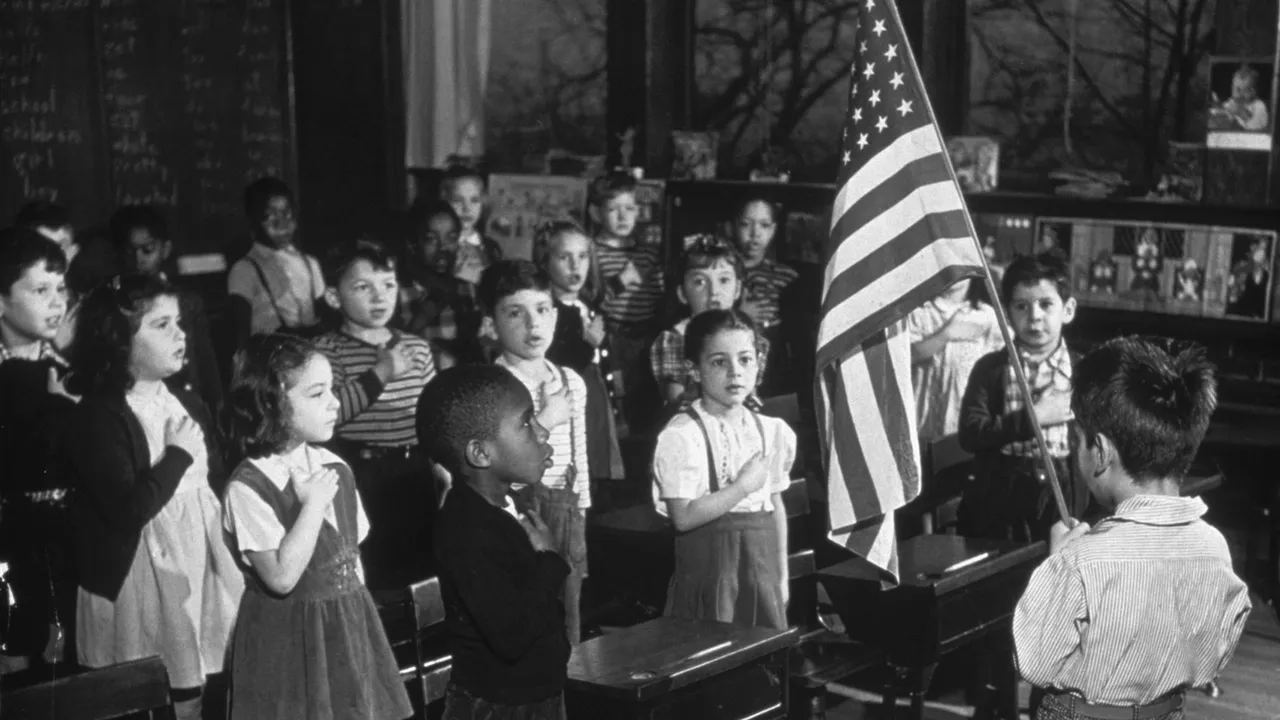
If compelled speech has a single origin story, it would be West Virginia State Board of Education v. Barnette (1943).
West Virginia required public school students to salute the flag and recite the Pledge of Allegiance. Jehovah’s Witness students refused on religious grounds. The state treated refusal as a serious violation of school rules, and the consequences could be severe: students could be expelled, and parents could face prosecution for truancy.
The Supreme Court struck the requirement down. The Court’s most famous line is still the point:
No official can prescribe what is orthodox in politics, nationalism, religion, or other matters of opinion.
Barnette is not primarily about “student speech” in the modern sense. It is about something more fundamental: a person cannot be forced to affirm a government-approved belief as the price of receiving a public benefit like education.
Different ways government can compel speech
Compelled speech is not one problem. It is a family of problems. Courts typically analyze compelled speech by category, because the constitutional questions change depending on the setting.
- Forced affirmation: requiring you to recite, salute, or pledge.
- Forced display: requiring you to carry or display a message, like a motto or slogan.
- Forced hosting: requiring you to provide your platform, property, organization, or services as a vehicle for someone else’s message.
- Forced subsidy: requiring you to pay for speech you disagree with, often through mandatory fees.
- Public employment constraints: rules governing what public employees must say, may say, or must not be forced to say.
Forced display: when the message rides on your property
One of the clearest compelled-speech cases is Wooley v. Maynard (1977). New Hampshire required license plates to display the state motto “Live Free or Die.” The Maynards, who objected to the motto on religious grounds, covered it and were prosecuted.
The Supreme Court held the state could not require individuals to use their private property as a “mobile billboard” for an ideological message. The state can print whatever motto it wants on its own materials. But it cannot force each driver to personally display it.
Important nuance: states can still require neutral identification on plates, like numbers, registration stickers, or state names. The constitutional issue is not “government requires a plate.” It is “government requires an ideological message.”

Forced hosting: when the government makes you carry someone else’s speech
Sometimes the government does not demand you repeat a slogan. Instead, it requires you to host a message you would rather exclude.
A classic example is Hurley v. Irish-American Gay, Lesbian and Bisexual Group of Boston (1995), involving the organizers of Boston’s St. Patrick’s Day parade. Massachusetts tried to apply its public accommodations law to require the parade to include a group with a message the organizers did not want to convey through their event.
The Supreme Court sided with the parade organizers. A parade is expressive. Forcing the inclusion of a message changes the expression itself. The First Amendment, the Court explained, protects not only what speakers say but what they choose not to say.
This category is why compelled speech keeps resurfacing in modern disputes about events, creative services, and platforms. A major recent case is 303 Creative LLC v. Elenis (2023), where the Court held that Colorado could not use its public accommodations law to force a website designer to create custom wedding sites expressing messages the designer did not wish to convey. The decision turned on the Court’s view that the service at issue was expressive and custom, so the state’s rule operated as compelled speech rather than a neutral requirement to provide a generic service.
Closely related is compelled association, the idea that the government cannot force private groups to include members or messages in a way that changes the group’s expression. Boy Scouts of America v. Dale (2000) is the best-known example. You do not need that case to understand Hurley, but it reinforces the same theme: the First Amendment protects editorial control over a group’s own expressive identity.
Symbolic speech: compulsion without words
Speech is not only sentences. The Court has long recognized that some actions communicate ideas so clearly that they are treated as speech for First Amendment purposes.
The leading case is Texas v. Johnson (1989), where the Court held that burning an American flag in protest is protected expressive conduct. That case is about punishment of expression, not compelled speech. But it matters here because compelled-speech conflicts often involve required conduct with expressive meaning, like salutes, mandated participation in ceremonies, or compelled display of symbols.
In practice, symbolic speech works like this:
- If an action is widely understood as expressing a viewpoint, forcing the action can look like forcing a viewpoint.
- If the action is mainly functional, courts are more willing to treat it as regulation, not compulsion of speech.
Public employees: when the government is your boss
Compelled speech becomes trickier when the person speaking works for the government. A public employer is still the government, and employees still have First Amendment rights. But employment changes the analysis because the government also has a legitimate interest in running an effective workplace.
Two ideas to keep straight
- Employee speech as a citizen: A public employee does not surrender all speech rights. When speaking as a citizen on matters of public concern, they may have protection against retaliation, depending on the context.
- Employee speech as part of the job: When an employee speaks “pursuant to official duties,” it is typically treated as the government’s own speech or as job-required speech the employer can control.
The Supreme Court framed that second point in Garcetti v. Ceballos (2006), holding that when public employees speak as part of their official job duties, the First Amendment generally does not insulate them from workplace discipline. The underlying logic is managerial: the government must be able to control its employees’ official communications, just as any employer can.
So where does compelled speech fit? Public employees can be required to deliver the government’s message when that is literally the job. But forced ideological affirmation is a different animal. A government cannot demand that employees personally pledge allegiance to a political party or endorse a candidate as a condition of employment.
In between those poles is the gray zone that produces litigation: training statements, workplace pledges, internal scripts, and requirements to communicate contested viewpoints. The closer a requirement is to doing the job, the easier it is to defend. The closer it is to ideological conformity, the more Barnette-like it becomes.

Union fees and compelled subsidy: paying for speech you reject
One of the most consequential modern compelled-speech developments is not about words at all. It is about money.
For decades, many states allowed public-sector unions to collect “agency fees” from nonmembers to cover collective bargaining and related costs, on the theory that all workers benefit from union representation and nonmembers should not free-ride. The Supreme Court had approved that arrangement in Abood v. Detroit Board of Education (1977), at least for certain nonpolitical, bargaining-related expenses.
Then came Janus v. AFSCME (2018). The Supreme Court held that requiring public employees to pay agency fees violates the First Amendment, and it overruled Abood. The reason: in the public sector, collective bargaining is deeply intertwined with public policy. Forcing a worker to subsidize that advocacy compels them to support speech on matters of public concern.
Janus treats compelled fees as a First Amendment issue because, in practice, mandatory funding can operate like mandatory endorsement. The state does not have to ban unions. It just cannot require dissenting public employees to bankroll union speech as the price of keeping their jobs.
Note the boundary: Janus focuses on public-sector employment. Private-sector labor law involves different constitutional and statutory questions, because the First Amendment constrains government action, not private employers directly.
Government speech: when the First Amendment does not help you
A lot of compelled-speech confusion comes from this fact: the government can speak. It can promote public health campaigns, patriotic observances, military recruitment, and civic slogans. The First Amendment generally does not require the government to be viewpoint-neutral in its own messaging.
This is sometimes called the government speech doctrine. The difference matters because if a message is classified as the government’s own speech, individuals generally cannot claim a First Amendment right to force the government to include their message too.
The license plate context shows how slippery this can get. In Pleasant Grove City v. Summum (2009), the Court held that permanent monuments in a public park were government speech, meaning the city could choose which monuments to display. In Walker v. Texas Division, Sons of Confederate Veterans (2015), the Court treated specialty license plates as government speech, allowing Texas to reject a proposed design.
One caution: government speech is not a magic wand that dissolves every constitutional limit. Other provisions can still matter depending on the facts, including the Establishment Clause and Equal Protection.
Put simply: sometimes the state is forcing you to speak, and sometimes the state is speaking for itself. Courts have to decide which story better fits the facts.
What compelled speech is not
Because “compelled speech” sounds broad, it gets invoked in places where it does not really apply. A few clarifications help.
- Private pressure is not a First Amendment violation. A private employer, a social platform, or a neighbor can pressure you to say something. That may be unfair or coercive. It is usually not a constitutional claim because the First Amendment limits government, not private actors.
- Neutral disclosures can be constitutional. In some regulated contexts, governments can require factual, non-ideological disclosures, especially in commercial settings. A common reference point is Zauderer v. Office of Disciplinary Counsel (1985), which allows certain “purely factual and uncontroversial” disclosure requirements tied to preventing consumer deception. Outside that lane, compelled disclosures can trigger tougher scrutiny, particularly if they push contested viewpoints.
- Not every workplace script is compelled ideology. Government employees often have to follow scripts, policies, and communications standards. The First Amendment question is whether the requirement is job-related management or forced personal endorsement.
How courts analyze compelled speech
Courts do not use one universal test for every compelled-speech dispute. But the recurring considerations are consistent. When compelled speech claims succeed, it is usually because several of these factors line up:
- The message is ideological, not merely factual or administrative.
- The individual is being made to appear to endorse it, not merely to provide a neutral service.
- The setting is personal, like a home, a private event, or a person’s own property.
- The penalty for refusal is serious, like job loss, fines, or denial of a public benefit.
- There are less speech-restrictive alternatives, like the government speaking in its own voice instead of using yours.
Sometimes readers want to know the legal “level of scrutiny.” The short version is that it varies with the category. Forced ideological messages often face the toughest review. Commercial disclosures can be treated more leniently when they are factual and uncontroversial. Public-employee speech rules often receive more managerial deference when they govern official job communications.
The most useful way to remember the doctrine is also the simplest: the First Amendment is not only about protecting your right to speak, but also about protecting your right to decide whether to speak at all.
Why it matters now
Compelled speech fights tend to surface at the pressure points of civic life: schools, workplaces, licensing, and public benefits. That is not an accident. Those are the places where government has leverage, and where citizens feel the cost of dissent.
Barnette and Wooley tell us the Constitution does not tolerate government-written scripts for personal conscience. Hurley and 303 Creative show that compelled speech is not only about slogans, but also about forced inclusion and forced creation in expressive contexts. Janus shows that coercion can be financial as well as verbal. And the public-employee cases remind us that government power expands when it is acting as an employer, but it does not become limitless.
The First Amendment’s core promise is not that everyone will agree. It is that the government cannot make agreement mandatory.