
You can memorize the Fourth Amendment in a minute. You can spend a lifetime learning the exceptions.
The border search exception is one of the biggest. It is the doctrine that lets the government search people and property at the international border, and at its functional equivalents like international airports, with a reduced level of Fourth Amendment justification. Outside recognized exceptions, warrantless searches are presumptively unreasonable. And when the government does seek a warrant, it generally must be supported by probable cause. At the border, the baseline shifts: many searches are considered reasonable simply because they happen at the border, even though the Fourth Amendment still applies and courts still ask whether the search was reasonable.
One point up front because it is a common misconception: this doctrine applies fully to U.S. citizens. Citizenship can affect what happens next in immigration terms, but it does not create a Fourth Amendment shield against routine border inspections.
Join the Discussion
Why the border changes the Fourth Amendment
The Fourth Amendment prohibits “unreasonable searches and seizures.” It does not say the government always needs a warrant. It says the government must be reasonable. Courts have long treated border control as a special context where the government’s interests are at their peak: preventing unlawful entry, collecting customs duties, and intercepting contraband.
That is the core idea: when you cross into the United States, the government gets more latitude to verify who you are and what you are bringing in. The tradeoff is that your expectation of privacy is lower at that checkpoint than it would be on a city street or in your home.
This does not mean “no Fourth Amendment at the border.” It means the reasonableness analysis is different. Some border searches can be done with no individualized suspicion at all. Others still require at least reasonable suspicion, and in a few contexts courts have suggested even more may be needed.
What counts as “the border”
The doctrine covers:
- The actual international border, including land crossings.
- Ports of entry, including seaports.
- International airports when you arrive from abroad. Courts often call this a “functional equivalent” of the border.
It also intersects with immigration enforcement inside the country. Interior checkpoints and roving patrol stops raise their own Fourth Amendment questions, and the border search exception does not automatically bless everything that happens miles away from a crossing. The closer a search looks to ordinary domestic policing, the more likely normal Fourth Amendment rules start to reassert themselves.
You may also see courts and commentators talk about extended border searches, meaning searches that happen after the actual crossing. Those searches can be constitutional, but they typically require more justification than a search at the port of entry itself, and they are more likely to be litigated like ordinary policing.
Entry and exit searches
The border exception is not only an “entry” rule. It also shows up in outbound (exit) enforcement. When people or property leave the country, the government may inspect to intercept things like bulk cash, stolen goods, or export controlled technology. The legal framing varies by context and circuit, but the practical takeaway is simple: the border is a search-heavy zone in both directions.
Routine and non-routine searches
The most useful distinction in border search law is the one courts draw between routine and non-routine searches.
Routine searches (often no suspicion required)
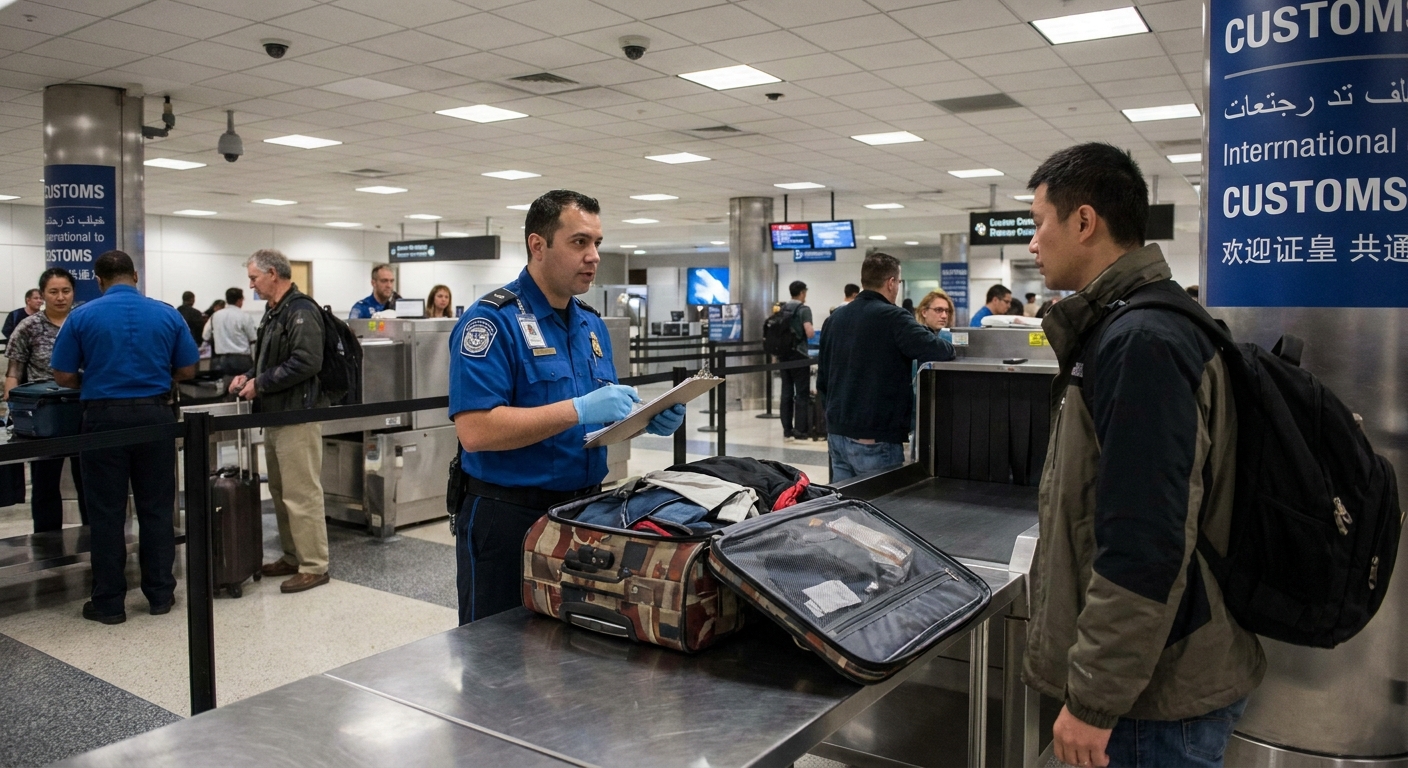
Routine border searches are the basic tools of inspection: looking through luggage, opening containers, searching a vehicle at the crossing, and conducting ordinary questioning about citizenship and travel. These searches are typically considered reasonable by default at the border.
Think of the “open the bag, look inside, swab the exterior, check the trunk” level of intrusion. It can feel invasive, but courts usually treat it as a predictable incident of international travel.
Non-routine searches (suspicion may be required)
When a search becomes significantly more intrusive, courts are more likely to require reasonable suspicion. The classic examples involve invasive searches of the person, extended detentions aimed at finding contraband inside the body, or searches of property that cross a line into extreme damage or exceptional invasiveness.
The key is the degree of intrusion. The Fourth Amendment’s reasonableness standard is still there, and the more extreme the search, the more justification the government typically needs.
Vehicles at the border
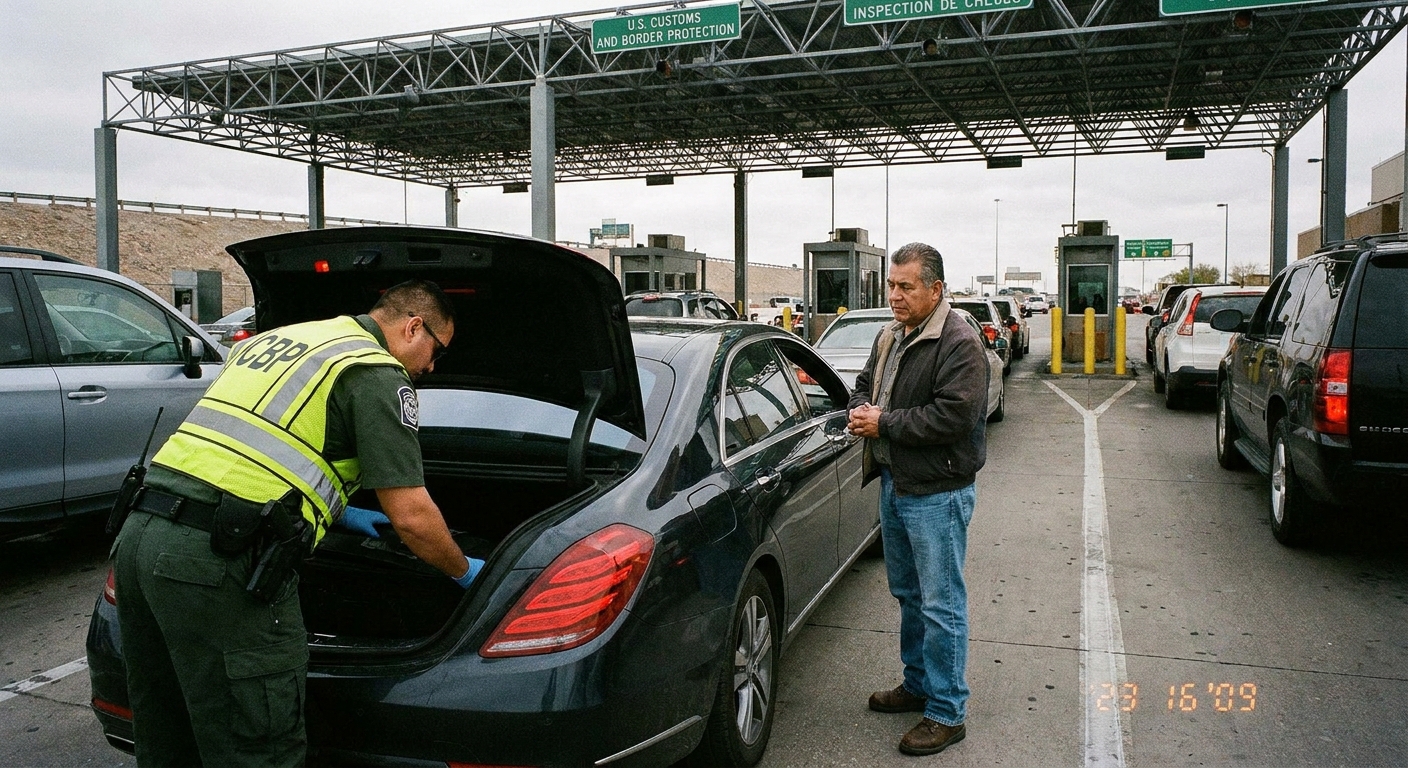
Cars and trucks are the workhorses of border doctrine. At a port of entry, agents can generally inspect a vehicle and its contents without a warrant. That can include opening compartments, looking through the trunk, and examining cargo.
People sometimes assume the “automobile exception” is doing the work here. But that is a different doctrine. The automobile exception is about mobility and reduced privacy on public roads and still ties to probable cause. The border search exception is about the border itself, and it permits a broader range of suspicionless inspection at the crossing.
One helpful Supreme Court anchor is United States v. Flores-Montano, which upheld suspicionless removal and inspection of a vehicle’s gas tank at the border. The Court suggested truly destructive searches could raise different questions, but the headline is that even fairly intensive vehicle inspection can still be treated as routine at the border.
Luggage and personal effects
For travelers, the most common border search is the simplest one: a luggage inspection. Agents can generally open suitcases and examine contents. They can also search items you are carrying, including packages, toiletry kits, and other containers.
Two points matter in practice:
- Time and place: A search tied to the entry process is in the heartland of the doctrine.
- Scope: Courts have historically treated physical inspection of baggage as routine, even when it is thorough.
Even so, border authority is not a blank check to detain you indefinitely. Routine questioning and short processing delays are broadly permitted. When detentions become prolonged, coercive, or unusually intrusive, the legality becomes more fact-specific and more likely to turn on the level of suspicion and the reasons for continuing to hold someone.
Electronic devices
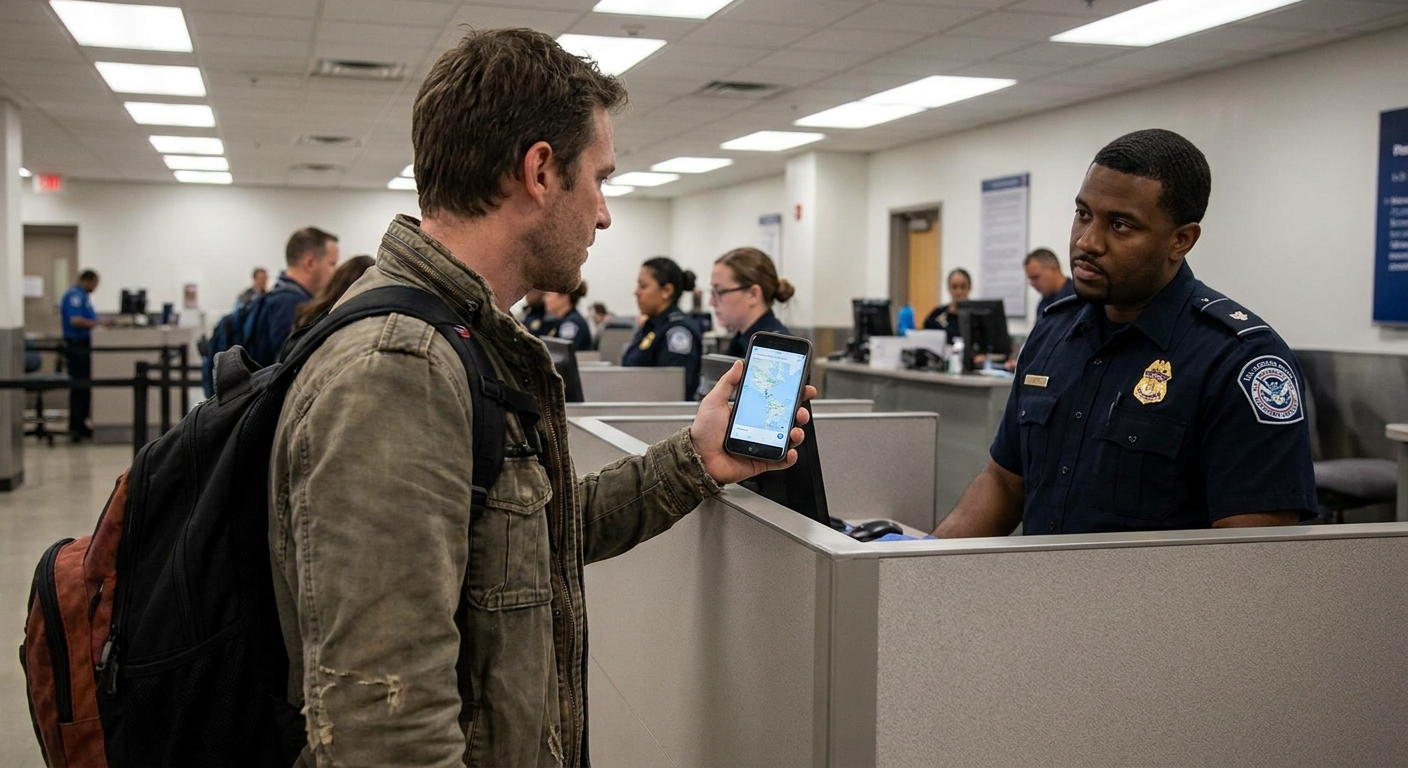
If there is one place where the border search exception feels like it collided with the 21st century, it is your phone.
A smartphone can contain years of emails, photos, medical information, banking apps, location history, and private communications. A laptop can hold entire archives of work product. That volume and intimacy are the reason electronic searches are treated differently in other Fourth Amendment contexts. The Supreme Court has recognized, outside the border setting, that digital devices raise privacy stakes in ways older containers do not.
At the border, however, the legal landscape is uneven and circuit-dependent. Courts have struggled to fit digital searches into the “routine” versus “non-routine” box. Many decisions distinguish between:
- Basic or manual searches, such as scrolling through a device without specialized tools.
- Advanced or forensic searches, such as using software or external equipment to copy, extract, or analyze data.
Representative examples: the Ninth Circuit in United States v. Cotterman treated a forensic search of a laptop as requiring reasonable suspicion; the Fourth Circuit in United States v. Kolsuz likewise treated a forensic exam as non-routine and analyzed it under at least reasonable suspicion; other circuits have been more permissive in some contexts. The practical bottom line is that advanced forensic searches are more likely to trigger a suspicion requirement than a quick manual look, but there is no single nationwide rule that cleanly settles every scenario.
There is also a related issue that confuses travelers: compelled access. A “search” of a device and a demand that you unlock it can raise Fifth Amendment questions about self-incrimination, as well as Fourth Amendment questions about reasonableness. The law here is fact-specific and varies by jurisdiction.
How border searches differ from warrants
Most people learn the Fourth Amendment as a simple story: police need a warrant, and warrants require probable cause. That story is incomplete even in ordinary settings, but at the border it is especially misleading.
Here is the contrast at a high level:
- Typical domestic search: outside recognized exceptions, warrantless searches are presumptively unreasonable; warrants generally require probable cause.
- Border search: routine searches can be reasonable without a warrant or probable cause; more intrusive searches may require reasonable suspicion; the border itself supplies much of the justification, though reasonableness still limits scope and methods.
If you want the deeper baseline rules for ordinary policing, see our explainer on search warrants.
Other doctrines at the border
The border search exception is its own rule set, but it does not exist in a vacuum. Other Fourth Amendment concepts still matter in how courts evaluate what agents did and why.
Terry stops and detentions
In the interior of the country, a brief stop for investigation can be lawful on reasonable suspicion under Terry v. Ohio. At ports of entry, officers already have broad authority to stop and question entrants, but the logic of “how long is too long” and “what justifies escalation” echoes the Terry framework.
Highly intrusive detention cases at the border often cite United States v. Montoya de Hernandez, where the Supreme Court addressed extended detention in a suspected alimentary-canal smuggling investigation. The case is a reminder that duration and conditions matter most when the detention becomes unusually burdensome or investigative in a way that goes beyond routine processing.
If you want the standard model for stops and frisks away from the border, start with our Terry stop explainer.
Plain view
Plain view is a doctrine about what officers may seize when they are lawfully present and evidence is immediately apparent. At the border, an officer opening a bag may see contraband in plain view. The key overlap is that “lawful presence” often comes from the border search exception itself.
For the general rule outside the border context, see our plain view page.
Search warrants
Even though border searches often do not require warrants, warrants can still appear in border-related investigations. If a border inspection leads to a broader criminal case, agents may pivot to ordinary warrant procedures for subsequent searches away from the crossing.
That transition matters. The border exception justifies the border inspection. It does not automatically justify everything that comes next.
The tension
Border search law is a balancing act that never stops being uncomfortable.
On one side is a government interest that is easy to articulate: controlling entry and exit, intercepting contraband, and protecting public safety. On the other side is a right that is supposed to apply to “the people” broadly, not only when it is convenient.
That tension is why electronic devices matter so much. A suitcase search is intrusive, but finite. A phone search can quietly become a search of your associations, your politics, your medical life, your finances, and your private communications. The doctrine built for trunks and luggage now has to justify access to an entire person’s digital footprint.
What travelers should take away
- The border is one of the rare places where routine searches often need no warrant and no probable cause, and that is true for U.S. citizens and non-citizens alike.
- More intrusive searches are more likely to trigger a requirement of reasonable suspicion, especially invasive searches of the person or forensic extraction from electronics.
- Digital searches are the most contested area, with courts drawing lines between manual review and forensic analysis, and with different rules in different circuits.
- The doctrine is not only about entry. Outbound searches can also be justified at the border.
- Border authority is broad, but it is not limitless. The Fourth Amendment question is still reasonableness, and courts still examine intrusion, scope, duration, and justification.
The Constitution does not stop at the border. It changes posture there. And the ongoing fight is over how much change is too much.