
It is easy to talk about “due process” like it is a courtroom concept. A judge. A lawyer. A formal charge. A tidy timeline.
But due process often fails earlier, in the messy place where armed authority meets an ordinary morning.
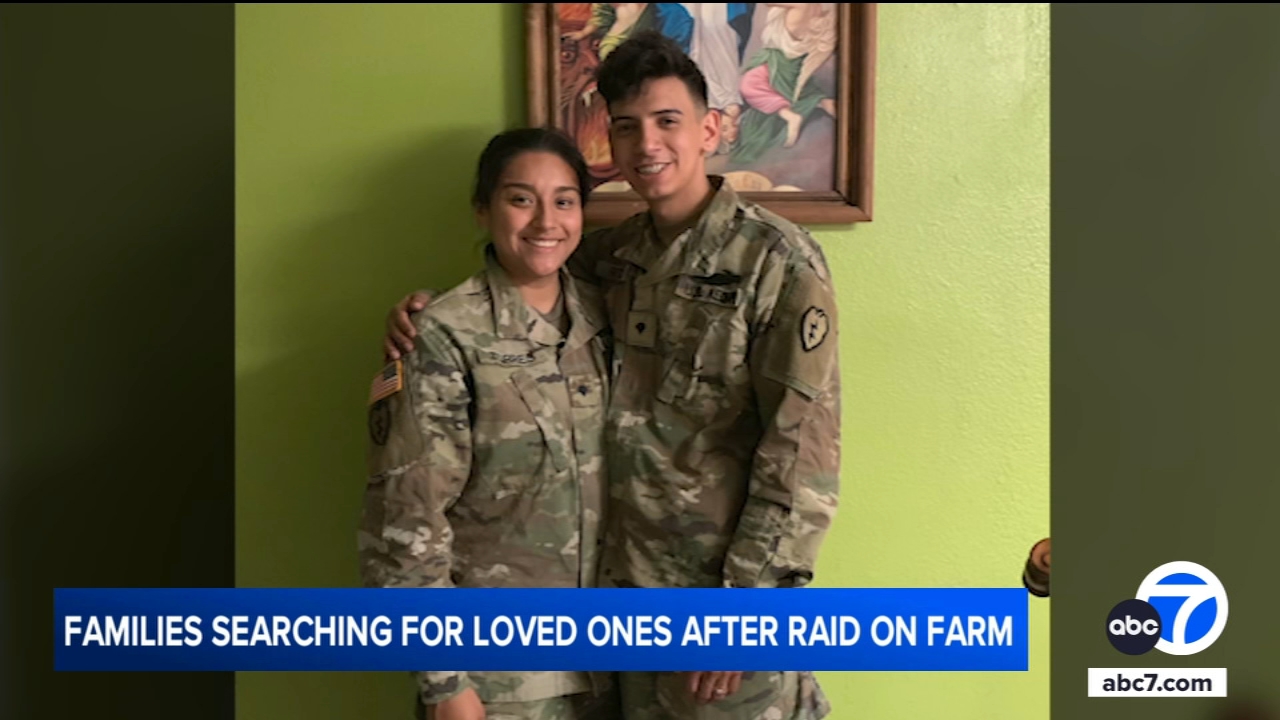
George Retes, a 25-year-old U.S. citizen, Army veteran, and father, says that on July 10, 2025, he drove to work at a legal cannabis farm in Ventura County, California and ran straight into an immigration raid. What followed, he alleges, was tear gas, a shattered window, pepper spray, a violent arrest, and more than three days in custody with no meaningful explanation. Later, the Department of Homeland Security publicly claimed he had been arrested for assaulting law enforcement, a claim Retes says is false.
If that story makes you ask, “How can that happen to an American citizen?” you are already in the right constitutional frame.
Join the Discussion
The Constitution has no ICE carveout
Immigration enforcement sits in a strange corner of American life. It is federal, it is forceful, and it often involves people who do not have full constitutional protections in every respect.
That last part leads some Americans to assume immigration agents operate under a different Constitution.
They do not.
When the government lays hands on a citizen, the familiar rules apply. And the two amendments that matter most at the moment of arrest are not complicated in concept, even if courts have made their application technical.
- The Fourth Amendment governs stops, arrests, and force. It demands reasonableness. It generally requires probable cause for an arrest.
- The Fifth Amendment guarantees that the federal government cannot deprive a person of liberty without due process of law.
Retes’ allegations raise both: whether federal officers had adequate justification to arrest him, and whether the government provided a constitutionally adequate process once it did.
What happened, as alleged
Retes says he drove toward his worksite and encountered chaos: blocked roads, parked cars, and people protesting. He says he eventually reached a line of agents who stopped him in the road. Hoping to get to his shift, he pulled up, parked, and got out to ask to pass.
He describes officers shouting conflicting commands and profanity, including “Get the fuck out of here!” and “Leave!” while also ordering him to get back in his car and pull over. He says he asked for a badge number he could give to his boss when he did not show up on time, and that this made the agents angrier.
Retes says he told them immediately he was a U.S. citizen and was trying to get to work. “Literally the first words out of my mouth was that I was a U.S. citizen, that I'm just trying to get work…and they just didn't care,” he has said.
Trying to comply and leave, he says he got back into his car. Then, he alleges, agents unexpectedly moved in, surrounded the vehicle, banged on the windows, and pulled on the door handles while continuing to issue contradictory commands. He says tear gas thrown toward protesters behind him drifted into and engulfed his car, leaving him coughing and unable to see clearly.
He says glass then went flying as his window was shattered, and an agent immediately pepper-sprayed him through the broken window. A moment later, he says, he was dragged from the car, forced down, and restrained. “At that point,” Retes has said, “I'm just a ragdoll.” He also says officers knelt on his back and neck and that he pleaded that he could not breathe.
Then came the part that turns a street encounter into a due process crisis. Retes says he was zip-tied, taken onto the farm where he worked, and left sitting in the dirt for four hours. “The entire time I was sitting there, they only asked for my ID once,” he has said. He told them it was in his car, which he says had disabled veteran plates, and he does not know whether anyone checked.
Retes says he was eventually driven to a Navy base where authorities took his fingerprints, his picture, and a mouth swab for DNA. He says they read him his rights and told him they were investigating what happened and why he was there, but, “They never said I was being charged with anything. They never said that I was getting arrested.”
He says he was then transported to the Metropolitan Detention Center in downtown Los Angeles, processed, and strip-searched. He says he repeatedly asked to call his family or a lawyer and was ignored, and that his requests for a shower to wash off tear gas and pepper spray were also ignored.
“There was no explanation,” Retes has said. “I didn't do anything wrong,” he has also said.
Retes says that after a medical evaluation the next day, he was placed on suicide watch in a constant-light cell and still was not allowed to make a phone call. He says he was released on Sunday after spending over three full days in custody, and that he missed his daughter's birthday while detained.
The Fourth Amendment question
Start with the simplest constitutional baseline: the federal government cannot arrest you because it feels like it.
An arrest is a seizure under the Fourth Amendment. To be lawful, it generally requires probable cause that the person committed a crime. If officers lack probable cause, an arrest becomes constitutionally unreasonable.
In immigration operations, officers may be looking for civil immigration violations as well as crimes. But that does not create open season on citizens. A citizen cannot be arrested and held for civil immigration removal purposes because there is nothing to “remove” them from.
So constitutionally, the government has to be able to answer questions like these:
- What exactly did agents think Retes did? Was there a specific offense, or was he swept up in the chaos?
- What evidence supported that belief at the moment force was used? Probable cause cannot be invented after the fact.
- Was the force reasonable? Even when an arrest is justified, the Fourth Amendment still limits how it is carried out.
Retes’ account, if proven, describes escalation amid contradictory commands and deteriorating conditions, followed by detention without a clear criminal charge communicated to him at the time.

The Fifth Amendment question
Due process is not only about the final outcome. It is about procedures that reduce the risk of error when the government takes your freedom.
When someone is detained, a constitutional system is supposed to answer three basic questions quickly:
- Who is this person?
- Why are they being held?
- How can they challenge it?
In ordinary criminal cases, that structure is enforced through prompt presentment to a judge, access to counsel, formal charging decisions, and bail procedures.
Immigration enforcement can involve different procedures and timelines, and one risk in high-tempo operations is that a mistaken detention does not get corrected quickly. A citizen misidentified as removable can end up pushed through processes built for noncitizens, even though the core premise is wrong.
Retes’ allegations describe the worst version of that risk: a citizen repeatedly asserting his citizenship, while the government continues to hold him anyway, without giving him a meaningful chance to prove it and without explaining what, exactly, justified continued custody.
Due process as verification
When the government gets the wrong person, the constitutional injury is not just the initial error. It is the refusal, delay, or indifference to correcting it.
A system that respects due process treats identity as a threshold issue, especially when the consequence is incarceration. That means officers should have incentives and clear procedures to do the obvious work: check identification, run database queries carefully, compare biometrics, and document the basis for continued detention.
Retes says his ID was in his car and that his vehicle had disabled veteran plates. He says he does not know if anyone checked. He also says that even after authorities took his fingerprints, his picture, and a DNA mouth swab, he was still held for days.
If the government had readily available avenues to confirm citizenship and did not use them, that is not mere bureaucratic sloppiness. It becomes the constitutional story.
The false claim issue
Retes says the first explanation he received for his arrest came later, not from a charging document or a judge, but from a public statement by the Department of Homeland Security claiming he had assaulted law enforcement. He calls that claim “a lie.”
Even setting aside defamation concepts, false official narratives matter constitutionally because they can:
- Retrofit justification for an arrest that was shaky in real time.
- Poison accountability by shaping public perception and discouraging oversight.
- Influence future proceedings if the government later tries to bring charges or defend civil litigation.
Due process is not only “did you get a hearing.” It is also whether the government plays fair with the facts when liberty is at stake.
What remedies exist
Here is the uncomfortable civics lesson: the Constitution can recognize a right, and the legal system can still make it hard to enforce.
For state and local officers, a key accountability tool is 42 U.S.C. § 1983, which allows lawsuits for constitutional violations under color of state law.
For federal officers, the path is narrower. The Supreme Court’s 1971 decision Bivens v. Six Unknown Named Agents recognized a damages remedy for some Fourth Amendment violations by federal agents, but the modern Court has sharply limited when that remedy is available.
Retes and his attorneys have filed suit under the Federal Tort Claims Act against the federal agencies involved in his detention. The lawsuit stems from what they argue were violations of his Fourth and Fifth Amendment rights.
That gap between “right” and “remedy” is not accidental. It is policy, doctrine, and immunity law layered on top of the Bill of Rights.
Due process is not a slogan
Workplace raids and crowd-control tactics create exactly the environment where constitutional shortcuts become tempting. Confusion starts to look like guilt. Proximity starts to look like suspicion.
And when a citizen is caught in that machinery, the Constitution’s promise is supposed to be simple: the government must have a legitimate basis to seize you, must use reasonable force, and must provide a real and timely way to challenge your detention.
Retes has said, “This is much bigger than just me.” That is not rhetoric. It is a constitutional diagnosis.
Because the question is not whether the government will ever arrest the wrong person. It will.
The constitutional question is what happens next. Does the state treat error as an emergency to correct, or as an inconvenience to ignore?
What to watch next
Cases like this tend to turn on facts courts can verify: video, audio, logs, transport records, intake paperwork, and timestamps showing when identity checks happened, if they happened at all.
But the larger civic issue is structural. If immigration enforcement routinely sweeps up citizens, the fix is not only individual compensation after the damage is done. It is procedural: policies that force rapid verification, mandatory documentation, and prompt access to communication and counsel when liberty is taken.
Due process is the idea that government power should be constrained by procedure because procedure is what keeps power from becoming purely discretionary.
If we forget that, we do not just risk detaining the wrong person. We risk normalizing a government that can cage the right person, for the wrong reason, for days, and call it enforcement.