
You can feel the legal tension in the headline: a U.S. senator sends a “criminal referral” over abortion pills allegedly being shipped into states that ban abortion. The obvious question follows immediately.
Can abortion pills be mailed across state lines, or is that automatically a federal crime?
The frustrating answer is also the accurate one: it depends on which law you mean and which conduct you are talking about. “Mailing abortion pills” can implicate federal criminal statutes, FDA regulation, state abortion bans, private-carrier rules, and the constitutional boundary line between state police power and federal control of the mail and interstate commerce.
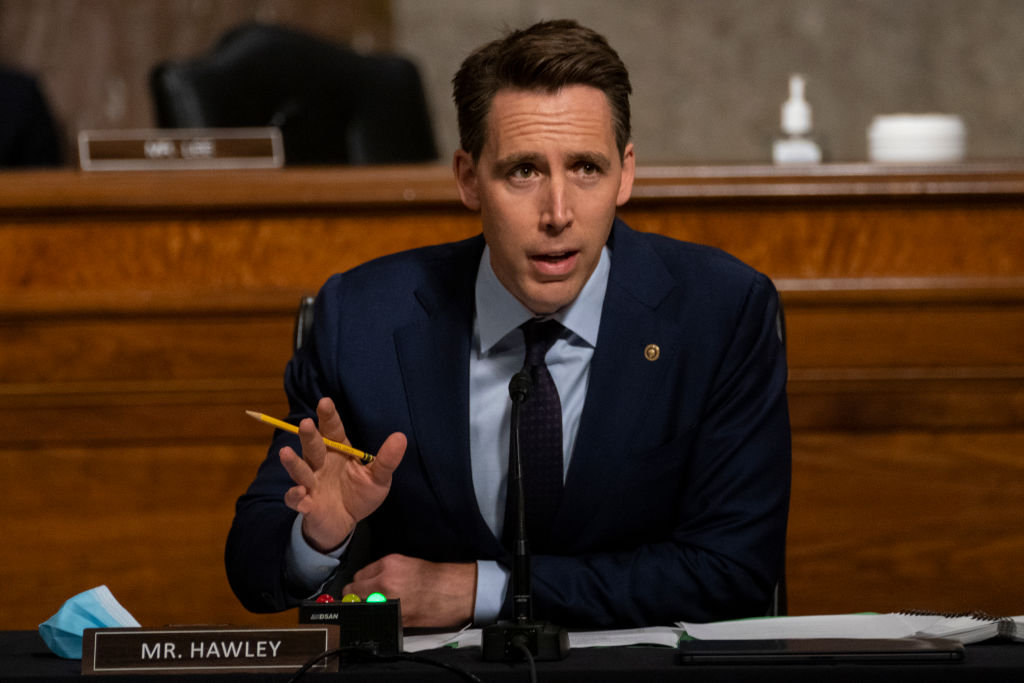
Note on the news hook: This explainer uses the idea of a Senate “criminal referral” as the prompt because that is how the issue often re-enters the public debate. If you are reading this in connection with a specific referral attributed to Sen. Josh Hawley, verify the date, the target, and the statutes cited in the actual letter or supporting material. Those details matter for what, if anything, DOJ can realistically do next.
Join the Discussion
What a referral is
Sen. Josh Hawley’s “criminal referral” is best understood as a request, not a prosecution. A senator cannot indict anyone. A referral is essentially a letter or packet sent to the Department of Justice (and sometimes an inspector general or another enforcement office) arguing that certain facts may amount to a violation of federal criminal law.
What matters legally is what the referral claims happened, who it says did it, and which statutes it invokes. When the full letter and supporting material are public, it becomes easier to assess the specific theory of liability. When key details are not public, the referral is best understood as an attempt to frame a broader enforcement question: whether federal law can be used to target cross-border distribution of abortion drugs, especially into states with abortion bans.
What it can do
- Prompt DOJ review of the allegations and any supporting material.
- Encourage investigative steps if DOJ thinks there is a plausible federal offense and a provable case.
- Signal political priority and add public pressure around enforcement choices.
What it cannot do
- Compel DOJ to investigate or bring charges.
- Change the underlying law on mailing medication or abortion.
- Replace evidence. Federal criminal cases require proof beyond a reasonable doubt, built from documents, witnesses, and chain-of-custody proof.
The basics on the pills
Medication abortion in the United States most commonly involves mifepristone (which blocks progesterone) followed by misoprostol (which causes uterine contractions). Misoprostol also has multiple non-abortion medical uses, which can matter legally when intent is disputed.
The federal mailing law
When people say “federal law bans mailing abortion pills,” they are usually pointing to 19th-century provisions often called the Comstock Act, mainly 18 U.S.C. § 1461 (mail) and 18 U.S.C. § 1462 (common carriers and interstate transport). These provisions are not limited to “obscene” materials. They also include abortion-related language.
At a high level, § 1461 bars using the mail for items described in the statute, including things “designed, adapted, or intended for producing abortion,” and § 1462 applies similar concepts to express companies and other carriers in interstate commerce. How those words apply to modern FDA-approved drugs is where the legal fight lives.
The key fight: intent
Modern disputes often hinge on intent. Courts and DOJ arguments often focus on what it means for an item to be “intended” for producing abortion, and whether that intent must be tied to an abortion that is unlawful under relevant law in the circumstances.
Interpretations have varied over time and across contexts. The executive branch has, at times, taken the position that these provisions should be read with an unlawful-use limitation in light of later legal developments and longstanding practice. Others argue the text is broader and should be enforced as written. A criminal referral is often designed to push DOJ toward a more aggressive reading.
USPS vs private carriers
“Mailing” can mean different things legally.
- USPS is squarely covered by § 1461 and other federal mail statutes.
- Private carriers (like UPS or FedEx) are not the U.S. Mail, but § 1462 is the provision people point to when arguing federal restrictions can apply to interstate carriage by non-USPS channels.
So “I did not use USPS” is not automatically a safe harbor if the government is pursuing a Comstock-style theory. But the statutory fit and the proof problems may look different depending on the channel.
FDA rules and REMS
The abortion-pill debate often collapses into “abortion” as a political category. But much of the law runs through a more technocratic channel: the FDA regulates drugs nationally.
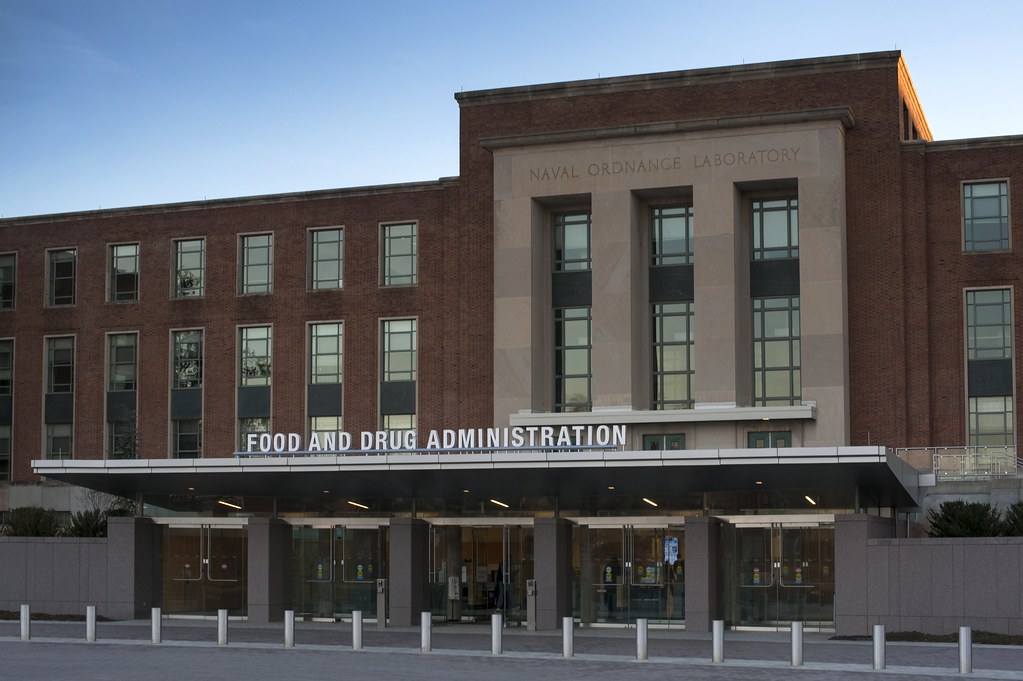
Mifepristone is FDA-approved under conditions that include the agency’s Risk Evaluation and Mitigation Strategy (REMS). Those requirements have changed over time, and they can be updated again. As of current FDA policy, mifepristone may be dispensed through certified pharmacies, including by mail, subject to REMS certification and other conditions.
Two clarifications reduce confusion:
- Misoprostol has multiple lawful uses and is widely used for other indications (including ulcer prevention and obstetric care). That matters for any argument about what a sender “intended” and for how enforcement narratives are built.
- These drugs are not controlled substances under federal controlled-substances scheduling, so the core legal fights are not about DEA-style controlled-substance trafficking rules.
Practical point: readers often assume all shipments are alike. They are not. Enforcement risk can look very different for FDA-compliant prescriptions from certified channels versus non-prescription distribution or pills sourced outside regulated U.S. pharmacy pathways.
State bans and shipments
Dobbs v. Jackson Women’s Health Organization did not ban abortion nationwide. It removed the federal constitutional right recognized in Roe and Casey and returned primary regulatory power to the states. The result is a patchwork where:
- Some states permit medication abortion broadly.
- Some states restrict it by gestational age, provider rules, or telemedicine limits.
- Some states ban most abortions and try to restrict in-state provision of abortion pills.
Can a state punish receiving pills?
It varies widely. In many states, enforcement is aimed at providers, prescribers, and distributors rather than patients, and some states include explicit patient-protection language. Others are less clear. As a general trend, states tend to have their strongest footing when they regulate or punish in-state conduct by in-state actors, and a weaker footing when they try to reach out-of-state actors.
When states reach outward
If a person in State A ships a product from State A to a recipient in State B, State B will argue the harmful effects occurred in State B. That is the basic jurisdictional theory. But outward-reaching cases often trigger constitutional challenges, including:
- Due process limits on personal jurisdiction, especially for out-of-state defendants.
- Extraterritoriality concerns, where a state effectively tries to regulate conduct occurring wholly outside its borders.
- Dormant Commerce Clause arguments that a state cannot unduly burden interstate commerce or project its policy into other states.
Three scenarios
Readers usually want the law to resolve into yes or no. In practice, it resolves into fact patterns.
Scenario 1: clinician to patient
A licensed clinician in a permissive state mails mifepristone to a patient in a restrictive state. The legal questions typically include: Is the prescription lawful under the clinician’s state law and the patient’s state law? Do the FDA’s REMS requirements appear satisfied? Does the restrictive state try to claim jurisdiction over the clinician? And on the federal side, would prosecutors try to use § 1461 or § 1462, and could they prove the mailing was “intended” for an unlawful abortion under the relevant law?
Scenario 2: online seller or pharmacy
An online entity ships pills nationwide. This raises the same Comstock and FDA issues, plus additional scrutiny around whether the operation is a legitimate pharmacy channel, whether prescriptions are valid, and whether the entity is marketing into states where the underlying medical act is prohibited.
Scenario 3: individual to individual
A friend or relative ships misoprostol to someone in another state. This can be harder to detect, but if discovered, the legal risk analysis often turns on proof: what was sent, what was known, what was intended, and what state laws criminalize aiding, abetting, or unlawful distribution. The fact that misoprostol has many lawful uses can become central to the intent debate.
What courts have said
There is no single Supreme Court decision that cleanly answers “Comstock makes all abortion-pill mailings illegal” or “Comstock is dead.” Instead, the landscape is shaped by ongoing litigation, conflicting legal theories, and executive-branch interpretations.
In broad strokes, the disputes that keep returning to courts include:
- Challenges involving FDA actions on mifepristone approval and distribution conditions, including who may dispense and under what safeguards.
- Disputes over federal enforcement posture on the Comstock provisions, including how to read “intended” and what prosecutors must prove about the sender’s purpose.
- State efforts to restrict cross-border provision, which can raise jurisdiction, preemption, and interstate commerce questions.
The practical takeaway for readers is modest but real: the intent question and the federal-state conflict question are live issues. That is why officials keep trying to tee them up through referrals, lawsuits, and enforcement actions.
Is it a federal crime?
Here is the durable way to think about it.
- There is no single modern statute that simply says: “Mailing abortion pills is always a federal crime.”
- There are federal criminal mailing and carriage statutes that may be argued to apply, especially 18 U.S.C. § 1461 and § 1462, depending on how courts interpret “intended” and what counts as an unlawful abortion in context.
- There are FDA rules and federal drug laws that govern lawful distribution channels, and violations can carry civil, and in some settings criminal, consequences.
- There are state laws that may criminalize providing medication abortion within that state, with wide variation in who is targeted and how aggressively cross-border theories are pursued.
In other words, legality turns on who is shipping what, by which channel, from where, to whom, under what medical authority, and with what intent, plus how courts resolve conflicts between state bans and federal control of drugs, carriers, and the mail.
Enforcement paths
When a public official calls for a “criminal probe,” people often imagine a single lever being pulled. In reality, there are multiple paths, each with its own standards.
Federal path
- DOJ can evaluate whether a specific shipment fits a chargeable offense and whether evidence can prove knowledge and intent.
- Mail-related investigations can involve the U.S. Postal Inspection Service.
State path
- States with bans can investigate in-state prescribing, dispensing, advertising, or alleged aiding and abetting, as defined by state law.
- When states target out-of-state actors, expect constitutional litigation over jurisdiction, extraterritoriality, and interstate commerce burdens.
Civil and administrative path
- Licensing boards can discipline in-state professionals.
- Regulators can pursue civil penalties tied to unlawful distribution channels.

What to watch
- DOJ posture: whether federal enforcement leans toward a narrower or broader reading of the Comstock provisions, especially on intent.
- Court rulings: decisions that clarify preemption, jurisdiction over out-of-state providers, and how “intended” is proved.
- State experimentation: new state laws aimed at telemedicine, shipment facilitation, or aiding-and-abetting theories, and the inevitable constitutional challenges that follow.
FAQ
Does the federal government control what can be mailed?
Yes. Congress has broad constitutional authority over the postal system, and it can attach criminal penalties to certain uses of USPS. The dispute is usually about which items a statute covers and what prosecutors must prove, including intent.
Does FDA approval override state bans?
Not automatically. FDA approval and REMS set federal conditions for lawful marketing and distribution. States still regulate medical practice and can restrict abortion. Whether a particular state rule is preempted by federal law is a separate legal question that depends on the details of the state statute and the federal scheme.
Does “across state lines” make it federal?
Interstate shipment makes federal authority more relevant because interstate commerce and carriers are federal domains. But it does not mean every shipment triggers a clear federal criminal violation, especially where statutory interpretation and intent are disputed.
Are these pills controlled substances?
No. Mifepristone and misoprostol are not scheduled as controlled substances under federal controlled-substances law, which is why the key federal arguments tend to focus on mailing and drug-distribution rules instead.
The bottom line
After Dobbs, abortion policy moved back into state legislatures. But the infrastructure of modern life did not. USPS is federal. Interstate carriers are part of interstate commerce. Drugs are regulated nationally. That is why disputes about mailing abortion pills become disputes about 18 U.S.C. § 1461 and § 1462, FDA REMS and drug-distribution rules, and the constitutional limits on state power when a state ban collides with national systems.
A senator’s referral matters as a political and procedural trigger. The legal question it points toward is older and harder: when states ban a medical act, how far can they reach into the channels of commerce and communication that Congress regulates?