
You can rename a lake in a speech in about five seconds.
You can even instruct executive-branch agencies to start using the new name in their press releases and talking points.
But you cannot rename geography the way you rename a post office, because geographic names live in shared systems that have standardization processes and many different users, including other sovereigns.
To be clear up front: this piece is a civics explainer about how a “presidential renaming” would work, what actually changes (and what does not), and where the legal pressure points are if a president attempted to push a new federal name for a binational Great Lake like Lake Ontario. If you are reading this because you saw headlines about “Lake America,” treat that as the prompt for the question, not proof that a legally effective federal renaming has occurred. The decisive details would be: what specific federal action happened (executive order, agency memo, or a Board on Geographic Names decision), when it happened, and what federal products actually changed.
If a federal name change did happen, what you should expect to change first is narrow: federal map labels, federal datasets, and executive-branch style guidance. What you should not expect to change automatically is private speech, state signage, or what Canada calls the lake.
Join the Discussion
What renaming means
In American law and practice, a place name can exist in several different layers at once:
Everyday usage: what residents, news outlets, and tourists call it.
Official federal usage: what appears on federal maps, federal datasets, federal signs, and federal publications.
State and local usage: what appears on state maps, highway signs, and local ordinances.
International usage: what Canada, international mapmakers, and treaty partners call it.
When people say “the president renamed a lake,” they are usually describing a change in federal usage, not an act that alters the name in every context everywhere. The practical question becomes: who standardizes names for federal use, and what authority (if any) does the president have to change that standardization?
The federal naming system
The United States’ institutional answer to naming disputes is the U.S. Board on Geographic Names (BGN). Its job is not poetic. It is administrative. The point is to ensure the federal government uses one standardized name for each feature in official federal products.
Structurally, the BGN is an interagency body. The Department of the Interior, through the U.S. Geological Survey, hosts key functions and maintains the federal names database (GNIS), but the BGN is not just one Interior office handing down labels. It is a coordination system so that USGS, NPS, FEMA, NOAA, DOT, DOD, and others are not all using different names for the same thing.
One helpful way to keep the pieces straight: the BGN is the decision and standard-setting body for federal usage; GNIS is the database that records those standardized names and related information for use across federal products.

How a name changes
A common misconception is that a federal name change happens by sheer declaration, and then maps immediately update like a phone setting.
In reality, a typical federal naming change is slow and procedural. While specifics vary by feature and context, the basic shape is usually:
A proposal is submitted or initiated.
Input is gathered, often including state and local views and evidence of local usage.
A decision is made through the BGN process for federal standardization.
The standardized name is recorded in GNIS and then rolls out over time across federal products as datasets, maps, and signage cycles update.
The BGN also tends to look for practical governance reasons to standardize: consistency, evidence of usage, and whether the change is supported or opposed by relevant governments and communities. When the BGN acts, the result is not just vibe. It is a recorded federal standard that agencies can point to when they update maps and databases.
This is why “you can get federal materials to start printing the new name” needs a little tightening. An administration can push usage quickly in communications, but the broader ecosystem of maps, datasets, and physical signs updates on real-world timelines and budgets.
Can a president order it?
A president sits atop the executive branch, so presidential influence is real, but usually indirect and procedural:
The president can direct executive agencies to use a preferred term in communications and internal style guidance.
The administration can press relevant agencies to support or initiate a naming change through the established process.
The administration can shape executive-branch participation through appointments and management priorities.
What a president generally cannot do is bypass statutory constraints, ignore required procedures, or use naming as a shortcut around other binding law. If the federal “rename” is actually a final agency action (for example, a BGN decision that changes the standardized federal name for federal usage), that action can potentially be reviewed in court under ordinary administrative-law principles, assuming a plaintiff has standing and a viable cause of action.
One more practical point: not every naming controversy becomes a lawsuit with traction. Courts usually want a reviewable final action and a concrete, legally cognizable injury, not just a dispute over terminology.
A border lake
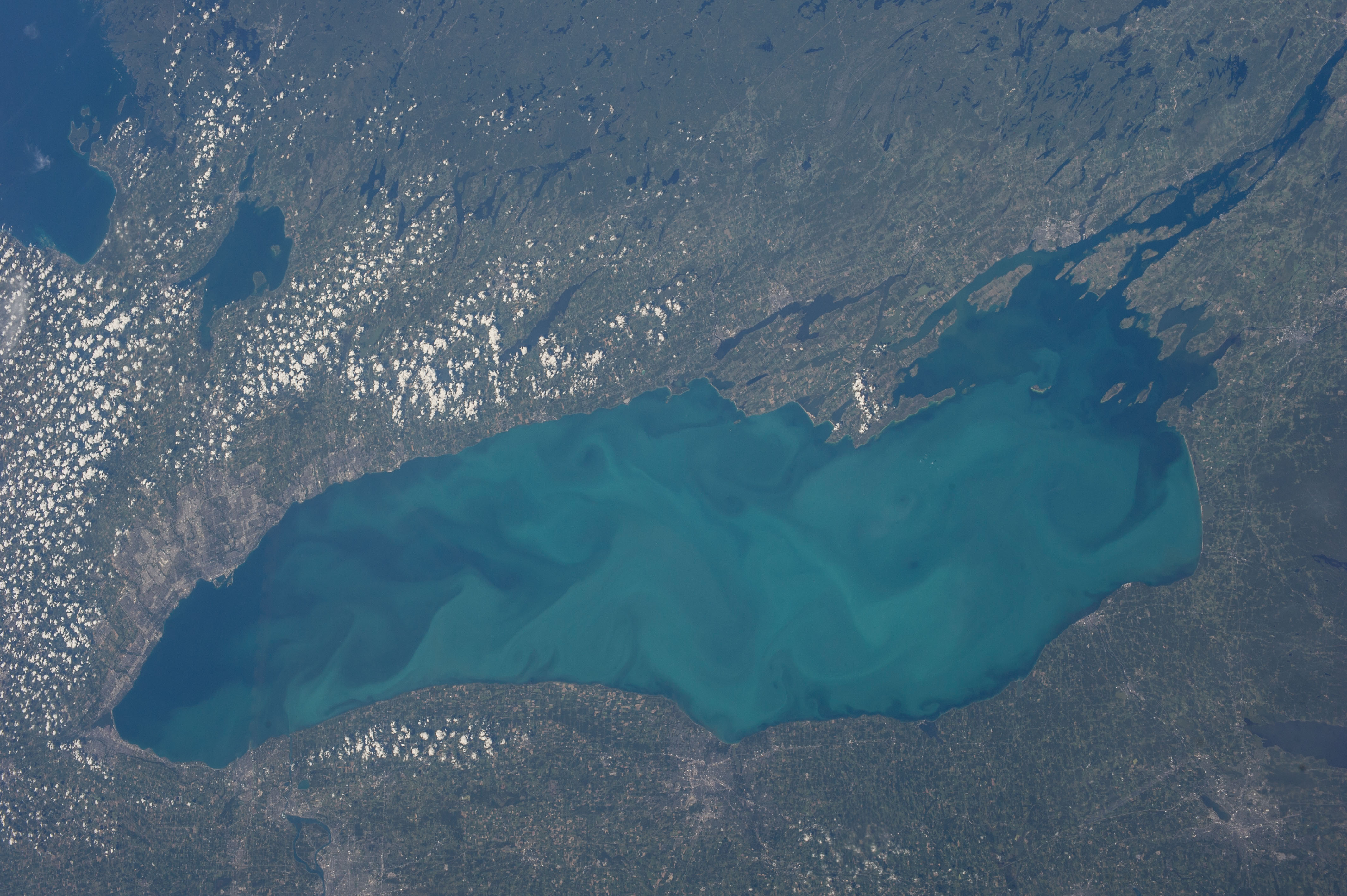
Even if you assume the federal naming apparatus could be pushed into adopting a new name for federal usage, Lake Ontario is not purely an internal U.S. feature. It is a binational body of water connected to the Great Lakes system and shared with Canada.
That does not mean the United States is forbidden from using a domestic preferred label in some contexts. It does mean that any “renaming” should be understood as a U.S. internal naming choice. It will not automatically be mirrored by Canada, by international bodies, or by private mapmakers.
In other words: the United States can change what its federal materials say, but it cannot unilaterally make the rest of the world call a shared border lake something else.
The treaty hook
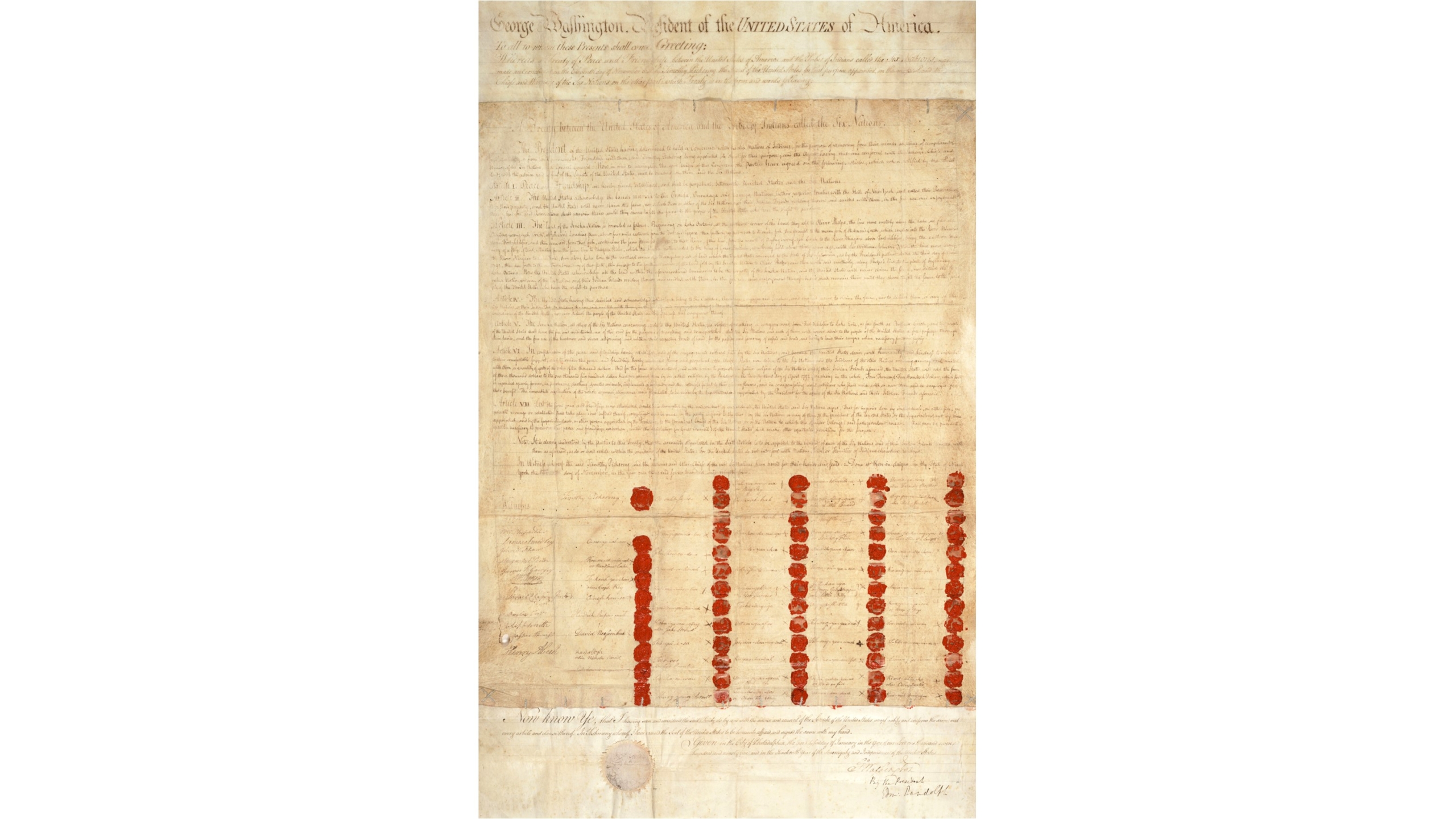
If a naming dispute draws objections from tribal governments or Native leaders, one place they might point is the 1794 Treaty of Canandaigua, a still-cited agreement between the United States and the Haudenosaunee (Iroquois) nations.
Constitutionally, the starting point is straightforward: Article VI’s Supremacy Clause makes treaties made under U.S. authority part of the “supreme Law of the Land.” That places treaties alongside federal statutes in the hierarchy that binds state and federal actors.
The important nuance is enforceability. Not every treaty term is directly enforceable in court on its own. Some treaty commitments are treated as non-self-executing domestically, meaning they may require implementing legislation or a recognized cause of action to be judicially enforced. Even so, the executive branch is not operating in a treaty-free zone: agencies still have to act within the law that applies to them, and treaty commitments can matter in interpretation, in consultation expectations, and in evaluating whether an agency acted arbitrarily.
Treaty violation?
Not every federal action that touches a treaty-related subject is a treaty violation. Courts usually look for a conflict with a specific obligation the treaty imposes.
So the key questions are practical and textual:
What does the Treaty of Canandaigua promise? It is widely associated with peace and commitments regarding land and the U.S. relationship with the Haudenosaunee. Whether a naming decision implicates those promises depends on the text and how it is interpreted.
Is the disputed name tied to a reserved right, boundary understanding, or a federal promise? A label change could be legally irrelevant, or it could be argued to be part of a broader practice that undermines recognition and the government-to-government relationship the treaty reflects.
What is the legal effect of the “renaming”? If it is limited to rhetoric or limited federal communications, it may be harder to show concrete legal injury. If it alters management, access, consultation, education materials, or formal recognition practices, the argument becomes more concrete.
There is also a recurring feature of federal Indian law: treaties with Native nations are interpreted using specialized canons, including that ambiguities are construed liberally in favor of tribes and that treaty terms are interpreted as tribes would have understood them.
Sovereignty and consultation
Tribal sovereignty is not absolute independence, and it is not a mere symbolic label. Native nations are “domestic dependent nations” under longstanding Supreme Court doctrine, with inherent sovereignty that persists unless Congress clearly takes it away.
That status affects how federal agencies are expected to behave, but it is not a universal, one-size-fits-all consultation mandate for every government action. Consultation duties most often come from specific hooks, such as:
Executive Order 13175 (a policy framework for consultation and coordination with tribal governments).
NHPA Section 106 (when a federal “undertaking” may affect historic properties, including traditional cultural places).
NEPA (when environmental review is required, often including engagement with affected tribes).
Agency-specific statutes and policies that govern government-to-government relationships.
A naming decision can look cosmetic, but names are often tied to cultural heritage, official recognition, interpretive signage, and education. If a tribe argues the federal government made a significant symbolic change without required consultation, or in a way that undermines treaty-based relationships, the dispute shifts from “Can the president say this?” to “Did the agencies follow the rules that actually apply?”
How it gets reversed
If an administration succeeds in pushing a new name into federal usage, reversal usually comes through one of four channels:
1) A later administration
The simplest reality is political. Many naming choices function as executive-branch policy and practice. A future administration can direct agencies to revert to prior usage and support a return to the prior standardized name, assuming no statute locks the new name in.
2) The naming process
If the BGN process was used, opponents can petition for reconsideration through the same administrative pathways, emphasizing local usage, historical evidence, and stakeholder input.
3) Congress
Congress can legislate a name for federal usage, or forbid a particular name, especially where it is controlling federal programs, federal property, and appropriations conditions.
4) Litigation
A tribe, state, local government, or other affected party may sue, depending on standing, sovereign-immunity limits, and the legal hook. In practice, challenges often run through the Administrative Procedure Act (final agency action), and courts generally want a concrete injury tied to a reviewable action, not only offense at a label.
The bottom line
Here is the civics answer that fits the Constitution we actually have:
A president can influence what the executive branch calls a feature in communications and can push agencies toward adopting a new standardized name for federal use.
A president cannot unilaterally rewrite treaty commitments, and treaty questions can matter even when courtroom enforcement is complex.
A president cannot force Canada or international practice to adopt a U.S. preferred label for a shared border lake.
The legality turns on authority, process, and effects: who made the decision, under what authority, what procedures were required, and what changed downstream.
So “Can the president rename Lake Ontario?” is not one question. It is a bundle of questions about administrative authority, borders, and the constitutional status of treaties.
FAQ
Is the Treaty of Canandaigua still in force?
Treaties do not expire just because they are old. Unless a treaty has been lawfully terminated, superseded, or rendered unenforceable by later legal developments, it remains a binding commitment. The real-world disputes are usually about what it requires today and whether a specific federal act breaches it.
If treaties are supreme law, can the government ever override them?
U.S. law recognizes a later-in-time rule: a later federal statute can sometimes override an earlier treaty domestically. That is a congressional move, not something the executive branch can do by declaration.
Is a new lake name symbolic, or does it have legal force?
Often it is symbolic. But symbols can carry legal consequences when they affect federal publications, datasets, interpretive signage, education materials, or agency practices. Those downstream effects are where legal disputes tend to concentrate.