
When Americans talk about “property rights,” they often mean a simple expectation: if the government wants to punish you over how you use your land, you get to challenge it in a real court. Not just a meeting. Not just a panel. A court. And, in the traditional American imagination, a jury.
That is the nerve a cattle ranching family in Washington is touching right now. Wade and Teresa King, who run King Ranch in Grant and Douglas counties, are trying to put a basic constitutional question front and center: when the state hits you with a major civil penalty and restoration orders tied to your land, do you have the right to have ordinary citizens decide the facts?
Join the Discussion
The fight in plain English
In 2023, the Washington State Department of Ecology imposed a $267,540 penalty on the Kings. The agency said the ranch damaged protected wetlands by digging and altering ponds used for livestock water. The Kings disagree at the most basic level. They say the contested areas are longstanding stockwater ponds used in their ranching operation, not regulated wetlands.
And here is where the dispute stops being only about dirt and water. The department’s process channels the Kings into the Pollution Control Hearings Board (PCHB), an administrative panel that does not provide jury trials. The Kings have been pushing to get the dispute in front of a jury instead.
Wade King has described what is at stake in blunt terms. “Losing this fight would be an existential threat,” he said. “I don't know how we would recover from that, to be honest with you.”
Why the forum matters
It is easy to assume that if you “appeal” an agency action, you quickly end up in a normal courtroom with the usual protections. But in Washington, the department’s required process puts the first major fight before the PCHB, not a jury.
To the Kings, that structure shapes everything. Wade criticized the setup as one that sits inside the executive branch, and he pointed to who holds appointment authority over the board. “It's all under the executive branch, and they very rarely go with the property owner,” Wade said, adding that Washington Gov. Bob Ferguson, who was attorney general when the fight began, now has appointment authority over the board alongside the state Senate.
“They almost always side with the agencies and it's just not a fair trial for appellants like us.”
The PCHB declined to comment due to the pending case.
The case on pause
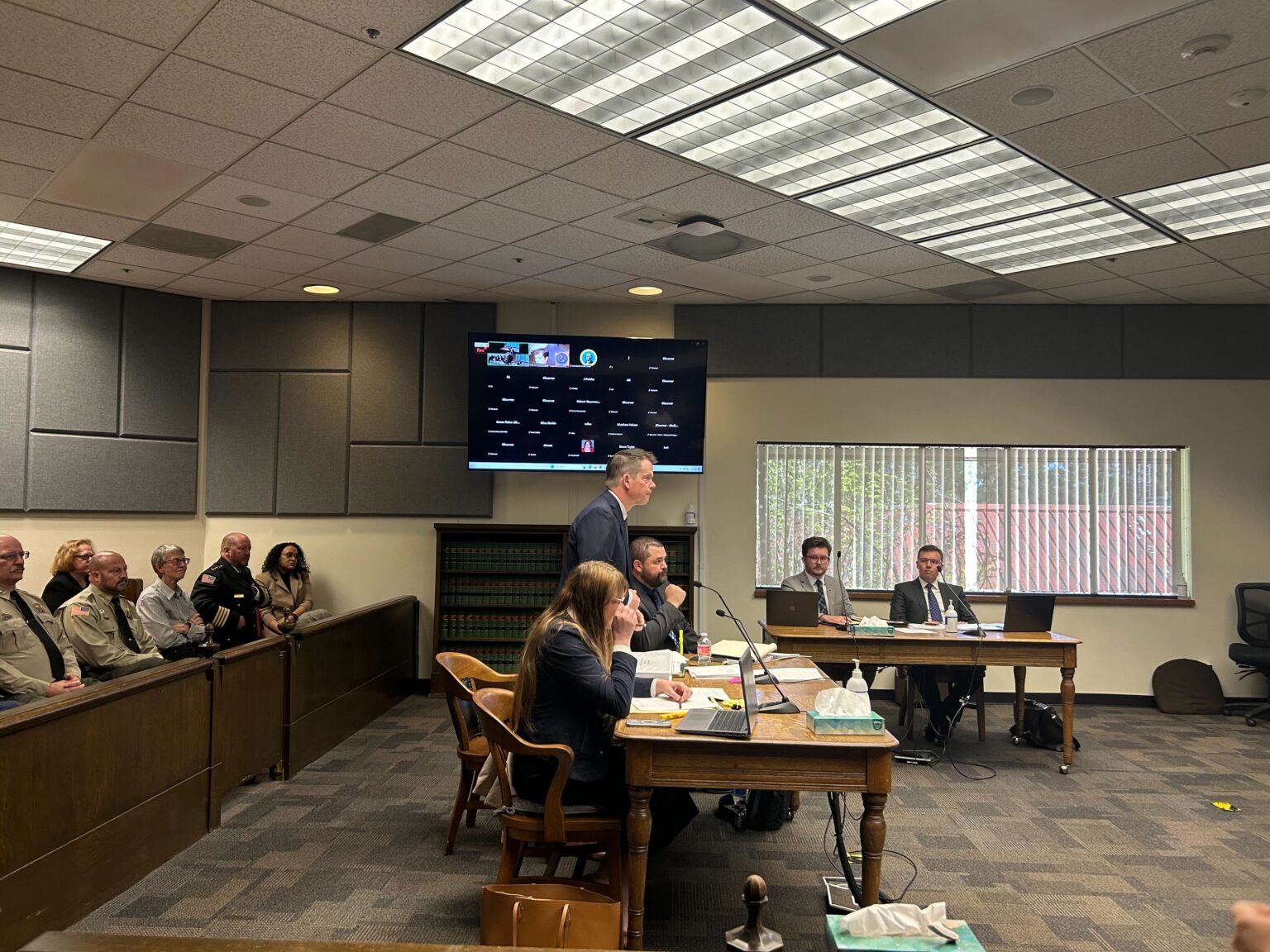
In March, the Kings filed a separate lawsuit in Grant County Superior Court seeking to bypass the administrative route and get the dispute into a jury trial forum. Months later, a judge dismissed that suit, ruling they had to complete the administrative process first.
The Kings appealed. In September, a commissioner for the Washington Court of Appeals paused the PCHB proceedings while the court considers whether the Kings are entitled to a jury trial.
The pause is not the end of the story. But it does show the jury trial question is now squarely in front of the appellate court.

The price tag
The immediate penalty is $267,540. But the Kings’ attorneys estimate that complying with the department’s restoration directives could exceed $3.7 million.
Teresa King has said the restoration demands are not merely expensive but, in her view, structurally impossible, because the areas were never wetlands to begin with. “How do we as ranchers turn these into wetlands and comply with everything that Ecology wants us to?” she asked. “It'll be unachievable and it would just spin us in the ground financially.”
Wade King put it even more sharply: “How are we supposed to make wetlands from non-wetlands?”
What Ecology says it found
The Washington State Department of Ecology has not framed this as a close call. The department said its investigation found no evidence the disputed areas were previously stockwater ponds and accused the Kings of damaging 23 naturally occurring wetlands in Grant County.
“Ecology inspectors made site visits to these damaged areas where possible, but also used satellite imagery, aerial images dating from as far back as 1949, and other records to determine that the Kings had damaged 6.37 acres of naturally occurring wetlands by excavating, recontouring, and putting fill in them,” the department said.
The department added it “repeatedly sought to resolve concerns about the damage” but the Kings “refused to cooperate with these efforts.” It said additional restoration orders were issued for 11 more areas in Douglas County last year, bringing the total to 34, and that most of those were on state land.
Why labels matter
One line in this dispute is about classification: wetland or stockwater pond. Another line is about power: who gets to decide, and under what rules.
Wade King said the department has failed to give them details on how to fix the alleged damage. He also argued that calling the areas wetlands gives the department greater authority over the sites than it would have if they were treated as stockwater ponds.
“That's the big reason why they want to call them wetlands when they're not wetlands,” Wade said.
The Seventh Amendment question
Oliver Dunford, a senior attorney with Pacific Legal Foundation representing the Kings, has described the endgame plainly. If the Kings are unsuccessful in Washington, he said they are prepared to petition the U.S. Supreme Court over a question that sounds technical but carries real bite: whether the Seventh Amendment right to a jury trial applies against the states in a case like this, and whether the Kings should have received a jury trial.
“We have to ask them one question: to rule that the Seventh Amendment does apply against the states, and then to argue that the Kings should have had a jury trial under the Seventh Amendment,” Dunford said.
Dunford said a ruling could have ripple effects beyond Washington. “If we prevail, it would have an enormous effect, certainly across the state of Washington, but hopefully across the country, and prevent these agencies from just issuing these fines and then essentially putting the burden on you to prove your innocence and take the case all the way to the Supreme Court just to get a chance at a jury trial,” he said.
Why the Kings say it matters
The Kings are not describing this as a one family problem. Teresa King said the conflict threatens “every rancher in the state of Washington's exempt livestock water rights.”
The Kings have ranched in Grant and Douglas counties since the 1950s. Teresa King described a family operation already into its fourth generation, with fifth and sixth generations living and working on the ranch. “We just want to be left alone,” she said.
Wade King also rejected the idea that a long term operation would recklessly degrade the land it depends on. “We want clean water,” he said. “Why would we pollute or cause damage to the land or the water that we rely on in our livelihood? We're generational. Why would we do something to harm ourselves that way and harm the environment?”
The bigger question
Here is the tough question I would put to any civics class: what does “trial by jury” mean in a country where so many high stakes punishments arrive as “civil penalties” administered through executive branch processes?
Some people will see the administrative model as efficient and expert driven. The Kings see it differently. They see a system where the first and biggest fight happens in a forum that never offers a jury at all.
If the case ultimately reaches the Supreme Court, the court’s answer could shape what jury trial protections look like when states impose large civil fines tied to land use enforcement. Either way, the Kings’ battle illustrates something many Americans learn too late: the fight over property is often a fight over forum. And the forum can decide the fight.
Quick timeline
- 2023: Washington State Department of Ecology fines Wade and Teresa King $267,540 over alleged wetland damage tied to stockwater ponds.
- March: The Kings file a lawsuit in Grant County Superior Court seeking a path to a jury trial.
- Months later: A judge dismisses the lawsuit, directing them back to the administrative process.
- September: A Washington Court of Appeals commissioner pauses the PCHB proceedings while the court reviews whether the Kings are entitled to a jury trial.