
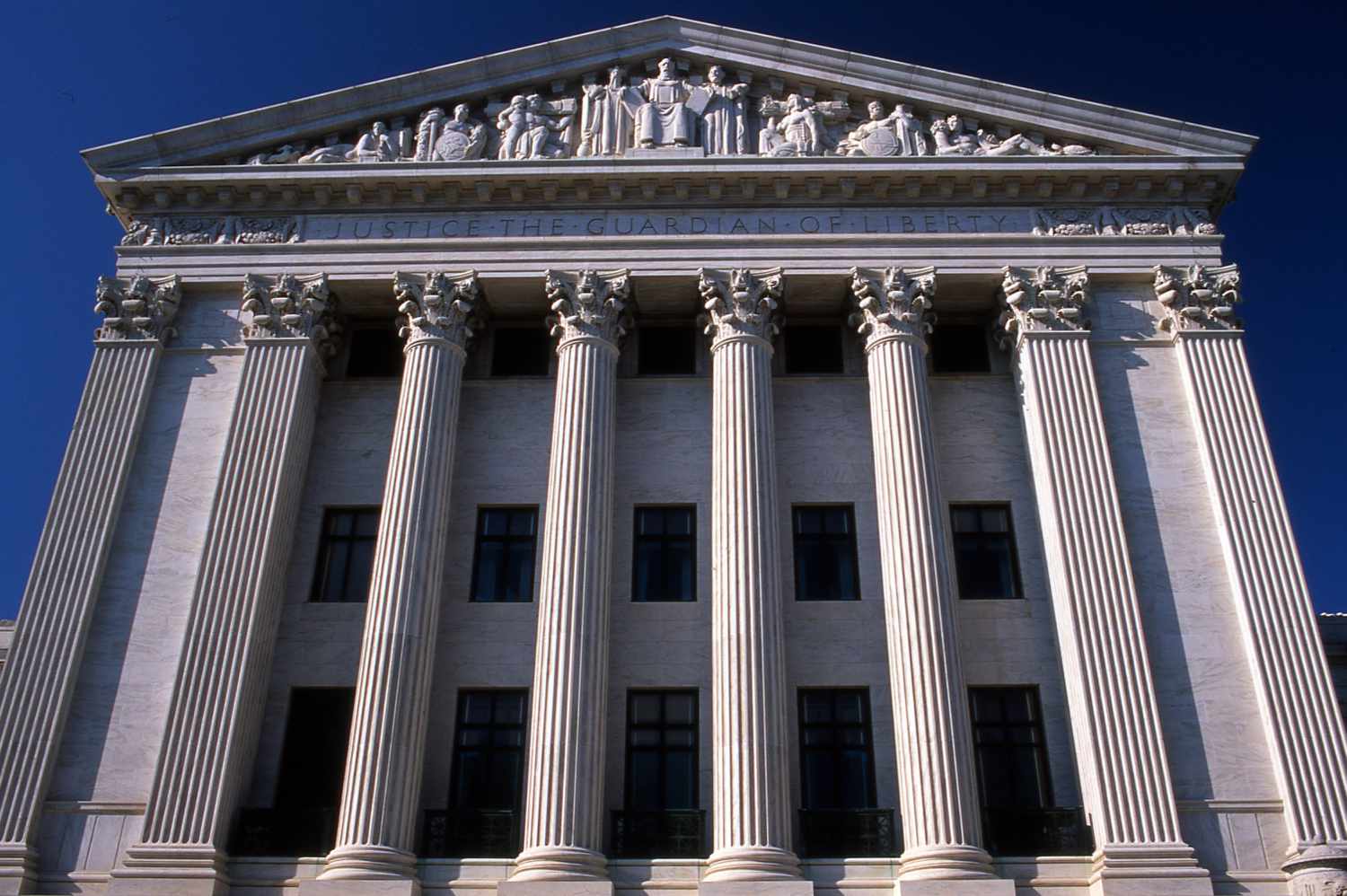
Here is a question I used to spring on my civics students when they got a little too comfortable with the word government: When the government accuses you of wrongdoing and demands money, who gets to decide whether you actually did it?
For most Americans, the instinctive answer is simple. A judge. A jury. A courtroom with rules that feel older than any agency’s policy manual.
But in some regulatory enforcement schemes, the first stop is not an Article III courtroom. The dispute can begin in an agency forum, with facts found and penalties assessed through administrative adjudication rather than a federal judge and, where applicable, a jury.
Now the Supreme Court is being asked to decide whether Congress can authorize that kind of arrangement in a case involving the Department of Labor. The hinge of the debate is a slippery phrase that has carried a lot of weight for a long time: the “public rights” exception.
Join the Discussion
The core issue
Regulatory agencies were built for expertise and speed. That is the familiar pitch. An agency understands its subject matter, so it can enforce rules efficiently without routing every dispute into the federal courts.
But the Constitution does not organize power around efficiency. It organizes power around suspicion. It divides the authority to write rules, enforce rules, and judge disputes because the Framers worried about what happens when those functions collapse into one set of hands.
That is why Article III vests the “judicial Power of the United States” in courts whose judges have salary protections and life tenure. It is also why the Seventh Amendment preserves the jury trial in “Suits at common law,” a phrase tied to an older baseline idea: when property is on the line as punishment, citizens traditionally get a voice in fact-finding.
Administrative adjudication can strain both traditions when Congress routes enforcement matters to an agency forum instead of an Article III court, especially when the dispute resembles classic law enforcement: alleged misconduct, disputed facts, and penalties meant to sting.
Why public rights matters
If agencies can decide certain enforcement matters internally, it is often because courts have treated those disputes as involving “public rights.” The label has functioned like a permission slip, allowing Congress to channel some cases away from Article III courts and into administrative adjudication.
But what counts as a “public right” is exactly where the doctrine starts to wobble. Is it a benefits claim? A licensing dispute? A monetary penalty for alleged wrongdoing? Something else entirely?
The Supreme Court has not clearly explained what a “public right” is in the decades since it embraced the concept. Critics also stress a basic point of constitutional vocabulary: when the government interacts with people, it does not possess “rights” in the way private parties do. It has powers, and those powers must be exercised through constitutional procedures.
In SEC v. Jarkesy (2024), the Supreme Court threw cold water on the concept, noting that the “public rights” exception “has no textual basis in the Constitution.” That sentence matters. It does not automatically end administrative enforcement. But it weakens a rationale that has sometimes been used to keep Article III courts, and in some contexts juries, out of agency penalty cases.
The case at the Court
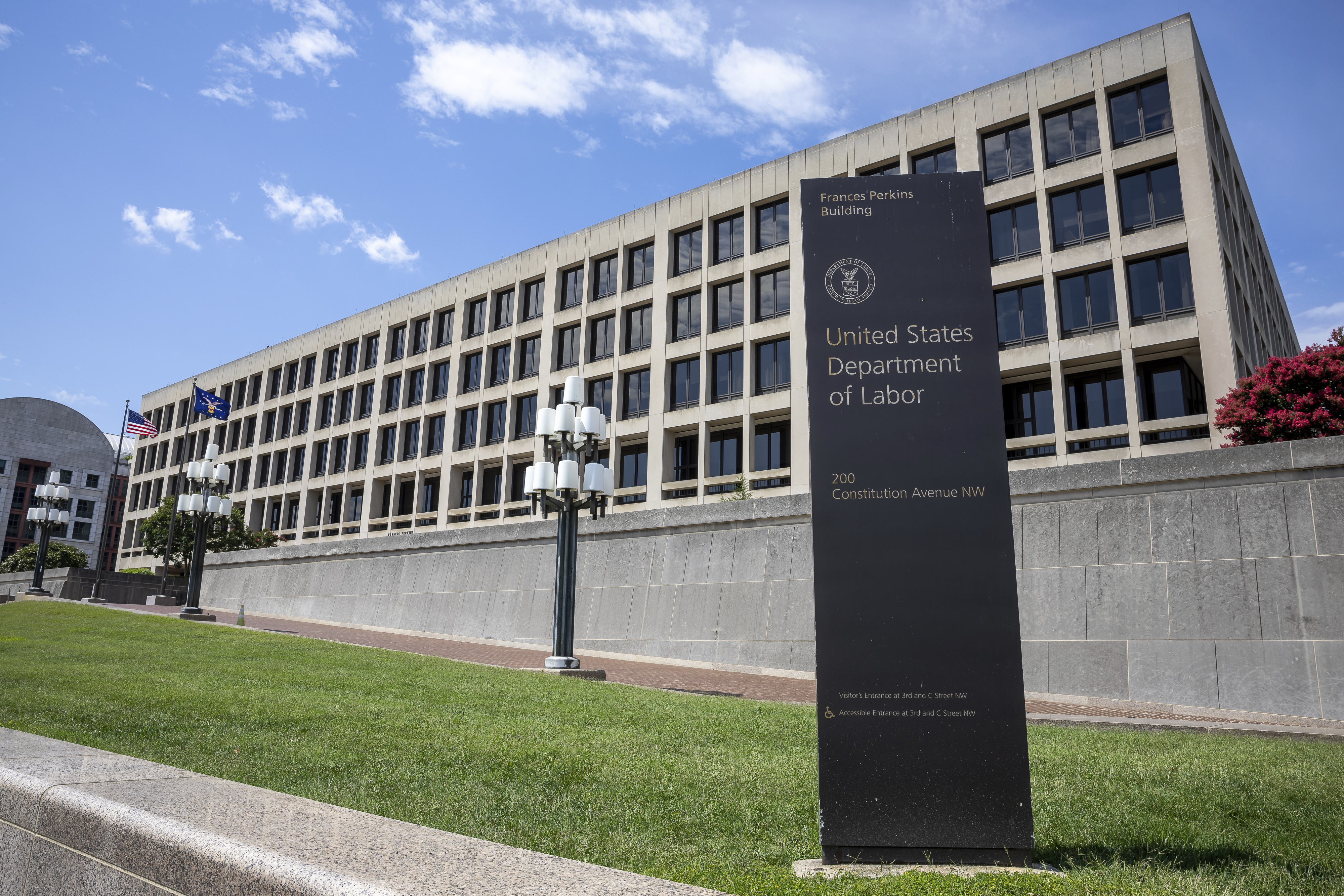
The latest push comes in a dispute titled Department of Labor v. Sun Valley Orchards. The immediate question is whether Congress can authorize the Department of Labor to adjudicate a variety of enforcement cases, rather than requiring the government to prove its case in an Article III court.
In this case, the New Civil Liberties Alliance filed an amicus curiae brief alongside Americans for Prosperity Foundation and The Buckeye Institute, urging the Supreme Court to find the arrangement unconstitutional and to require Article III court adjudication for regulatory enforcement cases.
Supporters of a return to court-based adjudication argue that Congress does not possess judicial power and therefore cannot relocate or “delegate” it to the executive branch. Not in substance. Not by relabeling. Not by calling punitive enforcement a “public right.”
That argument asks the Supreme Court to confront a key precedent: Atlas Roofing Co. v. Occupational Safety and Health Review Commission (1977). In that case, the Court upheld agency adjudication in a way that has been read to permit administrative resolution of cases involving “public rights,” including punitive law-enforcement proceedings supposedly prosecuted in the public interest, without a Seventh Amendment jury trial in an Article III court.
Those urging a change want Atlas Roofing reconsidered. They want the Court to say plainly that Congress cannot relocate the judicial power outside the Judicial Branch, even when enforcement is packaged as a regulatory proceeding.
A key line
One of the most revealing fault lines in this debate is philosophical as much as legal. The “public rights” framing sounds harmless until you ask what it implies: that the government can invoke a special category that may, in practice, reduce a citizen’s access to an independent judge and the protections that come with Article III adjudication.
Critics reject that premise. In their view, when the government brings an enforcement action, it is not vindicating a “right.” It is exercising power, and that power must be chained to constitutional procedure.
Russ Ryan, Senior Litigation Counsel at the New Civil Liberties Alliance, put it bluntly: “The Court should clarify that nothing remains of its bewildering ‘public rights’ exception to Article III jurisdiction. In the process it should also explicitly overrule its dreadful Atlas Roofing decision.”
And NCLA President and Chief Litigation Officer Mark Chenoweth framed the moment as unfinished business after Jarkesy: “The Supreme Court’s Jarkesy case went a good way toward jettisoning the court-created ‘public rights’ exception to Article III jurisdiction. Now, it should go the rest of the way. There is no basis for it in the text of the Constitution, so Atlas Roofing should be on the chopping block.”
What a shift would mean
When people hear “restore jury trials,” they sometimes imagine every technical dispute turning into a twelve-person spectacle. That is not quite the point, and it is not always the remedy.
The point is structural: who gets the first real crack at deciding the facts, and under what constitutional constraints? If major enforcement cases must begin in federal court, the government would have to litigate in front of an independent judge from day one, and where the Seventh Amendment applies, present disputed facts to a jury.
Moving more penalty cases into federal court could change the terrain in at least three ways:
- Independence: Article III judges do not work for the agency bringing the case.
- Jury fact-finding: Where the Seventh Amendment applies, citizens can decide contested facts.
- Procedural symmetry: The government must proceed under the same courtroom rules it expects everyone else to respect.
None of this eliminates regulation. It changes where certain enforcement disputes are adjudicated, and it pushes the government, when it seeks punitive consequences, toward the courthouse the Constitution built for the judicial power.
The question
The Supreme Court has spent decades trying to draw lines that keep the administrative state functional without dissolving the Constitution’s basic separation of powers. The “public rights” exception has been one of its most convenient tools because it is flexible enough to cover a wide range of modern regulatory arrangements.
That flexibility is also the danger. A doctrine that can be stretched to fit almost any enforcement structure is not much of a boundary at all.
So here is the question the Court is being pushed to answer: When the government accuses you of violating a federal rule and seeks a penalty, is that a matter Congress can assign to an executive-branch forum? Or is it a classic exercise of coercive power that the Constitution routes through Article III courts and, where required, juries?
If the Justices narrow the “public rights” category sharply, or discard it, agencies will not stop enforcing the law. They will simply have to enforce it in a way that more closely matches the Constitution’s design: by persuading an independent judge, and sometimes a jury, that the government is right.
And if that sounds like an inconvenience, it is worth remembering what the Constitution was built to do. Not to make government easy. To make power answerable.
Quick FAQ
What is the public rights exception?
It is a judge-made idea that certain disputes can be decided outside Article III courts, often by agencies, because they involve matters tied to government regulatory or benefits programs.
Why does it matter for penalties?
Because if punitive enforcement is treated as “public rights,” agencies can sometimes impose penalties through administrative adjudication rather than starting in an Article III court, which can affect whether a Seventh Amendment jury trial is available.
What did SEC v. Jarkesy change?
In 2024, the Supreme Court emphasized that the “public rights” exception “has no textual basis in the Constitution,” strengthening arguments that punitive enforcement should be adjudicated in Article III courts.