
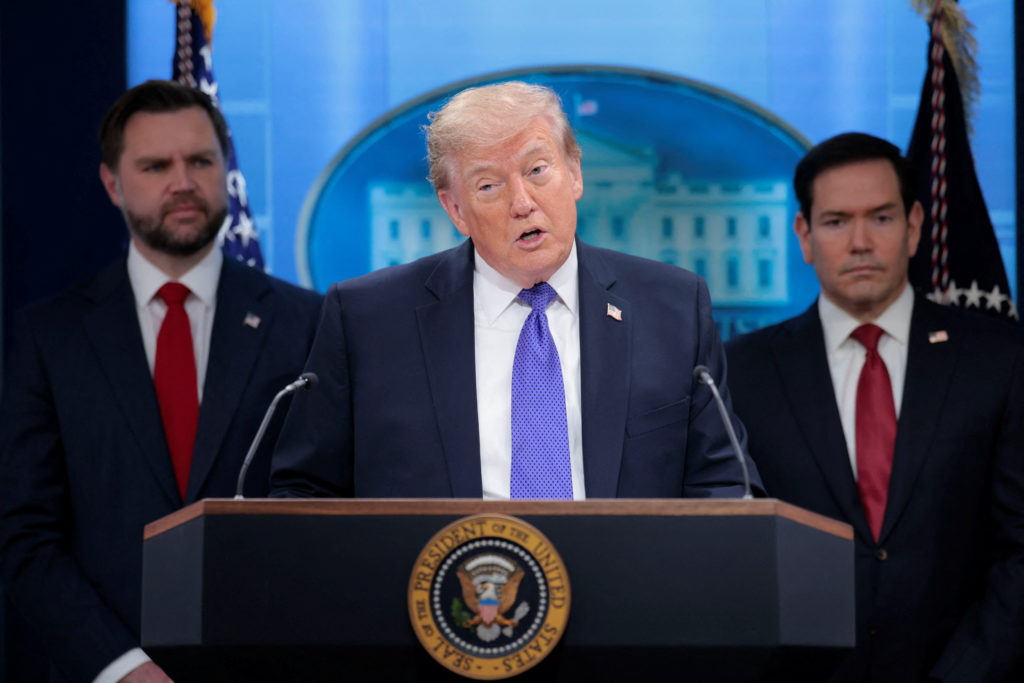
When a president talks about a new “tax,” it can sound immediate. On Friday, President Donald Trump floated a new penalty aimed at the fast-growing world of artificial intelligence data centers.
At a White House news conference, Trump said the United States should keep AI data center construction at home. He threatened what he called “a tremendous tax” on U.S. companies that build those facilities in other countries, but he did not explain how it would work.
Here is what Trump said, why it has become a flashpoint, and what remains undefined so far: how, exactly, the administration would enforce the threat.
Join the Discussion
What Trump said
Briefing reporters at the White House shortly after returning from Asia, Trump framed domestic AI infrastructure as part of a competition with China. He said the United States is ahead of China in developing what he likes to call “super intelligence,” but warned the country could fall behind if a growing political backlash slows the data center buildout driving the AI boom.
His threat was blunt:
“We’re not going to allow companies to build data centers in other countries,” Trump said. “If they do that, they can. But we’re going to put a tremendous tax on them.”
He contrasted his push to keep AI infrastructure in the U.S. with the foreign production of advanced computer chips, which he said had been “very destructive to our country.”
Trump also acknowledged the idea had not been discussed with his staff, and he offered no details on enforcement.
Why data centers are a fight
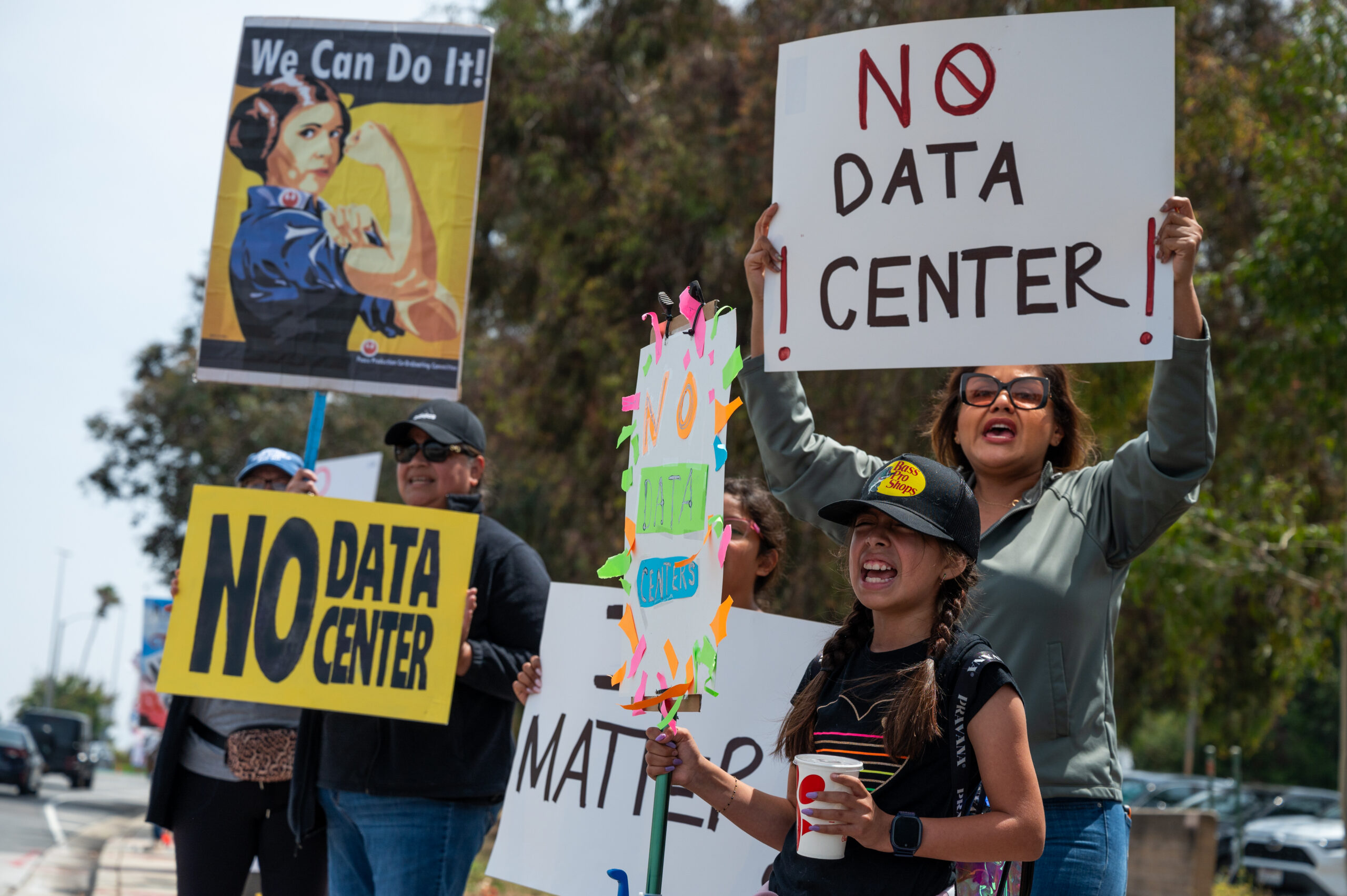
This debate is not only about technology. It is also about land use, water, and power, and who bears the costs when a massive industrial project moves in.
Voter unease has been measurable. About three-quarters of U.S. voters in this year’s election said they opposed construction of a new data center in their community.
In a survey taken over the summer, about 6 in 10 Americans said they supported limiting the number of new data centers that can be built, including most Democrats and Republicans. That same survey found a majority were “extremely” or “very” concerned about the impact of data centers on electricity prices or the water supply in the communities where they are built.
Those concerns were still fresh less than three weeks after voter worries about data centers contributed to a Republican wipe-out in the midterm elections.
How companies are responding

As communities turn against the gargantuan server warehouses, technology giants are promising to take fewer taxpayer handouts, keep fewer secrets, and put more money into communities willing to host them.
Officials with Google and Meta have described efforts to address mistrust by being more transparent with communities where they want to build, alongside pledges to reduce environmental impact and assurances that data centers will boost local property values.
Many of the tech giants already have global footprints. Google has data centers in Asia and Europe.
The economic stakes
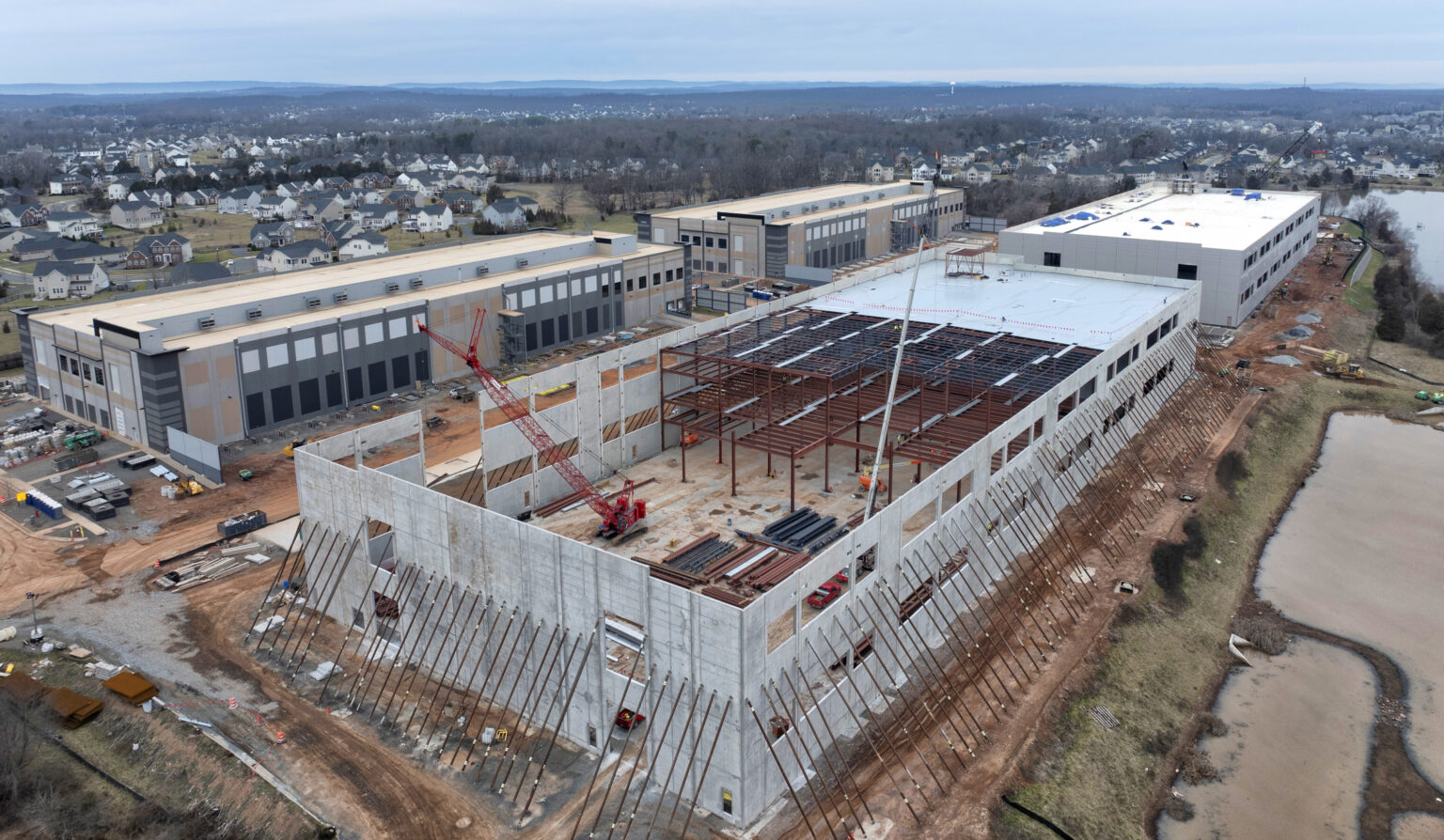
Trump’s threatened penalty for overseas construction reflects his view that the data center buildout is a boon for the U.S. economy. Most economists agree, but with caveats.
Economists at UBS estimate the largest high-tech firms could spend as much as $1.8 trillion next year developing AI, mostly on data centers. The boom has also boosted wages for some construction workers, particularly skilled contractors such as electricians, who are in short supply.
At the same time, most of the goods that power data centers are imported, particularly semiconductors, but also materials such as copper. That offsets much of the economic gain.
What is unclear
Trump’s remarks left a central question unanswered: how would the administration actually apply a “tremendous tax” to U.S. companies that build AI data centers abroad?
He did not lay out a specific mechanism. For now, the threat is clear, but the enforcement details remain undefined.
What the Senate is doing
While Trump talked about penalties tied to overseas construction, the Senate moved in a different direction on the domestic buildout.
On Thursday, the Republican-led Senate approved bipartisan legislation to speed permitting reviews for power plants, transmission lines, and other energy infrastructure, as lawmakers seek to increase the nation’s energy supplies to meet surging demand and lower electricity prices.
The legislation’s changes would shorten the timeline to start big energy projects and make sure data centers pay for the energy they use and upgrades to the larger transmission network.
Trump praised the Senate bill as it heads to the House, saying: “It’s going to cause tremendous amounts of new building.”
What it shows
Trump is pushing for more data center building in the United States while facing an electorate that is increasingly uneasy about what those projects mean for local communities.
He suggested concerns could be addressed through community negotiations with the tech companies seeking to build. Tax breaks, reduced utility bills, money for teachers, and direct payments to local residents all could be part of the talks.
“Make the deal,” Trump said. “They have plenty of money. Take it.”