
In a war that has trained the world to watch maps of front lines, a warehouse fire in a Moscow suburb should not feel like a headline with strategic gravity. And yet that is exactly what made the Elektrostal strike go viral. The target was not a barracks or an airfield. It was a logistics hub tied to everyday life, the kind of place that turns clicks into cardboard boxes and next-day delivery into political reassurance.
On July 18, 2026, Ukrainian drones struck a major Wildberries logistics and distribution center in Elektrostal, in Russia’s Moscow region about 33 miles east of the Kremlin. Online footage and aerial imagery quickly converged on the same conclusion: the facility suffered catastrophic damage, with three main warehouse halls reported as compromised and extensive fires continuing even after emergency crews responded.
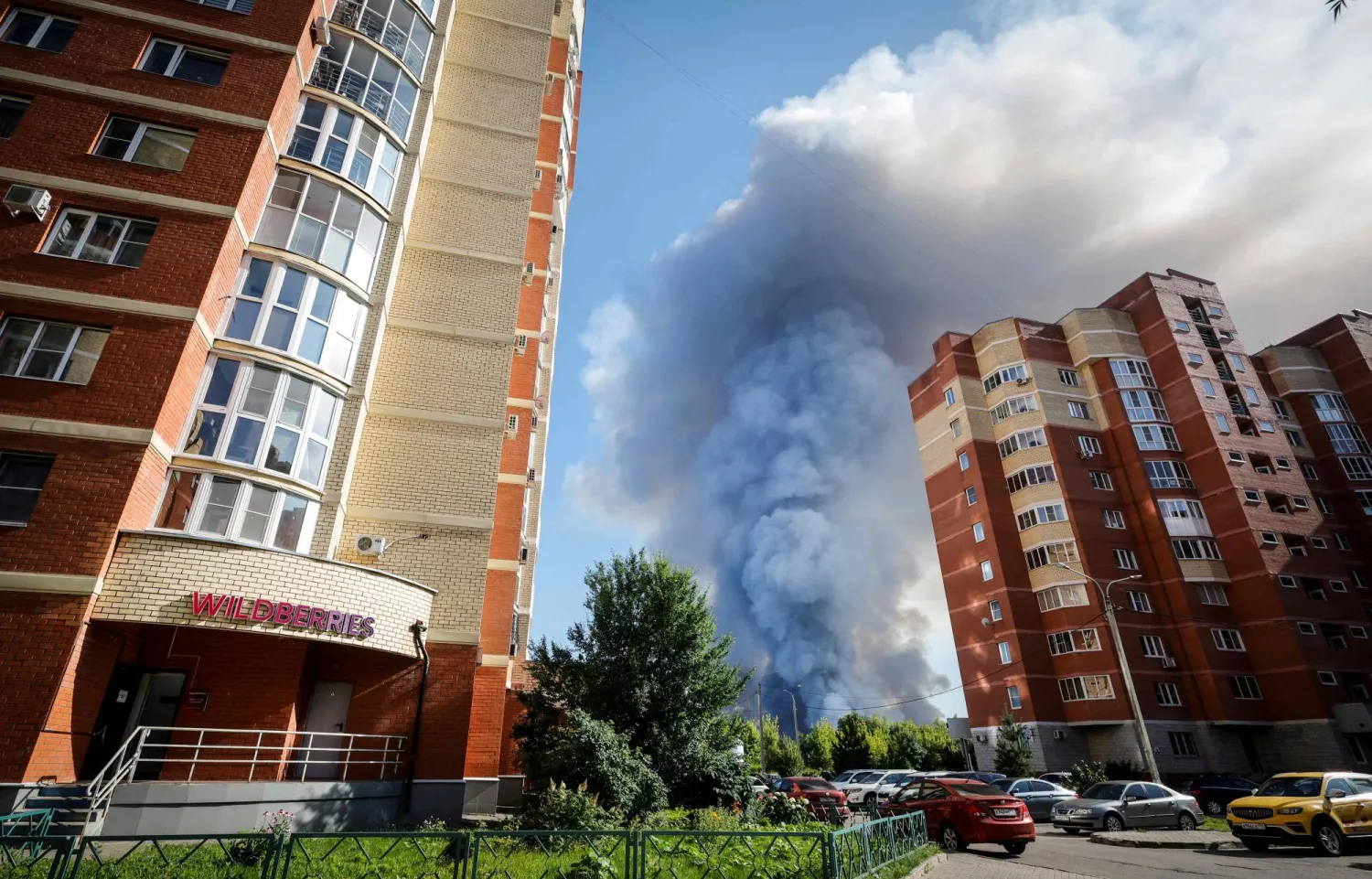
This story is not really about Wildberries as a brand. It is about what it means, economically and politically, when a war reaches deep into a capital region and hits the systems that make modern consumer life feel normal.
Join the Discussion
What Wildberries is, and why a warehouse matters
Wildberries is one of the best-known online retail marketplaces in Russia. In practical terms, it functions like the backbone of a domestic e-commerce ecosystem: sellers list goods, buyers order them, and the company’s fulfillment network sorts, stores, and routes packages across a vast geography.
That last part is the quiet engine. A large distribution center is not just square footage. It is inventory concentration, automated sorting capacity, loading docks, contract trucking schedules, and the software choreography that keeps orders moving. When a major hub goes offline abruptly, the damage is not limited to a single building. It ripples outward:
- Inventory disruption: goods stored at the facility may be destroyed or become inaccessible for days or weeks.
- Routing shock: shipments must be re-routed to other facilities, which can overload them.
- Delivery delays: customers experience slower delivery windows, cancellations, and shortages of popular items.
- Seller impact: small businesses that rely on marketplace logistics can lose revenue immediately.
- Insurance and capital costs: reconstruction, replacement stock, and security costs raise operating expenses.
Viral posts repeatedly described the Elektrostal facility as among the largest Wildberries warehouses in Russia, often calling it the largest or second-largest. Whether it ranks first or second, the core point remains: a big, centralized node was hit in a region where Russia typically projects security and control.
Why Elektrostal is not “just outside Moscow”
Electrostal sits in the Moscow region, part of the wider belt of industrial towns and logistics corridors that feed the capital’s economy. If you want to build a high-throughput warehouse network serving Moscow and beyond, you put major facilities in places like this: close enough to reach huge consumer demand quickly, connected to road and rail infrastructure, and surrounded by labor markets that can staff large operations.
That geography is also why the strike resonates. A hit in the Moscow region is interpreted differently from a hit near a border. It challenges the assumption that the capital’s economic bloodstream is insulated from the battlefield.
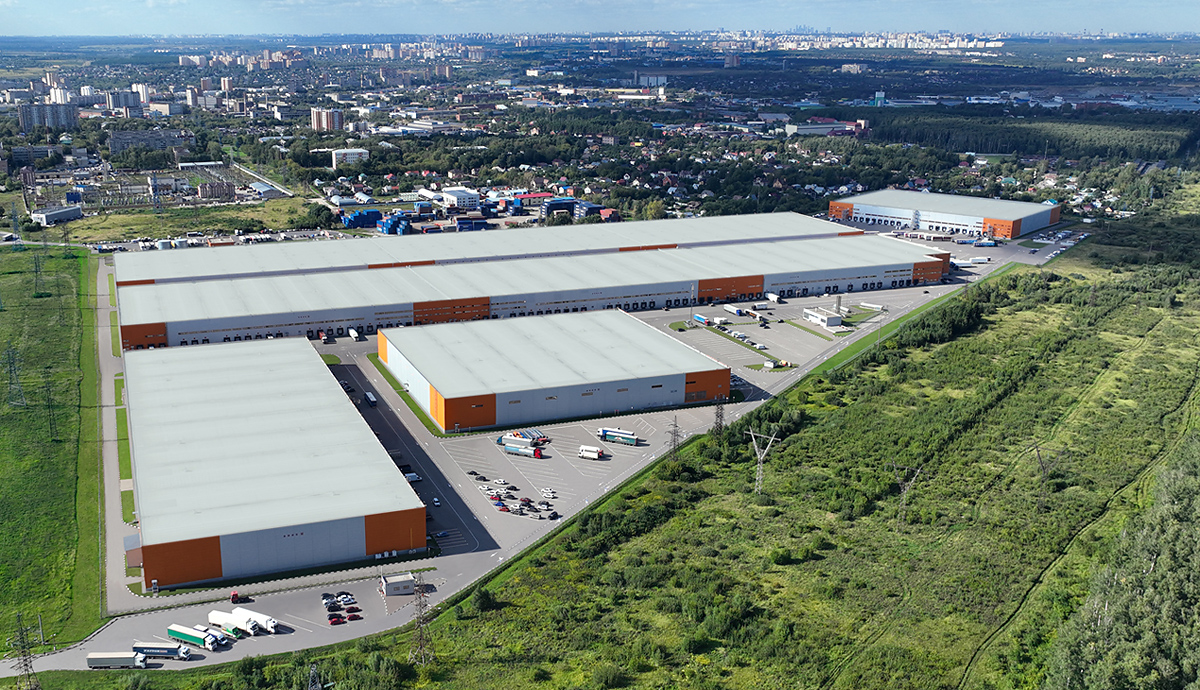
What the viral footage is really communicating
The most shared clips were not product photos or corporate logos. They were the visual language of modern open-source war watching: drone views, wide-area smoke plumes, and overhead imagery meant to show scale. The emphasis online has been on the completeness of the destruction, with repeated claims that all three main halls were compromised and that little could be salvaged even as crews worked the scene.
That focus matters because it turns an attack into a story about capacity loss. A small fire can be repaired. A total loss is a different category. It suggests a longer disruption window, larger replacement costs, and a more serious interruption to a network designed around predictability.
Why would Ukraine target retail logistics?
There is a moral intuition many people bring to war: legitimate targets look like soldiers and weapons. But modern states do not fight with uniforms alone. They fight with fuel, chips, replacement parts, transportation, and the economic confidence needed to keep a society functioning under strain.
A strike on a logistics hub can be understood through several overlapping strategic logics:
- Economic pressure: degrade the infrastructure that supports commerce, forcing higher costs and slower distribution.
- Resource diversion: push Russia to allocate more air defense, security, and emergency response capacity to domestic protection.
- Symbolic messaging: demonstrate reach into the Moscow region, undermining the narrative of invulnerability.
- Dual-use ambiguity: logistics facilities can serve civilian commerce while also supporting broader state capacity in a wartime economy.
None of that requires the claim that every package is “war material.” The point is simpler: in the 21st century, supply chains are strategic terrain. A warehouse is where the civilian and the national blend into the same system of roads, schedules, and storage.
The civilian infrastructure problem, and why democracies obsess over it
Once a conflict starts striking deeper into civilian economic systems, a hard question follows: what counts as a lawful target, and who gets to decide?
International humanitarian law draws lines using concepts like distinction, military necessity, proportionality, and precautions. But wars also run on propaganda, and the public often sees only the outcome, not the targeting analysis. A burning warehouse can look like either a strategic strike or an attack on “normal life,” depending on who is telling the story.
American constitutional law does not govern Ukrainian targeting decisions or Russian air defenses. But Americans should recognize the civic danger in how quickly populations adapt to the idea that everyday infrastructure is fair game. Once that frame takes hold, it tends to travel. Democracies then face the long-term problem of keeping public debate tethered to law, not vengeance.
That is the constitutional angle hiding in plain sight: liberal societies require citizens who can separate anger from analysis. Otherwise, “national security” becomes an all-purpose solvent that dissolves every boundary.
What the strike signals about Russia’s consumer economy
Russia’s domestic marketplace economy, like every modern economy, relies on two kinds of trust:
- Consumers trust that goods will arrive and systems will work.
- Investors and businesses trust that large capital assets can operate without being regularly destroyed.
A high-visibility fire at a major distribution center near Moscow punctures both assumptions at once. Even if Wildberries shifts volume to other hubs, the immediate message is that the cost of doing business in the capital region can include wartime risk. That can translate into higher prices, longer delivery times, tighter inventory, and a creeping sense of instability that is hard to quantify but easy to feel.
And because Wildberries is a consumer-facing brand, the disruption is legible. People may not understand the military meaning of a damaged refinery component or a radar site. They understand missed deliveries.
What happens next: the logistics reality check
In the short term, the operational questions are mundane but decisive:
- How much inventory was inside? Total loss claims imply a major write-off.
- How quickly can volume be rerouted? Redundancy exists, but it has limits.
- Can the site be rebuilt? Reconstruction is slow even in peacetime, especially for automated warehouses.
- Will security protocols change? Expect more hardening of critical logistics nodes and more resources assigned to air defense and counter-drone measures.
In the longer term, the strategic lesson is about the modern battlefield. When drones can reach into metropolitan regions, geography stops being a guarantee. The distance between “war” and “home” shrinks into a single flight path.
FAQ
Was the Wildberries warehouse in Elektrostal completely destroyed?
Public imagery and viral aerial footage depict extensive damage and large fires, with widespread claims that the main halls were compromised and the facility is a near-total loss. Independent, comprehensive damage assessment typically takes time, but the visible destruction appears severe.
How far is Elektrostal from Moscow?
Electrostal is in the Moscow region roughly 33 miles east of the Kremlin.
Why would a warehouse be targeted in a war?
Large logistics hubs are choke points in a national economy. Disrupting them can impose economic costs, force security resource diversion, and send a symbolic message about reach and vulnerability, especially when the strike occurs near a capital region.