
You do not have to do anything “wrong” in the ordinary criminal sense to get a fighter jet’s attention. In American airspace, some of the most consequential rules are designed for prevention, not punishment: Temporary Flight Restrictions (TFRs), prohibited and restricted areas, and the air-defense procedures that sit behind them. That is what makes an incident like a NORAD F-16 intercept near Camp David feel dramatic even when it starts as a navigation mistake.
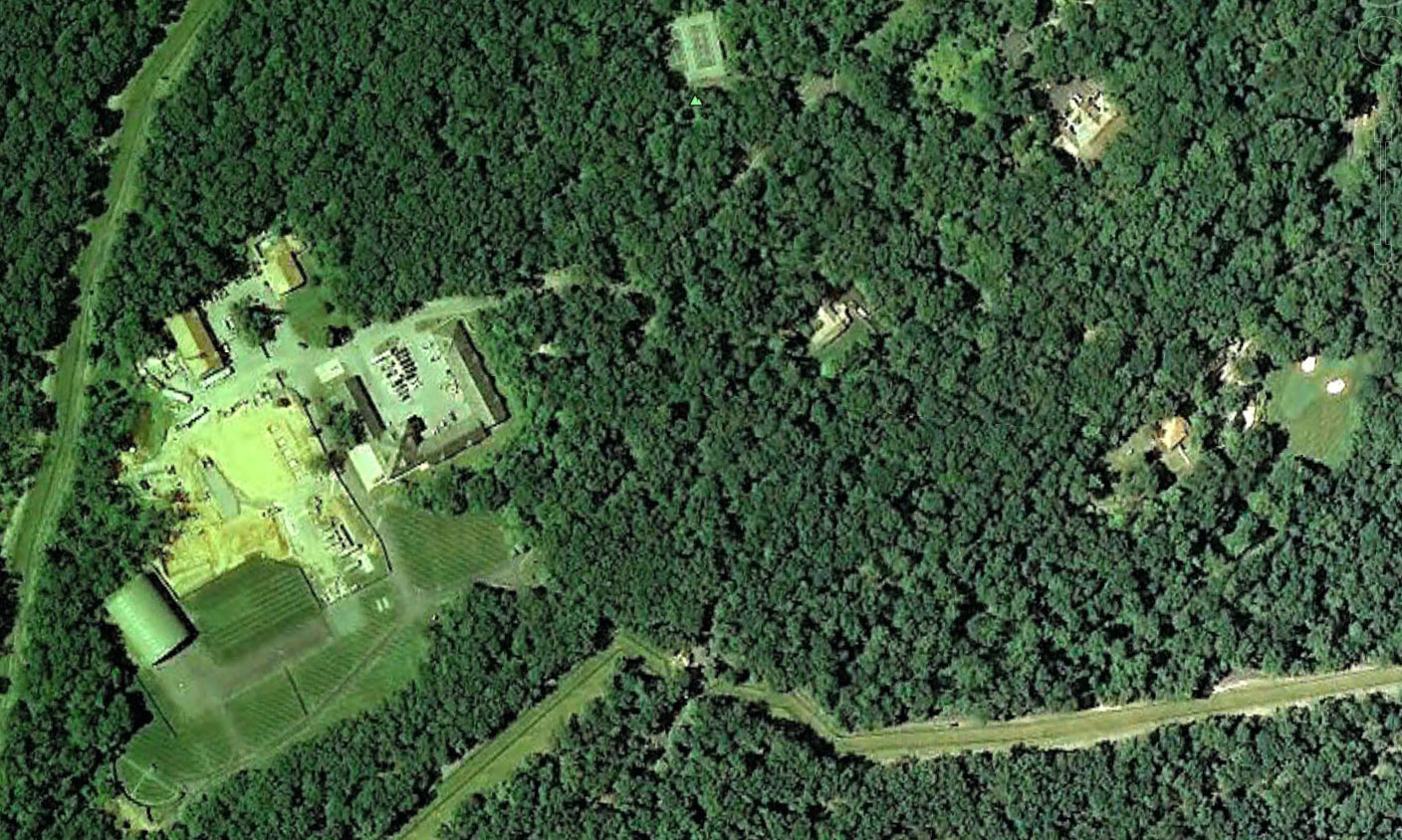
Camp David is not just a retreat. When the President is there, it becomes part of the government’s most sensitive security environment. That changes how the federal government treats the sky overhead, and how quickly it acts when an aircraft wanders where it should not be.
Join the Discussion
What it means when NORAD scrambles F-16s
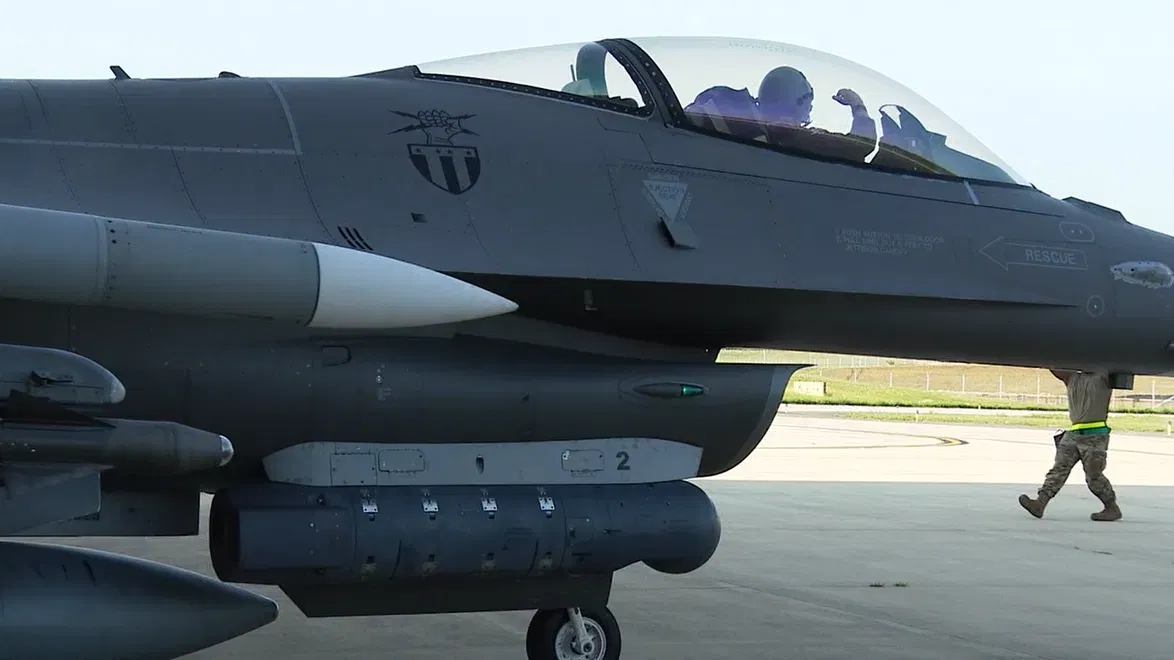
“Scramble” is the plain English version of a tightly choreographed process: detect, identify, and, if necessary, intercept. NORAD runs the aerospace warning and aerospace control mission for North America, and in the United States the alert aircraft and crews are typically provided by the U.S. Air Force and Air National Guard under that air-defense mission. When sensors or air traffic control flag an aircraft that looks out of place, fighters can be launched to figure out what is happening fast.
An intercept is often about communication, not aggression. The intercepting aircraft may try radio contact on emergency frequencies, use standard ICAO intercept signals (like rocking wings), and position itself to guide the aircraft away from protected airspace. Flares can be used as a visual attention-getter under specific procedures, but they are not the default and are generally reserved for situations where other signals are not working. The goal is to restore clarity quickly, because in a restricted zone uncertainty itself is the danger.
Restricted airspace vs. a presidential TFR
People use “restricted airspace” as a catchall, but U.S. aviation law separates a few different concepts.
Restricted areas (the FAA chart kind)
These are charted areas, most commonly associated with military operations, training, testing, or weapons ranges. Entry may be allowed only under specific conditions and coordination, and the restrictions can include varying hours, altitudes, and controlling agencies. The details are published in FAA charts and related information that pilots are expected to check before flight.
Prohibited areas
These are places where flight is not allowed at all for security reasons. The best known example is Prohibited Area P-56 in Washington, D.C., which covers the White House and surrounding core federal sites.
Temporary Flight Restrictions (TFRs)
A TFR is the tool used when the government needs to lock down airspace for a limited period, often for VIP movement, major public events, wildfire operations, or disaster response. When the President travels, the FAA typically issues a presidential TFR. Many presidential TFRs are structured as two rings, often described as an inner core (commonly 10 nautical miles) where flight is prohibited and an outer ring (commonly 30 nautical miles) where flight may be allowed only if strict requirements are met. The exact dimensions and rules are always set by the specific NOTAM and can vary.
So when officials say an aircraft violated restricted airspace near Camp David with the President present, the underlying mechanism is usually this: a presidential TFR issued by the FAA, layered over an area that already receives heightened attention.
Who has the legal authority
The Constitution does not have a clause that says, “The President may close the sky.” Instead, the authority comes from a combination of constitutional powers, statutes, and interagency procedures.
The President’s constitutional role
Article II makes the President the Commander in Chief of the armed forces. That is the constitutional foundation for using military assets to defend the country against airborne threats, including threats that could be aimed at the President himself.
Congress’s power over aviation and defense
Congress has broad powers over national defense and interstate and foreign commerce. Modern civil aviation exists inside that framework. The FAA’s authority to regulate airspace, issue TFRs, and set operational rules is statutory, built through decades of legislation.
How it is bounded in practice
In practice, air defense and air traffic control work together. The FAA issues the restriction (typically via NOTAM) and manages the civil side of the airspace system. The Department of Defense, executing the air-defense mission through NORAD, may intercept when an unknown aircraft presents a potential security risk. That response is governed by rules of engagement, approval chains, and long-standing coordination protocols designed to protect the public while minimizing danger to pilots, passengers, and people on the ground.
Why Camp David is treated differently
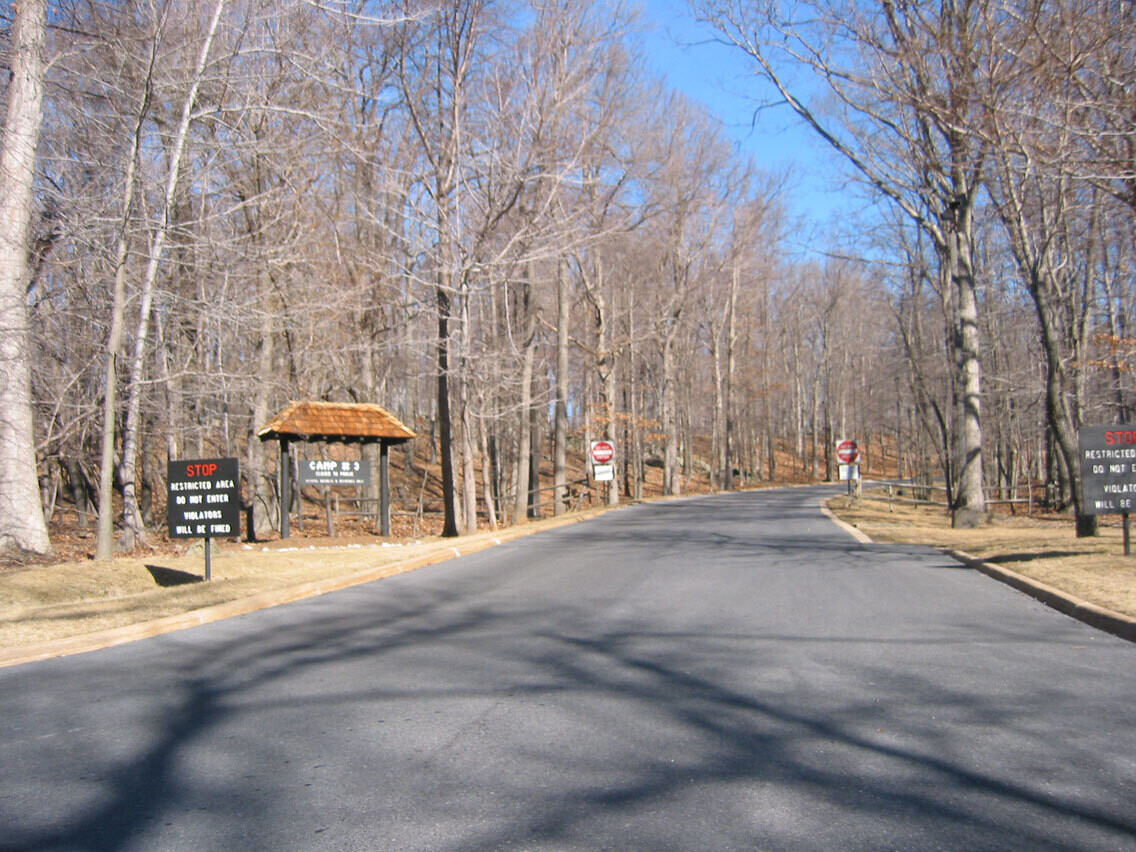
Camp David is a military installation and a presidential residence. It hosts high-level meetings, foreign leaders, and secure communications. In other words, it is the kind of place where the government does not want unidentified aircraft loitering overhead.
That sensitivity is not just about secrecy. It is also about vulnerability. Small aircraft can move quickly, carry limited but dangerous payloads, and appear with little warning. After 9/11, the United States adopted a more assertive posture around airspace tied to presidential protection. The closer you get to the President, the faster ambiguity turns into a security incident.
What happens to a civilian pilot
Consequences vary based on what the pilot did, why they did it, and what happens after contact is made. A purely accidental incursion can still trigger enforcement, because the system has to deter carelessness around sensitive airspace.
- Immediate interception and direction. The first consequence is operational, not legal: an intercept, instructions to turn or depart the area, and sometimes directions to proceed to an airport to land.
- FAA investigation and enforcement. The FAA can pursue administrative action, including certificate suspension or revocation. Even when no criminal charges are filed, the FAA can treat the violation as a serious safety issue.
- Civil penalties. The FAA may impose fines depending on the violation.
- Criminal exposure in serious cases. If there is evidence of willfulness, false statements, or conduct that creates real danger, federal prosecutors can get involved. The specific charges depend on facts, but the key point is this: a TFR violation can move from “pilot error” to “federal case” quickly if intent or risk is present.
- Secondary consequences. Detention, questioning, and the cost of legal counsel are common even when the situation ends without charges. Pilots can also face insurance and employment consequences.
If you are intercepted
- Stay predictable. Do not make abrupt turns, and do not turn toward the protected site.
- Communicate. Monitor 121.5 MHz (guard) and respond to ATC if you can. If you are already talking to ATC, follow instructions.
- Follow intercept signals. Look for the fighter’s wing rock, position changes, and turns that indicate “follow me,” then comply.
- Be ready to land. If directed to land, comply promptly and expect to be met on the ground.
If you are reading this as a pilot, the most practical truth is also the most constitutional one: in this context, the government’s priority is prevention. The rules are designed so that the burden falls heavily on the person entering the airspace to know where they are.
How big is the zone near Camp David
The exact size depends on what is in effect. Prohibited and restricted areas are charted, but some restricted areas are not continuously active, and their controlling times and altitudes can vary. Presidential TFRs, by contrast, are issued for a specific time window and can change based on security planning.
That is why these stories keep happening. The boundaries are knowable, but they are not always intuitive from the cockpit, especially for VFR pilots who are not in constant contact with ATC and who may be navigating visually. The safest routine is to check current NOTAMs and TFRs through official FAA channels, a flight service briefing, or an EFB briefing that pulls directly from FAA data.
Why this is a civil liberties story
When people hear “fighters over Camp David,” they sometimes jump to a fear of domestic militarization. The better civic question is narrower: how does a constitutional government use military power inside the homeland without turning routine governance into martial law?
The answer is structure and mission. NORAD air defense in these scenarios is not policing ordinary life. It is a specific defensive mission tied to protecting national leadership and preventing catastrophic attacks. It operates alongside civilian air traffic control, and it is bounded by published restrictions (TFR NOTAMs), an FAA regulatory process that defines the airspace limits, and rules of engagement and approval chains that treat lethal force as an extraordinary, last-resort measure.
Still, it is worth noticing what the incident reveals. The federal government can assert extraordinary control over the air above you with relatively little day-to-day visibility. That control is lawful, but it is also powerful, which is exactly why it belongs in the civic education category, not just the aviation one.
Quick FAQ
Can civilians fly near Camp David?
Sometimes, depending on what airspace restrictions are active. If a presidential TFR is in effect, the inner zone is typically no-fly, and the outer zone may allow flight only under strict conditions. Always check current FAA notices, NOTAMs, and charts before flight.
Does NORAD have authority to shoot down a civilian plane?
The United States has procedures for dealing with airborne threats, but using lethal force is an extreme and exceedingly rare last resort, authorized at the highest levels under established rules of engagement. The overwhelming majority of intercepts end with the aircraft leaving the area and landing safely.
Is violating a TFR automatically a crime?
No. Many cases are handled as FAA enforcement matters. It becomes criminal when there is evidence of willfulness, dangerous conduct, or other aggravating facts.