
Jake Johnson is trending for a reason that feels almost quaint: a lot of people realized they have been watching him for years, and they finally wanted the name to match the face.
This is not a scandal cycle or a breaking-news spiral. It is a recognition reset: highly recognizable, low tabloid footprint, constantly working.

Join the Discussion
What Trends can tell you
When a celebrity jumps on Google Trends, the public instinct is to ask, “What happened?” With Jake Johnson, the better question is, “Why do I feel like I have seen him everywhere?”
Here is the measurable part, with the caveat up front. Google Trends does not show raw search counts. It shows a normalized index where 100 marks the term’s peak relative interest for the selected term, time range, and geography.
In these moments, the chart often looks the same: a steady baseline, then a sharp climb toward 100 when a prompt breaks through to a wider audience. The exact shape depends on your settings and the specific day you check, but the underlying signal is the point: a sudden burst of curiosity, not a slow build.
The mechanics that usually sit under that kind of chart are simple:
- A profile or interview that gives people language for the “familiar face” phenomenon
- A broad-reach entertainment mention tied to a current or upcoming project
- A secondary pickup that carries it outside the usual entertainment loop, especially when the hook overlaps with sports, hobbies, or lifestyle
Related search intent in these spikes also tends to lean toward recognition, not controversy. You often see role-check searches that function like an identification checklist, for example: “Nick Miller actor,” “Jake Johnson Spider-Verse,” or “Jake Johnson movies.” When the public is basically doing identification, you are not watching a crisis. You are watching name recall catch up with face recognition.
Why now
There is no single public “cause” you can safely assume from a chart alone. But there is a common pattern that explains the timing without forcing a specific trigger we cannot verify from the outside:
- Step 1: Something lands that puts words to a feeling people already had: “I know him, I just do not know his name.”
- Step 2: A bigger distribution channel repeats the prompt, often tied to a simple hook like “he has something new coming,” delivered through a platform that reaches casual viewers.
- Step 3: Other channels pick it up for their own audiences, adding repetition across feeds.
- Step 4: Searches rise as viewers try to match the name to the face they already know.
A common kind of hook in these spikes is an easy, repeatable angle that can travel outside entertainment feeds, sometimes sports-adjacent. Pickleball is a frequent example of that broader category because it is a ready-made conversation bridge. Whether or not any one clip or project is the spark, the structure tends to be the same: repetition does the work.
Who he is
Jake Johnson is an actor whose career has been built on characters that feel like real people you might actually know. That is part of the trick. He plays “specific” without being distracting, which makes him unusually sticky in the viewer’s memory.
- Nick Miller on New Girl: the role most viewers can picture instantly, even if they could not name the actor five minutes ago.
- Peter B. Parker in Spider-Man: Into the Spider-Verse: a voice role that widened his recognition to audiences who may not connect voice acting to a face until they see the name.
- Other “wait, that was him” credits: Safety Not Guaranteed, Let’s Be Cops, 21 Jump Street, and Jurassic World, plus a steady run of ensemble parts and guest arcs that add up to “seen him everywhere.”
He is not new. The label is what catches up.
Why pickleball helps
Pickleball is not just a sport anymore. It is a cultural bridge between demographics that rarely overlap cleanly: retirees and college students, suburban leagues and influencer groups, former tennis players and people who never played organized sports at all.
That makes it an unusually efficient promotional vehicle. More broadly, it is the kind of outside-entertainment hook that pulls a movie conversation into sports and lifestyle feeds, which is exactly the sort of cross-pollination that can turn “familiar face” into “let me look this up.”
Familiar not famous
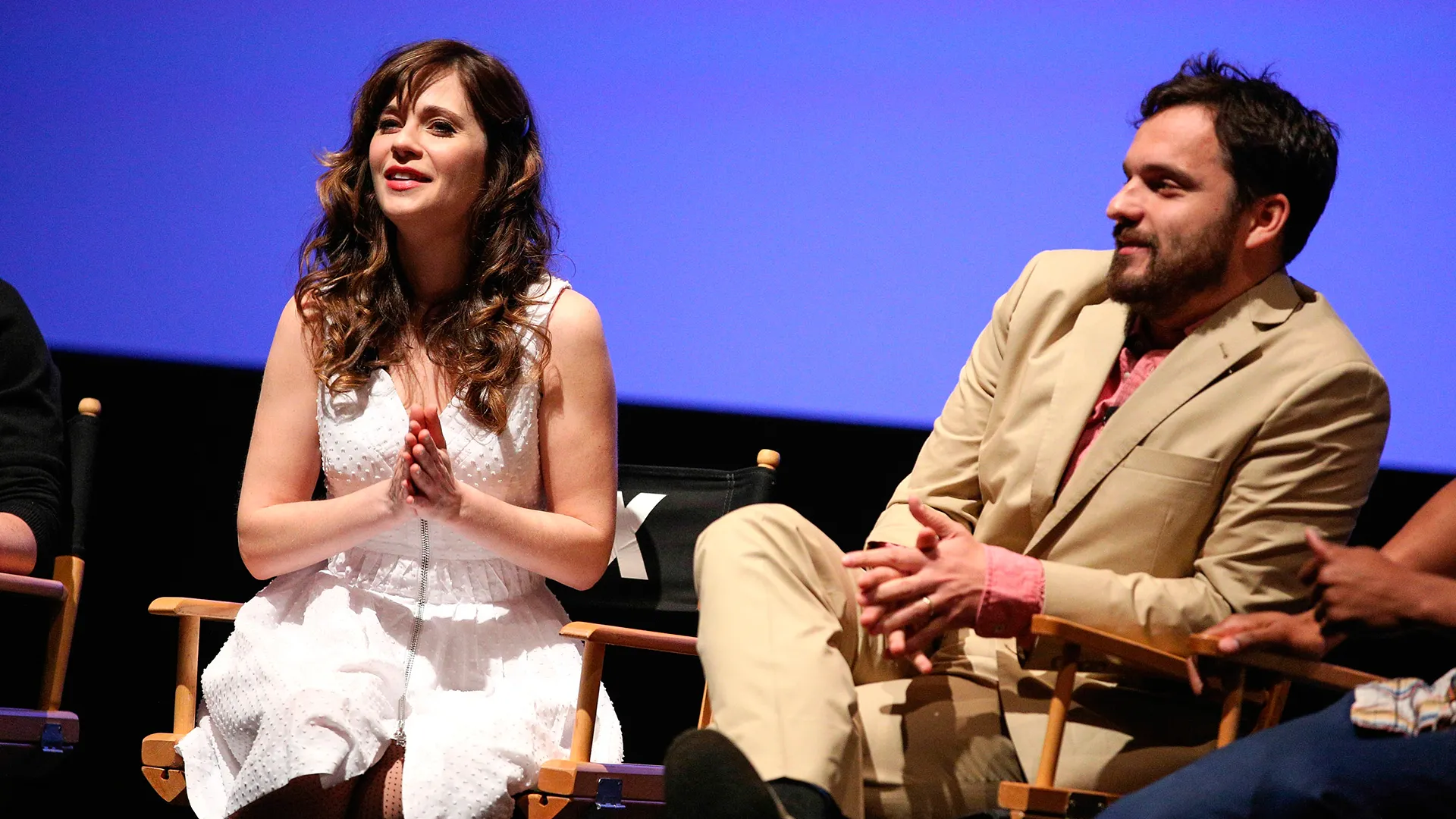
The phrase “familiar, not famous” lands because it describes a real shift in how celebrity works.
In the old model, fame was a funnel: a handful of TV channels, a handful of magazines, and a small roster of names the public could not avoid learning.
In today’s model, fame is more like a grid. You can be:
- ubiquitous on screens but not a tabloid character,
- critical to hit franchises but not the face on the poster,
- deeply known inside internet subcultures and still anonymous in a grocery store two towns over.
Jake Johnson sits in the sweet spot of that grid. He is the actor you can describe in one sentence to a lot of viewers, and then watch them nod in instant recognition.
Why this fits here
USConstitution.net is not an entertainment gossip desk. But we do cover something adjacent to celebrity: how mass attention forms , and what it reveals about the public sphere.
The Constitution assumes a citizenry capable of noticing, sorting, and prioritizing information. Modern attention is routinely shaped by platform incentives, algorithmic amplification, and the economic logic of the press. None of that requires hidden coordination. It is simply how a media environment protected by the First Amendment functions in practice: lots of speakers, lots of incentives, and a constant competition for attention.
This Jake Johnson moment is a low-stakes example of a high-stakes civic reality. The same attention dynamics show up when a Supreme Court argument clip goes viral, when a single phrase from a debate dominates a news cycle, or when a court filing becomes “the story” because it is easily screenshot, summarized, and reposted. In entertainment, the outcome is mostly harmless. In civic life, the same pattern can decide what the public thinks is important before the full record is even read.
What people are searching
If you are one of the new searchers, you are probably not looking for a filmography spreadsheet. You are trying to solve a mental itch. The most common questions inside these spikes are straightforward:
- Who is that guy from New Girl? Jake Johnson, who played Nick Miller.
- Is he in Spider-Verse? Yes. He voices Peter B. Parker in Into the Spider-Verse.
- Is there bad news? Moments like this are often driven by recognition, not scandal.
The absence of controversy is part of the appeal. The internet is trained to associate trends with disasters. Sometimes the trend is just a collective, delayed introduction.
Limits of the data
Google Trends is a useful signal, but it is not a headcount. The index tells you when interest peaked relative to itself in the selected view, not how many people searched in absolute terms. The “why” still comes from the surrounding context: what people were seeing, sharing, and repeating that week.
What to watch next
If your brain is still doing the “where else have I seen him?” scan, start here:
- New Girl (Nick Miller)
- Spider-Man: Into the Spider-Verse (voice of Peter B. Parker)
- Safety Not Guaranteed and Let’s Be Cops (two of the most common “oh right” titles in his catalog)
- Jurassic World and 21 Jump Street (often remembered as “he was in that?” roles)
The point is not that he suddenly arrived. The point is that the internet finally put a label on a familiar face.
The takeaway
Jake Johnson’s surge is a reminder that “fame” is not a single status you either have or do not. It is a bundle of separate things:
- face recognition
- name recall
- platform repetition
- and the right hook at the right time
What you can say with confidence is modest but useful: a familiar actor hit an attention cluster, and a lot of people did what the internet does when it finally gets a label for a feeling. It searched, shared, and moved on, now slightly more certain it knows what it is looking at.