
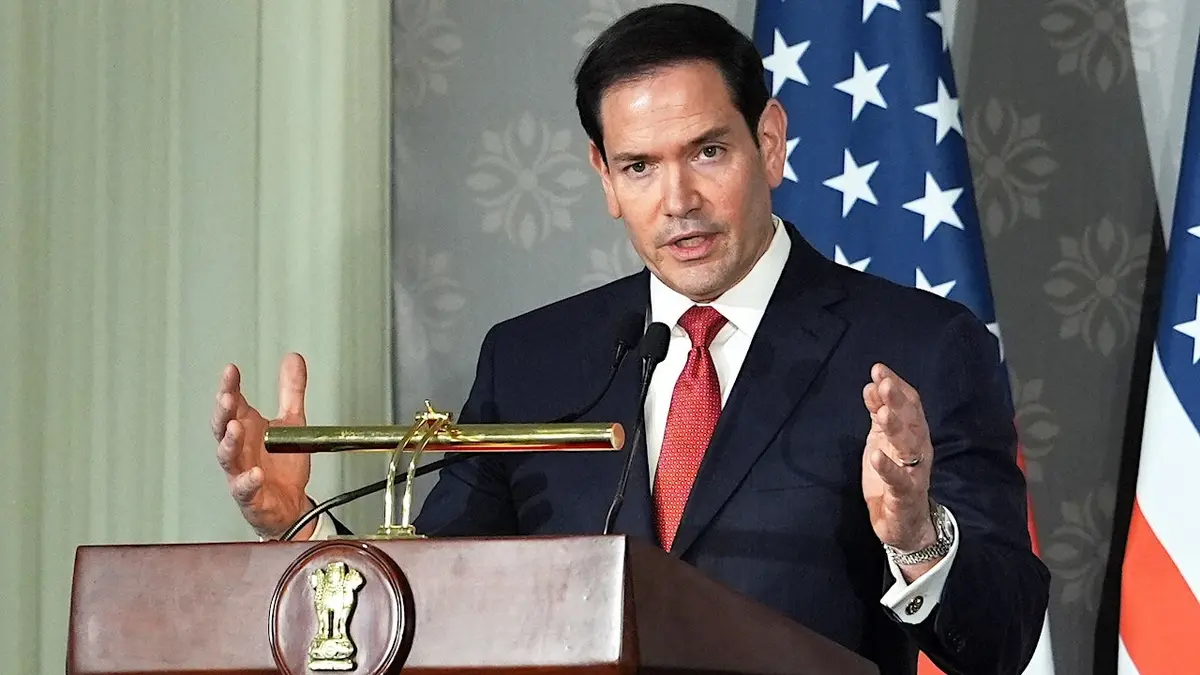
Marco Rubio is trending because he became the public face of a live diplomatic event with a built-in flashpoint: a U.S.-convened global summit held July 16, 2026 at the State Department focused on what State Department materials and Rubio’s public remarks described as “far-left political terrorism.” The phrase is the spark. It is not a single scandal clip or a personal controversy. It is a foreign policy push with cameras on, diplomats in the room, and a contested label being moved from debate to agenda.
Important distinction: “Far-left political terrorism” is a messaging label, not a settled term in U.S. criminal law. The legal system turns on conduct and specific statutes. The political fight is over whether this label should become an organizing category for international cooperation and, indirectly, domestic security priorities.
People are drawn to Rubio’s name for opposite reasons at the same time. Supporters believe a category of ideological violence has been minimized or treated as an afterthought. Critics worry because civil liberties groups and some legal scholars have long warned that elastic “terrorism” labels can be politicized or applied too broadly, including in ways that chill protest activity. Either way, a complex question gets compressed into a single name: Marco Rubio.
Join the Discussion
What happened
On July 16, 2026, Rubio convened a State Department summit and argued that left-wing ideologically motivated violence is a counterterrorism priority that is under-identified internationally. In his framing, the goal was not only rhetorical. It was institutional: push partners toward shared language and workable channels for identifying, tracking, and disrupting this category of violence across borders.
The controversy flows from a basic reality of government: naming a threat is not neutral. Once a label becomes a formal priority, it tends to shape what gets measured, what gets briefed, what gets funded, and what gets pursued.
What the summit is
The core idea of the July 16 summit is structural. Rubio is trying to build an international vocabulary and a practical track for cooperation on left-wing ideologically motivated violence, similar to how governments coordinate on other extremist threats through definitions, watchlists, and information-sharing workflows.
In modern counterterrorism, labels are not just rhetoric. They can influence:
- What gets counted and therefore funded and prioritized.
- What gets shared through intelligence and law enforcement channels, including travel alerts and threat reporting.
- What gets prosecuted, depending on which statutes fit and when enhancements apply.
- What gets sanctioned through asset blocks and visa restrictions, typically aimed at foreign actors.
That is why the summit format matters. It signals an attempt to make the concept legible as government process, not just a speech line. If partners adopt a shared category, it can show up downstream in analytic units, training, and cross-border requests for assistance.
What it means in law
Rubio’s phrase is politically charged, but the policy question beneath it is familiar: when does ideological violence become “terrorism” as a legal and diplomatic category?
In U.S. statutory terms, baseline definitions appear in 18 U.S.C. § 2331, which defines “international terrorism” and “domestic terrorism.” In simplified form, those definitions generally focus on conduct that:
- involves acts dangerous to human life
- violates criminal law (or would if committed within U.S. jurisdiction)
- appears intended to intimidate or coerce civilians, influence government policy by intimidation or coercion, or affect government conduct by certain violent means
A major public misconception is that “domestic terrorism” operates like a single, standalone federal charge. It usually does not. The definition can still matter for investigative posture, resource allocation, and how certain statutes or enhancements are discussed, but many prosecutions proceed under other criminal laws that target the underlying conduct.
Descriptive vs legal labels
One reason this debate heats up fast is that governments often mix two different things:
- Descriptive or intelligence categories, used to analyze patterns of violence.
- Legal categories, which trigger specific authorities, penalties, and collateral consequences.
Those categories can overlap, but they are not interchangeable. Partners also disagree, sometimes sharply, about classification. A label that feels straightforward in one system can be unlawful or politically impossible in another.
Why definitions matter
If governments adopt shared language internationally, it can affect:
- Designation debates, where a group is treated as a terrorist organization versus a criminal network versus a political movement with violent offshoots.
- Extradition and mutual legal assistance, because cooperation often hinges on how conduct is characterized in each system.
- Counter-financing workflows, because financial surveillance regimes rely on defined categories of risk.
This is where civil liberties concerns enter. A definition written too broadly can drift from bombs and shootings to looser theories of “association,” sweeping in protected advocacy or ordinary civil society activity unless policymakers draw and enforce clear lines between speech and violence.
Examples and limits
Readers often want a clean line between violence and protest. The law does not give a single bright line, but it does give guardrails.
Conduct that can fit an “ideologically motivated violence” frame usually involves planning or carrying out violence, arson, bombings, assaults, or targeted sabotage intended to intimidate civilians or coerce government policy. When officials cite specific incidents to justify the “far-left political terrorism” framing, the most reliable public anchors are identifiable cases, charging documents, and on-the-record government statements.
Conduct that is typically protected includes organizing, marching, chanting, striking, publishing radical arguments, and calling for systemic change, even if the ideas are offensive or extreme. The government can punish crimes that occur at protests, but it cannot treat an ideology or movement identity as contraband.
The hard cases live in the middle. Property damage or obstruction may be prosecuted as criminal conduct, but it is not automatically “terrorism” as a legal matter. That is part of why rhetoric and legal precision collide in debates like this one.
What the U.S. can do
Summits like this can sound like they produce immediate crackdowns. In practice, they more often produce coordination mechanisms that shape outcomes later.
Likely deliverables, based on the kinds of steps the State Department typically uses to operationalize new priorities, include:
- Shared language: a working definition or set of indicators for ideologically motivated violence attributed to far-left movements.
- Information sharing: agreements on what travel data, threat reporting, and financial red flags are exchanged, and through which channels.
- Operational coordination: liaison roles, joint analytic work, or priority tasking for existing counterterror teams.
- Legal alignment: encouragement of compatible statutes and clearer cooperation paths for investigations and extradition.
There are also hard constraints worth stating plainly. U.S. designation tools like the Foreign Terrorist Organization list are limited to foreign organizations. Treasury’s counterterrorism sanctions authorities, including the Specially Designated Global Terrorist program under E.O. 13224 (as amended), are generally oriented toward terrorism with an international dimension and are typically used where there is a foreign nexus, foreign activity, or cross-border support. They are not a general domestic-terror designation tool. So even when summit rhetoric sounds aimed at domestic movements, the legal reality is narrower. What travels internationally most easily is cooperation around foreign-connected networks, cross-border financing, travel facilitation, and violence that runs through international channels.
Why now
The timing is doing what timing always does online: it compresses a dense story into a single name. On the day of the summit, live coverage and rapid commentary made Rubio the face of the story even for people who were mainly trying to follow the event itself.
There is also a deeper political logic. International security agendas are partly a contest over attention. If the U.S. can get partners to treat a category as a shared priority, it becomes easier to justify new intelligence tasking, joint statements, sanctions aimed at foreign actors, and coordinated investigations.
In other words, the trend reflects something structural, not personal: a high-profile official convening partners around a label that reliably polarizes audiences while reshaping how governments describe and pursue political violence.
Constitutional fault lines
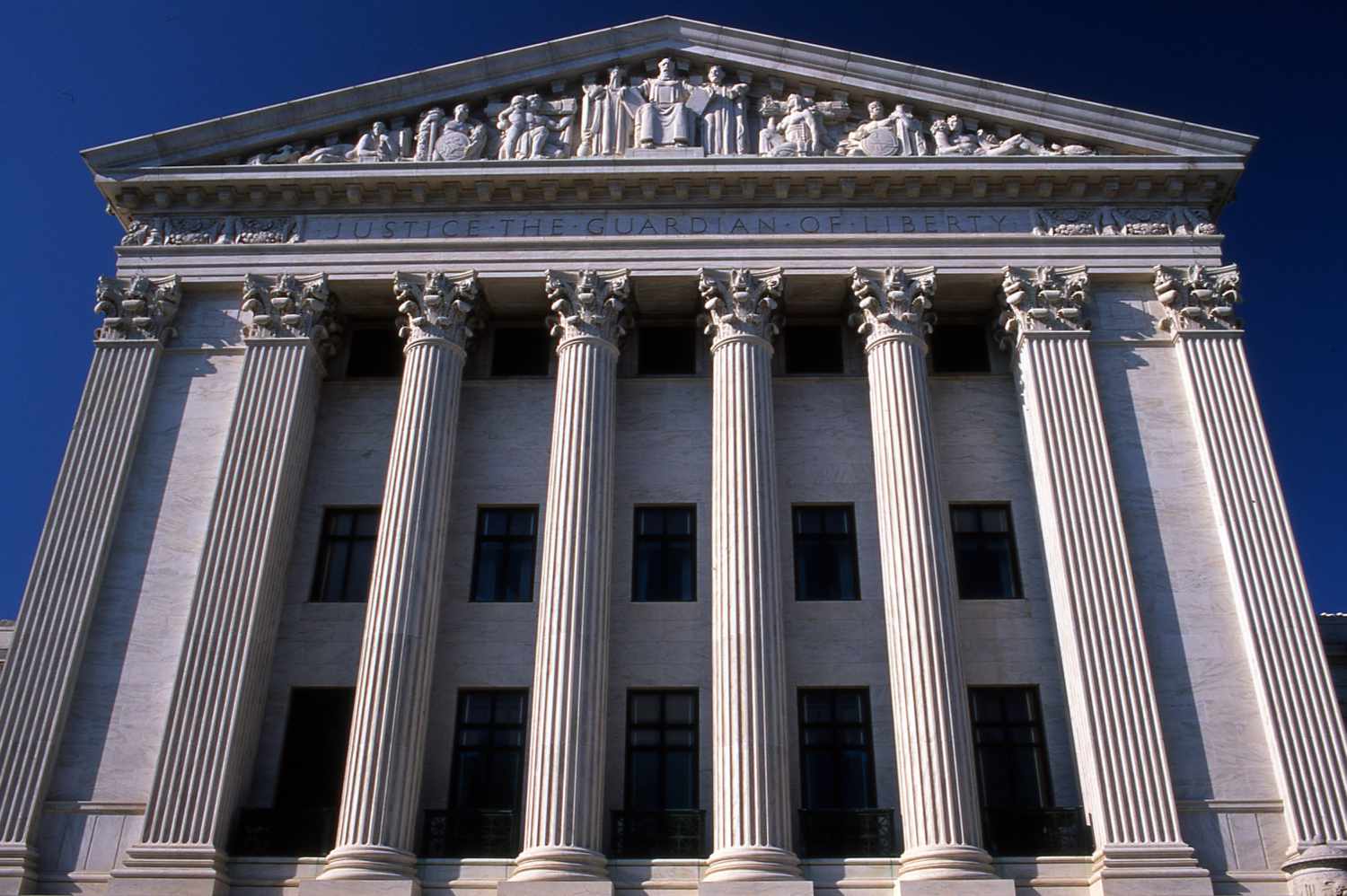
Even though this was a foreign policy summit, U.S. readers map it onto domestic constitutional anxieties because tools developed for counterterrorism abroad can, over time, influence the boundaries of lawful dissent at home.
1) First Amendment
The First Amendment protects unpopular speech, radical speech, and political organizing. The government can punish true threats and incitement, but it cannot treat ideology as contraband. The classic anchor here is Brandenburg v. Ohio, which limits punishment of advocacy unless it is directed to inciting imminent lawless action and likely to produce it.
2) Due process
Once the government starts using labels that carry real-world penalties, the question becomes: what process exists to challenge the label? Lists and designations can function like punishment even before a trial through lost banking access, travel restrictions, or employment consequences. Due process is the difference between a security claim and a durable rule-of-law system.
3) Viewpoint neutrality
One reason this summit is controversial is not the idea that left-wing violence exists, but the fear that counterterror priorities will be enforced asymmetrically. If “terrorism” becomes partisan shorthand, enforcement risks looking like viewpoint discrimination, which triggers constitutional and legitimacy problems.
A related legal anchor that often surfaces in this space is the “material support” framework, including litigation involving Holder v. Humanitarian Law Project. It is worth being precise about what that case stands for: it upheld restrictions on certain forms of coordinated support to an FTO, even when the support was framed as training or advice. It does not criminalize independent advocacy, commentary, or general political speech uncoordinated with a designated group.
What to watch
After a summit like this, the reporting questions that determine whether it was a one-day messaging moment or the start of a durable policy track are straightforward:
- What was announced, such as a working group, timeline, or future meeting.
- Who attended, including which countries and which U.S. agencies were represented.
- What evidence was cited to justify the “far-left political terrorism” framing.
- What is explicitly international (cross-border travel, financing, foreign networks) versus what is merely implied to be domestic.
As of publication, the State Department has not released details such as a joint statement, a formal readout with attendee lists, or an agreed working definition. If the Department releases those documents, they will clarify whether the summit produced a standing coordination structure or remained primarily a rhetorical marker.
Bottom line
Marco Rubio is trending because a live, internationally oriented summit turns foreign policy into a single public protagonist. The substantive story is not only “what did Rubio say.” It is “what category is the U.S. trying to build, what counts under the government’s framing, and what happens when a contested label becomes a cross-border enforcement priority.”
If the summit yields a joint statement, a working definition, or an ongoing coordination structure, the attention will not end with the livestream. It will shift into the slower, more consequential question: how a democracy fights political violence without redefining political disagreement as violence.