
The Smithsonian is back in the headlines after the White House released a report criticizing the National Museum of American History for what it described as “extreme political activism” and a move away from “straightforward education.” Whatever you think of that critique, the larger question people are really asking is durable: can a president force a museum to change an exhibit, and why are taxpayers paying for any of this?
That is partly a constitutional question, and partly a statutory and governance question. The Constitution does not mention museums or the Smithsonian, but it does allocate powers and constraints: Congress’s power to spend, Congress’s power to create structures by statute under its enumerated powers and the Necessary and Proper Clause, the President’s duty to execute laws, and the First Amendment rules that apply when the government communicates with the public.
Join the Discussion
Is the Smithsonian federal?
Yes and no, and that is the point.
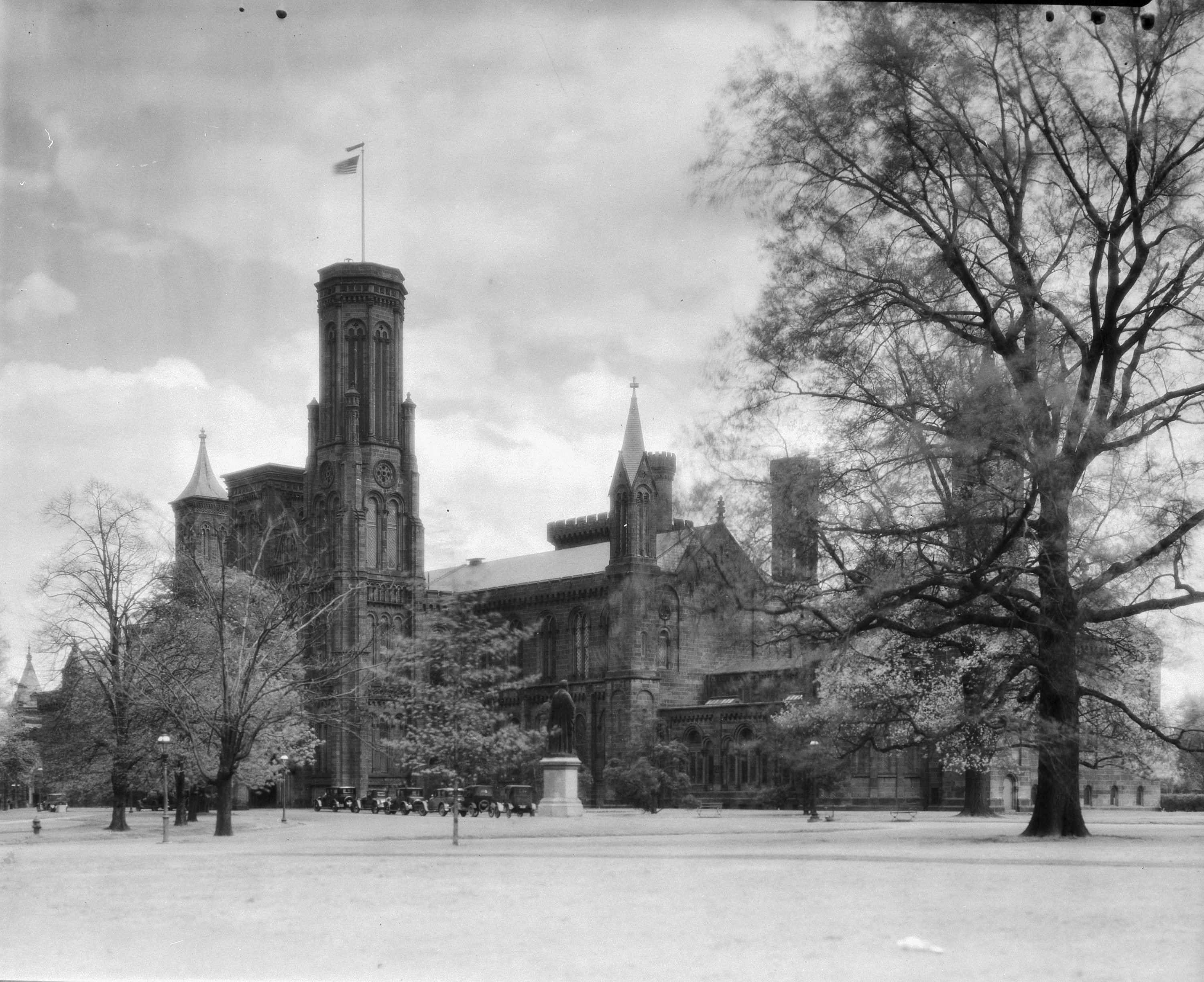
The Smithsonian Institution is not a cabinet department and it is not structured like a typical executive branch agency. It is a federally chartered institution created by Congress and governed under federal law, but it also operates with a distinctive hybrid identity. It runs many of the most visible “public” museums in the country, yet it also manages private donations and trust funds alongside congressional appropriations.
That mixed structure matters because it shapes who can legitimately claim authority over museum content.
- Congress created the legal framework and regularly funds operations.
- The Smithsonian’s governing board sets institutional policy and oversight.
- The executive branch interacts with it mainly through the budget process, the ex officio officials specified by statute, and general federal law.
So when people ask, “Can the White House control the Smithsonian?” the more accurate question is: what levers does federal law give the executive branch over an institution Congress designed to have a buffer of independence?
Where its authority comes from
The Smithsonian exists because Congress implemented a private bequest through federal legislation. James Smithson, an English scientist, left his estate to the United States to found an institution for the “increase and diffusion of knowledge.” Congress accepted the bequest and created the Institution to carry it out, giving the Smithsonian a statutory footing as well as the trust obligations tied to the gift.
Constitutionally, this sits comfortably inside Congress’s authority to spend for federal purposes and to create entities by statute under its enumerated powers and the Necessary and Proper Clause. There is no freestanding “create institutions” clause. Instead, Congress builds institutions as instruments for carrying out powers the Constitution does enumerate.
That does not mean Congress can do anything it wants with speech. It means Congress can fund and structure programs, and then the First Amendment determines the boundaries when government action pressures, compels, or penalizes expression.
Who oversees it?
The Smithsonian is overseen by a Board of Regents. If you are trying to map power, start here, not with headline debate about exhibit labels.
The Regents are a governing body defined by statute. They include ex officio federal officials (including the Vice President and the Chief Justice) as well as members of Congress and citizen Regents. The citizen Regents are selected through the process Congress set by law. In practical terms, the Regents function like a board of directors for a national institution: they oversee leadership, major policies, and the institution’s general direction.
This governance design is a constitutional compromise in miniature. It reflects two competing instincts:
- Public accountability because taxpayer money is involved and the Smithsonian presents public history in prominent national spaces, including many museums on federal property.
- Institutional independence so curatorial decisions are not rewritten with every change in political winds.
Independence here does not mean immunity. It means the primary oversight channel is structured governance and congressional appropriations, rather than direct presidential command. It also means Smithsonian leadership is not chosen the same way as a cabinet secretary. The Regents, not the President acting alone, play the central role in institutional direction.
How it is funded
The Smithsonian’s budget is not a single pot of money. It is a blend, and that blend is why “taxpayer-funded museum” is both true and incomplete.
- Federal appropriations support core operations, facilities, security, and many museum functions.
- Trust and gift funds come from private donors, endowments, and revenue-generating activities.
- Grants and partnerships can support research, exhibits, and programs, often with restrictions set by the grant terms.
Constitutionally, once Congress appropriates funds, it can attach conditions, but only within limits. The unconstitutional-conditions doctrine is nuanced: conditions are often upheld when they define the scope of the program Congress is funding, but become more suspect when they are designed to penalize or control speech outside the funded program or to force an institution to surrender constitutional rights as the price of participation.
The Smithsonian’s practical reality is simpler: Congress can always ask what it is paying for and can always choose to increase, reduce, redirect, or deny future appropriations. That is the accountability mechanism the Constitution most clearly provides.
What a White House report can do
A White House report can do several things very effectively, and one thing not at all.
What it can do
- Signal priorities to the public and to the agencies involved in budgeting.
- Apply political pressure by framing an institution’s choices as inconsistent with its mission.
- Shape funding debates by giving members of Congress arguments, talking points, and lines of inquiry for hearings.
- Trigger follow-on actions indirectly, such as agenda-setting within the executive branch, communications with the Regents, or requests for reviews through established oversight channels.
What it cannot do by itself
- Rewrite governance rules that Congress set in statute.
- Order exhibit changes the way a department head can direct a subordinate office inside the executive branch.
- Unilaterally cut appropriations because the power of the purse belongs to Congress.
In other words, a report is not a command. It is an attempt to shape the environment in which lawful commands might later be made through legislation, appropriations, or board governance.
Separation of powers
Americans often assume that anything “federal” is ultimately controlled by the President. That instinct is understandable, but constitutionally incomplete.
The President is charged with executing the laws. Congress writes the laws and controls appropriations. When Congress creates an institution that is not a standard executive agency, it is deciding that day-to-day control will be routed through a different governance mechanism.
That does not mean the executive branch is irrelevant. It means its influence tends to be indirect:
- Budget proposals can recommend funding changes, even though Congress has final say.
- Participation by ex officio officials can matter where federal law places executive branch officials within the governance structure.
- General federal law still applies, including procurement, employment rules, and civil rights requirements where relevant.
The constitutional takeaway is that “oversight” is not a single power. It is a set of tools distributed across branches. The Smithsonian’s design places more of those tools in Congress and the Regents than in direct presidential supervision.
The First Amendment issue
When the dispute is over whether an exhibit is “education” or “activism,” the legal question becomes: whose speech are we dealing with, and what legal tool is being used to change it?
Two First Amendment frames tend to collide in museum controversies.
1) Government speech
If the Smithsonian is understood as speaking for the government when it curates and presents exhibits, then the “government speech” doctrine is relevant. Under that doctrine, the government has substantial leeway to decide what messages it will promote, fund, and display, because every public institution must choose. A museum cannot display everything.
The check on government speech is usually political and structural, not viewpoint-neutrality litigation: elections, appropriations, hearings, and governance. That is why Congress’s funding role and the Board of Regents matter so much.
2) Viewpoint discrimination and compelled speech
If oversight becomes an attempt to punish or mandate particular viewpoints in a context where private speech rights are implicated, First Amendment alarms go off. The government generally cannot condition benefits on surrendering constitutional rights, and it cannot use public funding as a pretext to impose viewpoint-based censorship where the law treats the relevant setting as a forum for private expression.
Museums live in a messy middle. An exhibit label written and approved through Smithsonian channels is likely to be treated as the institution’s own message, which points toward government speech and political accountability rather than a judicially enforced viewpoint-neutrality rule. But a guest lecture series, a rented event space, or a program where outside speakers are invited to present their own views can raise different questions, including whether the government has created a limited public forum and must apply rules evenhandedly. The constitutional answer is rarely “the First Amendment forbids any oversight” or “the First Amendment allows total control.” It depends on the mechanism used and what, exactly, is being compelled or penalized.
Can the White House control exhibits?
Not by simple directive, the way a President can direct an executive agency to change a policy within statutory bounds.
Exhibit influence is more plausibly exercised through:
- Regents and Smithsonian leadership through internal governance and management.
- Congress through hearings, statutory changes, or appropriations language that funds or defunds certain activities.
- Public and donor pressure which is not a constitutional power, but is often an operational reality.
Even then, the First Amendment complicates the picture. If exhibit content is treated as government speech, courts may have little to say about viewpoint balance. If the government uses a tool that targets private speakers or penalizes protected speech outside a defined program, judicial review becomes more plausible.
What could happen next
In practice, the standard next steps after a high-profile critique are procedural rather than dramatic.
- Congressional hearings where Smithsonian leadership explains mission, process, and spending.
- Appropriations negotiations that may include report language, directives, or narrower riders tied to specific line items.
- Oversight reviews such as requests for audits or evaluations through established mechanisms.
- Regents engagement through policy guidance, governance review, or leadership-level direction consistent with Smithsonian rules.
None of these guarantees exhibit changes. They are, however, the channels the constitutional structure most naturally routes conflict into.
Accountability without censorship
There is a difference between oversight and editorial control, even if they get blurred in public debate.
Oversight that is generally consistent with constitutional structure often looks like:
- Asking for clear mission statements and measurable educational goals.
- Requiring public reporting on how federal funds are spent.
- Holding hearings where leadership explains curatorial process and governance.
- Auditing for financial integrity, procurement compliance, and ethics rules.
Oversight that starts to look constitutionally suspect tends to look like:
- Targeting particular viewpoints for punishment while leaving other viewpoints alone in a setting where private speech rights apply.
- Using funding conditions as a disguised command to adopt or suppress a specific political message outside the funded program’s scope.
- Attempting to force staff to endorse an official orthodoxy rather than meet professional standards.
The line is not always bright. But the Constitution pushes disputes toward structured governance and democratic accountability, rather than executive fiat.
Why this debate keeps happening
Public history is not neutral. Even deciding what to include is an argument about what matters. That is why institutions like the Smithsonian become magnets for conflict during periods of political polarization.
The constitutional design does not promise that federally supported civic education will be free of controversy. It promises something else: that disputes over publicly funded institutions will be mediated through lawful structures, divided powers, and speech protections that make it harder for any one branch to convert public institutions into personal instruments.
If you take one durable point from today’s news cycle, let it be this: the Smithsonian sits at a crossroads where Congress’s spending power, executive influence, statutory governance, and the First Amendment all overlap. That overlap is exactly why a White House report can generate headlines, but cannot, by itself, rewrite the museum’s walls.