
Every civics teacher eventually has to say a sentence students hate: process matters. Not because process is pretty, but because it is the guardrail that keeps power from turning into pure muscle.
That is why a seemingly small courtroom moment, a federal judge ordering a $5,000 sanction after a lawyer materially misrepresented a key case citation, deserves more attention than it will probably get. When courts punish lawyers for misstating case law, they are not nitpicking. They are defending the basic operating system of the judiciary: you bring your best facts, your best law, and you tell the truth about both.
Join the Discussion
The case behind the sanction
The sanction came out of an election-related defamation lawsuit brought by Eric Coomer over accusations that he used his position at Dominion Voting Systems to interfere with the results of the 2020 presidential election. The case went to trial, and the jury delivered a partial verdict for Coomer. The verdict included a punitive damages award against Frankspeech.
But the story here is not just the verdict. It is what happened in the filings along the way, and what the court concluded about the obligations lawyers take on when they submit briefs that ask a judge to rule on a jury’s punitive damages award.
Bad citations are not always small
Lawyers make typos. They also miss things. Judges know this. Courts are staffed by human beings, not citation robots.
What courts do not accept is a pattern of citations that are defective in ways that change the meaning or the weight of the legal authority being presented. There is a difference between getting a page number wrong and holding out a district court opinion as if it were binding circuit precedent.
In this case, the court had already confronted major citation problems before trial. In a pretrial response brief, the defense included “nearly thirty defective citations”. After questioning at a pretrial conference, attorney Andrew Kachouroff ultimately admitted that artificial intelligence had been used in drafting the filing, and he said citation checking had been delegated to co-counsel Jennifer DeMaster.
The judge imposed sanctions then: $3,000 against Kachouroff and his firm and $3,000 against DeMaster. The court described those sums as the least severe punishment sufficient to deter and punish the conduct, and it declined to extend sanctions to the defendants themselves at that time.
The second round and Capital Solutions
After trial, the parties filed post-trial motions. Coomer moved to increase the punitive damages award against Frankspeech, pursuant to Colorado law. Frankspeech’s response brief argued that such an increase would violate the Reexamination Clause of the Seventh Amendment.
In support, the response brief claimed: “The 10th Circuit recognized in Capital Solutions, LLC v. Konica Minolta Business Solutions USA, Inc., 695 F.Supp.2d 1149, 1154-56 (10th Cir. 2010), that the jury's determination on this issue is entitled to finality.”
The court found two major problems with that citation and its use:
- Wrong court. Capital Solutions is reported in the Federal Supplement, meaning it is a district court decision, not a Tenth Circuit case. The brief nevertheless described it as a Tenth Circuit decision.
- Wrong proposition. The case did not support the claim that a jury’s determination of the amount of punitive damages is “entitled to finality” under the Reexamination Clause.
That set off a second show-cause order and a renewed look at Federal Rule of Civil Procedure 11, the rule that requires lawyers to make reasonable inquiry before filing.
Why binding authority matters
Here is where the civics lesson gets blunt.
Courts operate on hierarchy. A federal district judge is bound by Supreme Court decisions and by published precedent from the circuit above her. A district court opinion, even a well-reasoned one, is not the same thing. It can persuade, but it cannot command.
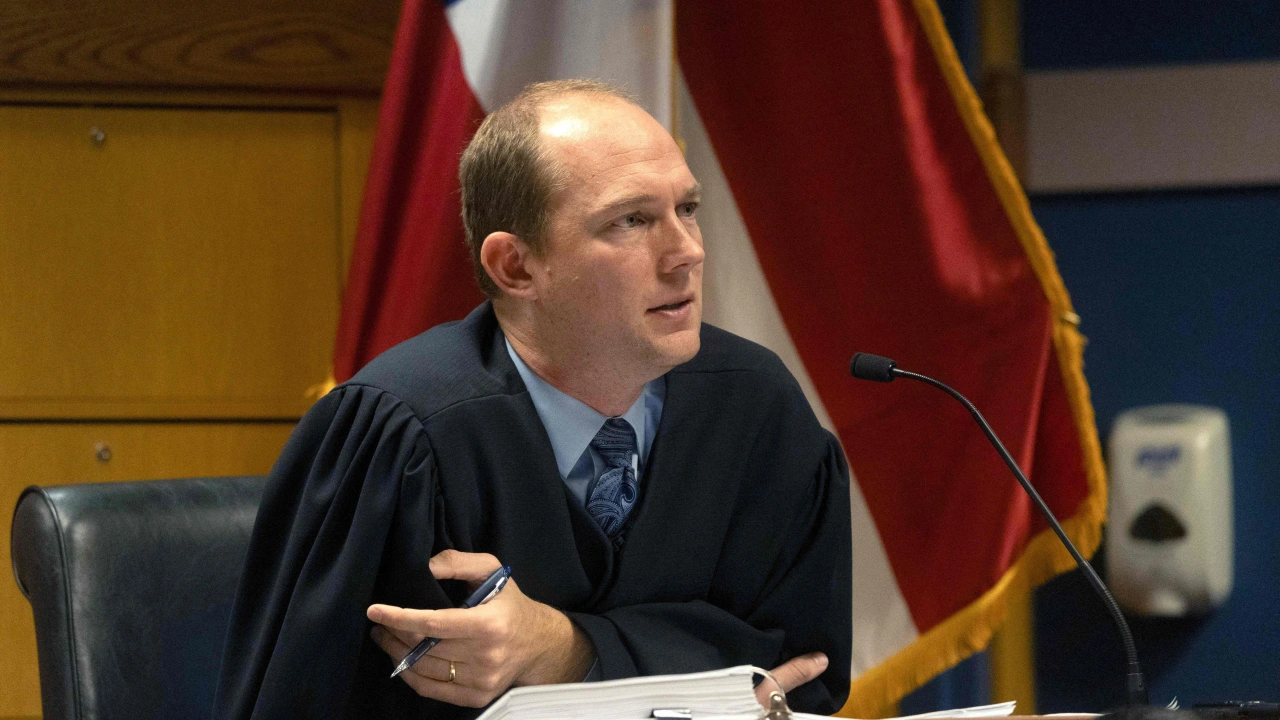
So when an attorney describes a district court case as if it were circuit precedent, that is not a harmless formatting error. It changes the claimed force of the law. Judge Nina Wang called that kind of error “material,” because it misrepresents the “legal significance” of the cited authority.
The court also emphasized how obvious the mistake should have been to any experienced lawyer. As the order put it, “Any lawyer…would or should recognize that a case reported in the Federal Supplement is from a district court, not a circuit court.”
AI and the duty to check
The modern twist is that courts are now seeing a particular species of error that looks less like human sloppiness and more like machine-generated confidence: citations that are close to real, but wrong in telling ways.
Judge Wang described the misattribution problem as “a form of hallucination” that had already appeared in the case. The order pointed to prior examples where a case was cited with the right name and reporter, but attributed to the wrong court, including misidentifying an Eastern District of Kentucky decision as if it were from the District of Colorado, and labeling a Fourth Circuit case as if it were a Tenth Circuit case.
This is not about banning AI. It is about refusing to let AI become a laundering machine for irresponsibility. Technology does not dissolve a lawyer’s duty to check, to read, and to tell the court the truth.
What Rule 11 does here
Rule 11 is often misunderstood as a weapon for punishing unpopular arguments. It is not supposed to be that. Lawyers can make aggressive arguments, novel arguments, even arguments that annoy the judge, as long as they are made responsibly.
Rule 11 is aimed at something narrower and uglier: filings that are not the product of reasonable inquiry, or that misstate what the law says, or that are presented for improper purposes. This is not a special standard for political cases. It is the baseline standard for any case that expects a court to rely on what a lawyer writes.
Courts also have broader, background tools for managing proceedings and protecting the integrity of the judicial process. But in this episode, the court’s focus was straightforward: the brief’s prominent, repeated misattribution of Capital Solutions and its misleading use of Seventh Amendment doctrine.
The court’s bottom line
After reviewing the record, Judge Wang ordered an additional sanction of $5,000. The language was not subtle. The court described the episode as part of a pattern of briefs with citations that “misrepresent[ ] what courts have said.” It also warned about the institutional cost: “The judiciary undermines its own central purpose of administering justice for the public good…and the public's confidence in the institution—when it permits attorneys to breach their duties…without consequence.”
Notably, the court declined to refer Kachouroff to the Virginia Bar for discipline, relying in part on his representation that he had stepped back from active trial-level litigation due to health issues.
The court also addressed sealing issues around an affidavit discussing those health problems. The judge allowed redaction of private medical details but required a public version that did not hide other statements the lawyer relied upon to justify his conduct.
So what does this have to do with lawfare
“Lawfare” is a slippery term. Sometimes it means using litigation as a political weapon. Sometimes it is just a complaint that the other side has lawyers too.
But if we are going to use the word seriously, we should draw the line in the right place. Litigation becomes lawfare, in the pejorative sense, when the court system is treated as a stage for narratives that do not have to meet basic standards of accuracy, diligence, and candor.
The real danger is not a single bad citation. The danger is the normalization of a strategy where filings are pumped out fast, packed with impressive-sounding references, and built to overwhelm rather than persuade.
The question under the procedure
Here is the question I would have put on my whiteboard for a civics class:
If courts cannot trust lawyers to accurately state what the law is, how does a constitutional democracy settle disputes without violence?
The American experiment assumes that we can channel conflict into institutions. The judiciary is one of those institutions. It works only if the inputs are honest enough for the outputs to be legitimate.
A $5,000 sanction will not fix polarization. It will not restore faith overnight. But it signals something essential: the courtroom is not a rumor mill, and it is not a content farm. It is a place where words have consequences.