
Gerrymandering is one of those political practices Americans love to hate, until it helps their side win. But the Constitution does not treat every kind of gerrymander the same. After a recent Supreme Court decision involving Louisiana’s congressional map, that difference just got sharper in a way that could reshape the 2026 elections and the fights leading into them.
The shift is straightforward: the Court is increasingly hostile to districts drawn with race as an explicit organizing principle, while leaving states broad room to pursue partisan advantage. That is not a small distinction. It changes what can be challenged, what arguments land, and why lawmakers are now moving quickly to revisit maps in places that are not typically on the decennial redistricting calendar.
Join the Discussion
The Louisiana ruling
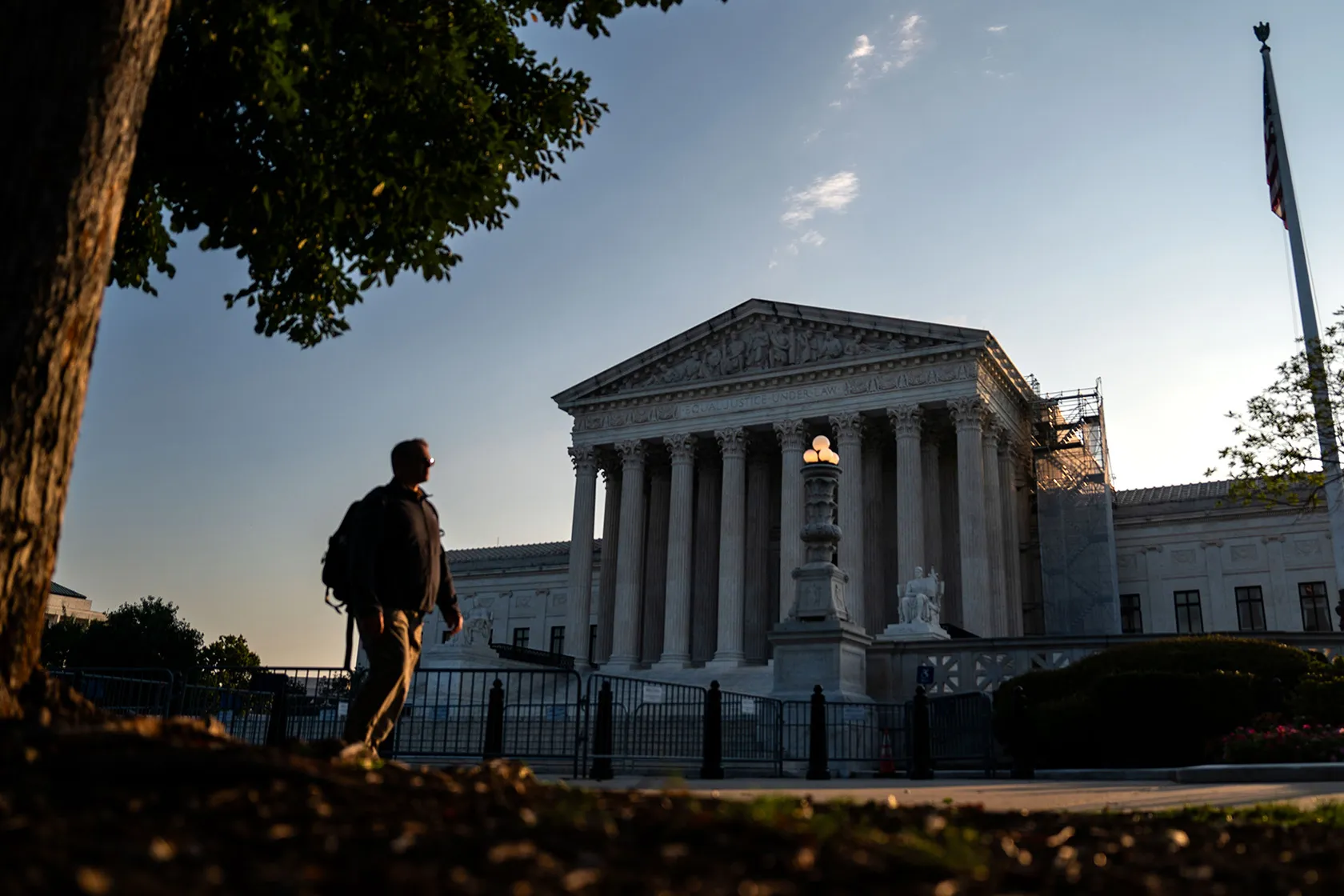
In Louisiana v. Callais, the Supreme Court, by a 6-3 vote, held it was illegal for lawmakers in Louisiana to create a new majority-Black congressional district. The opinion, written by Justice Samuel Alito, fits into a series of rulings by the Court’s conservative majority under Chief Justice John Roberts treating race-conscious policies in education, the workplace, and voting as unconstitutional.
The immediate consequence is practical and political: it will be far more difficult for districts drawn on racial lines to survive. The longer consequence is strategic. If race-based justifications are now legally riskier, map drawers have every reason to talk in the language of politics instead.
Race versus politics
Most voters use “gerrymandering” as a single catchall. In court, it often splits into two different stories, with two very different levels of Supreme Court tolerance.
1) Race is the red flag
The Court’s message, reinforced by the Louisiana decision, is that using race to draw election maps is unnecessary and unconstitutional. That creates a new legal hazard for states that openly defend a map as designed to create or preserve a majority-Black district.
In this environment, the details that matter are less about broad moral claims and more about how the state explains itself. If lawmakers and map drawers present race as a central goal, they invite the kind of constitutional suspicion the Court has been applying across race-conscious policy debates.
2) Partisanship is treated as politics
By contrast, the Court’s posture toward partisan line-drawing is permissive, even when it is aggressive. Election-law attorney Hans von Spakovsky described partisan gerrymandering as “part of what the Supreme Court has called the ‘hurly-burly of politics.’” He added, “But anybody who thinks we’re ever going to get gerrymandering, partisan gerrymandering entirely out, that’s just not going to happen. We’ve had it since Elbridge Gerry, the governor in Massachusetts, did it in the early 1800s. That’s where the name for it comes from.”
This is the asymmetry that is driving the next wave of fights: race-conscious mapmaking is increasingly treated as constitutionally suspect, while partisan intent is treated as the normal rough-and-tumble of democratic competition.
The VRA backdrop
It is hard to understand the intensity of today’s debate without the history that produced the Voting Rights Act in the first place. Nearly 61 years ago, President Lyndon Johnson signed the law, calling it a national turning point: “Every family across this great, entire, searching land will live stronger in liberty, will live more splendid in expectation, and will be prouder to be American because of the act that you have passed, that I will sign today.”
Martha Jones, a history professor at Johns Hopkins University, describes the long wait that preceded that moment. “Slavery is abolished in 1865; in 1870, the 15th Amendment is passed, intending to guarantee to Black men the right to vote; 1920, the 19th Amendment is intended to guarantee all women the right to vote. And still, Black Americans are kept from the polls in too many places, by law, by intimidation, by violence,” Jones said. “So, one thing we can say about 1965 is that people have been waiting a very long time.”
That waiting came with risk and loss. “Lives were lost, lives were threatened, communities were under siege,” Jones said. “And Americans, Black and White, put themselves in harm’s way in order to finally set fire to the feet of Lyndon Johnson, set fire to feet of Congress. And finally, the result is a Voting Rights Act.”
And she warned against sanitizing that origin story: “But to think of the Voting Rights Act as an act of Congress, or an act of Johnson’s pen, is to in essence erase the blood from the page. And there is a lot of blood in that story.”
What changes now
The Louisiana ruling is already echoing beyond Louisiana. In the wake of the decision, many Republican-controlled states are rushing to change their maps this year to give the GOP, which holds a narrow majority in the U.S. House, a better shot at keeping it in November.
In Tennessee, the state’s Republican governor signed a new map into law amid outrage and protests. Critics fear the map will dilute the voting power of the state’s Black citizens. Florida and Virginia are also part of the broader churn, as redistricting disputes and map changes ripple through the states.
For Rep. Cleo Fields, a Louisiana Democrat whose district will be affected, the stakes are personal and final. “Let’s be clear: Once the Supreme Court rules, it’s the final judgment of the highest court of the land,” he said. Fields added, “The real issue is whether or not a person who looks like me will have the opportunity to serve in Congress, and that’s what that fight has always been about.”
The deeper clash
Redistricting debates often sound like raw politics. Underneath them is a live argument about what equality means in a multiracial democracy, and about whether the Court is acting as an umpire or a participant.
Von Spakovsky argues the Court is rightly rejecting racial discrimination. “I think this is one of a series of, frankly, good decisions by the court that is saying racial discrimination is wrong,” he said. Asked about Black Americans who say the Voting Rights Act was not an instrument of racial discrimination, but rather a means to protect representation, he replied, “Yeah, well, I think they’re taking the wrong view of that.”
He also framed the baseline promise in procedural terms, not outcomes. “The point of our Constitution, and the Voting Rights Act, is that everyone is guaranteed an equal opportunity to vote,” von Spakovsky said. “They are not guaranteed success in the candidates that they think should be elected.”
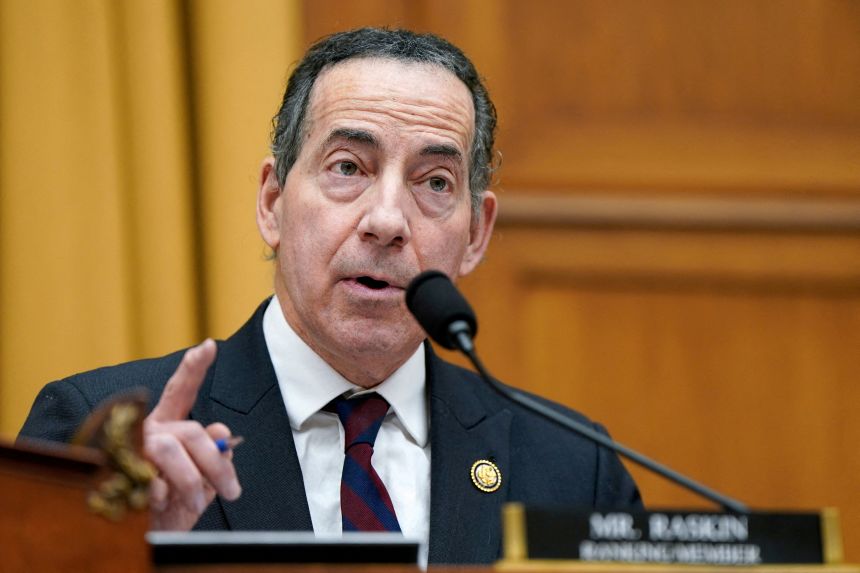
Rep. Jamie Raskin, a Maryland Democrat and the Ranking Member of the House Judiciary Committee, sees something far darker in the Court’s direction. “I believe that this decision represents the complete collapse of the Roberts Court into partisan political activity,” he said. He argued the decision is designed to shape power before the next round of contests: “There’s no other way for me to understand what just happened other than they, too, are trying to bail out Donald Trump from all of his policy catastrophes of this term by making it possible for him to win districts,” Raskin said.
Raskin also offered a blunt summary of the rulebook he believes the Court is creating: “They’ve basically said it’s unconstitutional to deliberately create a majority African-American, or majority Hispanic, district, although you can create all the majority White districts you want. That’s just considered the norm.”
What to watch next
If the legal climate is changing, the tactics will change with it. Expect future fights to turn less on grand declarations and more on how lawmakers describe their choices, how quickly they move, and whether courts view a map as being drawn along racial lines or explained as ordinary partisan maneuvering.
And because these disputes are unfolding in real time, timing itself becomes leverage. Raskin says the Court “totally reversed the plain meaning of the Voting Rights Act” and that “they are rushing these things to get done before the [2026] elections.” Whatever one thinks of that charge, the calendar pressure is real. Map changes made close to elections force faster decisions, fewer off-ramps, and higher stakes for everyone living inside the new lines.
History is watching
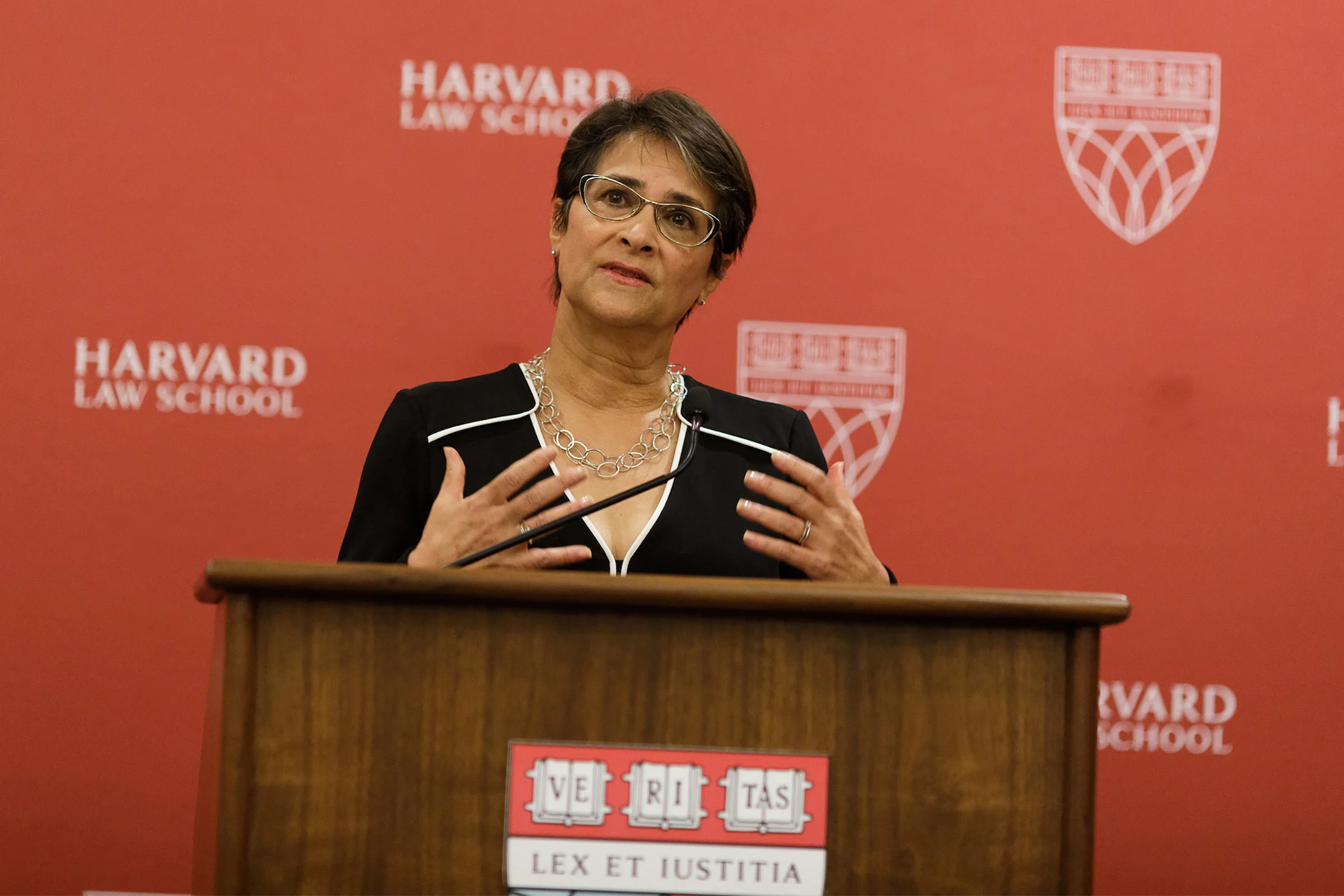
Jones framed the moment as a chapter in an ongoing national reckoning with race and the Constitution, one that will outlast the current Court. “As a historian, my counsel to judges is that history will be the judge,” she said. “Part of what we’re doing in this moment is making a record. And that’s part of what the Supreme Court does for us, is make a record of what has happened here.”
Her warning is not that tomorrow will be simple, but that tomorrow will be remembered. “Only history will tell us in some sense what it meant, what its long-term consequences were, for Black Americans, yes, but for American democracy as well,” she said. “I think anyone who is a party to what is unfolding at the Court now is wise to be humbled. Because they won’t always control the narrative. But history writers will.”
The big consequence
The most important practical takeaway is not a slogan, but an incentive. The Court’s current approach makes race-based districting legally hazardous while treating partisan mapmaking as acceptable politics. That combination encourages lawmakers to pursue power through maps while keeping their public rationale and paper trail focused on politics, not race.
That will not end the fight over representation. It will shift where the fight happens, and how it is argued, as the country heads into elections that could be shaped not just by voters, but by the lines that decide which voters count where.