
Most people think jury duty ends once you show up, sit in a big room, and wait to be called. But the most constitutionally loaded part often happens after that, when the courtroom door closes and the lawyers start trying to shape who will decide the case.
That process is jury selection . It is a mix of logistics, psychology, and constitutional law. And it matters because the Constitution promises more than just “a jury.” It promises a jury that is impartial, chosen through a system that cannot be skewed by race, sex, or other forbidden shortcuts.
(Those “other” categories depend on jurisdiction. Race and sex are clearly covered nationwide; some courts and states go further.)
Join the Discussion
From jury duty to jury selection
There are two related but different experiences:
- Jury duty: what to expect is about reporting, screening questionnaires, waiting, and the general mechanics of being summoned.
- Jury selection is what happens when you are assigned to a particular case and the court decides who will actually sit in the jury box.
If jury duty is the airport, jury selection is the gate. Lots of people enter the building. Only a small group boards the flight.
The constitutional foundation
Jury selection is constrained by several constitutional guarantees that overlap:
- Sixth Amendment (criminal cases): the accused has the right to a speedy and public trial by an impartial jury of the state and district where the crime was committed, with the district set by law.
- Fourteenth Amendment (state trials): requires due process and equal protection, which is where many anti-discrimination rules in selection come from.
- Fifth Amendment (federal trials): due process principles also matter in federal court.
One more idea is not written in a single clause, but shows up repeatedly in Supreme Court jury cases: the jury pool must be drawn from a fair cross-section of the community. This doctrine is strongest in criminal cases (and is reinforced by statutes like the federal Jury Selection and Service Act). It does not mean every trial jury must look like the community. It means the system cannot be built to exclude whole categories of people from the pool.
Note on civil cases: the federal Constitution’s civil jury right comes mainly from the Seventh Amendment (and many state constitutions and statutes). The equal protection limits on discrimination in selection still apply when courts run the process.
Step one: the jury pool and the panel
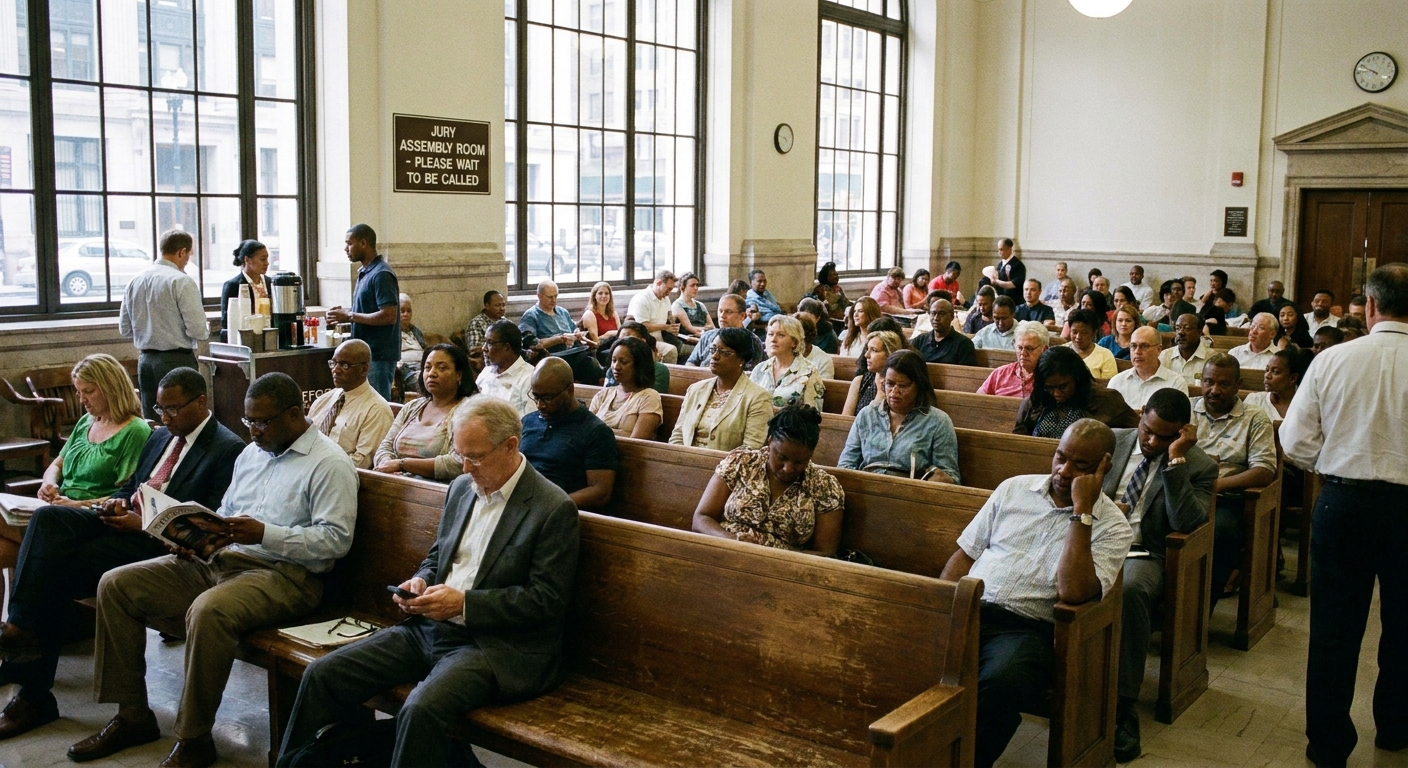
Courts start with a large jury pool, sometimes called the venire. It is typically assembled from sources like voter registration and driver’s license lists, plus other state-specific databases.
From that pool, the court summons a smaller group for a particular case. That group is the jury panel that will be questioned in the courtroom.
Step two: voir dire
Voir dire is the questioning phase. The point is not to test intelligence or civic virtue. The point is to find out whether a potential juror can be fair and follow the law as the judge explains it.
Who asks the questions?
This depends on the jurisdiction and the judge:
- Sometimes the judge leads most of the questioning.
- Sometimes the lawyers do most of it.
- Sometimes it is a hybrid.
Even when lawyers get time to question jurors, judges usually control the boundaries. Courts can limit repetitive questions, overly personal fishing expeditions, and anything designed more to persuade than to screen.
What gets asked?
Voir dire commonly covers:
- Basic background: occupation, family, prior jury service
- Connections to the case: knowing the parties, witnesses, or attorneys
- Experiences relevant to the subject: for example, being a victim of a similar crime
- Attitudes about legal concepts: presumption of innocence, police credibility, self-defense, damages in civil cases
- Ability to follow rules: language barriers, hearing issues, scheduling conflicts, disability accommodations
In many courts, this is also where written questionnaires and time limits matter. Some judges rely heavily on forms to cover sensitive or technical topics quickly.
Privacy and candor
Voir dire forces strangers to talk about sensitive things in public: prior arrests, trauma, mental health history, views about race or policing, political and religious beliefs that may affect fairness.
Judges sometimes allow certain questioning at sidebar or in chambers to protect privacy and encourage honesty. But it is still a system built on a fragile premise: that people will reveal bias, or at least reveal enough for lawyers to detect it.
Challenges for cause
After questioning, attorneys can ask the judge to remove a juror through a challenge for cause. The idea is straightforward: if a juror cannot be impartial, they should not serve.
What counts as cause?
Cause varies by state and by the judge’s discretion, but common examples include:
- The juror admits they cannot be fair
- The juror has a relationship with a party, lawyer, or key witness
- The juror shows strong bias about the type of case, such as “I always believe police” or “I never believe police”
- The juror cannot follow the legal instructions, such as the burden of proof
A classic flashpoint is the “rehabilitation” moment. A juror expresses bias, then after follow-up questions says they can be fair. Judges differ on how much weight to give that final promise.
How many do you get?
There is no set limit the way there is with peremptory strikes. In principle, any number can be raised, because the goal is to remove legally unfit jurors. In practice, judges limit repetitive or weak motions and keep the process moving.
A quick example
Suppose a juror says, “My sister is a police officer, and I tend to believe cops over everyone else.” If the judge finds that bias too strong to set aside, that juror can be removed for cause.
Peremptory strikes
Then come the tools that make jury selection feel less like screening and more like strategy: peremptory challenges, often called peremptory strikes.
With a peremptory strike, a lawyer can remove a juror without stating a reason up front. The number is limited by statute or rule and varies by jurisdiction and by the seriousness of the case.
Why do they exist?
The traditional argument is that peremptories help both sides remove jurors who seem “off” in ways that are hard to prove as legal bias. Maybe a juror is hostile, evasive, or visibly aligned with one side’s narrative. Peremptories are supposed to protect the parties’ confidence in the jury.
The modern problem is obvious: if you can strike without stating a reason, it is tempting to strike for the reasons the Constitution forbids.
Same scenario, different tool
In the example above, the judge might say the juror’s police connection is not enough for cause because the juror also says, “I can be fair.” Even then, either side might still use a peremptory strike based on tone, demeanor, or trial strategy.
Batson and discrimination limits
Peremptory strikes are still peremptory, but they are not immune from constitutional review. Under Batson v. Kentucky (1986), lawyers cannot use peremptory strikes to exclude jurors because of race. Later cases extended the principle to bar discrimination based on sex.
Batson is one of those Supreme Court decisions that tries to do two things at once: preserve a traditional trial practice, but fence it in with equal protection limits.
Batson in plain English
If one side believes the other is striking jurors for discriminatory reasons, they can raise a Batson challenge. The judge then walks through a basic three-step framework:
- Show a pattern or circumstances suggesting discrimination. For example, a prosecutor uses most strikes against Black jurors in a case with a Black defendant.
- The striking party must offer a race-neutral (or sex-neutral) reason. This can be almost anything facially neutral: “strong opinions about policing,” “inconsistent answers,” “seemed inattentive,” “body language.”
- The judge decides whether the stated reason is genuine or a pretext. This is the hardest step. It turns on credibility, comparisons to similar jurors not struck, and the judge’s willingness to call discrimination what it is.
Why Batson is controversial
Batson bans discrimination, but it does not eliminate the incentives that produce it. Peremptory strikes operate in the realm of hunches, and hunches are easy to dress up as neutral explanations.
That is why courts sometimes scrutinize whether the lawyer applied the stated reason consistently. If a lawyer says they struck Juror A for having a cousin who was arrested, but kept Juror B with the same circumstance, the judge may infer pretext.
Does Batson apply in civil cases?
Yes. The Supreme Court has held that peremptory strikes in civil cases involve enough state action to trigger equal protection limits (Edmonson v. Leesville Concrete). The rule also applies to peremptory strikes used by criminal defendants (Georgia v. McCollum), not just prosecutors.
Recent trends
Batson’s limits are evolving in the states. Some jurisdictions have concluded that the peremptory system is too easy to game. For example:
- Arizona eliminated peremptory strikes in state courts.
- California adopted reforms that tighten scrutiny of stated reasons and target patterns that historically masked discrimination.
The direction is the same: less tolerance for “neutral” explanations that track old stereotypes.
Other constitutional boundaries
Impartiality and publicity
The Sixth Amendment’s impartial jury requirement is tested when a case is famous. Voir dire may probe what jurors have heard and whether they have already formed conclusions. In extreme situations, courts can change venue, sequester jurors, or use detailed questionnaires.
Fair cross-section
The Constitution does not promise proportional representation on the final jury. But it can constrain systems that systematically exclude “distinctive groups” from the pool, especially in criminal cases. If the pool is engineered in a way that effectively screens out a slice of the community, that can trigger legal problems even before voir dire begins.
Lawyer effectiveness
In criminal defense, jury selection is also tied to the Sixth Amendment right to counsel. A lawyer who fails to challenge an obviously biased juror, or mishandles a Batson issue, can create grounds for appeal in some circumstances.
How a jury gets seated
The mechanics differ across courts, but a common pattern looks like this (often using either a “jury box” method or a “struck jury” method):
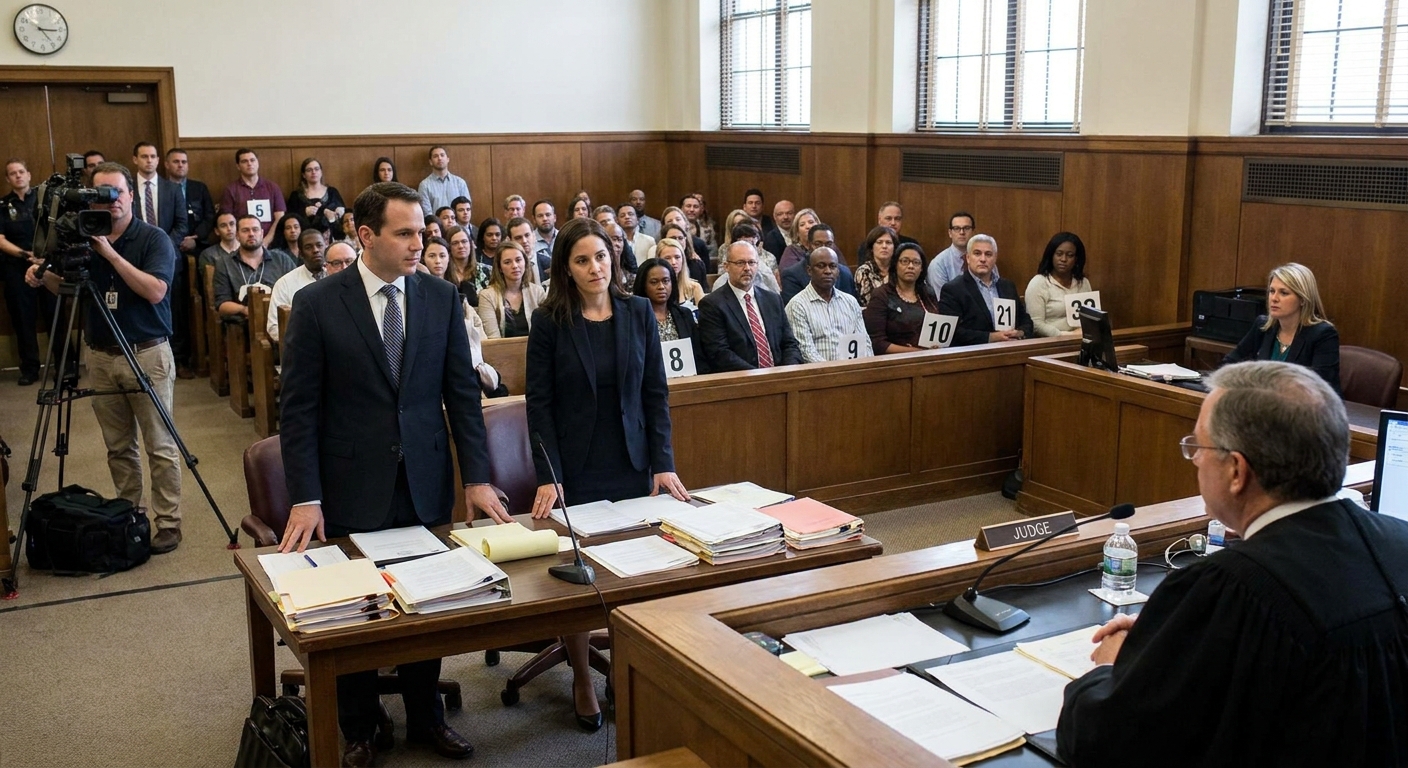
- The judge seats a group of potential jurors in the jury box and sometimes in nearby seats.
- The judge and/or lawyers conduct voir dire.
- Challenges for cause are argued and ruled on.
- Peremptory strikes are exercised, often on paper or at sidebar.
- The court repeats the cycle until the required number of jurors (plus alternates) are seated.
Once selected, jurors are sworn. At that moment, they stop being potential jurors and become the decision-makers the Constitution is talking about.
Details vary: some courts seat multiple alternates; some states allow non-unanimous verdicts in certain civil cases; criminal juries are more commonly required to be unanimous, with a few jurisdiction-specific wrinkles.
Common misconceptions
“A jury has to match the community.”
No. The Constitution focuses more on whether the process is fair than whether the final panel matches census data.
“Peremptory strikes are unconstitutional.”
Not inherently. The Supreme Court has allowed them to exist, but only within anti-discrimination limits like Batson, and some states have scaled them back or eliminated them.
“If you say you can be fair, you will be kept.”
Not necessarily. Lawyers can still strike you peremptorily, and judges can still grant a challenge for cause if your bias appears too strong or too close to the facts of the case.
“Jurors are picked to find the truth.”
Jurors are picked to decide a case using the evidence allowed in court and the law provided by the judge. That can feel like “truth,” but it is really a legal version of truth with strict rules about what can be considered.
Where the Constitution becomes real
In civics class, “trial by jury” sounds like a simple promise. In practice, it is a promise that has to survive human behavior: stereotyping, strategic thinking, fear, and the subtle pressure to pick jurors who will “get it.”
Voir dire is the system’s attempt to confront bias openly. Challenges for cause are the system’s attempt to remove bias honestly. Peremptory strikes are the system’s concession that bias is not always provable. Batson is the system’s reminder that some biases are not just unfair. They are unconstitutional.
If you ever wondered where constitutional ideals collide with courtroom reality, start here. The jury is not just who shows up. It is who the law allows to stay.