
ActBlue is not a political action committee in the way most people use that term. It is a fundraising platform, a piece of infrastructure that makes it easy for individuals to give money online to Democratic candidates, party committees, and progressive organizations. And because money in politics is never just money, ActBlue has become a recurring constitutional pressure point: Who can fund American elections, and how do we stop prohibited money from slipping in through the same digital channels that make small-dollar participation possible?
That question surged again after House investigators cited internal materials that, they argue, raise concerns about how the platform handled potential “foreign red flags.” The specific allegations will be fought over in politics and, potentially, in enforcement forums. The underlying legal reality is more stable: foreign nationals are broadly barred from contributing to U.S. elections, campaigns must use “best efforts” to collect certain donor information, and online platforms occupy an awkward middle space between payment processor, compliance tool, and political conduit.

Join the Discussion
What ActBlue is and what it does
ActBlue is best understood as a conduit. It processes donations from individuals and then transmits those funds to the chosen recipient, such as a candidate committee, a party committee, or a nonprofit. In campaign finance terms, that makes it similar in function to other online fundraising services, even though ActBlue is unusually prominent and politically identifiable.
Practically, ActBlue provides the tools that make modern online giving frictionless: saved payment information, recurring donations, “split” donations to multiple recipients, and standardized compliance fields. Those features are not just convenience. They change the shape of campaign fundraising by lowering the cost of giving and making small contributions more viable at scale.
Because it sits in the stream of money, ActBlue also sits in the stream of legal risk. A campaign may be the legal recipient, but a platform can be the place where prohibited contributions are attempted, where donor information is collected, and where suspicious patterns first show up.
Can foreigners donate? Generally no
Federal law draws a bright line around federal, state, and local elections: foreign nationals generally cannot directly or indirectly make contributions or donations in connection with any U.S. election. That prohibition covers more than writing a check to a candidate. It also reaches spending routed through intermediaries, reimbursements, and other workarounds that attempt to disguise the true source of funds.
The key concept is “foreign national.” It includes foreign citizens who are not lawful permanent residents. A lawful permanent resident, meaning a green card holder, is not treated as a foreign national for this particular ban and may contribute, subject to the usual limits and rules. Foreign governments, foreign political parties, and many foreign entities are also covered, and “indirect” contribution language is designed to stop laundering through straw donors.
That is the policy. The constitutional logic behind it is that democratic self-government depends on political accountability to the people who live under the laws. The Supreme Court has repeatedly treated political spending and contributions as tied to speech and association. But it has also recognized that the political community can set boundaries about participation by nonmembers, especially when the goal is to prevent foreign influence over elections.
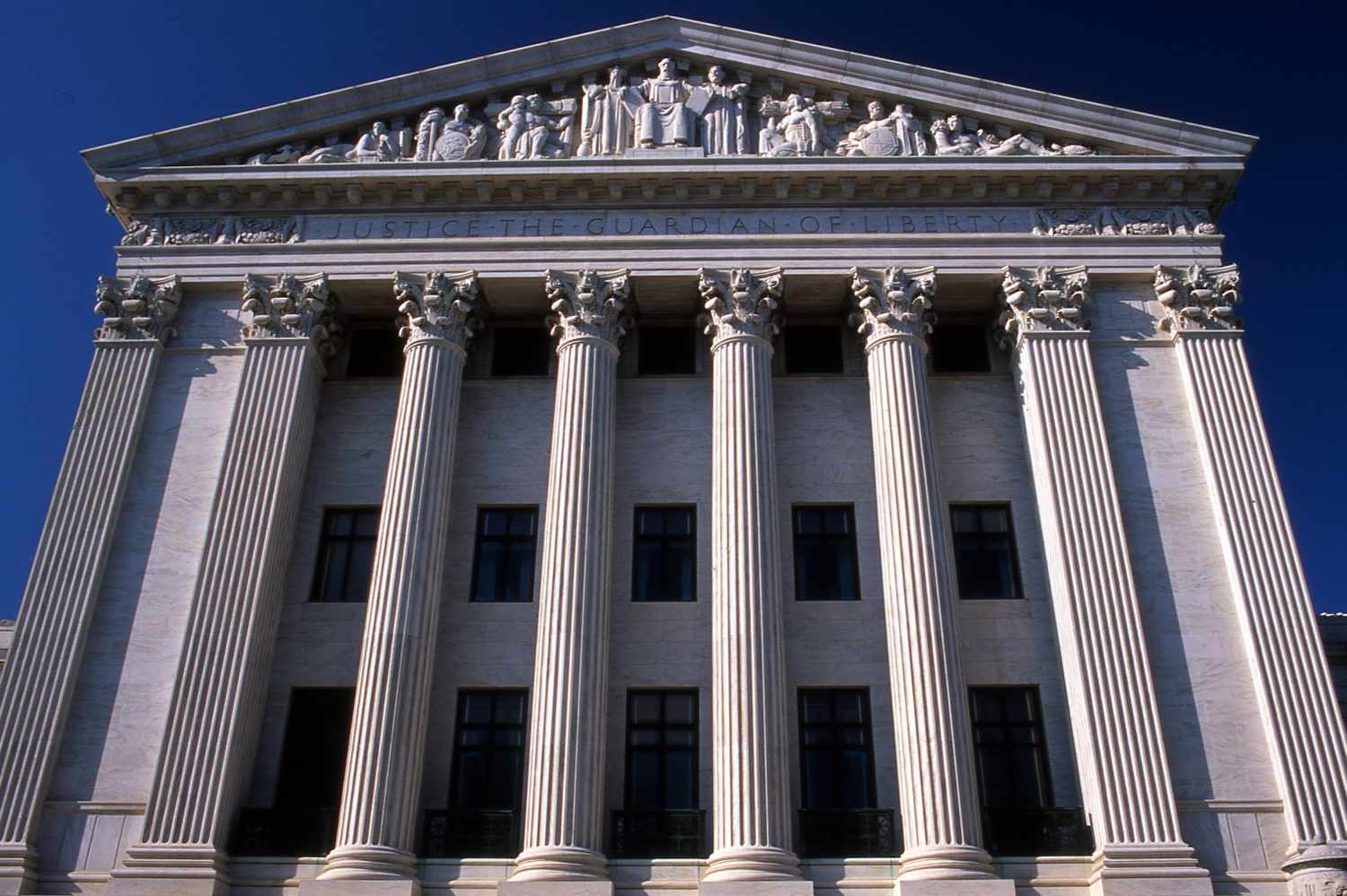
What the Constitution has to do with it
Campaign finance law lives in a constant tension between the First Amendment and the government’s interest in protecting elections from corruption and undue influence. The Supreme Court has treated contributions as a form of political association and expression, but not as an unlimited one. Contribution limits and source prohibitions are often reviewed under a less demanding standard than direct limits on political speech, because contributions are seen as posing particular corruption or influence risks.
Foreign contribution bans sit in their own category. The government’s interest is not just preventing quid pro quo corruption. It is preserving the sovereignty of the electorate. In other words, Americans can argue about how much money is too much. But the country has long insisted that the money must be American in origin, at least when it comes to funding elections.
That does not mean enforcement is easy, especially online. The Constitution sets the playing field. Technology decides how fast the ball moves.
How platforms screen donations
A modern campaign donation is not a check with a signature and a return address. It is a form field, a payment authorization, and a compliance representation, all completed in seconds. So the legal system relies on a mix of front-end certifications and back-end monitoring.
1) Donor certification
Federal political committees typically require a donor to affirm that they are a U.S. citizen or lawful permanent resident and that the contribution is made with their own funds. This is not just etiquette. It is part of the compliance architecture. A certification creates a record that the donor represented eligibility, and it gives campaigns and platforms a basis to reject or refund when something looks wrong.
2) “Best efforts” to collect donor information
For many federal committees, the law expects “best efforts” to obtain and report identifying information from contributors. That can include name, address, occupation, and employer, depending on thresholds and reporting requirements. Online systems usually prompt for this information, may validate formats, and may follow up if required fields are missing.
3) Fraud and pattern detection
Even when a donor checks the right boxes, suspicious activity can appear in patterns: unusually high volumes of small donations, repeated use of the same payment instrument across different names, clusters of contributions tied to certain IP ranges, or contributions that trigger chargebacks.
Some of these signals are about ordinary payment fraud. Some can be relevant to source prohibitions, including foreign attempts to route money through U.S. intermediaries. The hard part is that the same data points can suggest both innocent and illicit explanations. A college dorm, a corporate office, a VPN, or a shared network can create the same “pattern” as a coordinated scheme.
How foreign money can still be attempted
Legally, foreign money is not allowed to be a campaign contribution. Practically, prohibited money can be attempted in several ways, and the law tries to anticipate them.
- Direct attempts. A noncitizen abroad tries to donate online using a card that works in the U.S. If caught, the committee is expected to reject or refund.
- Straw donor schemes. A foreign source gives money to a U.S. person, who then contributes in their own name. That is illegal because the true source is concealed and the contribution is not made with the straw donor’s own funds.
- Layering through entities. Money can be routed through businesses or nonprofits. The details matter because the legal treatment depends on what the entity is, where it is incorporated, and who controls the decision to contribute.
- Payment obfuscation. Prepaid cards, third-party payment tools, or mismatched billing data can make it harder to see who is really behind a contribution.
None of that proves it happened in any specific case. It simply describes why “we prohibit foreign donations” and “we can stop foreign donations” are not the same sentence.
Who enforces the ban?
In theory, the enforcement lineup is straightforward. In practice, it is fragmented.
The Federal Election Commission (FEC)
The FEC writes and enforces campaign finance rules for federal elections. It can investigate, negotiate settlements, and impose civil penalties. The FEC is also famous for gridlock. Its structure is bipartisan by design, which means major enforcement actions can stall when commissioners split along party lines.

The Department of Justice (DOJ)
Some campaign finance violations can be criminal, especially when they involve knowing and willful conduct, conspiracy, or fraud. The DOJ can investigate and prosecute those cases. Criminal cases are harder, slower, and require proof beyond a reasonable doubt. They are also selective, because resources are finite and prosecutors prioritize clear, provable misconduct.
Congressional oversight
Congress can investigate, hold hearings, and issue reports. It cannot convict someone of an election crime. But it can subpoena documents, spotlight failures, and propose reforms. Oversight is political by nature, yet it can surface real compliance weaknesses and prompt changes in law or agency practice.
What to watch in the ActBlue controversy
When a fundraising platform becomes a headline, it helps to separate three questions that tend to get mashed together.
1) Did prohibited donations occur?
This is the factual question. If foreign nationals contributed, the next issue becomes whether the contributions were accepted, refunded, or routed onward, and what records exist to show the platform’s and recipients’ response.
2) Were controls adequate for the risk?
A platform can follow the basic legal script and still be criticized as too permissive, too slow to react to warnings, or too willing to rely on donor checkboxes. But “should have been better” is not automatically “illegal.” The law often speaks in standards like reasonableness and best efforts, which creates room for dispute.
3) Who is responsible when a platform is involved?
Campaign finance law places responsibility on political committees to report and to ensure contributions are lawful. Platforms, however, can be central actors in detection and prevention. That creates a modern accountability gap: the committee is legally on the hook, but the platform may control much of the intake process and data.
Expect debate over whether platforms should be treated more like regulated financial intermediaries, with stricter verification requirements, or whether that would chill small-dollar participation and create privacy risks for ordinary donors.
FAQ
Is ActBlue a PAC?
Not in the usual sense. ActBlue is primarily a donation processing and fundraising conduit that transmits contributions to political committees and other recipients. Technically, under FEC rules it is registered as a “conduit” committee, often described as a conduit PAC, because it receives contributions and forwards them to the intended campaigns and committees. A PAC in the common sense is a political committee that raises money to spend to influence elections. ActBlue’s core role is infrastructure and processing, though it operates within federal campaign finance regulation.
Can a foreign citizen with a green card donate?
Yes. A lawful permanent resident is generally allowed to contribute, assuming the contribution is made from their own funds and complies with limits and reporting rules.
Are small online donations less regulated than big ones?
No. The foreign national ban applies regardless of amount. Reporting requirements and required donor details can vary by threshold, but legality does not depend on size. A $5 illegal foreign contribution is still illegal.
If a prohibited donation gets through, what happens?
Typically, campaigns and committees are expected to refund unlawful contributions once identified. Enforcement can range from refunds and amended reports to civil penalties or, in egregious cases, criminal investigation.
Does banning foreign contributions violate free speech?
The Supreme Court has treated the government’s interest in preventing foreign influence on U.S. elections as sufficiently strong to sustain broad restrictions. The constitutional theory is that self-government permits the political community to limit electoral funding to those who are part of that community.
The civics bottom line
ActBlue matters because it is a major gateway into modern campaign fundraising. Foreign money matters because the law treats it as a category mistake: participation by someone outside the electorate in choosing the electorate’s representatives.
The hard problem is not writing the rule. The hard problem is enforcing it in an online system built for speed, volume, and low friction. If the current controversy produces anything durable, it will not be a viral allegation. It will be a clearer public understanding of what the ban is, who must comply with it, and which institutions we expect to catch violations before they become election narratives.