
“Deferred action” sounds like a technical footnote. It is not. It is one of the most powerful quiet tools in federal immigration enforcement because it answers a blunt question: will the government try to remove you right now?
Recent coverage and public discussion has pointed to Chukwunonso Eze, a suspect who allegedly entered on a tourist visa, overstayed, and later received deferred action at various points over time. Those are case-specific claims that matter, and they also require case-specific sourcing. If you are writing about any named person, the only responsible way to speak in specifics is to rely on primary records (a DHS notice, a court filing, or on-the-record statements identifying the basis for deferred action, the dates, and the agency component involved).
Set the individual facts aside for a moment, because the underlying confusion is common and real. A visa overstay is an immigration violation. So how can someone overstay and still remain in the United States for years under something granted by the federal government?
The short explanation is this: immigration law draws a hard line between lawful status and enforcement discretion. Deferred action is the second one. It can reduce the immediate risk of removal without turning a person’s presence into “lawful status.”
Join the Discussion
Deferred action is not a visa
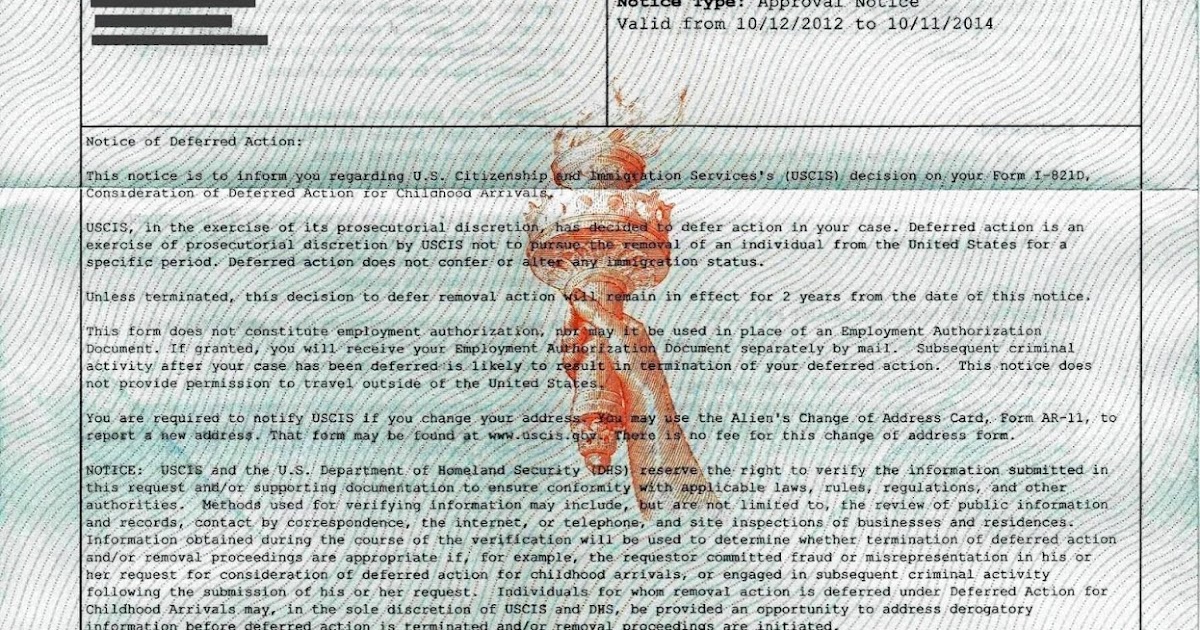
Deferred action is a decision by the executive branch to temporarily treat a person as a lower priority for removal, even though the person may be removable under immigration law. Think of it as a written form of: “We are not pursuing your removal for a set period, unless something changes.”
It can be granted even when DHS has not yet placed someone in formal removal proceedings. In other words, it is an enforcement-discretion posture, not a courtroom verdict and not a statutory immigration status created by Congress.
It is not a formal “status” the way a student visa, a work visa, asylum, or lawful permanent residence is. When deferred action ends, the underlying issue often remains. The person may still be removable based on the original overstay or another violation.
What it usually does
- Reduces immediate removal risk for a period of time.
- May support work authorization if the person separately qualifies for an employment authorization document (EAD) under the applicable regulatory category. The EAD is not automatic, and eligibility can vary by program and by the individual’s circumstances.
- May create practical stability like keeping a job, supporting a family, or avoiding repeated detention, even though the person can remain removable as a legal matter.
What it does not do
- It does not fix an overstay and does not convert the person into being “in lawful status.”
- It does not guarantee a future visa or a green card. Any future path depends on eligibility under statutes Congress actually wrote.
- It does not erase past violations and it can be ended. Deferred action can be time-limited, conditional, and revocable.
Where it shows up
Deferred action is best understood as a tool, not a single program. People most often encounter it through specific channels, including:
- Program-based grants, such as DACA (where available under current law and litigation posture).
- Humanitarian or victim-based contexts, including situations that can arise around VAWA self-petitions or U visa filings, where deferred action may be used as a temporary posture while an underlying process plays out.
- Case-by-case prosecutorial discretion, where ICE or DHS leadership uses written guidance to prioritize some cases over others.
None of these examples means a person automatically qualifies. They are simply common places the phrase “deferred action” appears in real life.

Visa overstay basics
Many people enter the United States legally and become removable later. A tourist visa is a clean example.
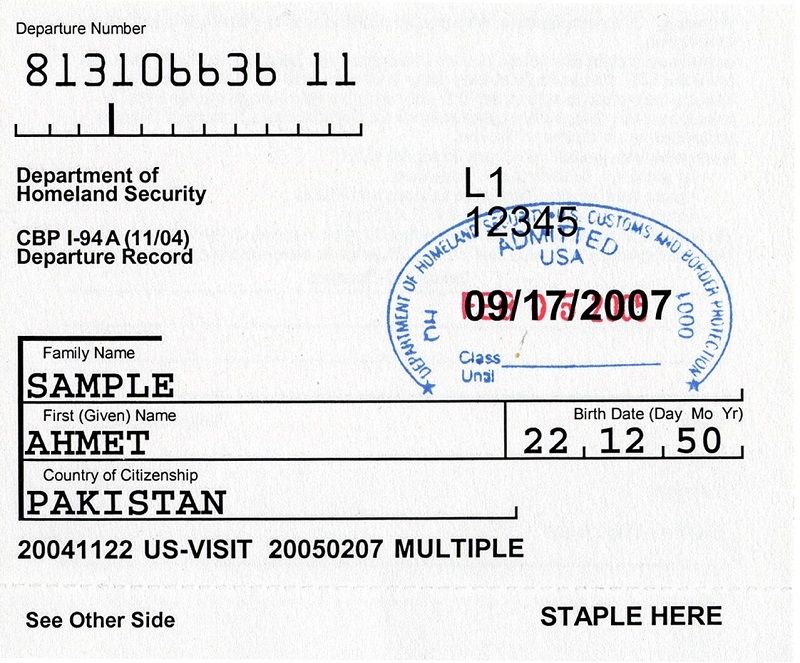
At a port of entry, Customs and Border Protection (CBP) inspects the traveler and decides whether to admit them. If admitted, the government sets a period of authorized stay, commonly reflected on an I-94 record.
One point that trips up readers: the visa in the passport is generally an entry document. The I-94 governs how long the person is authorized to remain after admission. When the I-94 period ends, the person becomes out of status if they remain.
That is the basic overstay. It is not exotic. It is also one of the most common ways people end up in the immigration system.
Unlawful presence is separate
Here is where the vocabulary starts to feel like a trap.
Overstaying a visa can make you removable. But immigration law also uses a different term, unlawful presence, which is tied to the “3 year” and “10 year” bars on reentry in many cases.
In simplified form:
- Accruing more than 180 days of unlawful presence and then leaving the U.S. can trigger a 3-year bar to reentry.
- Accruing one year or more and then leaving can trigger a 10-year bar.
Those rules have important exceptions and nuances. Minors are treated differently, and certain filings or circumstances can affect when unlawful presence accrues. The details are technical and fact-specific.
The key point for most readers is simpler: deferred action can reflect a discretionary choice not to pursue removal right now without wiping away prior violations. A person can have documentation showing the government is not actively seeking removal at the moment while still carrying legal baggage that can complicate, or block, a future attempt to reenter after departure.
How someone can remain
Because the United States does not have infinite enforcement capacity, and because Congress has written a system that depends on discretion at almost every stage.
In the real world, a person who overstays may remain in the U.S. for years because of a combination of:
- Detection limits: Not every overstay leads to immediate contact with immigration enforcement.
- Prioritization choices: DHS sets enforcement priorities that change across administrations and sometimes within them.
- Case-by-case discretion: ICE and USCIS can exercise discretion in whether to initiate removal, pursue it aggressively, or temporarily defer action.
- Paperwork realities: Deferred action, stays of removal, and orders of supervision can keep someone in a non-detained posture for extended periods.
Deferred action belongs in that last category. It is a formal acknowledgment that the executive branch is choosing, for now, not to prioritize removal. It is not a guarantee that nothing else can happen. It can be revoked, and it does not prevent DHS from acting if priorities or facts change.
Related tools people confuse
Deferred action is often mixed up with other immigration tools that sound similar but operate differently:
- Parole: A statutory authority that allows a person to be permitted into the U.S. (or, in some contexts, remain) without formal admission. It is not the same thing as deferred action.
- TPS: Temporary Protected Status is a statutory status Congress authorized, tied to country conditions and specific eligibility rules.
- Stay of removal: Usually appears when a person already has an order of removal and the government temporarily agrees not to execute it.
- Order of supervision: A post-order framework that may require check-ins and conditions while removal is not currently carried out.
These can overlap in practice, but they are not interchangeable terms. Deferred action is best understood as a discretionary decision about enforcement priority.
Constitutional roles
The Constitution never says the word “immigration.” It does not lay out a modern visa system. What it does provide is the structure that makes immigration law possible.
Congress writes the rules
Congress’s immigration power is treated as broad and deeply rooted in sovereignty and foreign affairs. The text most often invoked includes Congress’s power to establish a uniform Rule of Naturalization (Article I, Section 8), plus powers over commerce, war, and foreign relations.
Over time, the Supreme Court has described immigration control as a core attribute of national sovereignty. That doctrine helps explain why federal law dominates and why states have limited ability to run their own immigration systems.
The executive enforces and prioritizes
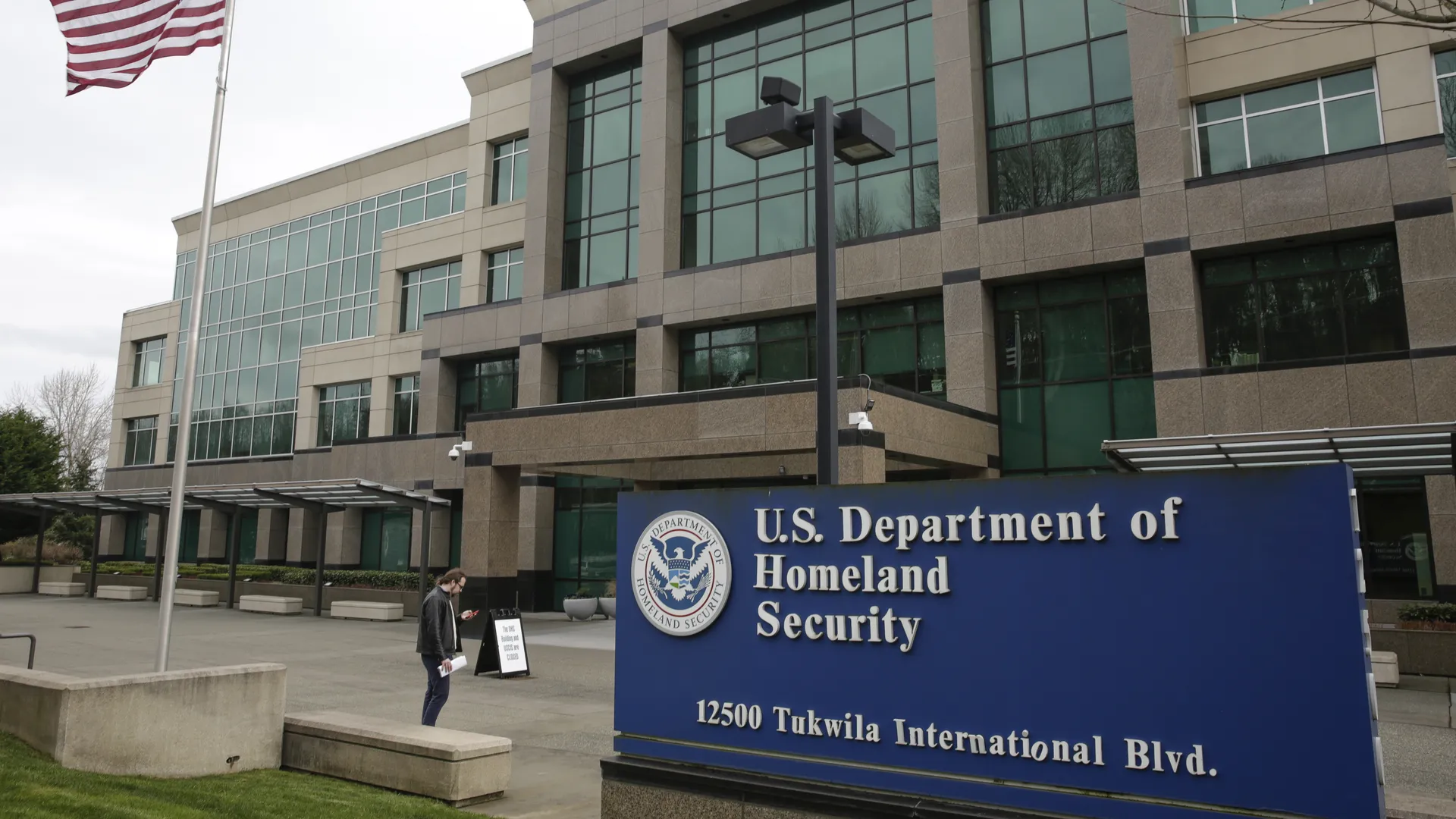
The president is charged with taking care that the laws be faithfully executed (Article II). In immigration, that job is carried out through the Department of Homeland Security and its components, including CBP, ICE, and USCIS.
Here is the constitutional tension that never goes away: enforcement requires choices. There are millions of potentially removable noncitizens and finite agents, detention beds, immigration court capacity, and investigative hours. So the executive branch inevitably prioritizes.
Deferred action is an example of that enforcement discretion made explicit. It is controversial in politics because it can look like policy making. It is defended in law as prioritization because it does not itself confer lawful status.
What courts can review
Immigration is full of limits on judicial review. Some discretionary decisions are largely shielded from court second-guessing. Other actions, especially those tied to constitutional claims or statutory interpretation, end up in federal court.
That means deferred action often lives in a zone that is legally real but not easily litigated by outsiders.
Different presidents, same tool
Deferred action is not owned by one administration. Different presidents can use it for different categories of cases, or for the same person at different times, because it is ultimately a discretionary posture.
Sometimes deferred action is granted for humanitarian reasons. Sometimes it is tied to cooperation with law enforcement. Sometimes it is tied to administrative programs. Sometimes it is simply the government deciding that immediate removal is not the best use of resources at that moment.
That is one reason people see the same term appear under multiple administrations in reporting. The underlying mechanism is available regardless of who is in office, even if the criteria and appetite for granting it change.
Public safety limits
When a case involves an allegation of serious violence, the natural question is whether deferred action “let” something happen.
Legally, deferred action is not a finding that someone poses no risk. It is not a criminal background clearance that binds future decisions. It is also not a shield against arrest or prosecution for new crimes.
It is still fair to name an enforcement reality. When the government chooses not to remove someone, it is choosing not to use one of the most direct civil tools it has to separate that person from the community.
At the same time, deferred action decisions are typically made on the record available at the time. A later crime is not, by itself, proof that the earlier discretionary decision was unreasonable or negligent. The meaningful question is what officials at DHS or ICE knew or should reasonably have known when the decision was made, and whether the agency followed its own criteria.
That question is usually answered through oversight hearings, inspector general reviews, internal DHS processes, and political accountability, not in a single neat constitutional clause.
FAQ
Does deferred action mean someone is “legal”?
Not in the way most people mean it. Deferred action is lawful as an executive choice, but it does not create lawful immigration status. A person can be removable and still have deferred action.
Can someone with deferred action get a Social Security number?
Often, yes, if they receive an employment authorization document. SSA generally issues Social Security numbers to people authorized to work. That does not convert deferred action into a visa or green card.
Does deferred action stop unlawful presence from accruing?
It can affect whether a person is considered to be in a period of authorized stay for certain purposes, but the rules are technical and fact-specific. The safest general takeaway is that deferred action does not automatically erase the consequences of an overstay.
Can deferred action be revoked?
Yes. It can be time-limited and it can be terminated, especially if circumstances change, priorities shift, or new disqualifying information comes to light.
Why not deport every overstay immediately?
Because Congress has not funded a system capable of doing that, and because the executive branch has to allocate enforcement resources across border enforcement, interior enforcement, national security, humanitarian categories, and criminal investigations. Discretion is not a loophole in the system. It is part of how the system functions.
Bottom line
A visa overstay is not a small technicality. It can make a person removable and can trigger harsh consequences if they later leave and try to return.
Deferred action does not change that underlying legal reality. It changes the government’s response to it, at least temporarily. And that, in a constitutional system where Congress writes the rules but the executive enforces them, is exactly where some of the most consequential power lives: not in grand declarations, but in day-to-day decisions about which cases move forward and which ones are put on pause.