
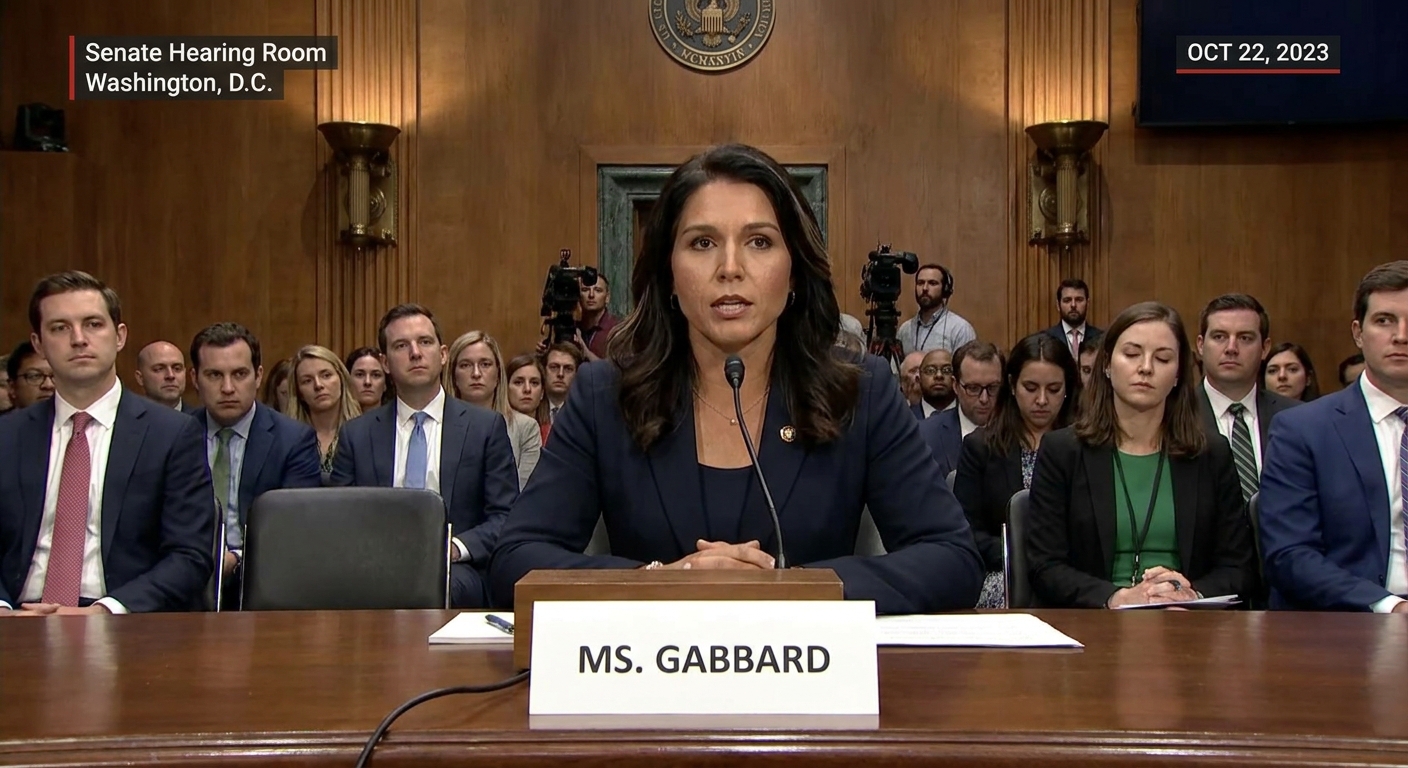
Tulsi Gabbard is resigning from her position as Director of National Intelligence, notifying President Donald Trump during a meeting in the Oval Office Friday that she needs to step away from government service to support her husband through a serious illness. Her last day at the Office of the Director of National Intelligence (ODNI) is expected to be June 30, 2026.
Join the Discussion
Why she is leaving
In her formal resignation letter, Gabbard wrote that her husband, Abraham, “has recently been diagnosed with an extremely rare form of bone cancer.” She said he “faces major challenges in the coming weeks and months,” and that the demands of running ODNI make it impossible for her to be fully present at home.
“At this time, I must step away from public service to be by his side and fully support him through this battle,” she wrote.
Gabbard also described her husband’s long-standing support through major life chapters, writing: “Abraham has been my rock throughout our eleven years of marriage,” including during her “deployment to East Africa on a Joint Special Operations mission,” as well as multiple political campaigns and her service in this role.
What it means for intelligence
The Director of National Intelligence plays a central role inside the executive branch. ODNI is designed to coordinate the work of U.S. intelligence agencies, set priorities, and provide a consolidated view of national security threats to the president and senior policymakers.
A leadership change at the top raises practical questions about continuity. Gabbard addressed that directly in her letter, telling the president she is “fully committed to ensuring a smooth and thorough transition over the coming weeks so that you and your team experience no disruption in leadership or momentum.”
Her tenure, in brief
In her letter, Gabbard said she has “made significant progress at the ODNI, advancing unprecedented transparency and restoring integrity to the intelligence community,” while acknowledging “there is still important work to be done.”
During her time as DNI, Gabbard framed her agenda around reshaping internal operations and increasing public-facing disclosure where she believed it was appropriate. The administration has pointed to major budget-related changes and organizational restructuring, including reducing the agency’s size and citing taxpayer savings of more than $700 million per year.
Her tenure has also included dismantling DEI programs in the intelligence community and creating the first-ever “Weaponization Working Group,” aimed at coordinating efforts across the federal government to expose the Biden administration’s weaponization of government.
Her office pursued wide declassification efforts. As of this month, she had declassified more than half a million pages of government records, including material connected to the Trump-Russia investigation and the assassinations of President John F. Kennedy and Senator Robert F. Kennedy. She also declassified documents tied to the origins of the Trump-Russia “Crossfire Hurricane” probe, arguing they showed Obama administration officials politicized intelligence related to Russia’s 2016 election interference and used it to undermine Trump’s first presidential victory.
In national security operations, her National Counterterrorism Center prevented more than 10,000 individuals with ties to narco-terrorism from entering the country in 2025 and placed more than 85,000 similarly tied individuals on the terror watchlist.
How resignations work
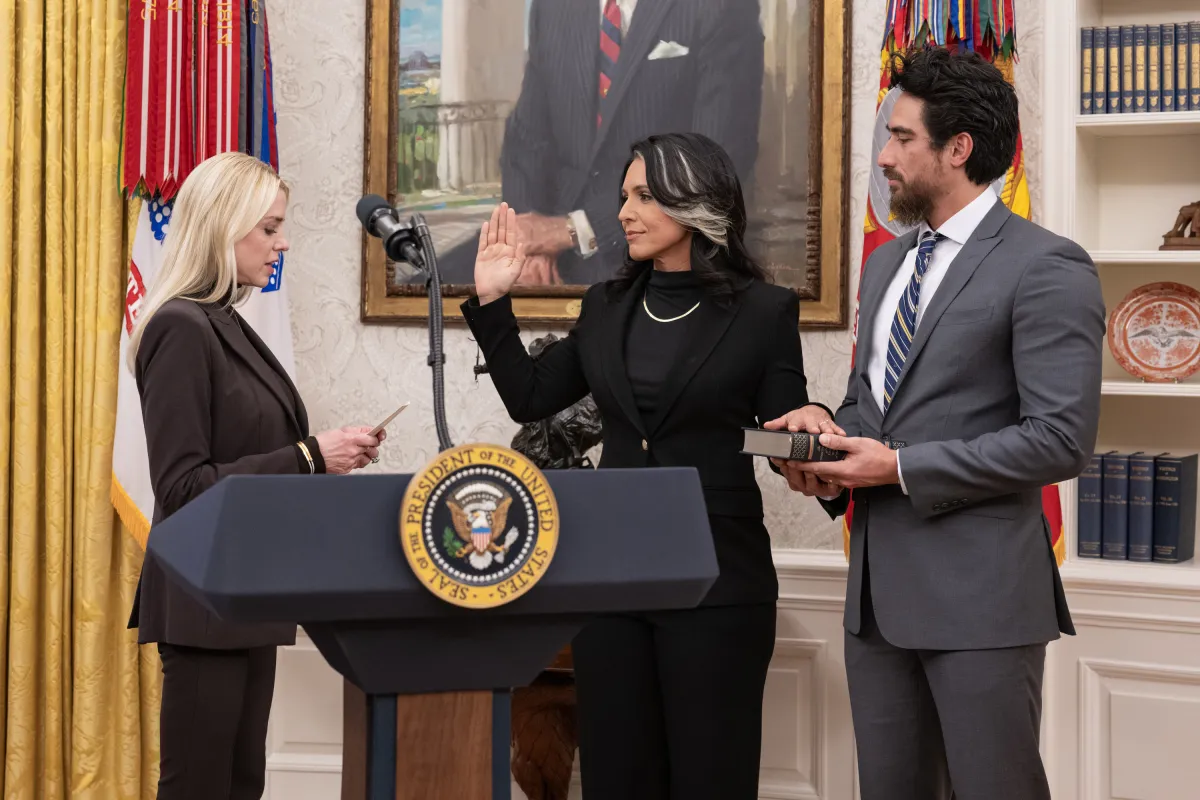
For readers who like to place headlines in a civics frame, a resignation at this level is a straightforward example of how executive power functions day to day.
- The president appoints top executive officials (including many Cabinet-level roles), typically with Senate confirmation.
- Those officials serve at the president’s pleasure unless a statute sets different terms or protections. In practice, that means senior officials can resign, and presidents can accept resignations and select replacements.
- Continuity is handled through succession and acting officials while a new nominee is identified and, where required, confirmed.
It is not unusual for an administration to navigate leadership transitions, but the stakes feel higher in national security posts because intelligence coordination is continuous and time-sensitive.
What happens next
Gabbard’s resignation takes effect June 30, 2026. Between now and then, the key questions will be practical ones: who will serve in an acting capacity if needed, whether the president will nominate a successor quickly, and how the Senate will approach confirmation given the role’s scope and sensitivity.
In her letter, Gabbard closed on a personal note of gratitude: “Thank you for your understanding during this deeply personal and difficult time for our family.” She added that she would remain “forever grateful” for the chance to serve the nation “as DNI.”