
Every losing party does a version of the same thing after Election Day. It convenes a postmortem, produces a document, and promises that the next cycle will be different. The idea is simple: if we can diagnose the failure precisely enough, we can treat it next time.
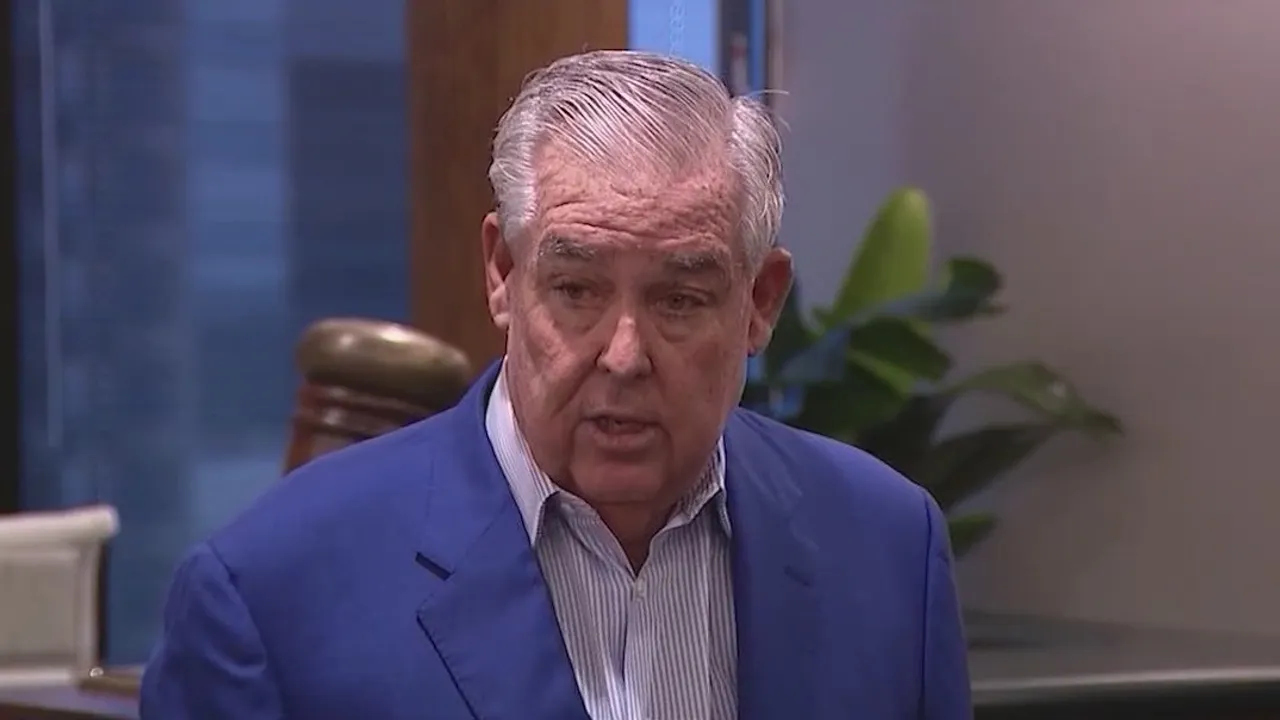
John Morgan, a longtime Democratic donor who has given more than $1 million to the party over the years, thinks the ritual can become a form of avoidance. Not because analysis is useless, but because it becomes an excuse not to say out loud what many voters have already said at the ballot box.
His verdict on 2024 is not subtle. It is meant to sting.
Join the Discussion
A donor signal
Morgan is not an outside heckler. He is the kind of insider every national party depends on: a wealthy supporter, a network builder, and a man accustomed to being listened to.
That is what makes his confession politically revealing. He said he didn’t give “a penny” to the 2024 campaign once Vice President Kamala Harris took the helm. In donor-world, that is not just a criticism. It is a vote of no confidence, expressed in the language parties understand best.
He delivered his critique in a televised interview, and the bluntness felt like the point. He was not trying to sound like a strategist. He was trying to sound like a voter who is tired of being talked around.
The five-point autopsy
Morgan’s “autopsy” comes as a list, delivered with the impatience of someone who thinks the diagnosis is obvious. Here it is, in his own words:
“One, DEI is D-E-A-D. Two, woke needs to be put to sleep. Three, transgender swimmers don't get to swim against girls, it's unfair. Four, you need to seal the border tight. And five, anything to do with Kamala or her staff,” Morgan said. “That's the autopsy. Period, end of story.”
Notice what is going on in that list. It is not a policy white paper. It is a map of cultural irritants and trust failures, with border security as the one concrete governing issue that voters can picture in their everyday sense of the word “control.”
What the internal review emphasized
The internal post-election review took a different tack. Instead of centering culture-war flashpoints, it leaned into party mechanics and organizational choices.
It argued Democrats weakened their infrastructure through declining voter registration, cuts to state party support, and a failure to listen to certain groups of voters. It also said the party needed a renewed focus on voters in Middle America and the South.
That contrast matters. It suggests the party is debating whether 2024 was lost mainly because of what voters heard in the message, or because of how the party built (or failed to build) the machinery that delivers the message.
Why the list lands
As a former civics teacher, I cannot read Morgan’s list without hearing the Constitution humming underneath it.
DEI and equality fights
DEI battles are often fought as workplace policy, but they tap into something older: what Americans think “equal protection” should look like in practice. The Fourteenth Amendment promises equality under law, but it does not tell us whether modern institutions should pursue equality primarily through individual rights, group-based remedies, or some blend of the two.
When Morgan says “DEI is D-E-A-D,” he is not making a legal claim. He is making a political prediction: that voters are turning on language and programs they associate with elite moralizing or unequal treatment.
Transgender athletes and competing values
The transgender athlete debate is a classic American problem: two values that the public wants to honor, but that collide in specific settings.
- Fairness in competition, especially in sex-separated sports, where the category itself is designed to balance physical advantages.
- Equal dignity for transgender students, who do not stop being citizens when they walk into a locker room or onto a field.
Morgan frames it bluntly: “it's unfair.” You do not have to agree with him to recognize why this hits politically. It is easy to visualize, easy to argue about at a kitchen table, and hard to reduce to bureaucratic language without sounding evasive.
Border control and sovereignty
“Seal the border tight” is a slogan, not a statute. Still, it points to a real constitutional instinct: the idea that a nation-state must be able to decide who enters, under what rules, and with what enforcement. Immigration is shared across federal powers, executive enforcement discretion, and congressional lawmaking. When voters think the system looks porous, they often interpret that not as compassion, but as abdication.

Harris and staffing
Morgan’s fifth point is the most personal: “anything to do with Kamala or her staff.” In a constitutional system, elections are not only referendums on ideas. They are judgments about competence, temperament, and managerial ability.
Voters often treat staffing as a proxy. If the candidate’s team looks insulated, ideological, or chaotic, the public assumes the administration would govern the same way. Fair or not, that is how democratic accountability functions when citizens cannot possibly audit every policy detail.
The party’s fight over the fight
The post-election review sparked controversy inside the party, and Democratic National Committee Chair Ken Martin publicly distanced himself from the product even as he released it.
“I am not proud of this product; it does not meet my standards, and it won’t meet your standards,” Martin said. He added that he could not “in good faith put the DNC’s stamp of approval on it.”
Martin also emphasized that he was releasing it for transparency “as I received it – in its entirety, unedited and unabridged – with annotations for claims that couldn’t be verified.”
That disagreement matters because it signals two competing instincts:
- Institutional diagnosis, focused on registration, resource decisions, and party infrastructure.
- Voter diagnosis, focused on the issues people felt in their gut and talked about without consultants translating it.
Morgan is firmly in the second camp. He is essentially saying: stop explaining the loss in internal jargon. Start by asking why a family in the Midwest or the South heard the word “Democrat” and pictured cultural lecturing instead of stable governance.
A warning about 2026 and beyond
Morgan also offered a forward-looking caution. He said Democrats have a “deep bench,” mentioning figures like Andy Beshear and Rahm Emanuel. But he warned that leaning into candidates associated with “socialists” is a recipe for defeat.
“If you go with anybody with ‘socialists’ at the end of ‘Democrat,’ you are going to lose because socialism is the first cousin to communism,” Morgan said.
Here is the deeper constitutional point. Parties can survive losing elections. What they cannot survive, at least not in a healthy republic, is losing the ability to speak to the broad middle and still claim to govern “We the People.” When a party becomes a coalition of factions that cannot agree on first principles, it stops being a governing instrument and becomes a protest brand.
And Republicans should not treat Morgan’s critique as a victory lap. A party that wins because the other side is culturally out of touch can still overread its mandate. The Constitution is designed to punish overreach, and it does not care which team is doing it.
The question that remains
Morgan’s list is not a neutral civic lesson. It is partisan, sharp-edged, and intentionally provocative. But it poses a question that Democrats, and really any party after a defeat, has to answer plainly:
Did voters reject your infrastructure, or did they reject what they believe you stand for?
If the answer is the second, an autopsy is not a report. It is a mirror. And the hardest part is not writing the findings. It is accepting the reflection.