
Every so often, American politics gives us a clean civics lesson. Not a tidy one. A real one. The kind with sharp elbows and clear consequences.
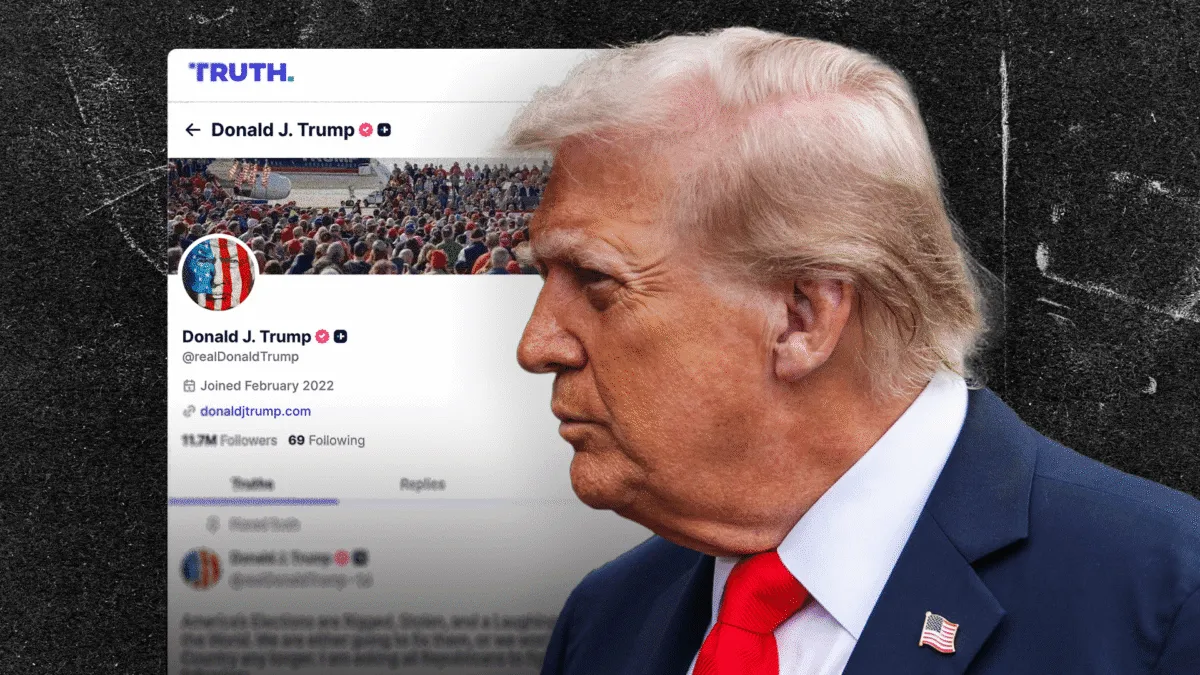
In Kentucky, Representative Thomas Massie is staring down exactly that kind of lesson. With the Republican primary set for Tuesday, President Donald Trump has gone after Massie personally, using Truth Social to call him “the worst and most unreliable Republican Congressman in the history of our Country” and urging voters to “vote the bum out on Tuesday.”
This was not a single drive-by insult. Trump kept at it over roughly eight hours starting early Sunday, a sustained attempt to turn a primary into a loyalty test.
This is not just a personality feud. It is a referendum on whether a member of Congress can act like a member of Congress when the president of his own party expects something closer to obedience.

Join the Discussion
Why Trump is targeting Massie
Massie has built a reputation as one of the rare Republicans willing to say “no” to a president who treats “no” as betrayal. His record includes:
Voting against Trump’s signature tax and spending cuts bill.
Helping to force the Justice Department to release the Jeffrey Epstein files.
Insisting Congress should have oversight over U.S. military actions in Venezuela and Iran.
That last point is the one that should make constitutionalists sit up straight. War powers fights are not symbolic. They are the oldest argument in the Republic: does the president get to initiate, expand, and define conflict, while Congress salutes from the sidelines? Massie has been poking that bruise on purpose.
A close race
Massie has tried to project confidence. Appearing on This Week on ABC News, he said, “I’m the only one they haven’t been able to bully,” adding: “I’m ahead in the polls, and they’re desperate … That’s why the president’s losing sleep and tweeting about this.”
But the numbers suggest real danger. An independent poll by Quantus Insights put Trump-endorsed challenger Ed Gallrein ahead 48% to 43%, with 8% undecided.
Gallrein, a farmer and retired U.S. Navy Seal, has the most valuable currency in modern Republican primaries: the Trump seal of approval. And Trump has been using it loudly, turning his platform into a rolling argument for replacement rather than reconciliation.
Money and pressure
Massie argues he is not just being challenged, he is being targeted. He has said he is buoyed by the support of anti-abortion and gun rights groups in the state, and by millions of dollars in donations from grassroots voters.
By contrast, he has blamed super-wealthy donors including Miriam Adelson and Paul Singer and what he called the “Israeli lobby” for bombarding Kentucky with money to unseat him.
Whether voters accept that framing or reject it, the underlying dynamic is familiar: primaries are increasingly less about persuading the median voter and more about mobilizing an ecosystem of donors, influencers, and power brokers who want predictable outcomes.
Discipline, purified
Zoom out and Massie’s situation looks less like an isolated grudge and more like a continuing project. Trump’s influence inside the party has been demonstrated repeatedly, including the weekend news out of Louisiana where Senator Bill Cassidy was ousted in a primary after having voted to convict Trump in the 2021 impeachment trial tied to January 6.
Two Trump-endorsed Republicans, Representative Julia Letlow and state treasurer John Fleming, both surpassed Cassidy and will now compete in a runoff election on 27 June.
Though Cassidy did not mention the president by name, he left little to the imagination in his concession speech. “If someone attempts to control others through using the levers of power, they’re about serving themselves, they’re not about serving us, and that person was not qualified to be a leader,” he said.
The purge math is hard to miss. Of the seven Republican senators who voted to convict Trump in the January 6 impeachment trial, only two remain in place: Susan Collins of Maine and Lisa Murkowski of Alaska. Only one of the 10 Republican House members who voted to impeach Trump in 2021 is left running for re-election in November: David Valadao of California.
Senator Lindsey Graham distilled the current party logic even more bluntly on Meet the Press: “The headline is: Trump strong,” he said. “Bill Cassidy lost because he tried to destroy Trump, Massie is going to lose because he tried to destroy the agenda. If you try and destroy him, you are going to get destroyed – that’s the takeaway.”
House Speaker Mike Johnson, for his part, called Trump’s impact on elections “the most powerful endorsement in the history of politics.”
This is what an internal purge looks like in a two-party system. It does not require formal expulsion. It just requires replacing lawmakers with candidates who understand that their first constituency is the leader.

The Article I question
Here is the part I wish every voter would ask before pulling a lever in a primary: what is a representative for?
Article I does not create a Congress of brand ambassadors. It creates an institution meant to be stubborn, independent, and, yes, sometimes obstructive. The legislative branch was designed to be the place where ambition counteracts ambition. Not where ambition kneels to ambition.
So when a president demands loyalty from a sitting member of Congress, the real question is not whether Massie is likable, or whether Trump is popular. The question is whether Congress remains a co-equal branch when its members are conditioned to treat dissent as disqualification.
Voters are frustrated
One more tension runs underneath this Kentucky fight: Trump’s ability to command fear inside the party does not neatly match his broader standing with the public.
The US-Israel war with Iran, and the consequent economic fallout including rising fuel prices, are taking their toll.
A CBS News poll found approval among Republicans of Trump’s handling of inflation fell from 74% in March to 63%. And when asked about Trump’s approach to the economy, 70% of all respondents said they were frustrated or angry.
That split is politically important. A party can tighten internal control and still lose the country. Former transportation secretary Pete Buttigieg argued there is a “big opening for Democrats,” saying the Republican party is becoming “less and less around conservative principles, more and more around one man.”
What Tuesday decides
The Kentucky primary will be scored as a win or a loss for Trump. That is how modern politics works.
But for anyone who still cares about the Constitution as a living arrangement between rival centers of power, the deeper test is simpler: can a lawmaker treat Congress as its own branch, with its own duties, and survive a primary in a party where the president sees independence as sabotage?
Massie says he cannot be bullied. Trump is daring Kentucky voters to prove him wrong.