
Virginia’s new “assault firearm” law is now the subject of a federal constitutional challenge, and it arrives at a moment when Second Amendment litigation follows a very different roadmap than it did just a few years ago.
In New York State Rifle & Pistol Association v. Bruen (2022), the Supreme Court told lower courts to stop using the familiar modern “means-end” balancing tests and instead focus on something more historically grounded: whether a challenged gun law fits within the Nation’s historical tradition of firearm regulation.
That shift matters because bans on popular rifles and magazine limits often turn on two questions that are now front and center: what the Second Amendment’s text covers, and what history shows governments were allowed to regulate.

Join the Discussion
What the law does
Virginia enacted the law last month, becoming the 12th state to pass an “assault weapon” ban. Gov. Abigail Spanberger signed it on April 13.
The statute makes it a crime to manufacture, import, sell, purchase, or transfer certain firearms the law labels “assault firearms.” As written, it reaches many semiautomatic center-fire rifles that accept detachable magazines and have any of five listed features: a folding or adjustable stock; a thumbhole stock or pistol grip; a second handgrip or protruding grip that can be held by the nontrigger hand; a grenade launcher; or a threaded barrel that can be used to attach a muzzle brake, a muzzle compensator, a sound suppressor, or a flash suppressor.
The law also restricts magazine capacity, setting a 15-round cap. In practical terms, that places legal pressure on equipment that is commonly sold as standard with many popular handguns and rifles.
The lawsuit, plainly
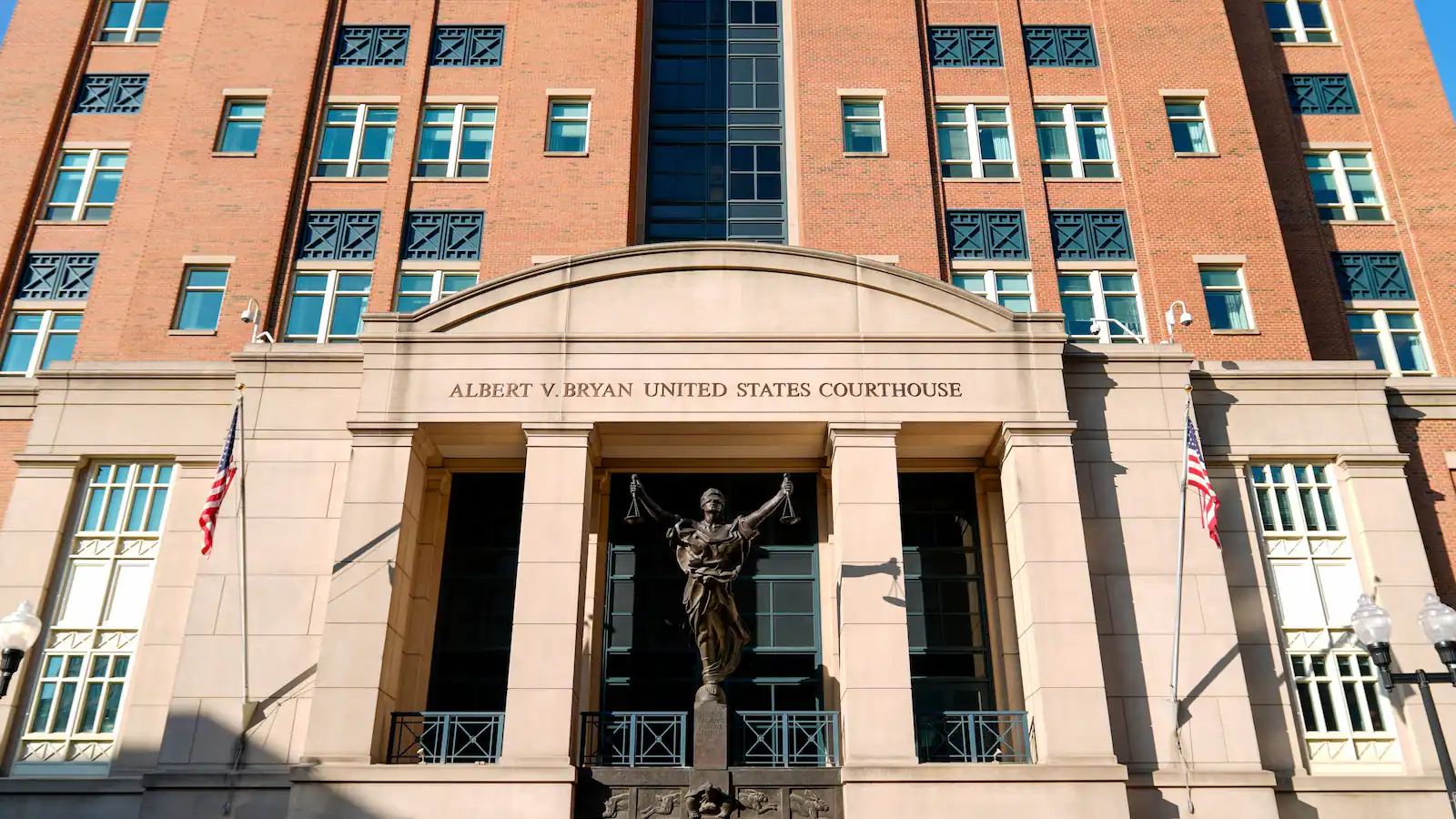
The challenge, filed in federal court in the Eastern District of Virginia as McDonald v. Katz, is brought by the Firearms Policy Coalition, the National Rifle Association, and the Second Amendment Foundation. Their core claim is straightforward: Virginia has prohibited arms that ordinary, law-abiding people own for ordinary, lawful reasons, and the state cannot justify that prohibition under the history-and-tradition test required after Bruen.
FPC President Brandon Combs put it this way: “Spanberger’s insane law criminalizes constitutionally protected conduct and bans arms the Second Amendment protects,” adding, “We’re going to force Governor Spanberger and other government thugs to follow the Constitution and respect the Second Amendment, full stop.”
The complaint leans heavily on the Supreme Court’s repeated distinction between weapons that are “in common use” for lawful purposes and weapons that are “dangerous and unusual.” Under District of Columbia v. Heller (2008), arms in common lawful use sit near the heart of the Second Amendment’s protection.
How courts analyze Bruen cases
If you are trying to follow a post-Bruen Second Amendment case, it helps to know the order of operations. Courts generally move through the analysis in two stages, with a few recurring sub-questions that come up again and again.
1) Does the Second Amendment’s text cover the conduct?
The first question is whether the regulated activity is within the Amendment’s scope. The Second Amendment protects the right of “the people” to “keep and bear Arms.” So courts ask things like:
- Is the item an “arm”? Rifles and magazines are typically analyzed as part of the arms ordinary citizens keep and use, though courts sometimes treat magazines as accessories and sometimes as integral to the operation of the firearm.
- Is the plaintiff trying to “keep” arms (possess) or “bear” arms (carry)? Bans on purchasing, transferring, or possessing commonly fall into the “keep” category.
- Are the people at issue law-abiding citizens? Many modern cases turn on regulations aimed at the general public rather than disqualified persons.
If the answer is yes, the burden shifts to the government.
2) Can the government show a historical tradition that supports the restriction?
This is the distinctive Bruen step. The state must identify historical analogues, meaning real regulations from relevant historical periods that are similar enough in burden and purpose to justify the modern law.
Courts commonly wrestle with:
- What time period counts most? Many judges look to the Founding era (late 1700s) as especially important, while others also weigh Reconstruction-era evidence (mid-to-late 1800s), particularly because the Fourteenth Amendment is what applies the Second Amendment against the states.
- How close does the match need to be? Bruen allows “relevantly similar” analogues, not perfect twins. Courts compare the why (the problem the law addressed) and the how (the mechanism and severity of the burden).
- Is the law a regulation or a prohibition? A rule about storage or manner of carry is often treated differently than a broad ban on acquiring a category of commonly owned arms.
Common use and “dangerous and unusual”
Even though Bruen is framed as history-first, Heller still shapes the playing field. Heller treats arms “in common use” for lawful purposes as protected, while allowing bans on “dangerous and unusual” weapons.
That is why both sides in these cases spend so much time on real-world prevalence.
Here, the complaint points to large ownership numbers for semiautomatic rifles commonly covered by “assault weapon” definitions. The National Shooting Sports Foundation has reported that Americans own more than 32 million “modern sporting rifles.” Survey data suggest that somewhere between 16 million and 25 million Americans have owned AR-15-style rifles, and they commonly report using them for lawful purposes such as self-defense, hunting, and target shooting.
On magazines, the lawsuit cites industry and survey figures to argue that magazines over 15 rounds are widespread and standard for many common firearms. Among the data points raised: a 2024 NSSF report stating that from 1990 to 2021, Americans bought more than 400 million rifle magazines with a capacity of 30 or more rounds. The complaint also cites the 2021 National Firearms Survey’s estimate that 21.6% of firearm owners, about 18 million Americans, have owned handgun magazines holding more than 15 rounds.
Those numbers matter because the legal question is not whether a legislature dislikes a design feature. It is whether the regulated arms fall into the protected category of commonly possessed weapons used for lawful ends, such as self-defense.
Why the listed features matter
Virginia’s definition does not ban all semiautomatic rifles. It bans rifles with certain configurations. In court, that triggers a predictable judicial question: are these features mainly about criminal misuse, or are they also tied to ordinary lawful use?
The complaint emphasizes lawful functions, for example:
- Folding and adjustable stocks that ease carriage over long distances while hunting, allow safer transportation in spaces like a hiking pack, an ATV, or a boat, and can make a home-defense rifle easier to store safely while still being accessible. An adjustable stock can also help fit the firearm to a particular shooter and support safer, more effective use.
- Pistol grips and protruding grips that can improve stability and accuracy and reduce the risk of stray shots. The complaint also argues that pistol grips are effectively necessitated by the AR-15’s straight-line design, which reduces muzzle rise. It adds that protruding grips can open hunting and sport-shooting to people for whom recoil poses a challenge.
- Flash suppressors that can protect a homeowner against momentary blindness when firing in self-defense and reduce the chance that an intruder identifies the shooter’s position. The complaint also argues they can promote accuracy in target shooting and hunting, especially at dawn.
The law includes a grenade launcher as a listed feature. The complaint does not delve into that point, and grenade launchers and grenades are strictly regulated as “destructive devices” under the National Firearms Act.
Courts do not decide these cases by voting on whether a particular accessory is a good idea. But factual context can influence whether a judge views a law as a targeted safety regulation or as a categorical ban on a commonly selected configuration of protected arms.
Do crime stats decide it?
Statistics show up in almost every gun case, and they can still shape a judge’s understanding of the state’s asserted problem. But after Bruen, statistics are not supposed to substitute for historical justification.
The complaint cites FBI homicide figures for 2014 to 2023, stating that rifles of any type were used in an average of 380 homicides per year, compared with handguns (an average of 7,044 per year), knives (1,593), and “personal weapons” such as hands and feet (692). The lawsuit uses those numbers to argue that the ban targets arms not typically used in most violent crime.
Even so, Heller is a reminder that prevalence in crime does not automatically remove constitutional protection. The Court recognized a right to possess handguns for self-defense even while acknowledging their role in violence. Crime data may inform the backdrop, but Bruen demands history as the legal engine.
What Virginia will need to show
To defend a modern ban under Bruen, states typically try to present historical laws that they say are similar in principle. In assault-weapon and magazine cases, that often means pointing to older restrictions on particular weapons, regulations aimed at especially feared arms, or laws addressing unusually dangerous conduct.
Judges then ask:
- Were the historical restrictions actually comparable to a ban on acquisition and transfer?
- Were they widespread or isolated outliers?
- Did they regulate how arms were used, or did they prohibit possession by ordinary citizens?
- Were the regulated weapons truly outside the ordinary toolbox of lawful self-defense?
One reason these cases keep heading upward through the courts is that reasonable judges, applying the same Supreme Court instructions, have reached different answers about what counts as a sufficiently similar historical analogue.
What comes next
Federal appellate courts have not been uniform in how they handle bans on semiautomatic rifles and magazine capacity restrictions. But there are signs the Supreme Court may be moving toward resolving how “common use” applies to modern rifles and magazines.
As McDonald v. Katz proceeds, expect the litigation to focus less on whether Virginia’s approach is good policy and more on whether Virginia can do what Bruen requires: produce a persuasive historical tradition for banning the acquisition and transfer of arms and magazines that millions of Americans possess for lawful purposes.
At a glance
- Post-Bruen framework: Courts ask whether the Second Amendment’s text covers the conduct, then whether history supports the restriction.
- Common use matters: Arms widely owned for lawful purposes are harder to ban under Heller’s logic.
- Virginia’s law is broad: It covers many semiautomatic center-fire rifles with common features and caps magazines at 15 rounds.
- What the state must show: A historically grounded analogue that justifies a comparable burden on ordinary citizens.