
For decades, your car mostly revealed what could be seen from the outside: where it was parked, whether it was speeding, maybe what was in plain view through a window. Today, many vehicles are something else entirely: networked computers with sensors, software, and cellular connections that can generate detailed records of daily life.
That shift is why a growing chorus of privacy-focused lawmakers has pressed for tighter limits on connected-car data. On February 28, 2024, Sen. Ed Markey renewed scrutiny of automakers’ data practices by sending letters to 14 major automakers seeking specifics on what vehicle data is collected, how it is shared, and how long it is retained.
Sen. Ron Wyden has similarly argued that location and telemetry can become a back door around constitutional safeguards when the government can obtain sensitive records from companies or purchase comparable datasets through intermediaries. That argument has appeared most prominently in the data-broker and commercial location-data context, and privacy advocates see connected-vehicle ecosystems as a close analogue as vehicles become more data-rich.
The push has also been fueled by consumer-facing research documenting how expansive vehicle data practices can be. Mozilla’s Privacy Not Included buyer’s guide has published widely read car privacy reviews, including its 2023 car-focused reporting.
Privacy advocates warn that some models can collect or derive location, speed, route history, driving inputs such as hard braking, voice commands used for in-car assistants, and in-cabin signals tied to driver monitoring. The dispute is not just about privacy in the everyday sense. It is also about whether federal agencies and contractors can access or encourage the retention of sensitive driving data without clear Fourth Amendment safeguards.
Join the Discussion
What car data can show
When people hear “car data,” they often think of a crash “black box,” more formally an event data recorder (EDR). EDR data is primarily crash-related and most commonly stored locally. Connected-car systems can be broader and more continuous than that, creating a stream of information tied to everyday movement and behavior.
Depending on the automaker, trim, and which features are enabled, connected vehicles may collect or derive:
- Location data (where you go, when you go, and how long you stay)
- Speed and route history (patterns of travel and routine)
- Driving behavior such as acceleration, steering inputs, and braking patterns
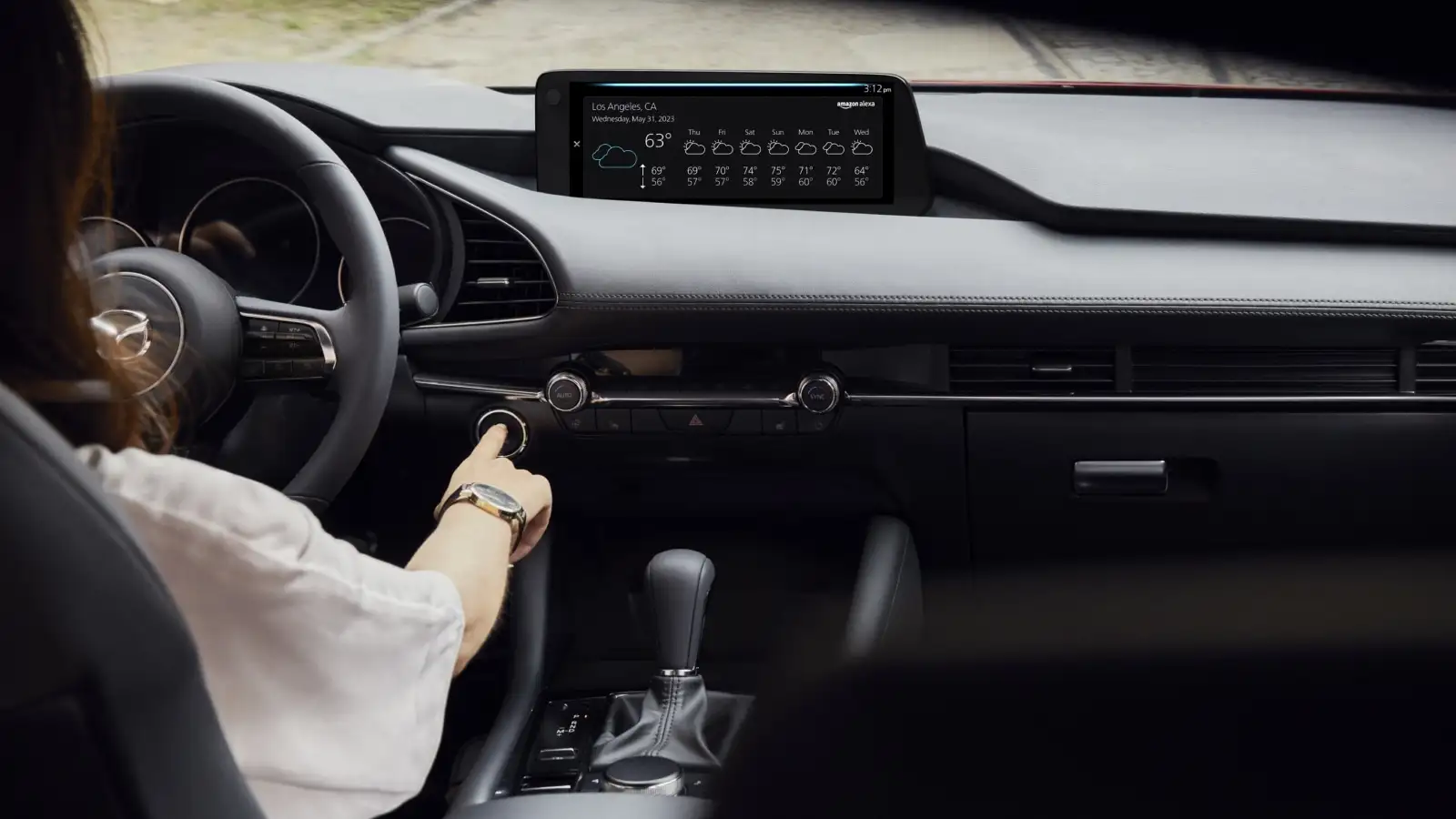
- Voice commands captured by in-cabin microphones for hands-free calling and assistants, which may be processed in the cloud depending on settings and provider
- In-cabin signals tied to sensors like cabin cameras, infrared driver-monitoring systems, seat sensors, or occupancy detection (what is collected varies widely)
One record might seem harmless. But a long-term timeline of ordinary trips can turn into something intensely personal: where someone worships, seeks medical care, attends political meetings, or visits family. The point is not that every car collects every category. It is that the connected-car trend makes it increasingly possible for everyday driving to generate a searchable history.
It also helps to distinguish where the data lives:
- Stored locally in the vehicle (for example, certain EDR logs or locally cached navigation history)
- Transmitted to the automaker or a telematics provider (for connected services, diagnostics, safety features, and app functions)
- Shared onward with vendors (analytics, roadside assistance, call centers, insurance programs) and, depending on the company’s policies, potentially further distributed through partners
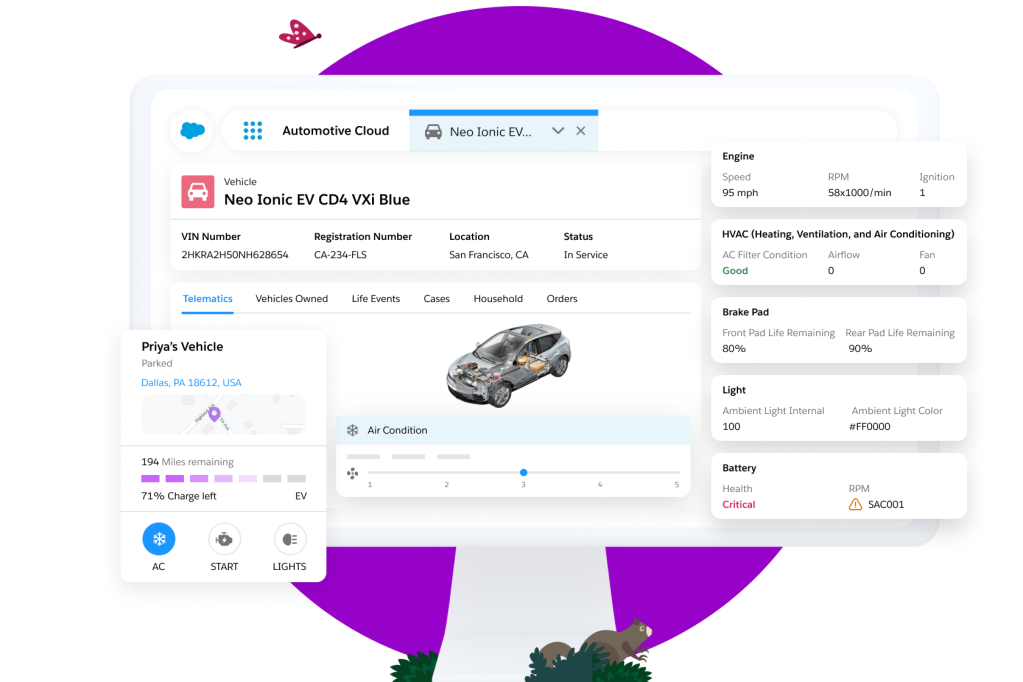
A concrete, real-world example of how these layers can stack: a driver uses an automaker phone app to remote-start the car and find it in a parking lot. That convenience feature can require the vehicle to transmit location and status to the automaker’s servers, while the companion app may also generate its own data trail through phone permissions and analytics settings. If the driver also enables an opt-in insurance telematics program, additional driving telemetry (like braking and acceleration patterns) may be scored and retained under a separate set of terms.
Concrete examples vary by model and configuration, but the pattern is increasingly common across the industry: driver-monitoring systems can rely on infrared cameras and attention tracking, and voice assistants can involve recordings or transcripts that are stored for troubleshooting or improvement if users do not opt out.
Why it is a Fourth Amendment issue
The Fourth Amendment limits unreasonable government searches and generally requires strong legal justification for intrusions into private life.
Connected vehicles complicate that boundary because they can generate detailed movement records and driving telemetry that may be stored or accessible outside the car. That raises a practical question: if the government can obtain these records from companies using legal processes that fall short of a probable cause warrant, does that create a path to monitor people’s lives at scale with weaker safeguards than the Fourth Amendment is meant to require?
The legal backdrop includes the third-party doctrine, which has often been read to reduce constitutional protection for information shared with companies. But modern data has strained that logic. In Carpenter v. United States (2018), the Supreme Court held that the government generally needs a warrant supported by probable cause to obtain historical cell-site location information (CSLI), recognizing that long-term location tracking can reveal an intimate portrait of a person’s life even when records are held by a third party. The Court also described the holding as narrow, and it did not erase the third-party doctrine as a whole.
Connected-car data sits in that tension. The rules can vary by the category of data and the legal tool used. A probable cause warrant is the highest bar. A subpoena generally demands records but often involves less judicial review. Some court orders sit in between, with standards that vary by statute. Emergency requests can also exist in specific contexts. The question lawmakers are pressing is where connected-vehicle telemetry and long-term location history should sit on that spectrum.
The broker workaround
Another complication keeps showing up in modern privacy fights: the data-broker workaround.
Even when the law would make it difficult for an agency to compel certain records directly, agencies have at times asserted they can purchase similar information from third-party brokers or intermediaries. This practice has been widely reported in the context of location data from mobile ad-tech markets. The constitutional and statutory status is contested, and policies vary by agency and over time, but the core concern is consistent: safeguards that apply to compelled disclosure can be weakened if similar data is obtainable by purchase.
Because this article focuses on vehicles, it is important to be precise. Public reporting has been most robust around phone-derived location data rather than a mature, standardized market for “connected-car location history” sold by brokers. The risk, as privacy advocates frame it, is that as automakers, telematics vendors, and partner ecosystems expand, vehicle-derived data could become part of the same broader data marketplace, or could be combined with other identifiers to produce equivalent tracking.
Put more carefully than a slogan, the worry is that buying data can turn a constitutional protection into a procurement decision. Lawmakers including Wyden and Markey have argued that constitutional protections should not depend on whether the government collects information by force or by purchase.
Retention and pressure
Access is only one half of the story. The other half is retention: how long data is kept, and whether companies can be required or incentivized to keep it longer than they otherwise would.
“Pressure” does not always mean a single dramatic order. It can be more incremental, such as:
- Procurement requirements that condition government contracts on data availability
- Preservation requests asking companies not to delete certain records
- Regulatory expectations that effectively reward longer logs for compliance, auditing, or investigations
- Default business practices where indefinite retention becomes the easiest option
The longer detailed records exist, the easier it becomes to reconstruct where someone has been and what patterns suggest about their private life, even when no one tracked the person in real time.
Limits and flexibility
On one side are supporters of tighter limits. Their argument is straightforward: if connected-car data can reveal intimate details of someone’s life, government access should not be casual, indirect, or built on unclear standards. They want clearer Fourth Amendment-aligned safeguards before access or long-term retention becomes routine, including closing pathways that make warrant-like protections optional in practice.
On the other side are opponents who argue that real-world investigations require flexibility. They point to needs such as:
- Emergency access
- Crash investigations
- National security needs
Those are not trivial interests. The constitutional tension is familiar: even important government goals can collide with the principle that searches and long-term monitoring should be constrained by rules that prevent abuse and overreach.
Everyday uses are real
It is also fair to acknowledge why many drivers accept connected features in the first place. Some connected-car data powers everyday services that are not about law enforcement at all, including roadside assistance, stolen vehicle recovery, software updates, navigation and traffic features, and opt-in insurance telematics programs that promise discounts for certain driving patterns.
The privacy question is what happens when data collected for convenience or safety becomes broadly accessible, kept longer than necessary, or repurposed in ways drivers did not expect.
Who can use it
The high-stakes reader question is not merely “What does my car collect?” It is “Who can make use of it?”
Privacy advocates worry about two practical realities working together. First, access can expand through vendors, contractors, and partner arrangements that are hard for ordinary drivers to see. Second, access can happen indirectly, including through the purchase of data that resembles what a warrant would otherwise be required to obtain.
A practical example of indirect exposure: even if an automaker does not “sell” location history in the plain-language sense, a connected-services vendor, analytics provider, or insurance partner may receive related signals under contract. Those downstream paths can multiply, and they can be difficult for consumers to map from a dashboard toggle.
That is why access rules and retention rules matter together. If data is widely accessible, it can be used broadly. If data is retained longer than necessary, it becomes more valuable for retrospective review, not just immediate safety uses.
What lawmakers want
The lawmakers pressing for restrictions tend to focus on tighter limits around two related issues: access and retention. The goal is not to outlaw connected features. It is to stop the quiet drift toward a world where sensitive driving data becomes an easy shortcut.
1) Limits on access
The key question is whether federal agencies and private contractors should be able to access connected-car information without warrant-level safeguards for sensitive categories like long-term location history. The exact standard may depend on the type of data and the statutory pathway, but the policy aim is clearer: treat sensitive vehicle telemetry more like private records and less like a convenient database.
2) Limits on retention
Retention is about how long this data is kept and whether anyone can require or effectively encourage it to be kept longer than it otherwise would be. The longer records exist, the easier it becomes to build a detailed picture of a person’s life over weeks, months, or years.
The payoff here is human: the difference between a car that helps you navigate traffic and a car that quietly generates a long-running log of where you go.
State rules vary
Drivers’ rights also depend on where they live. State privacy laws, most notably California’s CCPA and CPRA framework, can give residents rights to request access to certain personal information, request deletion (with exceptions), and opt out of certain forms of data sharing. Other states have adopted their own consumer privacy laws with different scopes and definitions.
Separately, state-level rules can also shape how law enforcement seeks access to vehicle data, and those standards can differ from state to state. This article focuses primarily on the federal constitutional questions and the practical pathways that can expand access.
It is also important to read the fine print on exemptions. Even where consumer privacy laws apply, companies often claim exceptions for security, safety, fraud prevention, service delivery, and legal compliance. Automakers and service providers may offer national settings, but the legal baseline is not uniform, and some vehicle data may be treated differently depending on whether it is considered a safety record, a service record, or an account profile.
What you can do
Drivers are not powerless, even if the defaults are often set for maximum connectivity. A practical checklist:
- Review connected-services settings in the vehicle and in the automaker app. Turn off features you do not use (for example, vehicle location sharing, driver monitoring where optional, voice assistant history where configurable).
- Opt out of data sharing where offered, including analytics, personalization, and marketing-related toggles in OEM apps and websites.
- Be cautious with insurance telematics. If you enroll, ask what is collected, how long it is retained, and whether it is shared onward.
- Limit app permissions on your phone for automaker and companion apps, especially location permissions set to Always.
- Ask about deletion. Some services allow you to delete certain histories or close accounts tied to a vehicle. Policies vary, and some categories may be retained for safety, security, fraud prevention, or legal reasons.
What to ask your automaker if you want clarity quickly:
- What exact data categories are collected for my model and trim?
- What are the retention periods for location history, voice interactions, and driver monitoring data?
- Which vendors or partners receive this data, and for what purposes?
- Is any data sold or shared for advertising, analytics, or broker-like uses?
- What is the process to access, export, and delete my data, and what exceptions apply?
None of this substitutes for clear legal rules. But it can reduce how much data is generated, transmitted, or retained by default.
What to watch next
This debate is likely to keep expanding because connected features are becoming standard, not exceptional. That means the Fourth Amendment question will move from a niche concern to an everyday one.
When you follow this story, keep an eye on three practical lines in the sand:
- When, if ever, can the government obtain connected-car data without a warrant-level safeguard?
- How long can companies be required, or effectively pressured, to keep the data?
- Can agencies bypass those limits by purchasing similar data from brokers or intermediaries?
How these choices are made will largely determine whether connected vehicles remain consumer tools, or become routine sources of detailed personal records.
A constitutional note
The Fourth Amendment was written in an era of papers, locked chests, and physical searches. Connected cars raise a modern version of an old question: if the government can learn the most private parts of your life without ever stepping inside your home or opening your trunk, have we kept faith with the Amendment’s purpose?
However lawmakers draw the lines, the core constitutional idea remains the same: technology should not make rights smaller simply because it makes surveillance easier.