
Some political scandals are about money. Some are about power. And some are about a deeper kind of civic corrosion: the gap between what an elected official demanded from the public and what they allegedly did in private.
A documentary released Thursday, titled The CLOSETocracy, centers on allegations from three men who say the late Republican Sen. Lindsey Graham paid them for sex over a span of years, even as he built a public record opposing LGBTQ+ rights and consistently denied being gay. One participant alleges he was 17 during an encounter and says Graham questioned his age before continuing.
These are allegations, not courtroom findings. But they land in a country where credibility is increasingly political, privacy is increasingly weaponized, and public accountability has started to feel optional.
Join the Discussion
What the documentary claims
The CLOSETocracy presents on-camera accounts from three participants identified as Cory Burns, Kelvin, and Jesse, each describing separate alleged encounters with Graham and describing payments they say were made for sex.
- Cory Burns, an adult film performer known professionally as Sean Harding, describes what he says was a $1,500 overnight booking arranged by an intermediary, with a driver taking him to Washington’s Mayflower Hotel. Burns says he only later recognized the client as Graham after seeing him on television. Burns also describes requests for domination and degrading language, including homophobic slurs. He alleges he was paid the agreed amount but that the booking ended early.
- Kelvin alleges an encounter in Arizona during the period when Graham served in the U.S. House of Representatives, between 1995 and 2003. Kelvin says he told Graham he was 18, but alleges Graham repeatedly challenged his age, demanded identification, and continued sexual activity despite expressing concern Kelvin was 17. Kelvin says he needed the promised $120 payment and felt unable to resist, stating: “I felt powerless in arguing with him about it.”
- Jesse alleges Graham paid $260 for an encounter at Washington’s Beacon Hotel in 2012.

The documentary frames these stories against Graham’s public record, with participants arguing that he pursued private sexual encounters while backing legislation and policies they viewed as harmful to LGBTQ+ people.
How “Lady G” spread
The film arrives after years of online rumor and insinuation about Graham’s private life. A major flashpoint came on June 4, 2020, when Burns posted publicly under his stage name alleging that an unnamed Republican senator hired male sex workers while supporting legislation harmful to LGBTQ+ people. Burns used the initials “LG”, urged other sex workers to come forward, and amplified posts that explicitly named Graham.
Within days, “Lady G” and “Lady Graham” spread widely online as a nickname male escorts allegedly used for Graham. Burns later said he would stop discussing the allegations because he and his family received death threats.
The documentary is, in effect, an attempt to pull long-circulating insinuations into a fixed record: names, places, alleged amounts paid, and first-person testimony on camera.
What is verified and what is not
The central claims in The CLOSETocracy have not been independently verified. That distinction matters, especially when accusations involve sex work, coercion, and age.
Graham, who died July 11 at 71, publicly denied being gay during his lifetime.
The documentary also touches prior allegations reported elsewhere, including claims by transgender author Jesse James Rose and allegations by Taylor Snider, a transgender woman who said Graham paid her for sex in June 2015. In that earlier work, purported appointment messages were reviewed but could not be independently authenticated. A relative recalled Snider discussing the allegation in 2020. Former Graham aides contacted for that story did not respond.
In a constitutional culture, we are trained to demand standards of proof in court. But the public square is not a courtroom. It runs on credibility, corroboration, and power, and in politics, power often controls which stories get investigated and which ones get dismissed as gossip.
Why this hits a nerve
The Constitution does not police hypocrisy. It does not contain a “thou shalt not legislate against others while privately doing the thing” clause. It also does not provide a neat remedy for moral contradictions that never become criminal prosecutions.
But the allegations raise questions that sit at the intersection of civic trust and constitutional design.
1) Consent, coercion, and power
Kelvin’s claim that he was 17, coupled with his statement that he felt “powerless,” is not just salacious. It is the kind of allegation that forces a public to reckon with what power can do to consent, especially when money, age, and status collide in a closed-door setting.
2) Private life vs. public authority
Public officials do not surrender their private lives when they take office. But they do acquire public authority: the power to vote on rights, shape policy, and set the tone for what counts as legitimate citizenship. When private behavior is alleged to directly contradict public acts, the story becomes less about voyeurism and more about governance.
3) Rights for me, rules for you
The participants in the documentary argue that Graham privately sought sexual encounters with people whose rights he opposed in public life. That claim cuts to the heart of a recurring American tension: when lawmakers treat civil rights as a tool of coalition politics rather than a principle that binds them personally.
Graham’s LGBTQ+ record
Whatever one believes about the allegations, Graham’s legislative record is a matter of public fact. He voted against repealing “Don’t Ask, Don’t Tell,” voted against federal employment protections for LGBTQ+ people, and voted against the Respect for Marriage Act.
This is why the story is not merely about sex. It is about the rules that govern dignity and belonging in public life, and the specific ways elected officials use the machinery of law to narrow or widen the definition of equal citizenship.
South Carolina politics
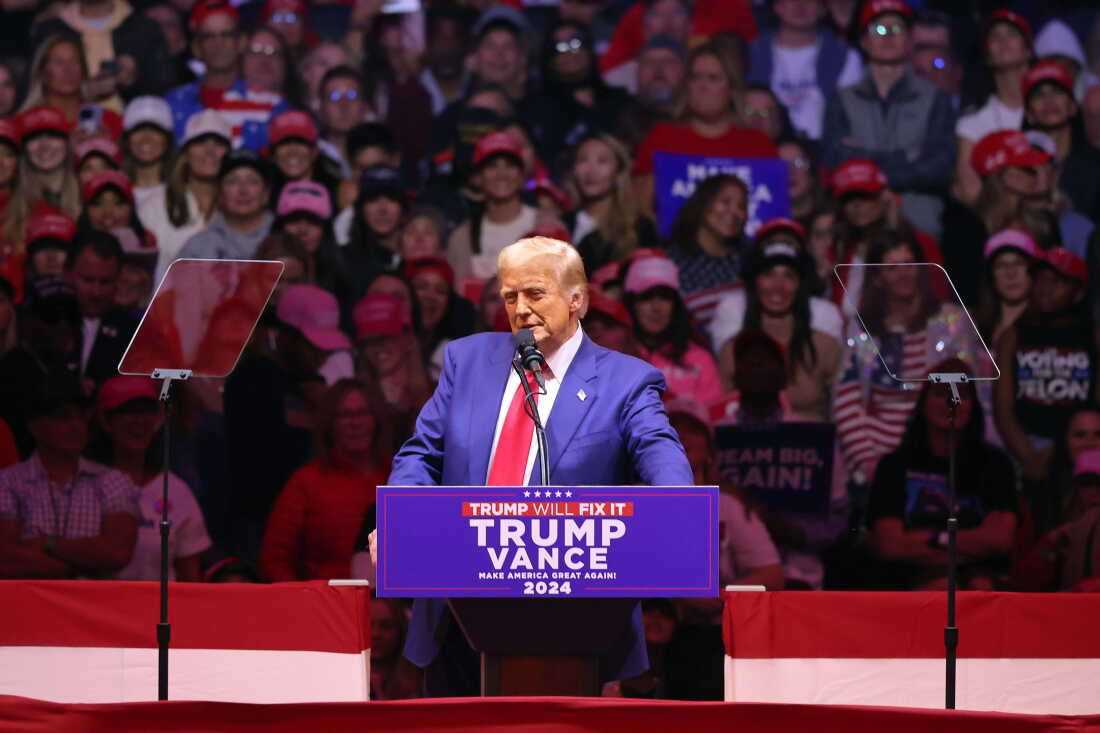
The documentary’s release comes as Graham’s sister, Sen. Darline Graham, runs a campaign against Democrat Annie Andrews. President Donald Trump held a rally Wednesday at Clemson University to support her, and praised an attendee who apparently struck a protester being removed from the event.
In footage included in the documentary, Darline Graham is shown rejecting a question about the allegations involving her brother, saying: “I’m not even going to entertain that question.”
A conservative spokesperson, Andrew Kolvet, dismissed the documentary’s political importance in a Thursday post on X, writing: “This is why we called him Lady Graham. This isn’t an October surprise, we’ve known this for years,” and adding, “No one cares.”
The question for voters
There is no constitutional amendment that can make the public care. There is no Supreme Court doctrine that can force a polity to take truth seriously, or to separate accountability from partisanship.
So the question is not simply whether the allegations are believed. The question is whether citizens still expect moral consistency from lawmakers who legislate morality, and whether they still demand that power be exercised with restraint even in private.
The Constitution can structure elections. It can divide powers. It can guarantee certain rights and limit certain governmental acts. But it cannot do the one thing a republic always needs most: make its people unwilling to tolerate a double standard.