
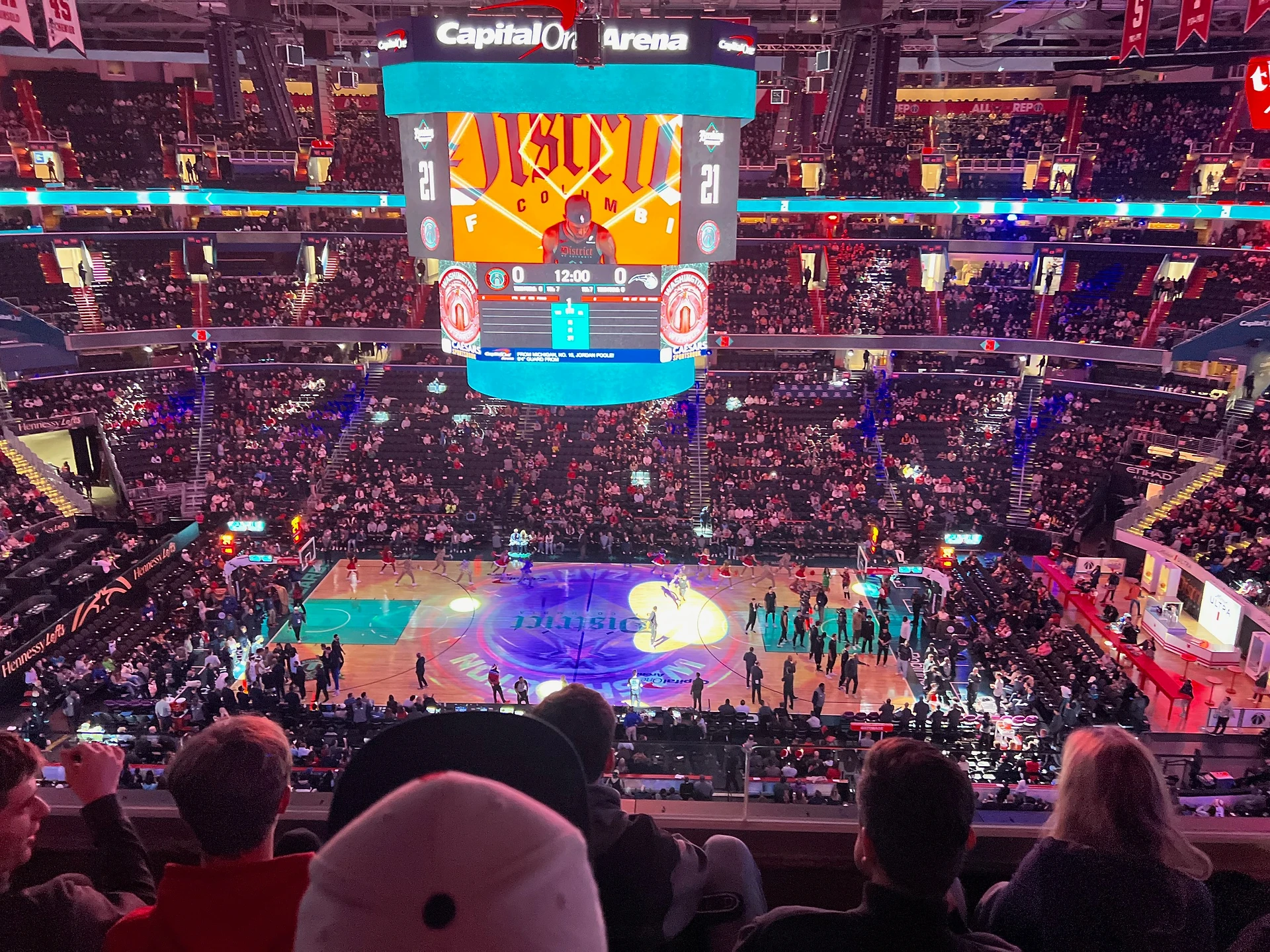
A short clip from a packed NBA arena is now doing what viral video often does in American life: collapsing the distance between private behavior and public consequence.
Britt McHenry, a former ESPN reporter and current staffer in the State Department, was captured on video Wednesday night throwing the remaining contents of her drink at another person during a verbal altercation at the Washington Wizards’ home opener.
Join the Discussion
What the video shows

The footage shows McHenry in a heated exchange with someone seated near her. At one point, she appears to toss what is left of her drink toward the other person.
In another moment, an usher at Capital One Arena can be seen telling her to leave. McHenry and a male guest then exit their row while other spectators throw items in their direction, including rally towels.
As she is leaving, McHenry appears to make light of the moment, blowing kisses back toward the crowd. She is also shown arguing with a security guard near an arena entrance before departing.
What may have sparked it
Sources familiar with the incident described the people seated behind McHenry as making misogynistic comments and instigating her reaction. The video captures the confrontation and her removal, but not the full context of what was said before the drink toss.
Why her job matters

If this were only about a fan dispute at a game, it would be the kind of clip people argue about for a day and then move on from. But McHenry is not just a private citizen in the public eye. She confirmed in September that she accepted a position with the Trump administration as a press adviser in the State Department.
That matters because public service comes with a predictable civic expectation: restraint. Not perfection, not sainthood, but the understanding that your conduct can become a proxy for the institution you represent, especially when your job involves communication.
And that is the uncomfortable tension our constitutional culture never quite resolves. The First Amendment protects expression, but it does not immunize public employees from employer discipline. Government work has long carried a second layer of scrutiny: not just, “Can you do the job,” but, “Does your conduct undermine the government’s ability to do its job?”
A pattern people remember
McHenry has faced viral backlash before. On April 16, 2015, a video surfaced showing her verbally berating and mocking a tow lot employee, Gina Michelle, using foul language. McHenry apologized publicly on Twitter, writing: “In an intense and stressful moment, I allowed my emotions to get the best of me and said some insulting and regrettable things... I am so sorry for my actions and will learn from this mistake.”
ESPN suspended her for one week after that incident. A day later, the towing company issued a statement indicating it did not want McHenry suspended or fired over the episode.
The relevant point is not that people are forever trapped by their worst clip. It is that reputations are cumulative in the viral era. Each new public altercation gets interpreted through the last one, whether that is fair or not.
Harassment claim history
In 2019, McHenry accused her co-host and wrestler George Murdoch of sexual harassment after she said he sent her lewd text messages. The matter was investigated and resolved.
On December 10, 2019, McHenry filed a sexual harassment lawsuit against Fox News and Murdoch. She later said she lost the phone that she claimed contained text messages central to her allegations. In July 2021, she voluntarily dismissed the lawsuit and left the Fox network, apparently as part of a legal settlement.
The civic question
It is tempting to treat the clip as either (1) proof of someone’s character or (2) proof that the internet is overreacting. But the more interesting question is civic in spirit, even if it is not a court case: what do we demand of people who speak for the government?
When someone holds a public-facing role, they inherit a kind of borrowed authority. It is not personal. It belongs to the office, the agency, the seal on the podium. That is why conduct in a stadium can become a question about credibility at a lectern.
None of this requires assuming we know every detail of what was said to her, or what led to the confrontation. It only requires acknowledging a basic reality of modern public life: when you work in government communications, your off-duty moments rarely stay off duty for long.