
When Americans picture diplomacy, we tend to imagine conference rooms, flags, and a leader stepping up to a microphone to say what they agreed to and why. The current U.S. talks with Iran are testing that mental picture in a very concrete way.
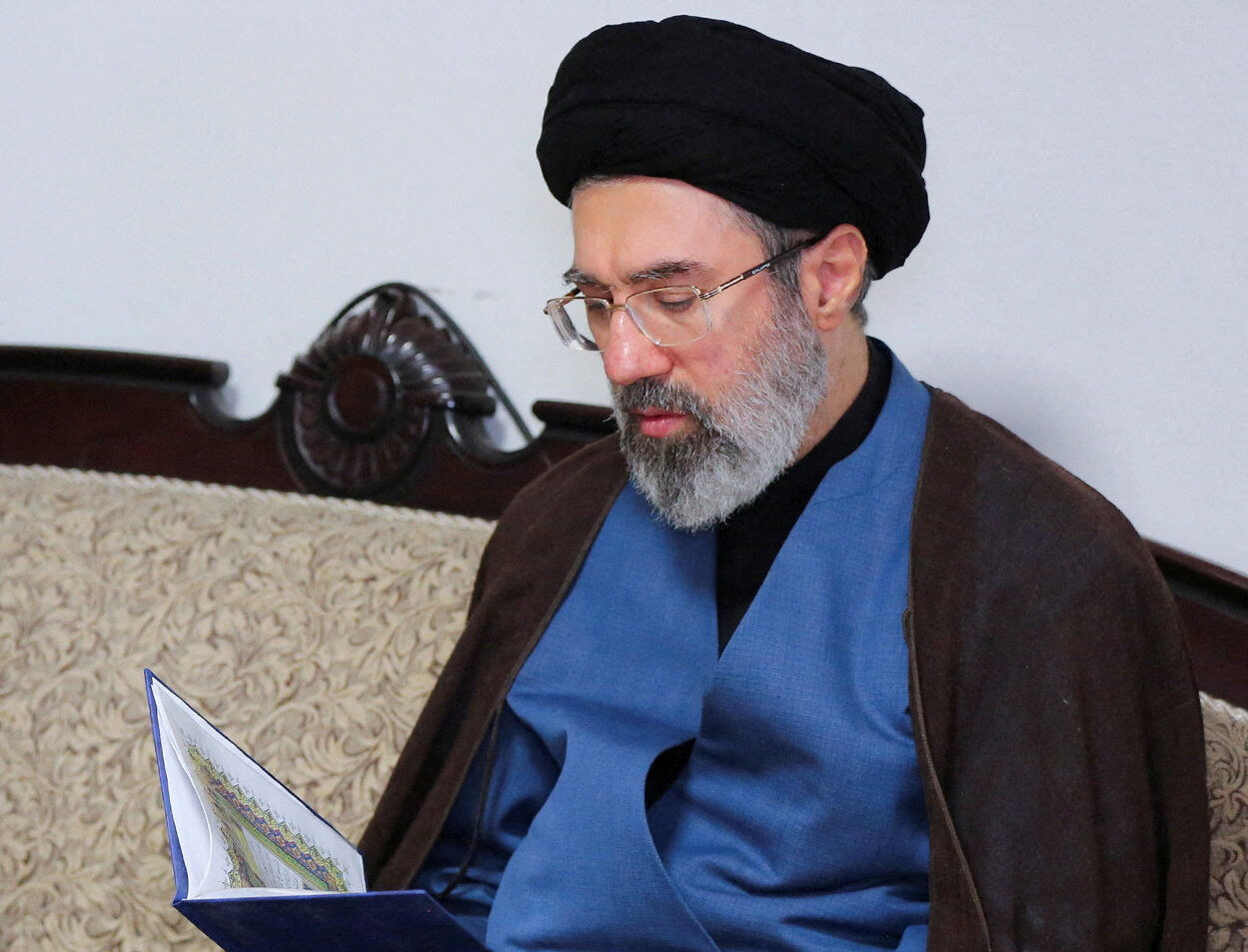
Counterterrorism analysts say Iran’s supreme leader, Mojtaba Khamenei, has been out of public view for nearly three months after his father was killed in the Feb. 28 strike. If he cannot safely appear, they say any final approval of a U.S. deal would have to move through secret courier networks, with responses arriving days late and enforcement tied to the survival of a leader who cannot show his face.
Join the Discussion
Why the signature matters
In most international agreements, the signature is not just a formality. It is a public signal that a specific official, operating through a known chain of authority, is taking responsibility for a country’s commitments.
Here, the practical problem is straightforward: if the person who must approve the deal cannot surface, then the final “yes” may have to travel through intermediaries. Dr. Omar Mohammed, director of the Antisemitism Research Initiative Program on Extremism at George Washington University, argues the courier system is not a temporary workaround. “The courier system used for messaging is not transitional. It is the operating system of his rule.”
What we know right now
Khamenei went underground after the Feb. 28 strike that killed his father, amid reports that he was gravely injured. Defense Secretary Pete Hegseth said Khamenei was “wounded and likely disfigured.” His wife and son were killed in the same strike.
Analysts tracking Iran’s internal power structure say his location is closely held. Mohammed said even high-level Iranian officials do not know where he is, meaning information reaching him is “dated” and his replies come with “significant latency.” In that environment, delay is not a glitch. It becomes part of the system.
Rubio and the latency problem
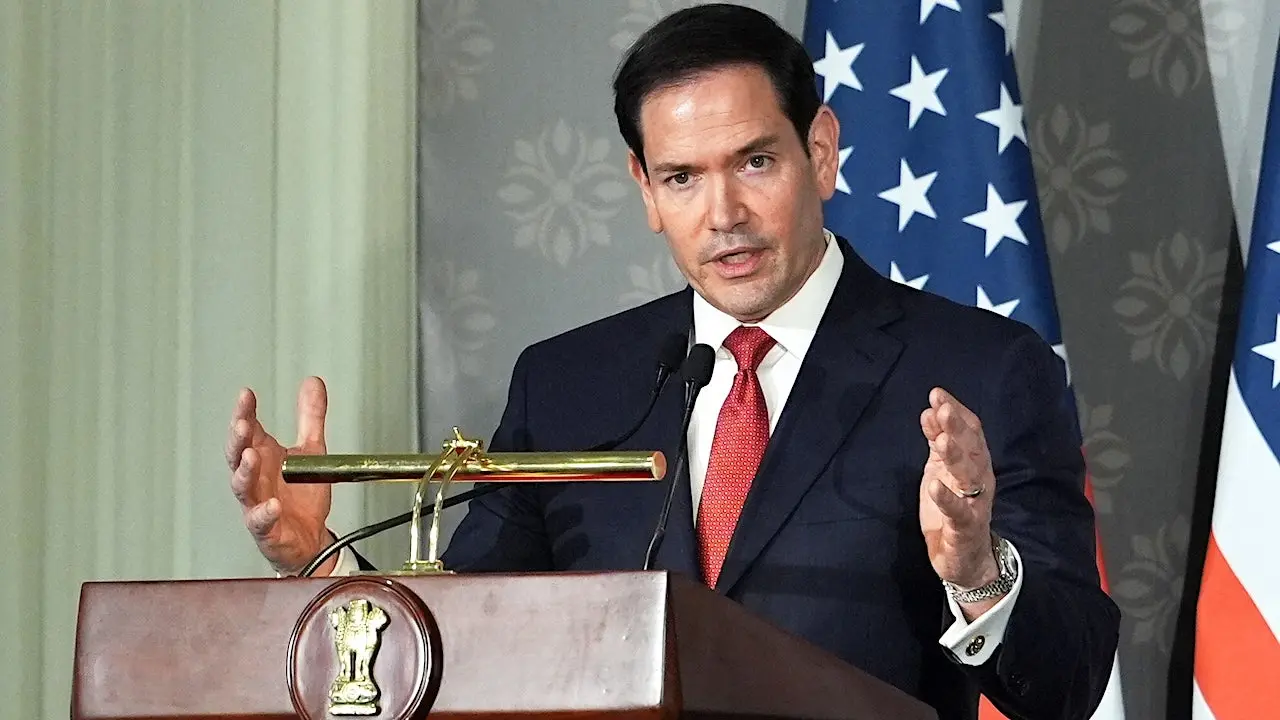
Secretary of State Marco Rubio, speaking to reporters in India, addressed why negotiations have moved slowly at moments. “It’s just the response,” Rubio said. “I mean, when you get down on some of these things, you’ve got to hear back, and it takes the Iranians, takes them a little while longer to get back.”
On its face, that sounds like a common diplomatic frustration. But Mohammed argues it points to something structural: “Mojtaba is in hiding, messages are moving by courier, and responses are arriving days late.”
Rubio also framed the administration’s posture in plain terms: “If there’s going to be a deal, we’re going to have to work through that. But this is, you know, it’s either going to be a good deal or there isn’t going to be one.”
What couriers change
In civics terms, this is where the mechanics matter. Treaties and executive agreements rely on more than signatures. They rely on continuity and the ability to test compliance against clear expectations.
Mohammed put the risk in stark terms: “Khamenei is a designated target, and every confirmed sighting is a coordinate.” He argues that makes the negotiation unusually personal and fragile. If the leader’s survival depends on staying unseen, then diplomacy has to be designed around a permanently invisible counterparty.
Mohammed also warns the enforcement problem is built in. “Any deal the United States signs will have to be designed for a permanently invisible counterparty whose enforcement depends on his continued survival.” He adds that this is not “arms control as it has been conventionally understood,” but “a memorandum signed under American military pressure, with a regime whose leader cannot show his face.”
Experts who focus on the operational side of diplomacy say that setup can reshape two basics people usually take for granted:
- Verification becomes harder: Analysts argue that when approvals and clarifications move through couriers with built-in delays, it can become harder to lock in timely, consistent intent and resolve disputes quickly enough to prevent backsliding.
- Accountability gets blurrier: They also warn that when the approving authority is invisible, rival power centers can more easily claim misunderstanding, deny responsibility, or renegotiate through silence.
What the talks are about
The stated goal of the current U.S.-Iran track is a deal to end the war that began Feb. 28 and to set rules around nuclear and regional security questions that remain unresolved.
A senior administration official has indicated the United States is prepared to ease sanctions if Iran makes major concessions on uranium enrichment. Frozen Iranian assets have also emerged as a key hurdle.
Iran, for its part, has publicly downplayed the idea that a full agreement is around the corner. Foreign Ministry spokesman Esmaeil Baghaei said no agreement was imminent even as talks continued toward a framework, and he emphasized that Iran’s focus remained ending the war “on all fronts,” including Lebanon. Baghaei also said a possible memorandum of understanding did not include specific details on managing the Strait of Hormuz.
The civics angle
On this site, we often talk about constitutional powers in the abstract. But this story is a reminder that “foreign affairs” is not just a legal category. It is a real-time problem of governance.
In the U.S. system, major international commitments can take different legal forms, and the durability of those commitments often depends on how clearly they are defined, who is responsible for them, and what enforcement tools exist if the other side stalls or backtracks.
If the U.S. is negotiating with an Iranian leader who cannot appear publicly and whose communications move through couriers, Congress and the public are likely to press for answers that go beyond the text of a memorandum. They will ask how the administration plans to measure compliance and what happens if approvals arrive late, disputed, or not at all.
What to watch
- Whether the framework includes timelines with real consequences for missed steps, delayed responses, or disputed instructions.
- How sanctions relief is structured, especially if it is phased and tied to verification.
- What is said publicly by both governments, since public statements often become the practical guide for what “the deal” is understood to mean.
Diplomacy usually depends on contact. When contact is replaced by couriers and long silences, the challenge is not just reaching an agreement. It is building one sturdy enough to survive the very unusual way it has to be approved.