
Most Supreme Court stories begin the same way: a case climbs a ladder. Trial court, appeal, another appeal, and finally a petition asking nine justices to take a look.
But a tiny slice of cases do not climb at all. They begin at the top. That is what original jurisdiction means, and it is one of the most misunderstood mechanics in constitutional law.
Join the Discussion
What “original” means at the Supreme Court
In everyday language, “original jurisdiction” sounds like a historical concept. In law, it is simpler: it describes where a case starts.
- Original jurisdiction means the Supreme Court can act as the first court to hear a dispute on the merits, not as a reviewer of another court’s decision.
- Appellate jurisdiction means the Supreme Court reviews what another court already did.
That matters because starting a case at the Supreme Court is not just unusual. It changes the job the Court has to do.
Appellate cases are mostly about law. The record is typically set. The facts have typically been found. The Supreme Court decides whether lower courts applied the Constitution, federal statutes, or precedent correctly.
Original cases can require something closer to trial-level work. The Court still is not set up like a trial court, so it uses special procedures to handle evidence, testimony, and factual disputes.
Article III’s narrow list
The Constitution puts original jurisdiction in exactly one place: Article III, Section 2. It says the Supreme Court has original jurisdiction in:
- Cases affecting ambassadors, other public ministers, and consuls
- Cases in which a state is a party
Then it adds the crucial limiter: “In all the other Cases before mentioned, the Supreme Court shall have appellate Jurisdiction,” with exceptions and regulations Congress can make.
So the Constitution builds an expectation that almost everything else reaches the Court by appeal. Original jurisdiction is the exception, not the rule.
Not “anything important”
Here is the mental trap: people assume the Supreme Court hears “big” cases first. But the Constitution does not say “big.” It says states, and a small set of diplomatic disputes.
That means many headline issues, even when they feel existential, still begin in lower courts.
- Most major rights cases begin in federal district court or state court, then move upward.
- Most fights over federal regulations begin in lower federal courts.
- Most criminal cases, even constitutional ones, begin in trial courts.
Original jurisdiction is not a fast pass for national controversy. It is a category system.
State vs. state
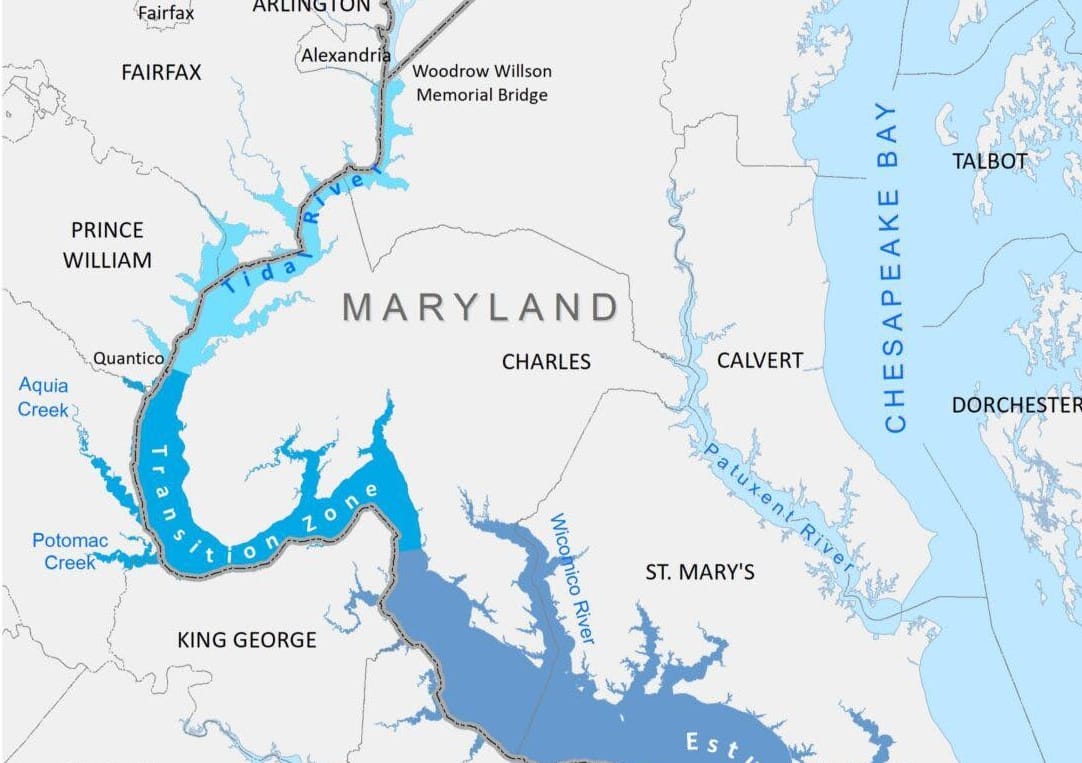
Among the most common original jurisdiction disputes are controversies between states. They sound dry until you realize what they usually involve: borders, water, money, and the kind of conflict that no single state court can neutrally resolve.
Plain-English examples
- Boundary disputes: Two states disagree about where the border really is. That can affect taxation, policing, natural resources, and even which voters belong to which state.
- Water rights: States fight over rivers, aquifers, and reservoirs. If an upstream state diverts water, the downstream state can claim serious harm.
- Interstate compacts: States sometimes make formal agreements, like contracts, approved by Congress. Disputes over those agreements can land at the Court.
If you want a concrete anchor, consider interstate water litigation like Florida v. Georgia, a long-running dispute over water use in the Apalachicola-Chattahoochee-Flint River Basin. These cases can take years and can involve heavy factual development.
In these disputes, the Court can look like a referee between sovereigns. That is not far off. The Court becomes a forum where states can sue each other without either state having home-field advantage.
States vs. the federal government
Sometimes, but the category is narrower and more technical than people assume. Under federal statute (most notably 28 U.S.C. § 1251), “controversies between the United States and a State” fall within the Court’s original jurisdiction, but not its exclusive original jurisdiction.
In practice, many state vs. federal disputes still begin in lower federal courts and reach the Supreme Court on appeal, especially when they are challenges to statutes, regulations, or executive actions that fit the normal trial and appellate structure.
Exclusive vs. concurrent
Even when the Supreme Court has original jurisdiction, that does not always mean it is the only court that can hear the case first.
- Exclusive original jurisdiction means only the Supreme Court can hear it initially.
- Concurrent original jurisdiction means the case could start either at the Supreme Court or in lower federal court, depending on the type of dispute and the governing statutes.
The modern roadmap is largely statutory. 28 U.S.C. § 1251(a) makes state vs. state controversies the clearest core of the Court’s exclusive original jurisdiction. Other categories listed in § 1251(b) are generally concurrent, meaning lower federal courts may also be available.
One more practical point: original jurisdiction does not automatically mean an entitlement to be heard. Many original actions require the Court’s permission to proceed (often framed as “leave to file”), and the Court has repeatedly emphasized that original jurisdiction should be exercised sparingly.
How SCOTUS handles facts
The Supreme Court is not designed to hear witnesses day after day. There is no jury. There is no sprawling docket built around evidentiary hearings.
So in original jurisdiction disputes, the Court often appoints a special master.
What a special master does
- Collects evidence and manages discovery
- Holds hearings and takes testimony when necessary
- Makes findings of fact
- Files a report with recommendations to the justices
Then the parties file objections, the Court hears argument, and the justices decide what to adopt, what to reject, and what rule of law controls.
That is the key translation: original jurisdiction does not mean the justices personally run a full trial in the way a district judge would. It means the case is theirs first, and they use tools like special masters to handle the trial-like parts.
Why it is rare
Two realities keep original jurisdiction rare.
1) The Constitution cabins it
Article III provides a short list. That is intentional. The Framers did not design the Supreme Court to be the nation’s all-purpose trial court.
2) The Court is built for appellate work
The Court’s institutional strengths are legal reasoning, precedent management, and national uniformity in constitutional interpretation. Original jurisdiction disputes require intensive fact-finding and administrative oversight, the kind of work trial courts are structured to do every day.
So even when original jurisdiction exists, the Court often manages it carefully, with narrow scheduling, delegated fact development, and high reliance on written submissions.
What it is really for
Original jurisdiction is a constitutional pressure valve. It exists for disputes that would otherwise be structurally awkward or politically risky.
Imagine a world where:
- Virginia has to sue Maryland in a Maryland court over a river dispute.
- A state court claims power to adjudicate another state’s sovereign interests as if it were a private litigant.
The legitimacy problems are easy to see. The Supreme Court’s original docket offers a neutral, national forum for disputes where state equality and sovereignty are part of the controversy itself.
Quick takeaways
- Original jurisdiction means a case can start at the Supreme Court, not that it is “more important.”
- Article III limits original jurisdiction mainly to diplomatic cases and cases where a state is a party.
- 28 U.S.C. § 1251 draws the key lines between exclusive and concurrent original jurisdiction.
- Many original actions require leave to file, and the Court can decline to hear them.
- The most familiar original jurisdiction disputes are state vs. state conflicts like borders and water rights, often handled with the help of a special master.
- Almost everything else the Court decides comes through its appellate docket, after lower courts build the record.
The question to keep in mind
When you see a legal dispute that sounds national, it is tempting to ask, “Can this go straight to the Supreme Court?”
The more constitutional question is sharper: Does this case fit the Constitution’s categories for starting there?
Because Article III does not treat the Supreme Court as the first stop for the country’s biggest arguments. It treats it as the first stop for a narrow class of disputes where the forum itself is part of the Constitution’s solution.