
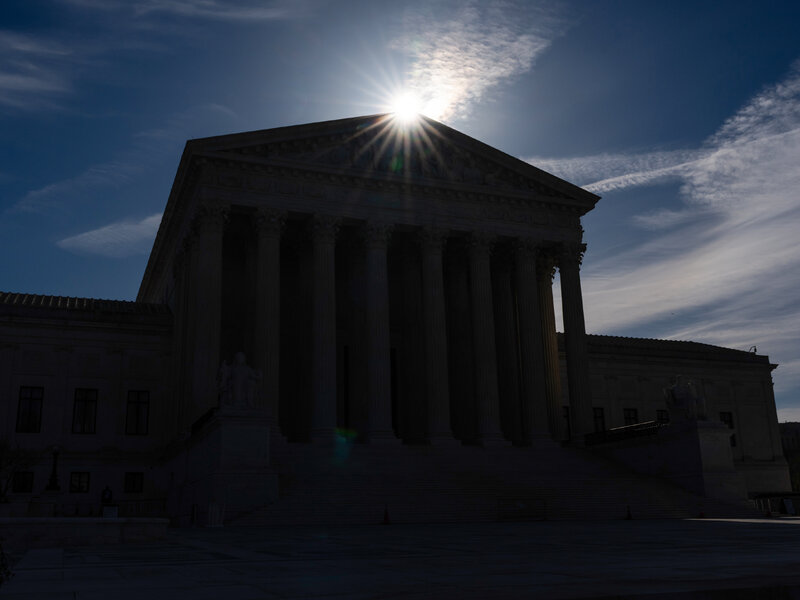
When people hear the phrase “shadow docket”, they usually imagine something secretive: important decisions made quickly, with little explanation, outside the Court’s normal rhythm of briefing, oral argument, and a signed opinion.
That concern is real. But there is another part of the story that often gets missed in today’s debates: one important argument is that the machinery we now call the shadow docket was not originally understood as a shortcut to help presidents. Some accounts frame it, at least in part, as a way for the Court to check executive power when presidents tried to move quickly, act alone, and make the judiciary scramble to catch up.
Join the Discussion
What it is
The Supreme Court has two main tracks of work.
- The merits docket is the one most of us learned about in school: the Court chooses a small number of cases, receives full briefing, holds oral argument, then issues written opinions.
- The emergency docket handles time-sensitive requests, often called applications: stay this order, pause that ruling, block this policy for now, let that law take effect while appeals continue.
The second track has long existed in some form. The controversy is how frequently it is used for high-stakes national disputes, and how often the Court resolves those disputes with minimal public reasoning.
The origin idea
Emergency orders were meant to be just that: emergency. Think of them as judicial triage. When a lower court order would take effect immediately, and the harm might be difficult to undo later, a party could ask the Supreme Court to intervene temporarily.
What is easy to forget is why this tool mattered in the first place. One thesis is that it grew in response to a recurring problem in American government: executive officials can create “facts on the ground” quickly. The logic is simple: if the government acts now, courts may not be able to put the toothpaste back in the tube later.
On that account, emergency procedures can be understood as developing in part to prevent a basic dynamic: the executive branch should not be able to win merely by moving first.
Where it collides
In constitutional terms, the shadow docket sits at a stressful intersection of three ideas:
- Presidents often claim urgency. National security, immigration, public health, labor disputes, and foreign policy are commonly framed as “we cannot wait.”
- Courts move deliberately. The judicial process is designed to test facts and law through adversarial briefing and reasoned decisions.
- Temporary orders have real-world consequences. A stay can effectively decide the practical outcome for months or years, even if the Court never fully hears the case.
So the Court faces a dilemma: if it refuses to act, the executive may effectively govern by outrunning review. But if it acts too readily, the Court can end up blessing executive action without the discipline of full merits review.
The hypocrisy
This is where the “hypocrisy” critique lands for many readers: a process that can be defended as a safeguard against executive overreach can, under modern conditions, produce the opposite result.
1) Timing tilts outcomes
When the Court resolves a dispute on an emergency timetable, the side that benefits from the status quo during litigation gains a powerful advantage. A simple example: if an administration launches a new rule, and the Court lets it operate while lawsuits crawl forward, regulated parties may have to reorganize their conduct immediately, even if the rule is later struck down.
2) Thin reasoning blurs the rule
On the merits docket, the Court is expected to explain itself. On the emergency docket, it sometimes issues a one-line order. That makes it hard for the public, Congress, and lower courts to understand what standard is being applied, and it can invite repeat litigation because no one is sure what the Court just signaled.
3) Lower courts get mixed signals
Trial courts and courts of appeals are supposed to apply Supreme Court doctrine. When the Supreme Court acts quickly without a clear explanation, lower courts can struggle to tell whether the order reflects a broad legal principle or a narrow judgment about timing and risk.
Why it matters
Even if you never read a Supreme Court opinion, the shadow docket can change the rules you live under quickly:
- Whether a federal policy takes effect immediately or is paused
- Whether a state law can be enforced while lawsuits continue
- Whether individuals and businesses must comply now, or can wait for clearer guidance
In the end, procedure is power. The shadow docket is a good example. It is not just a backstage administrative system. It is a set of choices about timing, transparency, and whose actions become the default while the law catches up.
What restraint looks like
The Court’s job is not to run the country. But it does have to decide when to step in.
From a separation-of-powers perspective, a more restrained version of emergency review looks like this:
- The Court intervenes when necessary to prevent irreversible harm.
- It explains, even briefly, the legal standard it is applying.
- It treats emergency relief as truly temporary and channels the dispute toward full review when warranted.
When those guardrails slip, emergency orders start to feel less like triage and more like governance. And that is precisely the fear the shadow docket is often said to have been meant to address, especially when the executive branch is the one insisting that urgency should outrun deliberation.
What to watch
If you want a simple way to evaluate future shadow docket disputes, keep three questions in mind:
- Who benefits from delay or acceleration? Ask whether the Court’s timing effectively locks in executive action.
- Is the Court applying a clear standard? Even a short explanation can show whether the Court is focused on likelihood of success, irreparable harm, or something else.
- Does the case move toward a full hearing? Emergency relief can be defensible when it is a bridge to a real decision, not a substitute for one.
The shadow docket is not inherently illegitimate. It is a necessary tool in a system where harm can happen quickly. The deeper question is whether the tool is being used in a way that preserves the Constitution’s basic promise: no branch, including the presidency, gets to accumulate power simply by acting first.