
Every few years the filibuster reappears as a political cliffhanger: keep it, kill it, carve exceptions, or watch it block everything. This time the argument is tied to a second question that feels separate but is not: statehood for Washington, D.C. and Puerto Rico. Put them together and you get a simple constitutional reality with outsized consequences.
The Constitution gives each chamber of Congress broad power to write its own rules. It also gives Congress the power to admit new states. Neither provision names the filibuster. Both provisions can change the legislative map anyway.
Join the Discussion
What the filibuster is and what it is not
At its core, the Senate filibuster is not a magic speech that never ends. It is a consequence of how the Senate ends debate.
In modern practice, most filibusters are silent. A senator does not have to hold the floor for days. Instead, the Senate operates on the assumption that a determined minority can delay final action unless the majority can gather enough votes to invoke cloture, which is the Senate’s procedure for cutting off debate.
That is why people talk about the filibuster as a “60 vote requirement.” It is really a 60 vote requirement to end debate on most matters, because Senate Rule XXII sets the cloture threshold at three-fifths of all senators duly chosen and sworn, which is usually 60.
Why it matters
The House runs on majorities. The Senate, by choice and by custom, often runs on supermajorities. That difference shapes what can pass, what dies, and what becomes bargaining leverage.
Does the Constitution require the filibuster?
No. The Constitution never mentions the filibuster, cloture, or any requirement that ordinary legislation clear a supermajority threshold in the Senate.
In fact, the Constitution is pretty clear about when it does demand supermajorities. Ratifying treaties requires two-thirds of senators present. Convicting in impeachment trials requires two-thirds. Proposing amendments requires two-thirds of both chambers. Overriding a veto requires two-thirds of both chambers. Those are explicit, enumerated supermajorities.
For most bills, the Constitution assumes majority rule after bicameral passage and presentment. The filibuster exists because the Senate has chosen, via its internal rules and traditions, to make ending debate harder than passing the final vote.
The constitutional hook: Article I, Section 5
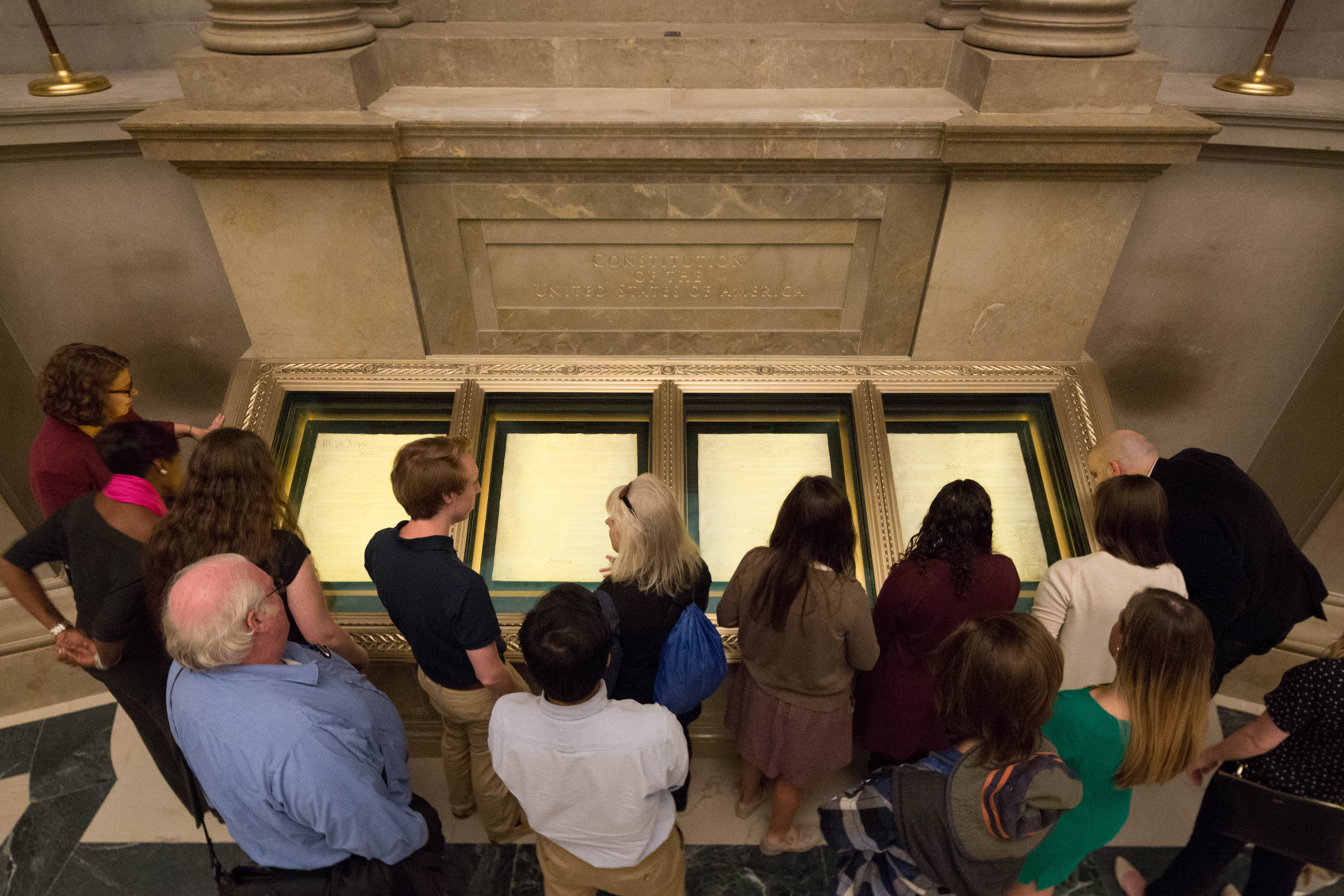
Article I, Section 5 states: “Each House may determine the Rules of its Proceedings.” That sentence is the filibuster’s home address. The rule is not constitutional, but the Senate’s authority to create rules is.
That is also why a filibuster fight is never just about procedure. It is about whether today’s Senate wants to bind itself to yesterday’s Senate.
Can the Senate abolish the filibuster?
Yes, because it is a Senate rule. The hard part is the how, not the whether.
- The normal route: Change the rules under the existing rules. That typically means you still need the votes necessary to overcome a filibuster of the rules change itself.
- The procedural route often called the “nuclear option”: Create a new precedent by majority vote about how certain rules are interpreted or applied. This approach has been used in recent decades to lower the threshold for confirming executive branch nominees and federal judges (including Supreme Court justices) from 60 to a simple majority.
There is no single constitutional referee who must approve a rule change. Courts generally treat the Senate’s internal procedural decisions as political questions or matters for the chamber itself, except in rare cases where constitutional rights or external legal obligations are clearly implicated.
What changes if the filibuster changes
If the Senate eliminates the 60 vote cloture threshold for legislation, the chamber begins to look more like the House: a majority can legislate more freely, and elections can produce faster policy swings. Supporters call that accountability. Critics call it whiplash. The Constitution does not pick a side. It delegates the choice to the Senate.

Why statehood changes the math so fast
The Senate is built on equal state representation: two senators per state, regardless of population. That design is not an accident. It was the Great Compromise, the price of getting small states into the same union as large ones.
Statehood changes the Senate in the bluntest possible way: it adds seats. Two seats per new state, immediately altering the number of votes needed to control committees, confirm nominees, or reach cloture if the 60 vote threshold remains.
If one new state is added, the Senate becomes 102 members. If two are added, it becomes 104. The cloture threshold under Rule XXII remains three-fifths of senators duly chosen and sworn, which means it scales with the size of the Senate.
What that means in practice
- Majority control: Control of the chamber can flip with a few seats, particularly in closely divided Senates.
- Cloture math: If the filibuster stays, adding senators can either make cloture harder to reach (if the majority does not gain seats) or easier (if it does).
- Committee power: Committee ratios, chairmanships, and scheduling power follow the majority, so even a small structural change can affect what gets hearings and what never makes the calendar.
This is why statehood debates are never just about maps and flags. They are about institutional control.

What the Constitution says about admitting new states
The power to admit new states is explicit. Article IV, Section 3 provides: “New States may be admitted by the Congress into this Union.” That is the main constitutional switch. If Congress passes an admission act and the president signs it, a new state can be created, subject to the Constitution’s other limitations.
The same clause adds an important qualifier: no new state can be formed within the jurisdiction of an existing state, or by combining states, without the consent of the state legislatures involved and Congress. That is why splitting a state is constitutionally harder than admitting a territory.
So, could Puerto Rico become a state?
Constitutionally, yes. Puerto Rico is a U.S. territory. Congress has broad authority over territories under the Territory Clause (Article IV, Section 3, Clause 2), and it can establish an admission process by statute. The major barriers tend to be political rather than textual: the terms of admission, local consent and referendum design, and congressional majorities.
Could Washington, D.C. become a state?
This is trickier, because the Constitution also creates a federal district.
Article I, Section 8, Clause 17 empowers Congress to exercise exclusive legislation over the “District” that becomes the seat of government. D.C. was designed to not be a state, so that no single state would host and potentially leverage the federal government.
Modern proposals often try to square that circle by shrinking the federal district to a small core area containing the Capitol, the White House, and major federal buildings, while admitting the remaining residential and commercial area as a new state. Whether that can be done by statute alone or effectively requires a constitutional amendment is a contested legal question, and it is part of why D.C. statehood draws litigation threats along with floor speeches.

Statehood, the Electoral College, and the 23rd Amendment
When a politician warns that a procedural rule could determine whether their party ever wins the presidency again, they are usually bundling three different systems into one argument: the Senate, the Electoral College, and the party coalitions of the moment.
Here is the constitutional structure:
- Presidential elections: Each state gets electors equal to its House seats plus its two senators. Adding states adds electors.
- Senate power: Adding states adds senators, affecting confirmations, treaties, and the legislative agenda.
- The filibuster: Keeping or changing the filibuster affects whether a Senate majority can pass an admission act for new states without needing a supermajority to end debate.
D.C. adds one more constitutional wrinkle: the 23rd Amendment gives the District electoral votes (currently three) even though it is not a state. Under the common “shrink the district” plan, the remaining tiny federal district would still exist, and it would still be entitled to those electoral votes unless Congress and the states address the amendment directly. In practice, that means D.C. statehood proposals often run into a second track of constitutional cleanup, either repeal of the 23rd Amendment or some other fix that prevents a near-empty federal enclave from keeping presidential electors.
So the causal chain looks like this: if statehood legislation depends on clearing a filibuster, the 60 vote rule can function as a gate. If the filibuster is weakened or removed for legislation, the gate swings open for whichever party holds a simple majority plus the House and the presidency.
But a permanent lock on presidential outcomes is not something the Constitution guarantees to any party. Coalitions shift. States change. Parties change. Institutional rules last longer than political predictions.
What happens the day after a filibuster change
A Senate without a legislative filibuster does not become lawless. It becomes more majoritarian.
Some guardrails remain constitutional and cannot be removed by Senate rule:
- Bicameralism and presentment: A bill still must pass the House and Senate and be signed by the president (or pass over a veto). That is Article I, Section 7.
- Enumerated supermajorities: Impeachment convictions, treaties, veto overrides, and constitutional amendments still require the thresholds the Constitution specifies.
- Elections: Senators still face voters on staggered terms. A majority can be punished or rewarded at the next election.
What changes is speed and leverage. Majorities can act faster. Minorities must rely more on persuasion, public pressure, and elections, and less on procedural delay.
Quick answers
Is the filibuster in the Constitution?
No. The Constitution gives the Senate power to write its rules, and the filibuster is a product of those rules and precedents.
Can the Senate eliminate the filibuster with 51 votes?
Potentially, yes, by setting a new precedent through a majority vote. The legality is internal to Senate procedure. The difficulty is political: persuading a majority to do it and live with the consequences.
How would D.C. statehood change the Senate?
Like any state, it would add two senators. It could also add Electoral College votes, because states receive electors partly based on their Senate seats. Any “shrink the district” plan also has to grapple with the 23rd Amendment’s separate grant of electoral votes to the remaining federal district.
Can Puerto Rico become a state?
Yes, through congressional admission legislation and whatever terms Congress sets, assuming political agreement and local consent mechanisms.
Does the Constitution let Congress add states for partisan advantage?
The Constitution does not ask Congress to prove neutral motives. It grants the power to admit new states. The check is political: elections, public legitimacy, and the risk that today’s advantage becomes tomorrow’s precedent.