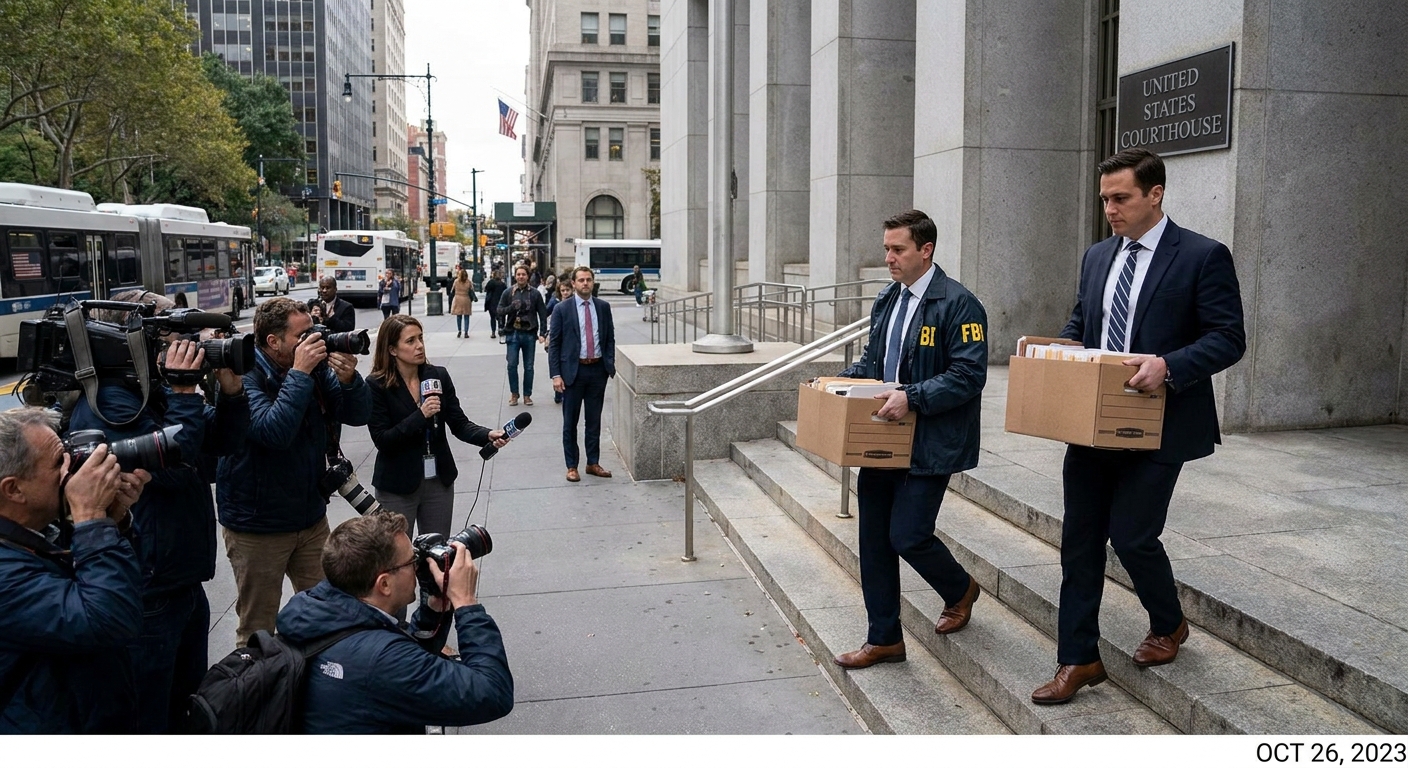
You have probably heard RICO described as the law for mob bosses. It is often framed that way.
But RICO is not just a “mob law.” It is a charging tool, built to connect the dots between people, crimes, money, and the structure that makes the crimes repeatable.
RICO stands for the Racketeer Influenced and Corrupt Organizations Act, passed in 1970. It lives in federal criminal law, but it reaches far beyond the classic image of organized crime. It can be used against street gangs, public corruption networks, long-running fraud rings, and even legitimate businesses that get used or operated as vehicles for a criminal pattern.
Join the Discussion
What RICO is, in plain English
Most criminal laws focus on a single prohibited act. Robbery. Bribery. Wire fraud. Drug distribution.
RICO focuses on a pattern of certain serious crimes connected to an enterprise. It is designed to address systems, not just episodes. The idea is that a criminal network can be more dangerous than any one offense because the network can replace members and keep going.
RICO is codified at 18 U.S.C. §§ 1961 to 1968. The main criminal prohibitions are in § 1962(a) to (d). In plain terms, those provisions make it illegal to:
- Use racketeering income to acquire, establish, or operate an enterprise. (§ 1962(a))
- Acquire or maintain control of an enterprise through racketeering. (§ 1962(b))
- Conduct or participate in an enterprise’s affairs through a pattern of racketeering activity. (§ 1962(c))
- Conspire to do any of the above. (§ 1962(d))
That structure matters because prosecutors can tell a broader story. Not just “this person did X,” but “this person used X and Y and Z to help an organization function.”
The building blocks
RICO sounds abstract until you break it into the three ideas prosecutors have to stitch together: an enterprise, predicate acts, and a pattern.
1) What counts as an “enterprise”
An enterprise is not limited to a formal corporation or a mafia “family.” Under RICO, an enterprise can include:
- A legal entity like a corporation, partnership, or nonprofit.
- An “association-in-fact,” meaning a group of people working together with a common purpose, even if it is informal.
The key point is that the enterprise is the ongoing structure or relationship. The crimes are what the enterprise does, but the enterprise is the thing RICO is trying to expose and disable. Importantly, the enterprise can look legitimate. The allegation is often that people used that legitimate structure to commit or conceal a criminal pattern.
2) What are “predicate acts”
RICO does not cover every crime. It covers a list of specified offenses called predicate acts, defined in the statute. If the alleged acts are not on the list, they cannot serve as RICO predicates.
Common categories of predicate acts include many forms of fraud and corruption, such as:
- Bribery and extortion (including Hobbs Act extortion in some contexts)
- Mail fraud and wire fraud
- Certain federal money laundering offenses
- Obstruction of justice and witness tampering (in certain statutory forms)
- Drug trafficking
- Gambling offenses
- Violent crimes like murder or kidnapping, when they fall within the statute’s predicate list, including certain qualifying state-law offenses
The predicate list is long, and it also incorporates some state-law crimes if they fit the categories RICO references.
3) What makes a “pattern”
RICO is not “two crimes and you are done.” The law requires a pattern of racketeering activity. The statute sets a minimum of two predicate acts within 10 years of each other (excluding any period of imprisonment), but courts have emphasized that a “pattern” also involves relationship and continuity.
In practice, that means prosecutors usually try to show the acts are connected to each other and to the enterprise, and that they amount to ongoing criminal conduct or a threat of it. A one-off scheme with no continuity is a harder fit.
What federal prosecutors use RICO for
RICO’s power is not just what it prohibits. It is how it lets prosecutors present a case: as a coordinated set of actions that make an organization run.
Common federal uses include:
Organized crime and gangs
This is the classic RICO setting. The enterprise is a criminal organization. The predicate acts can include drug trafficking, extortion, illegal gambling, and violence. RICO is especially useful when leadership insulates itself from the street-level crimes.
Fraud networks
RICO can be used when fraud is not an isolated event but a repeated method. Think of a long-running operation that relies on mailings, wires, shell companies, and laundering of proceeds. The “enterprise” may look legitimate on paper, which is often the point.
Public corruption
RICO is sometimes used to describe a system of payoffs and favors that functions like a marketplace. The predicates can involve bribery, extortion, and fraud-type offenses, and the enterprise might be an office, agency, or an association-in-fact built around a corrupt arrangement.
Complex, multi-defendant cases
RICO can make it easier to charge many people in one narrative, especially where each defendant played a different role. Some defendants may have committed predicates directly, while others are alleged to have helped direct the enterprise’s affairs.

How RICO charges differ
RICO is not just “more charges.” It is a different theory of criminal liability.
1) The crime is the connection
Traditional counts ask: did the defendant commit this act on this date?
RICO asks a bigger question: did the defendant participate in an enterprise through a pattern of predicate acts?
That connection element is why RICO cases often look like stories about systems: hierarchy, roles, communications, money flows, and repeated methods.
2) It can reach leadership and facilitators
One reason RICO was created was to target people who rarely “pull the trigger” but who allegedly direct, manage, or benefit from a criminal structure. Participation can mean conducting or helping conduct the enterprise’s affairs, not only committing each predicate personally.
3) Conspiracy is often central
RICO conspiracy charges can be especially potent. Conspiracy law, generally, allows liability based on agreement and participation rather than completion of every underlying act. In many RICO prosecutions, the conspiracy count becomes the backbone of the case.
Unlike some conspiracy statutes, a RICO conspiracy charge under § 1962(d) typically does not require proof of an overt act, although the exact articulation can vary by jurisdiction.
4) Penalties and forfeiture can be significant
RICO can carry heavy prison exposure, depending on the predicates. A RICO conviction is often punishable by up to 20 years per count, and it can be life if the underlying racketeering activity includes certain life-eligible offenses.
It also has powerful forfeiture provisions, meaning the government can seek to seize assets tied to racketeering activity. In practice, forfeiture and financial disruption are often as important as prison time.
RICO and the Constitution
RICO prosecutions can raise constitutional questions, even when the statute itself is not in doubt.
- Due process and vagueness: Defendants sometimes argue that “enterprise,” “pattern,” or the application of predicates is too elastic. Courts generally uphold RICO, but fights over how broadly it can be applied are common.
- First Amendment concerns: Membership, association, and speech are protected. RICO cannot punish protected advocacy. The government has to tie charges to criminal conduct, not mere association with unpopular groups or ideas.
- Sixth Amendment and fair trial issues: Multi-defendant RICO cases can be sprawling. That raises disputes about severance, joinder, and whether a jury can fairly compartmentalize evidence.
- Eighth Amendment and forfeiture: Large forfeiture judgments sometimes trigger arguments about excessive fines, depending on the facts.
In other words, RICO is powerful, but it lives inside constitutional guardrails. The friction comes from how much conduct prosecutors can fit under the “enterprise plus pattern” umbrella.
RICO FAQ
Is RICO only for the mafia?
No. RICO was shaped by the organized crime era, but it is used in many contexts, especially fraud and corruption cases where prosecutors allege an ongoing structure.
Does RICO mean the government can charge you just for being in a group?
No. RICO requires proof tied to an enterprise and a pattern of specified crimes. Mere association is not enough. The government still has to prove criminal conduct and the required connection to the enterprise’s affairs.
Are “predicate acts” just any crimes the prosecutor chooses?
No. Predicate acts come from a statutory list. Prosecutors have discretion in what they charge, but they cannot invent predicates outside the statute.
If there are two predicate acts, is that automatically a RICO pattern?
Not automatically. Two acts within 10 years is a statutory minimum, but courts look for relationship and continuity. Prosecutors usually try to show an ongoing scheme or a threat of continued criminal activity.
Is RICO always federal?
The original RICO statute is federal, but many states have their own RICO-style laws. When you see “RICO” in the news, it could be federal or state depending on the jurisdiction.
Is there a civil version of RICO?
Yes. RICO also allows civil lawsuits in certain circumstances. A civil plaintiff generally has to show an injury to business or property caused by the RICO violation. If they win, the statute can allow treble damages and attorneys’ fees, which is one reason civil RICO shows up so often in high-stakes business litigation. Civil RICO still has real hurdles and is not simply a shortcut to winning a commercial dispute.
Why RICO matters
RICO matters because it reflects a theory of crime that is bigger than the criminal act. It treats criminality as something that can be organized, professionalized, and scaled. The law’s purpose is to stop that scaling.
When you see a RICO charge, the government is usually saying: this is not an isolated incident. It is a machine.