
The Constitution has plenty to say about what Congress cannot do. But Article I, Section 10 is where the Founders turned around and aimed a few hard limits at the states.
One of those limits is blunt: “No State shall… pass any… Law impairing the Obligation of Contracts.”
At first glance, that sounds like a constitutional freeze frame. States cannot mess with contracts. Period. That is the intuition the text invites.
In practice, the Contract Clause has never worked like an on-off switch. It operates more like a constitutional pressure gauge. It asks whether a state has pushed too far when it rewrites the ground rules of private agreements, especially in moments when rewriting those rules is politically tempting.
Join the Discussion
What it is and why it exists
The Contract Clause appears in Article I, Section 10, Clause 1. It sits alongside other state-level prohibitions, including bans on bills of attainder and ex post facto laws.
One quick boundary line matters: the Contract Clause restrains states (and state-created entities acting under state law), not Congress. Federal contract interference is assessed under other constitutional doctrines.
The historical problem it was designed to address was not abstract. In the 1780s, state legislatures frequently passed debtor relief laws, delayed collection, altered repayment terms, or made it easier to dodge obligations after the fact. Credit markets tightened. Confidence in commerce weakened. The Framers saw a cycle: hard times produced populist contract rewrites, which produced less lending, which produced more hard times.
So the Contract Clause was meant to stabilize a young national economy by signaling that private promises would not be casually undone by state politics.
The modern impairment test
Today, the Supreme Court generally analyzes Contract Clause claims through a three-step framework most clearly associated with cases like Energy Reserves Group v. Kansas Power & Light (1983). More recent cases, including Sveen v. Melin (2018), apply the same core inquiry and emphasize factors like foreseeability when assessing whether an impairment is substantial.
Step 1: Is there a contract and is the impairment substantial?
Courts start with the basics: Was there a valid contractual relationship, and did the state law change it in a meaningful way?
Not every change counts. The impairment must usually be substantial. Judges look at factors like:
- Expectations: Was the contract made in a heavily regulated area where change was foreseeable?
- Severity: Does the law rewrite a core term, such as price, duration, enforcement, or payout?
- Reliance: Did a party reasonably structure its behavior around the old terms?
A key idea here is that contracts are formed against a backdrop of existing law. If you sign an agreement in an industry already governed by extensive regulation, the Court is more likely to say, in effect, you should have expected some legal evolution.
Step 2: Is there a significant and legitimate public purpose?
If there is substantial impairment, the state must justify it with a real public aim. Courts often accept purposes like protecting public health, preventing economic dislocation, or responding to a broad crisis.
The state does not have to prove perfection. But it must show the law is not just favoritism dressed up as policy. A statute that simply shifts losses from one politically sympathetic group to another can draw skepticism.
Step 3: Are the means reasonable and appropriately tailored?
Finally, courts ask whether the adjustment of contract rights is reasonable given the public purpose. This is where modern Contract Clause doctrine becomes a balancing act.
The Court tends to be more deferential when the state is regulating private contracts between private parties. It becomes far less forgiving, and applies more searching scrutiny, when the state is changing its own promises because the risk of self-interest is higher. That divide matters enough to earn its own section.
Private vs public contracts
The Contract Clause applies to all state laws that impair contracts, but the Supreme Court does not treat every impaired contract the same way.
When a state regulates private contracts
When the state is not a party to the contract, courts usually allow more room for regulation. The logic is practical: states must be able to govern, and governance inevitably touches private agreements.
That is why the question becomes less “did the state change the contract” and more “did it change the contract too much, for too thin a reason.”
When a state impairs its own obligations
When the state is effectively saying, “I know we promised, but we are changing the terms,” judges worry about self-dealing. A state that can rewrite its own debts, pensions, or bond obligations on demand is not just regulating the market. It is tilting the market in its own favor.
That is why the Court applies more skeptical review in public contract cases. A leading modern example is United States Trust Co. v. New Jersey (1977), where the Court struck down a state law that repealed a statutory covenant protecting bondholders. The state argued it needed flexibility for transportation policy, but the Court emphasized that a state cannot casually walk away from financial commitments simply because it now prefers a different budget priority.
In short, the Contract Clause is toughest when the state is grading its own homework, and a bit more forgiving when the state is acting as a regulator rather than a counterparty.
The case most people think of
If you have ever heard that the Contract Clause used to be powerful and then “faded,” you are hearing the shadow of the Great Depression. Earlier, the Clause reached a high-water mark in cases like Dartmouth College v. Woodward (1819), where the Court read it aggressively to protect charter-based bargains.
In Home Building & Loan Assn. v. Blaisdell (1934), Minnesota passed a mortgage moratorium law that temporarily extended the time borrowers had to redeem foreclosed property. Lenders argued that the law impaired mortgage contracts.
The Supreme Court upheld the law, emphasizing the emergency context and the temporary, limited nature of the relief.
Blaisdell did not erase the Contract Clause. But it reoriented it. The Court signaled that in extraordinary conditions, states can sometimes alter contractual enforcement without violating the Constitution, so long as the alteration is plausibly tied to a legitimate public purpose and not an opportunistic confiscation.
Modern doctrine still carries that DNA: the Clause is real, but it is not absolute.
What counts as substantial
“Substantial impairment” is where most Contract Clause cases are won or lost, because it filters out minor grievances and focuses courts on the changes that actually reprice a deal.
Here are common patterns courts weigh:
- Targeting a narrow set of contracts: A law aimed at a specific bargain or a small group can look less like general regulation and more like contract surgery.
- Removing key remedies: States have some flexibility over remedies, but stripping practical enforcement can effectively destroy the obligation. Not every remedial tweak is unconstitutional, but a remedy change that makes the promise essentially unenforceable can be.
- Retroactivity: The Clause is about laws that change the legal consequences of past agreements. Prospective rules that govern future contracts are usually safer.
- Regulatory backdrop: Heavily regulated areas can reduce reasonable expectations of fixed terms.
A quick illustration: if a state prospectively caps late fees in future consumer contracts, that often looks like ordinary regulation. If it retroactively wipes out an already-triggered late fee provision in existing contracts, especially in a lightly regulated area, courts are more likely to view that as a substantial impairment.
Even then, the test is not mechanical. The Court often frames the inquiry through expectations and fairness: did the state disrupt the bargain in a way the parties could not reasonably have anticipated?
Why it rarely wins but matters
In contemporary constitutional law, the Contract Clause is not the blockbuster it was in the early 1800s. Many challenges fail because courts accept broad public purposes and defer to legislatures when private parties are the ones bound.
But “rarely wins” is not the same as “irrelevant.” The Clause still matters because it forces states to answer three uncomfortable questions in court:
- How severe is the rewrite?
- What public purpose justifies it?
- Why was this approach necessary instead of a less contract-destructive alternative?
That scrutiny is especially meaningful in moments of crisis, when legislatures are under pressure to pick winners and losers quickly. The Contract Clause does not forbid emergency action. It demands constitutional reasons for it.
Contract vs takings
People often confuse Contract Clause claims with Takings Clause claims. Both can arise when the government changes economic rules. Both involve loss. But they ask different questions.
Contract Clause focus
The Contract Clause is about whether a state law has impermissibly impaired the obligations of an existing contract.
Takings focus
The Takings Clause, primarily in the Fifth Amendment as applied to states through the Fourteenth, asks whether the government has taken private property for public use without just compensation.
Sometimes the same facts tempt both theories, especially when a contract right looks like a property interest. But the tests are different, and success under one does not guarantee success under the other.
If you are reading across economic rights doctrines, a useful rule of thumb is this: Contract Clause cases ask whether the state may change your deal. Takings cases ask whether the state must pay when it effectively takes your property.
This page focuses on the Contract Clause side of that boundary, without duplicating the deeper takings analysis found elsewhere.
Common scenarios
Most Contract Clause disputes are not about handwritten agreements between neighbors. They are about contracts that structure large systems.
- Pensions and public employment benefits: When states revise retirement formulas or cost-of-living adjustments, the first question is often whether the benefit was a protected contract right under state law, and then whether the impairment can survive more searching scrutiny when the state is a party.
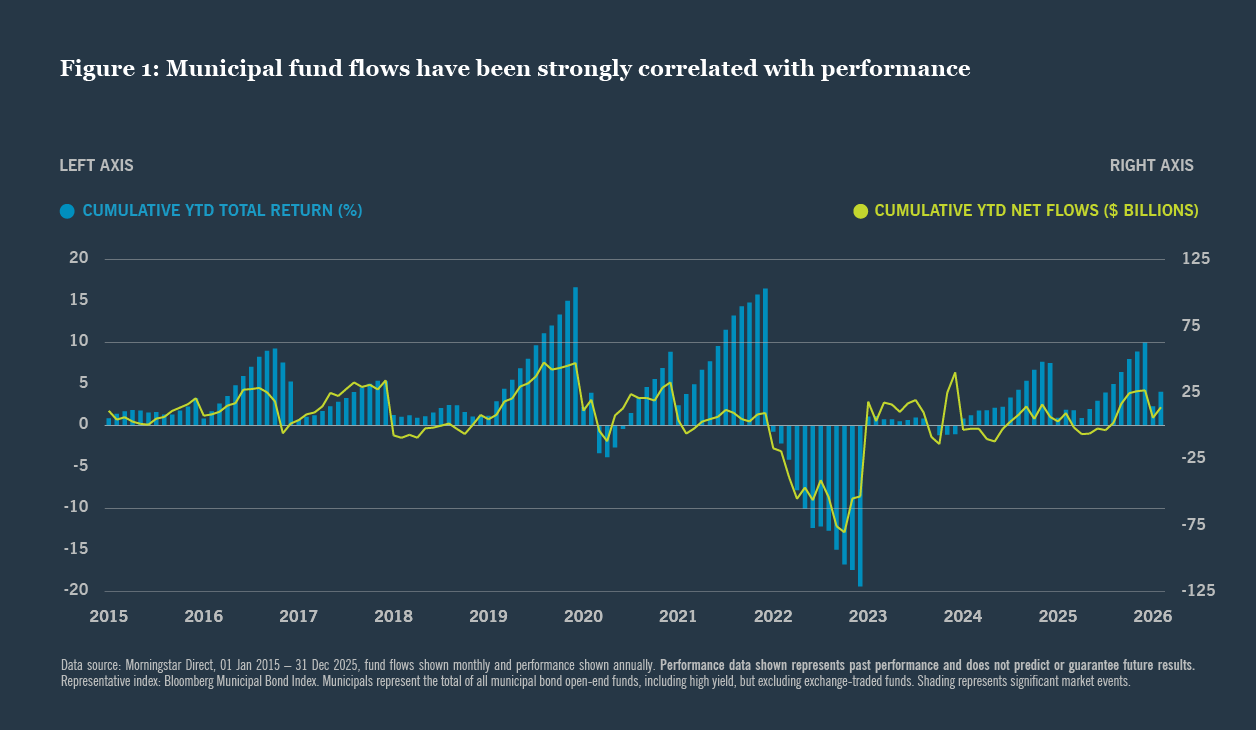
- Municipal bonds and state-backed covenants: Investors price risk based on legal commitments. Repealing bond protections can trigger the toughest Contract Clause review.
- Rent and housing regulations: Emergency measures can collide with lease terms. Courts tend to ask whether the change is temporary, broadly justified, and reasonably tailored.
- Insurance and beneficiary rules: Some modern cases involve state laws that change default rules for beneficiary designations after life events like divorce, raising the question whether the change is substantial or merely a background rule parties should anticipate.

What to remember
The Contract Clause sounds absolute because it is written like a commandment. The Court has not consistently treated it as absolute, and it has long recognized room for regulation, especially where a state is exercising its police powers for a genuine public purpose.
- Yes, states can impair contracts. The real question is when and how far.
- Private contract regulation gets deference. Public contract impairment gets suspicion and more searching scrutiny.
- Modern doctrine balances expectations, public purpose, and reasonableness.
The deeper constitutional point is the one the Founders were trying to protect in the first place: if a promise can be rewritten by the very government that benefits from rewriting it, “contract” becomes a fragile word. The Contract Clause is one of the Constitution’s ways of keeping that word meaningful.