
Most Fourth Amendment stories start with a warrant. Plain view stories start with something simpler: an officer is already somewhere they are allowed to be, sees something exposed to lawful observation, and its incriminating character is immediately apparent without the officer doing anything that would amount to a further search.
That sounds obvious until you remember what the Fourth Amendment actually regulates. It does not ban police from noticing things. It regulates searches and seizures that are unreasonable. The plain view doctrine is the Supreme Court’s way of describing a narrow set of situations where seizing an item is reasonable without a new warrant because the officer did not expand the intrusion to find it. (Often cited in cases like Horton v. California and Texas v. Brown.)
Join the Discussion
What plain view is and is not
Plain view is not permission to rummage. It is not a general “I saw it, so I can search for more” license. It is a justification for seizing an item that an officer observes while acting lawfully in a place they already have the right to be.
Courts typically break the doctrine into three core ideas:
- Lawful vantage point: the officer must be where they are allowed to be when they see the item.
- Lawful right of access: the officer must be allowed to physically reach the item without committing an additional Fourth Amendment violation.
- Immediately apparent: without further searching or manipulation, the officer must have probable cause to believe the item is contraband or evidence of a crime.
If any of those pieces are missing, “plain view” becomes a constitutional mirage. The officer may still be able to act, but they need a different doctrine, a warrant, or a recognized exception.
Lawful vantage
The first question is deceptively basic: Were you allowed to be standing there?
Practical examples
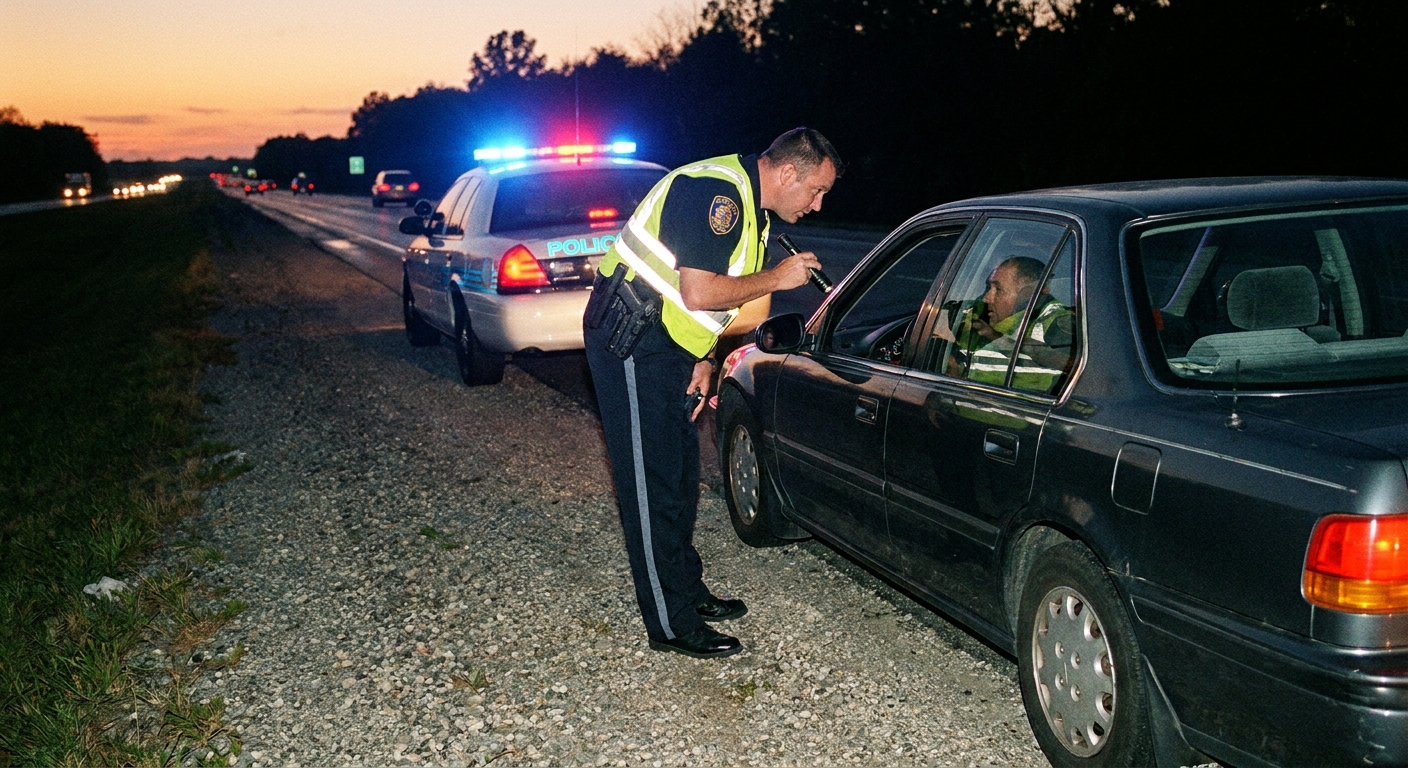
- Traffic stop, looking through the window: An officer lawfully stops a driver for speeding. While speaking at the driver’s window, the officer sees a bag of pills labeled with another person’s name on the passenger seat. The vantage point is lawful because the stop itself and the position at the window are lawful.
- Doorway conversation: Officers knock, and a resident opens the door. From the threshold, an officer can see a table inside with what looks like packaged narcotics. If the officer is standing in an area impliedly open to visitors (like a front walk or porch) and has not forced entry, the sightline can be lawful. But that implied license is narrow, and the analysis can change if officers linger, roam around curtilage, or use tactics aimed at exploring the home rather than conducting a brief knock and talk. (See Florida v. Jardines.)
- Inside a home during a permitted entry: Officers enter a home because a resident consents, or because an exigency justifies entry. While inside, they see a sawed-off shotgun leaning against the sofa. The vantage can be lawful because the entry and presence inside are lawful.
- Arrest warrant entry, with limits: Officers with an arrest warrant may enter the suspect’s own residence to arrest them when they have reason to believe the suspect is inside. (Payton v. New York.) Entry into a third party’s home to look for that suspect generally requires a search warrant or another exception. (Steagald v. United States.) If officers are lawfully inside under those rules and see evidence, plain view can apply.
But if the officer creates the view by stepping somewhere they are not allowed to be, plain view does not fix it. For example, an officer cannot trespass into a fenced backyard to look through a window and then call what they see “plain view.” The view might be “plain” to the officer’s eyes, but the vantage point is not lawful.
Lawful access
Even if an item is visible, the officer still needs a lawful way to get to it. This is where plain view often fails in practice: the officer can see it, but cannot lawfully cross a constitutional boundary to grab it.
Practical examples
- Visible inside a locked home from outside: An officer walking up a driveway sees through a window what appears to be a stolen painting hanging in the living room. The officer may have a lawful vantage from the driveway, but they do not automatically have lawful access to enter the home and seize it. Absent consent, a warrant, or an exigency, stepping inside to take it is the additional intrusion the Fourth Amendment cares about.
- Visible inside a closed container: During a lawful stop, an officer sees a suspicious box on the back seat. The officer may see the box, but plain view does not authorize opening it. Opening the container is a new search, not a seizure of what is already exposed.
- Visible across a threshold: Officers lawfully stand in a hallway of an apartment building and see a firearm through an open door across the threshold. Unless another exception applies, crossing into the apartment to seize it requires lawful access, which often means consent, exigent circumstances, or a warrant. Also note that whether a hallway is a lawful vantage point can be jurisdiction-dependent, especially in locked or secured buildings where courts may analyze expectations of privacy differently.
In other words: plain view can justify picking up what is already exposed to lawful observation. It does not automatically justify breaking the seal of privacy that still exists around homes, containers, and other protected spaces.

Immediately apparent
Plain view also demands a mental constraint: the officer must have enough information to identify the item as contraband or evidence without further searching. Courts often describe this as requiring probable cause, not certainty, and not a hunch.
Practical examples
- Obvious contraband: An officer lawfully inside a house sees a clear bag of white powder next to a digital scale and small baggies. The combination can make the incriminating nature immediately apparent.
- Serial number problem: An officer sees a gun on a table during a lawful entry. A gun is not automatically contraband. If the officer picks it up and twists it to find and read the serial number, that manipulation can be treated as an additional search beyond plain view. The initial sight is one thing. Handling it to discover new information is another.
- Ambiguous items: An officer sees a large amount of cash on a bed. Cash is not contraband. Without more, its criminal character may not be immediately apparent, so seizing it under plain view becomes harder to justify.
This is where plain view quietly protects ordinary life. Many things can look “suspicious” in isolation. The doctrine does not allow officers to turn curiosity into a seizure unless the criminal connection is apparent enough to meet the probable cause threshold.
Inadvertence
You may still hear that officers must discover the item “inadvertently.” That idea came from older formulations of the doctrine, and it still shows up in arguments and training. But the Supreme Court later rejected inadvertence as a constitutional requirement. (See Horton.)
What remains in real-world practice is more subtle:
- Pretext does not automatically kill plain view if the officer is lawfully present and the seizure meets the other requirements.
- But planning can expose problems in the first two elements. If officers position themselves to “see” something by pushing into areas they are not allowed to be, lawful vantage and lawful access can collapse.
So while “inadvertence” is not the modern centerpiece, the instinct behind it still matters: plain view is meant to capture encounters with evidence during lawful police activity, not engineered end-runs around warrant requirements.
Plain view vs. search incident
Plain view often gets confused with search incident to arrest because both can happen quickly and both can avoid a separate warrant. But they are different tools.
Search incident to arrest allows officers to search an arrested person and the area within their immediate control for weapons and evidence. The justification is officer safety and preventing destruction of evidence, tied directly to the arrest.
Practical examples
- Arrest first, then search: Officers arrest a suspect on a valid warrant. They can search the suspect’s pockets even if they do not see anything in plain view. That is search incident to arrest, not plain view.
- Plain view during the arrest: While handcuffing the suspect, an officer sees a small bag of heroin protruding from an open jacket pocket. Seizing the visible bag could be described as plain view, but the officer could also rely on search incident to arrest to search the pocket more thoroughly. The doctrines can overlap in timing, but the legal logic differs.
- Car context: If an officer arrests a driver, the ability to search the vehicle is limited and depends on specific conditions, such as whether the arrestee can access the car or whether it is reasonable to believe evidence of the offense of arrest is inside. (See Arizona v. Gant.) Plain view might still justify seizing a handgun visible on the passenger seat, but it does not automatically authorize a deeper vehicle search.
The key contrast: plain view is about what is already exposed. Search incident to arrest is about a limited search power triggered by the arrest itself.
Plain view vs. inventory searches
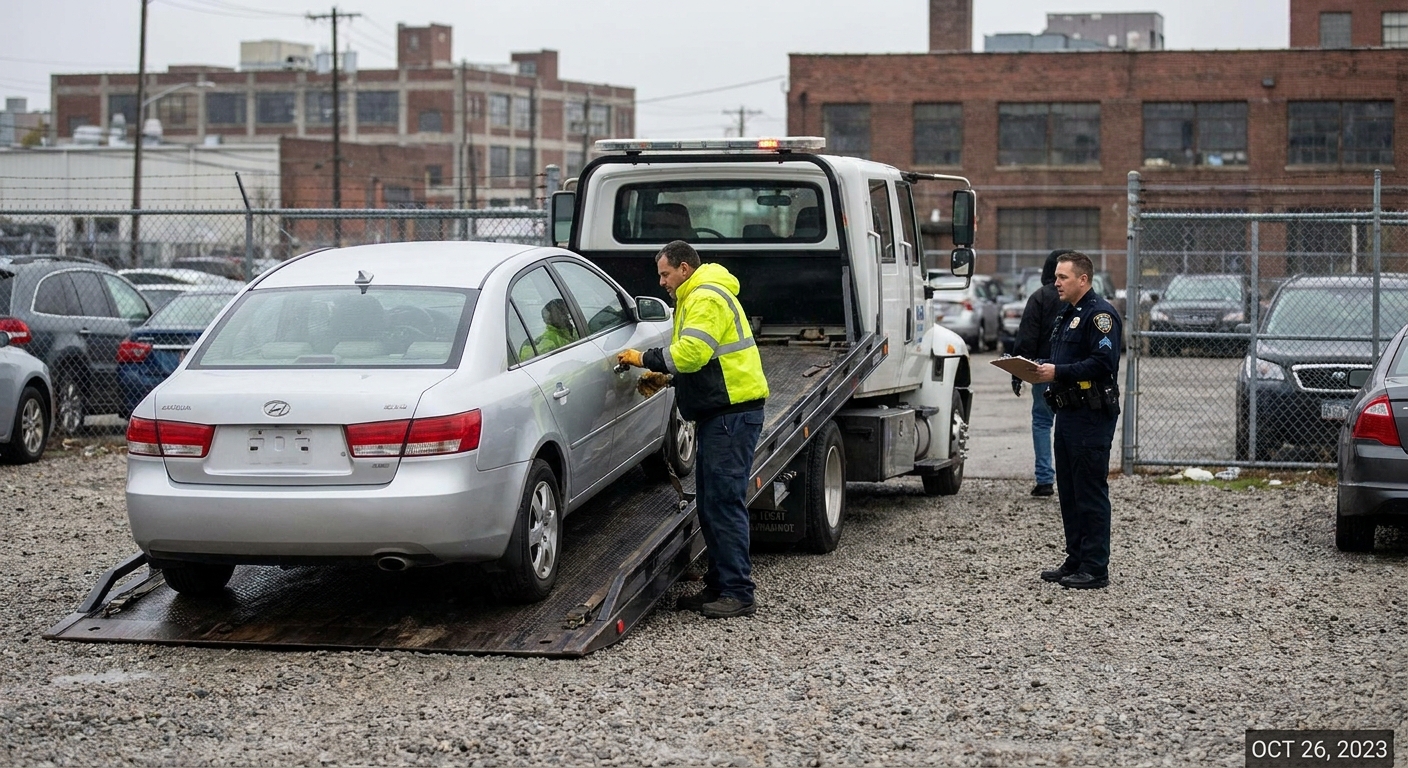
Inventory searches happen when police lawfully take custody of property, most commonly when a vehicle is impounded. The purpose is administrative: to document property, protect valuables, and reduce disputes about theft or damage. The validity typically depends on standardized procedures or criteria and whether the inventory is being used as a ruse for investigation.
Practical examples
- Impounded car, routine inventory: A driver is arrested and the car is impounded according to department policy. During the inventory, an officer opens the glove compartment as the policy permits and finds burglary tools. That discovery is usually analyzed under inventory search rules, not plain view, because the officer is looking through compartments as part of the inventory process.
- Contraband visible before the inventory: Before towing, an officer sees a bag of meth on the floorboard through the window. Seizing that bag can be plain view because it is visible from a lawful vantage and its nature is immediately apparent. The later inventory does not create the initial authority to seize what was already exposed.
The key contrast: inventory searches are about caretaking procedures after lawful custody. Plain view is about seizure based on lawful observation and immediate recognition.
Plain smell and plain feel
People often talk about “plain smell” or “plain feel.” They are not always treated the same way as plain view, but the idea is similar: officers may rely on sensory impressions obtained during lawful conduct. The constitutional friction appears when an officer goes further than what was already exposed.
Practical examples
- Odor during a lawful stop: An officer smells burnt marijuana during a lawful traffic stop. That observation may contribute to probable cause, but what it authorizes next depends on state law, evolving cannabis rules, and the totality of circumstances. In some places, odor alone may be treated differently than it was a decade ago.
- Touch becomes manipulation: During a lawful pat-down for weapons, an officer feels a lump in a pocket. If its identity as contraband is immediately apparent without squeezing or manipulating, seizure may be justified. If the officer has to knead and probe to figure it out, that can cross the line into an additional search.
These examples matter because they highlight the core theme: the Fourth Amendment problem begins when police actions shift from noticing to exploring.
Technology and “open view” issues
One more wrinkle: sometimes people use “plain view” to describe evidence seen from a public place, like the street or a neighboring property. You will also hear “open view” for that idea. Either way, the key question stays the same: was the officer’s observation made from a lawful position, using methods the Fourth Amendment permits?
Using a flashlight from a lawful position is often treated as ordinary observation. But sensory-enhancing tools can change the analysis when they let officers learn details that would otherwise be hidden inside a home. (A classic reference point is Kyllo v. United States.) The doctrine is not just about what the officer saw, but how they got that view.
After seizure: plain view is not a free search
Plain view primarily answers one question: can the officer seize the item now? It does not automatically answer what the officer can do next.
Some items can be examined without much additional privacy impact. Others contain more information than their exterior reveals. A phone, for example, might be in plain view and even lawfully seized, but searching its contents generally requires its own justification. The seizure is not the same thing as a deeper search.
Common misconceptions
- “If it is visible, it is fair game.” Not if the officer is not lawfully there, or not lawfully allowed to access it.
- “Plain view lets police search for more.” Plain view can justify seizing the item observed, not conducting a broader search without another legal basis.
- “Anything suspicious is immediately apparent.” Immediate recognition requires probable cause, not a hunch.
- “Plain view always requires surprise.” Inadvertence is not a universal requirement, but deliberate maneuvering can still undermine lawful vantage or access.
Why it exists
Plain view is a pressure valve. It keeps the Fourth Amendment from becoming a world where officers must avert their eyes from obvious evidence during lawful encounters. At the same time, it is designed to be narrow enough that “I saw something” does not become “I get to search everything.”
If you want a one-sentence test that stays honest: plain view allows seizure when the officer did not have to violate, expand, or manipulate privacy interests to find what they seized.
And when only part of the test is satisfied, the next step is usually straightforward: officers typically need consent, a warrant, or a recognized exception (like exigent circumstances) to go further.